AQA · A-Level · Business
Course version: 7132 · Version from Sept 2023
Choosing which markets to compete in and what products to offer: The…
Full specification wording
Strategic direction: choosing which markets to compete in and what products to offer: The reasons for choosing and value of different options for strategic direction
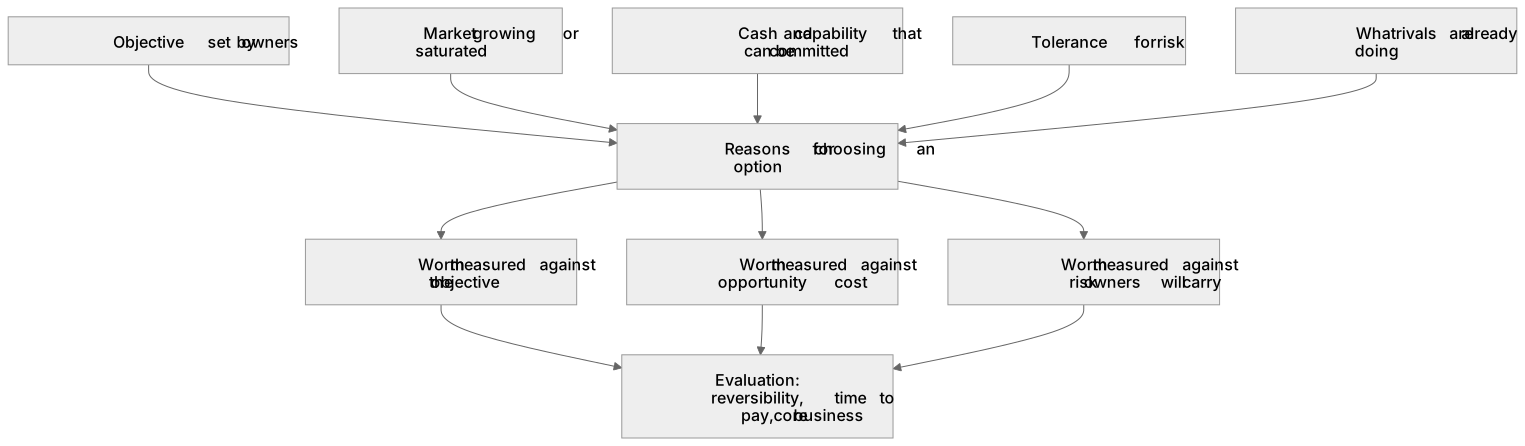
A firm picks its route for reasons that can be read straight off the case, and those reasons are what an answer should argue from: the objective the owners have set, whether the existing market is…
- Point 2 of 2
- 3 key terms
Study notes
From the teaching notes for this specification point.
The idea
A firm picks its route for reasons that can be read straight off the case, and those reasons are what an answer should argue from: the objective the owners have set, whether the existing market is growing or saturated, the cash and capability that can be committed, the tolerance for risk, and what rivals are already doing. Worth is not the same as ambition. It is measured against that objective, against the opportunity cost of the money tied up, and against the risk the owners are willing to carry, so a modest push for share at home can beat an overseas launch that locks up cash for years. Good evaluation asks three further questions: how reversible the move is, how long before it pays, and what happens to the core business while senior management attention is somewhere else.
What earns the marks
- Anchoring the choice to objectives stated in the case, such as growth in shareholder value, survival, or keeping family control, so the judgement has a yardstick.
- Weighing what the option demands against the finance and capability the firm actually has, for example gearing that is already high or a workforce without the necessary skills.
- Judging worth by return relative to risk and to the opportunity cost of the funds, rather than by the size of the market being entered.
- Considering timing and reversibility, including how quickly the move could be unwound if the forecast proves wrong.
Common mistakes and how to put them right
Assuming growth is always the aim, when the family firm in the case may value control and steady cash flow far more than scale.
Recommending a route with no reference to how it would be funded, which turns a strategy into a wish.
Judging the option by what it would do for any firm rather than by what it does for this one, in this market, with these constraints.
Exam tips
- Extended questions ask which route a named business should take, so commit to one and use part of the answer to show why the rejected option is weaker.
- Top band marks come from conditions: say what would have to hold, such as funding secured or demand steady, for the recommendation to stand.
- Keep one eye on the appendix, because market growth rates and margins usually settle the argument.
Try the lesson
The start of the Strategic direction: choosing which markets to compete in and what products to offer: The reasons for choosing and value of different options for strategic direction lesson, made from teaching notes for this specification point.
Have a go first
Which Ansoff matrix option involves selling a new product in an existing market?
Listen
A firm picks its route for reasons that can be read straight off the case, and those reasons are what an answer should argue from: the objective the owners have set, whether the existing market is growing or saturated, the cash and capability that can be committed, the tolerance for risk, and what rivals are already doing. Worth is not the same as ambition. It is measured against that objective, against the opportunity cost of the money tied up, and against the risk the owners are willing to carry, so a modest push for share at home can beat an overseas launch that locks up cash for years. Good evaluation asks three further questions: how reversible the move is, how long before it pays, and what happens to the core business while senior management attention is somewhere else. A strong answer earns marks for these points. Anchoring the choice to objectives stated in the case, such as growth in shareholder value, survival, or keeping family control, so the judgement has a yardstick. Weighing what the option demands against the finance and capability the firm actually has, for example gearing that is already high or a workforce without the necessary skills. Judging worth by return relative to risk and to the opportunity cost of the funds, rather than by the size of the market being entered. Considering timing and reversibility, including how quickly the move could be unwound if the forecast proves wrong. Exam tip: Extended questions ask which route a named business should take, so commit to one and use part of the answer to show why the rejected option is weaker.
See it
Key words
Say what each word means before you turn the card.
strategic direction
Try answering aloud or in your head before turning the card.
corporate objectives
Try answering aloud or in your head before turning the card.
risk appetite
Try answering aloud or in your head before turning the card.
See every definition
- strategic direction
- The route a firm picks for which markets to compete in and what products to offer, chosen for reasons that can be read straight off the case.
- corporate objectives
- The objective the owners have set, such as growth in shareholder value, survival, or keeping family control, which gives the judgement a yardstick.
- risk appetite
- The tolerance for risk, or the risk the owners are willing to carry, against which the worth of an option is judged.
Label the diagram
Some boxes have lost their names. Pick the right name for each number.
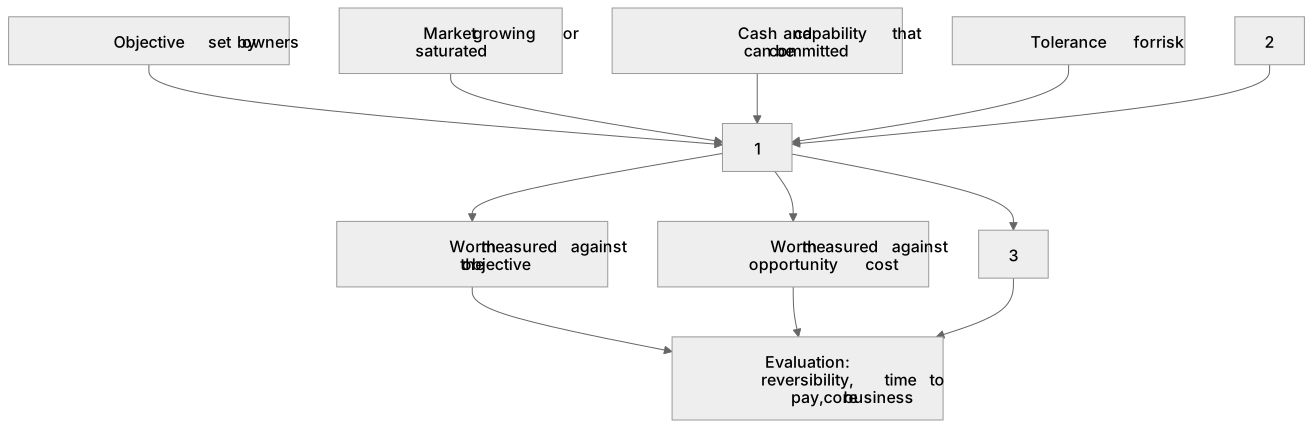
1Box 1
2Box 2
3Box 3
There is more to this lesson
The full lesson goes on to check your understanding and help you earn the marks. Create a free account to carry on, with your progress saved.
A week of Premium from your first lesson · Then the free plan continues · No card, no charge
Test your understanding of Strategic direction: choosing which markets to compete in and what products to offer: The reasons for choosing and value of different options for strategic direction
Active recall beats re-reading. Take an instant quiz now to test what you’ve learned and lock it into long-term memory.
A week of Premium from your first lesson · Then the free plan continues · No card, no charge