AQA · A-Level · Business
Course version: 7132 · Version from Sept 2023
The influences on functional decisions and plans including ethical and…
Full specification wording
Subject content: the influences on functional decisions and plans including ethical and environmental issues
Functional plans sit below corporate objectives and are pushed around by internal forces such as finance, capacity, culture and the owners' appetite for risk, and by external ones such as rivals,…
- Point 5 of 9
- 2 key terms
Study notes
From the teaching notes for this specification point.
The idea
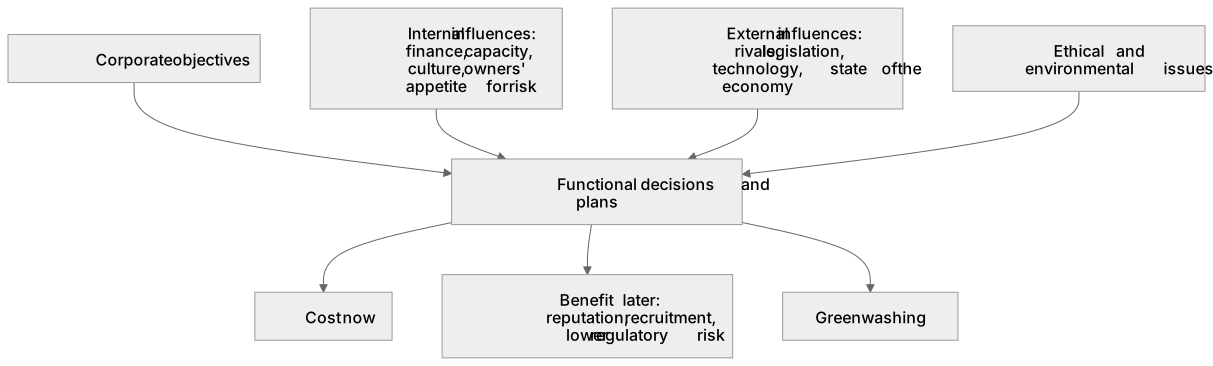
Functional plans sit below corporate objectives and are pushed around by internal forces such as finance, capacity, culture and the owners' appetite for risk, and by external ones such as rivals, legislation, technology and the state of the economy. Ethical and green pressure now sits among those forces rather than beside them: cutting packaging, paying suppliers on time or turning down a cheap contract raises cost today in exchange for reputation, recruitment and lower regulatory risk later. The trade-off worth writing is that the cost is certain and immediate while the payoff is slow and uncertain, so the case is strongest where customers will pay for it and the firm can prove the claim. Greenwashing is the failure mode, and it costs more than doing nothing.
What earns the marks
- Separating the influences the firm controls from those it can only respond to, and saying which of the two is driving this particular plan.
- Presenting the ethical choice as a cost now against a named benefit later, such as lower staff turnover, fewer recalls or a price premium.
- Linking the functional plan back to the corporate objective, so a marketing or operations decision is judged by whether it serves that objective.
- Judging with evidence from the case whether this firm's customers would actually pay more for the ethical position.
Common mistakes and how to put them right
Treating ethics as a list of good deeds with no cost attached and nobody having to fund them.
Claiming an environmental measure automatically raises profit, when the saving can be smaller than the investment for several years.
Confusing legal compliance with ethical behaviour, so the firm is praised for obeying a law it had no choice about.
Exam tips
- Ethical and environmental material usually arrives as an appendix of costs or a manager's quotation, and the marks come from using it rather than from moral commentary.
- When asked to justify a functional plan, state the objective it serves first, then the influence that most threatens it.
- Keep one real instance ready, such as a retailer stripping plastic from its packaging, since a brief real example beats an invented one.
Try the lesson
The start of the Subject content: the influences on functional decisions and plans including ethical and environmental issues lesson, made from teaching notes for this specification point.
Have a go first
Which of the following is an environmental influence on a firm's functional decisions?
Listen
Functional plans sit below corporate objectives and are pushed around by internal forces such as finance, capacity, culture and the owners' appetite for risk, and by external ones such as rivals, legislation, technology and the state of the economy. Ethical and green pressure now sits among those forces rather than beside them: cutting packaging, paying suppliers on time or turning down a cheap contract raises cost today in exchange for reputation, recruitment and lower regulatory risk later. The trade-off worth writing is that the cost is certain and immediate while the payoff is slow and uncertain, so the case is strongest where customers will pay for it and the firm can prove the claim. Greenwashing is the failure mode, and it costs more than doing nothing. A strong answer earns marks for these points. Separating the influences the firm controls from those it can only respond to, and saying which of the two is driving this particular plan. Presenting the ethical choice as a cost now against a named benefit later, such as lower staff turnover, fewer recalls or a price premium. Linking the functional plan back to the corporate objective, so a marketing or operations decision is judged by whether it serves that objective. Judging with evidence from the case whether this firm's customers would actually pay more for the ethical position. Exam tip: Ethical and environmental material usually arrives as an appendix of costs or a manager's quotation, and the marks come from using it rather than from moral commentary.
See it
Key words
Say what each word means before you turn the card.
corporate and functional objectives
Try answering aloud or in your head before turning the card.
cost now against benefit later
Try answering aloud or in your head before turning the card.
See every definition
- corporate and functional objectives
- Functional plans sit below corporate objectives, so a marketing or operations decision is judged by whether it serves that objective.
- cost now against benefit later
- The trade-off where the cost is certain and immediate while the payoff is slow and uncertain, so the case is strongest where customers will pay for it and the firm can prove the claim.
Label the diagram
Some boxes have lost their names. Pick the right name for each number.
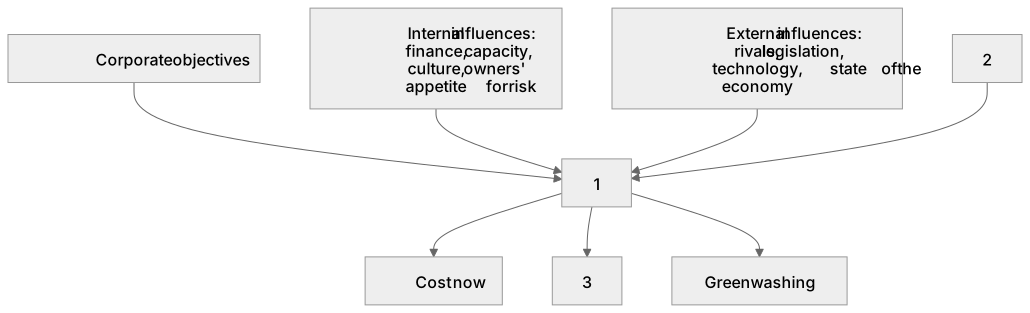
1Box 1
2Box 2
3Box 3
There is more to this lesson
The full lesson goes on to check your understanding and help you earn the marks. Create a free account to carry on, with your progress saved.
A week of Premium from your first lesson · Then the free plan continues · No card, no charge
Test your understanding of Subject content: the influences on functional decisions and plans including ethical and environmental issues
Active recall beats re-reading. Take an instant quiz now to test what you’ve learned and lock it into long-term memory.
A week of Premium from your first lesson · Then the free plan continues · No card, no charge