AQA · A-Level · Business
Course version: 7132 · Version from Sept 2023
The role of shareholders and why they invest
Full specification wording
Understanding different business forms: The role of shareholders and why they invest
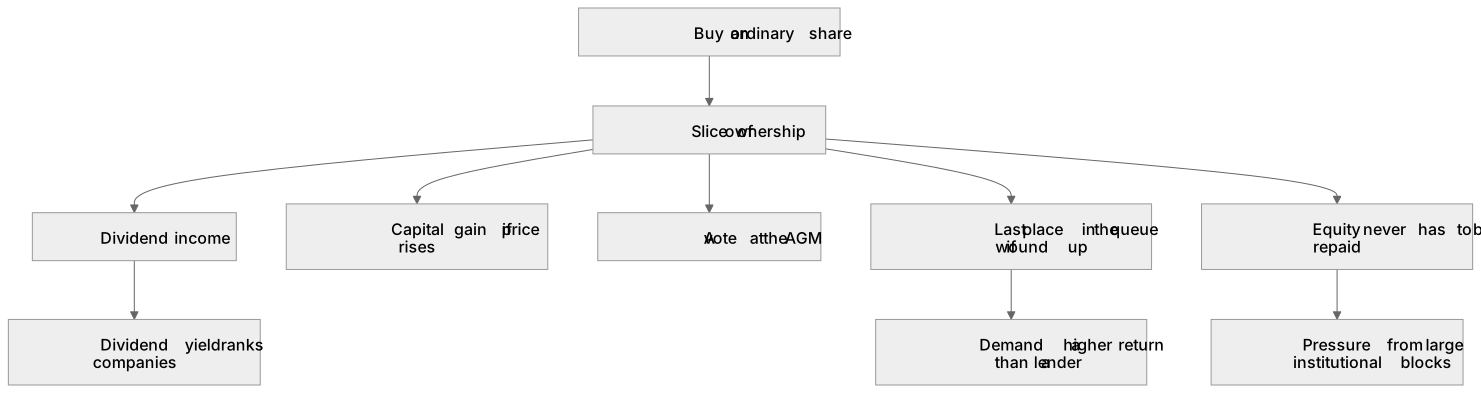
Buying an ordinary share buys a slice of ownership, and investors pay for two returns: income from dividends and a capital gain if the price rises.
- Point 2 of 4
- 3 key terms
Study notes
From the teaching notes for this specification point.
The idea
Buying an ordinary share buys a slice of ownership, and investors pay for two returns: income from dividends and a capital gain if the price rises. They also buy a vote at the annual general meeting, and they accept last place in the queue if the company is wound up, which is exactly why they demand a higher return than a bank charging interest on a loan. Dividend yield, the dividend per share divided by the share price and shown as a percentage, is how an income investor ranks one company against another. For the business the attraction is that equity never has to be repaid. The cost is pressure: institutions holding large blocks in a listed company can press for results this year and squeeze the patient investment a long term strategy needs.
What earns the marks
- Distinguishing the two returns an investor is buying, dividend income now and a capital gain later, and saying which of them this particular shareholder is in it for.
- Explaining the risk being priced, since ordinary shareholders rank behind lenders and creditors on liquidation and therefore require a higher return than a lender does.
- Using the ownership structure given in the stem, so a firm where a founding family holds most of the shares is treated differently from one owned by pension funds.
- Linking shareholder expectations to an actual decision in the case, such as cutting the dividend to fund expansion, and judging how investors would respond.
Common mistakes and how to put them right
Assuming every shareholder wants the same thing, when a pension fund buying for income and a founder holding for control will vote in opposite directions.
Writing that shareholders lend money to the company, which describes a debenture holder or a bank rather than an owner.
Claiming the company receives cash whenever its shares are traded, when money moves between investors on the secondary market and the firm gets none of it.
Exam tips
- This is usually paired with dividends or with objectives, so be ready to explain why a board might retain profit and how shareholders would judge that call.
- Evaluate questions reward a split judgement: name the type of shareholder, then argue that their influence depends on the size of the holding and on how easily they could sell out.
- Quote the dividend or the share price printed in the data rather than describing investors in general terms.
Try the lesson
The start of the Understanding different business forms: The role of shareholders and why they invest lesson, made from teaching notes for this specification point.
Have a go first
What do shareholders own in a public limited company?
Listen
Buying an ordinary share buys a slice of ownership, and investors pay for two returns: income from dividends and a capital gain if the price rises. They also buy a vote at the annual general meeting, and they accept last place in the queue if the company is wound up, which is exactly why they demand a higher return than a bank charging interest on a loan. Dividend yield, the dividend per share divided by the share price and shown as a percentage, is how an income investor ranks one company against another. For the business the attraction is that equity never has to be repaid. The cost is pressure: institutions holding large blocks in a listed company can press for results this year and squeeze the patient investment a long term strategy needs. A strong answer earns marks for these points. Distinguishing the two returns an investor is buying, dividend income now and a capital gain later, and saying which of them this particular shareholder is in it for. Explaining the risk being priced, since ordinary shareholders rank behind lenders and creditors on liquidation and therefore require a higher return than a lender does. Using the ownership structure given in the stem, so a firm where a founding family holds most of the shares is treated differently from one owned by pension funds. Linking shareholder expectations to an actual decision in the case, such as cutting the dividend to fund expansion, and judging how investors would respond. Exam tip: This is usually paired with dividends or with objectives, so be ready to explain why a board might retain profit and how shareholders would judge that call.
See it
Key words
Say what each word means before you turn the card.
capital gain
Try answering aloud or in your head before turning the card.
dividend yield
Try answering aloud or in your head before turning the card.
equity
Try answering aloud or in your head before turning the card.
See every definition
- capital gain
- The return an investor makes if the share price rises after buying an ordinary share.
- dividend yield
- The dividend per share divided by the share price and shown as a percentage, used to rank one company against another.
- equity
- Ownership finance that never has to be repaid, which is its attraction for the business.
Label the diagram
Some boxes have lost their names. Pick the right name for each number.
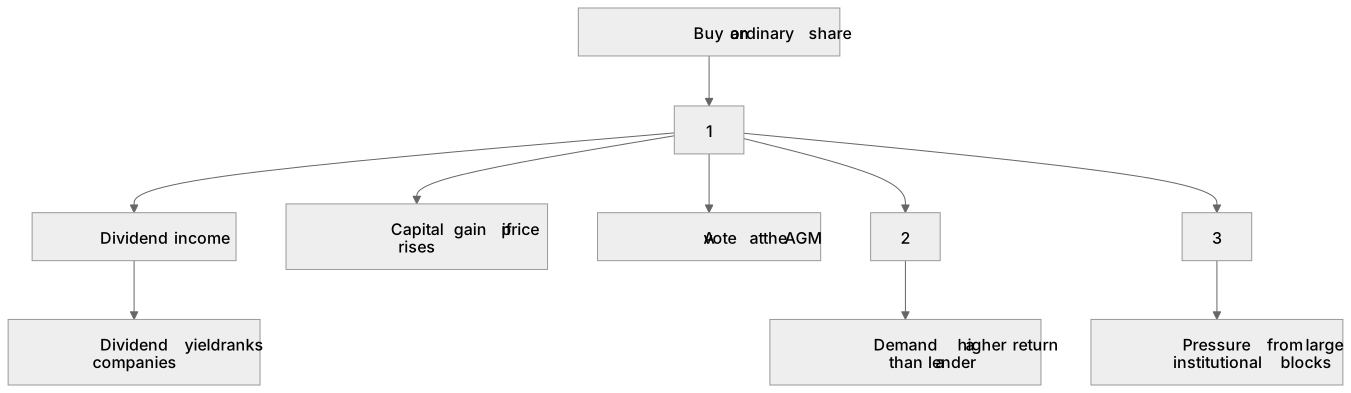
1Box 1
2Box 2
3Box 3
There is more to this lesson
The full lesson goes on to check your understanding and help you earn the marks. Create a free account to carry on, with your progress saved.
A week of Premium from your first lesson · Then the free plan continues · No card, no charge
Test your understanding of Understanding different business forms: The role of shareholders and why they invest
Active recall beats re-reading. Take an instant quiz now to test what you’ve learned and lock it into long-term memory.
A week of Premium from your first lesson · Then the free plan continues · No card, no charge