AQA · A-Level · Business
Course version: 7132 · Version from Sept 2023
The use of data in marketing decision making and planning
Full specification wording
Understanding markets and customers: The use of data in marketing decision making and planning
Evidence is only worth collecting if it changes what the firm does.
- Point 6 of 6
- 4 key terms
Study notes
From the teaching notes for this specification point.
The idea
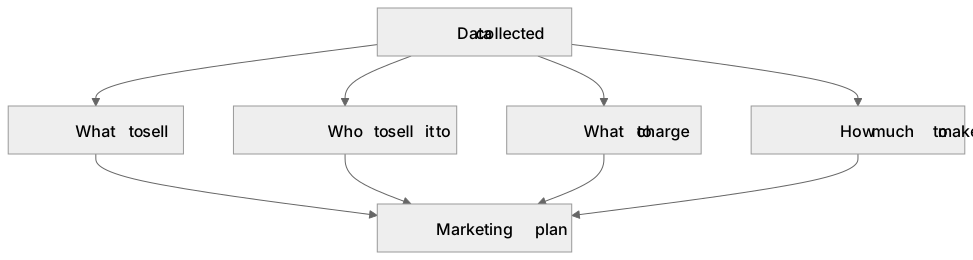
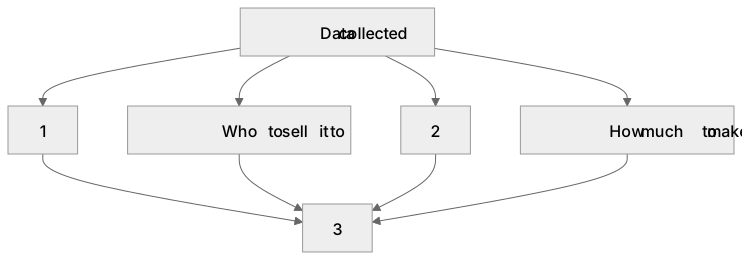
Evidence is only worth collecting if it changes what the firm does. In practice it feeds four choices: what to sell, who to sell it to, what to charge and how much to make, and the marketing plan is the document where those four are written down with the reasoning behind them. Loyalty schemes are the obvious source, and Tesco has used Clubcard records for years to decide which lines sit in which store, which beats a survey because it records what shoppers actually bought rather than what they said they would buy. The limits run the other way. Records describe yesterday and describe existing customers, so they are weakest exactly where a firm most needs help, in judging a product nobody has bought yet, and holding them brings a legal duty of care over personal information.
What earns the marks
- Naming the specific decision the evidence informs, such as which stores stock a line or which group receives an offer, rather than praising information in general.
- Weighing what it costs and how long it takes to gather evidence against the cost of getting the decision wrong, and reaching a view suited to this firm's size.
- Recognising that a record of what people bought is stronger than a statement of what they intend, because stated intention and actual purchase differ.
- Turning the analysis into a plan with an objective, a budget and a way of measuring whether it worked.
Common mistakes and how to put them right
Writing that more information always means better decisions, which ignores the money and time that gathering and analysing it takes from a small firm.
Forgetting that historic sales records come from existing customers, so they point a firm back at the market it already serves and say little about a new one.
Listing sources at length without ever saying what the firm would do differently as a result.
Exam tips
- This is a natural essay title, usually framed as whether a firm should base its marketing decisions on hard evidence, so plan two arguments each way and a clear judgement.
- In the case study, quote the actual figure from the extract when you argue, because unsupported assertions land in the lowest band.
Try the lesson
The start of the Understanding markets and customers: The use of data in marketing decision making and planning lesson, made from teaching notes for this specification point.
Have a go first
Which of the following best describes the purpose of using data in marketing decision making?
Listen
Evidence is only worth collecting if it changes what the firm does. In practice it feeds four choices: what to sell, who to sell it to, what to charge and how much to make, and the marketing plan is the document where those four are written down with the reasoning behind them. Loyalty schemes are the obvious source, and Tesco has used Clubcard records for years to decide which lines sit in which store, which beats a survey because it records what shoppers actually bought rather than what they said they would buy. The limits run the other way. Records describe yesterday and describe existing customers, so they are weakest exactly where a firm most needs help, in judging a product nobody has bought yet, and holding them brings a legal duty of care over personal information. A strong answer earns marks for these points. Naming the specific decision the evidence informs, such as which stores stock a line or which group receives an offer, rather than praising information in general. Weighing what it costs and how long it takes to gather evidence against the cost of getting the decision wrong, and reaching a view suited to this firm's size. Recognising that a record of what people bought is stronger than a statement of what they intend, because stated intention and actual purchase differ. Turning the analysis into a plan with an objective, a budget and a way of measuring whether it worked. Exam tip: This is a natural essay title, usually framed as whether a firm should base its marketing decisions on hard evidence, so plan two arguments each way and a clear judgement.
See it
Key words
Say what each word means before you turn the card.
evidence based decisions
Try answering aloud or in your head before turning the card.
marketing planning
Try answering aloud or in your head before turning the card.
cost and timeliness
Try answering aloud or in your head before turning the card.
limits of historic records
Try answering aloud or in your head before turning the card.
See every definition
- evidence based decisions
- Collecting evidence is only worth it if it changes what the firm does, feeding the choices of what to sell, who to sell it to, what to charge and how much to make.
- marketing planning
- The marketing plan is the document where those four choices are written down with the reasoning behind them.
- cost and timeliness
- Weighing what it costs and how long it takes to gather evidence against the cost of getting the decision wrong, reaching a view suited to the firm's size.
- limits of historic records
- Records describe yesterday and existing customers, so they are weakest in judging a product nobody has bought yet, and holding them brings a legal duty of care over personal information.
Label the diagram
Some boxes have lost their names. Pick the right name for each number.
1Box 1
2Box 2
3Box 3
There is more to this lesson
The full lesson goes on to check your understanding and help you earn the marks. Create a free account to carry on, with your progress saved.
A week of Premium from your first lesson · Then the free plan continues · No card, no charge
Test your understanding of Understanding markets and customers: The use of data in marketing decision making and planning
Active recall beats re-reading. Take an instant quiz now to test what you’ve learned and lock it into long-term memory.
A week of Premium from your first lesson · Then the free plan continues · No card, no charge