AQA · A-Level · Business
Course version: 7132 · Version from Sept 2023
The measurement and importance of profit (to include: The measurement of…
Full specification wording
Understanding the nature and purpose of business: The measurement and importance of profit (to include: The measurement of profit should include: revenue (also turnover and sales), fixed costs, variable costs, total costs.)
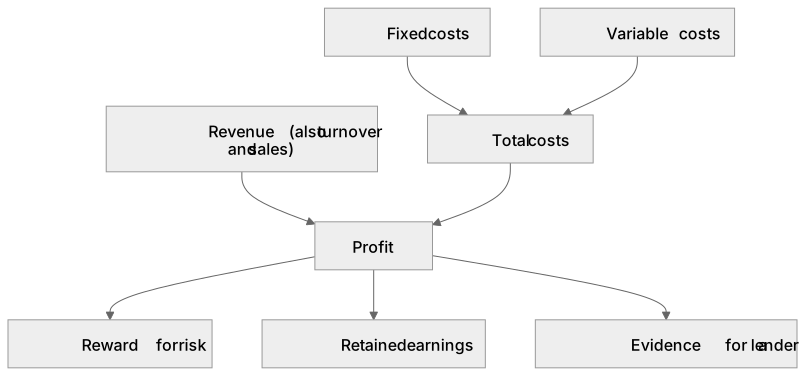
Take total costs away from revenue and what is left is the reward for running the business, but every part of that sentence has to be measured properly.
- Point 4 of 4
- 4 key terms
Study notes
From the teaching notes for this specification point.
The idea
Take total costs away from revenue and what is left is the reward for running the business, but every part of that sentence has to be measured properly. Revenue, also called turnover or sales, is selling price multiplied by quantity sold. Fixed costs such as rent, salaries and insurance do not change with output in the short run, while variable costs such as materials and piece rate wages rise with each unit made, so total cost is fixed cost plus variable cost per unit multiplied by output. The figure matters because it rewards the owners for their risk, funds expansion through retained earnings, the cheapest source of finance a firm has, and tells lenders the business is worth backing. Judge it as a margin rather than a raw amount, since operating profit as a percentage of revenue shows whether a bigger firm is actually a better one.
What earns the marks
- Stating the measurement correctly: revenue is price multiplied by quantity, total cost is fixed cost plus total variable cost, and what remains is the profit.
- Distinguishing the levels, gross after cost of sales, operating after overheads, and the figure for the year after interest and tax.
- Turning the amount into a margin, operating profit divided by revenue as a percentage, so firms of different sizes can be compared.
- Explaining why it matters: a reward for risk taking owners, retained earnings as an internal source of finance, and evidence for a lender assessing a loan.
- Separating it from cash, since a credit sale is recorded at once while the money arrives only when the customer pays.
- Evaluating the quality of the figure, noting that cutting training, maintenance or marketing flatters this year and weakens the business next year.
Common mistakes and how to put them right
Multiplying fixed costs by the number of units.
Put it right: Fixed costs are a total for the period, and only variable costs scale with output.
Using the variable cost per unit as if it were the total variable cost, which understates total cost and overstates what is left.
Working out the margin by dividing by total costs instead of by revenue.
Reading rising sales as rising profitability without checking what happened to costs over the same period.
Leaving the answer as a bare number, with no currency symbol or percentage sign, and losing the accuracy mark.
Exam tips
- Calculations here appear in the multiple choice section and as short calculations in data response, so set out revenue, then total cost, then the result, showing each line.
- Always label the answer with its unit and round to the number of decimal places the question asks for.
- When a judgement follows the calculation, use the margin and the trend across the periods given rather than the single figure you have just worked out.
Try the lesson
The start of the Understanding the nature and purpose of business: The measurement and importance of profit (to include: The measurement of profit should include: revenue (also turnover and sales), fixed costs, variable costs, total costs.) lesson, made from teaching notes for this specification point.
Have a go first
A business has total costs of £18,000 and makes a profit of £6,000. What is its revenue?
Listen
Take total costs away from revenue and what is left is the reward for running the business, but every part of that sentence has to be measured properly. Revenue, also called turnover or sales, is selling price multiplied by quantity sold. Fixed costs such as rent, salaries and insurance do not change with output in the short run, while variable costs such as materials and piece rate wages rise with each unit made, so total cost is fixed cost plus variable cost per unit multiplied by output. The figure matters because it rewards the owners for their risk, funds expansion through retained earnings, the cheapest source of finance a firm has, and tells lenders the business is worth backing. Judge it as a margin rather than a raw amount, since operating profit as a percentage of revenue shows whether a bigger firm is actually a better one. A strong answer earns marks for these points. Stating the measurement correctly: revenue is price multiplied by quantity, total cost is fixed cost plus total variable cost, and what remains is the profit. Distinguishing the levels, gross after cost of sales, operating after overheads, and the figure for the year after interest and tax. Turning the amount into a margin, operating profit divided by revenue as a percentage, so firms of different sizes can be compared. Explaining why it matters: a reward for risk taking owners, retained earnings as an internal source of finance, and evidence for a lender assessing a loan. Exam tip: Calculations here appear in the multiple choice section and as short calculations in data response, so set out revenue, then total cost, then the result, showing each line.
See it
Key words
Say what each word means before you turn the card.
Revenue
Try answering aloud or in your head before turning the card.
Fixed costs
Try answering aloud or in your head before turning the card.
Variable costs
Try answering aloud or in your head before turning the card.
Total cost
Try answering aloud or in your head before turning the card.
See every definition
- Revenue
- Selling price multiplied by quantity sold, also called turnover or sales.
- Fixed costs
- Costs such as rent, salaries and insurance that do not change with output in the short run.
- Variable costs
- Costs such as materials and piece rate wages that rise with each unit made.
- Total cost
- Fixed cost plus variable cost per unit multiplied by output.
Label the diagram
Some boxes have lost their names. Pick the right name for each number.
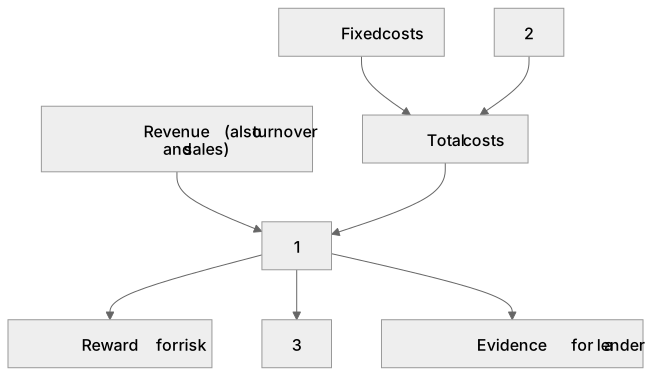
1Box 1
2Box 2
3Box 3
There is more to this lesson
The full lesson goes on to check your understanding and help you earn the marks. Create a free account to carry on, with your progress saved.
A week of Premium from your first lesson · Then the free plan continues · No card, no charge
Test your understanding of Understanding the nature and purpose of business: The measurement and importance of profit (to include: The measurement of profit should include: revenue (also turnover and sales), fixed costs, variable costs, total costs.)
Active recall beats re-reading. Take an instant quiz now to test what you’ve learned and lock it into long-term memory.
A week of Premium from your first lesson · Then the free plan continues · No card, no charge