OCR · GCSE · French
Pronunciation and intonation
Mastering French pronunciation and intonation is your secret weapon for the OCR GCSE Speaking exam. This guide breaks down the key sounds, rhythms, and melodies that examiners are listening for, giving you the tools to boost your AO2 mark and communicate with confidence.
- 4 min read
- 3 worked examples
- 5 practice questions
- 6 key terms
Study Notes
Overview
Pronunciation and intonation are critical components of the OCR GCSE French Speaking exam, accounting for a significant portion of the marks under Assessment Objective 2 (AO2). This guide focuses on the specific phonetic features that distinguish a high-scoring candidate. Examiners are trained to listen for the consistent production of authentic French phonemes, correct stress on the final syllable, and appropriate intonation contours for statements and questions. Failure to master these elements, such as anglicising the French 'u' or 'r' sounds, can impede communication and result in lost marks. This resource provides a targeted approach to developing an authentic French accent, focusing on the sounds and rhythms that will give you a competitive edge. We will cover key vowel and consonant sounds, the rules of liaison, stress patterns, and intonation, all within the context of the OCR exam requirements.

Key Pronunciation Features
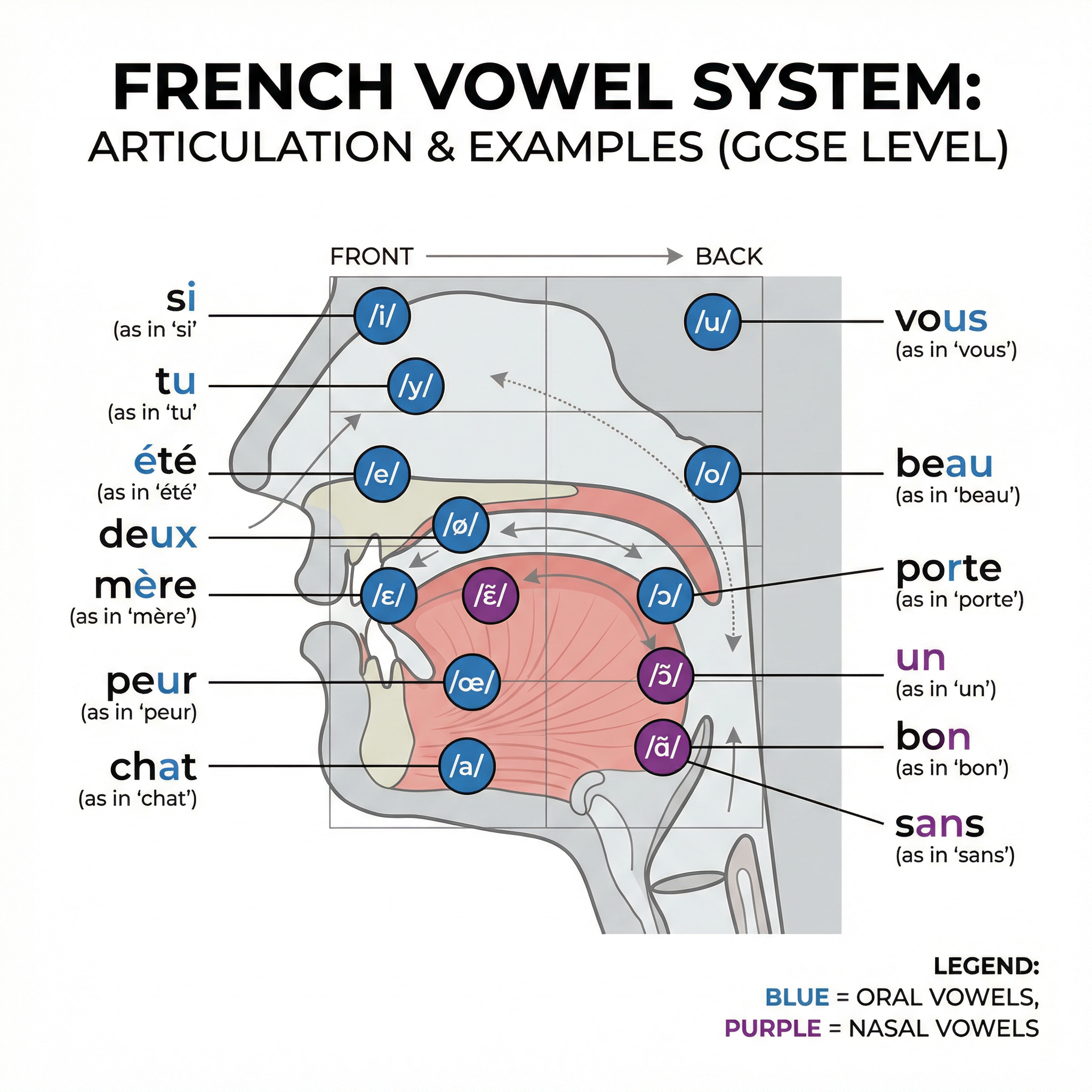
The French Vowel System
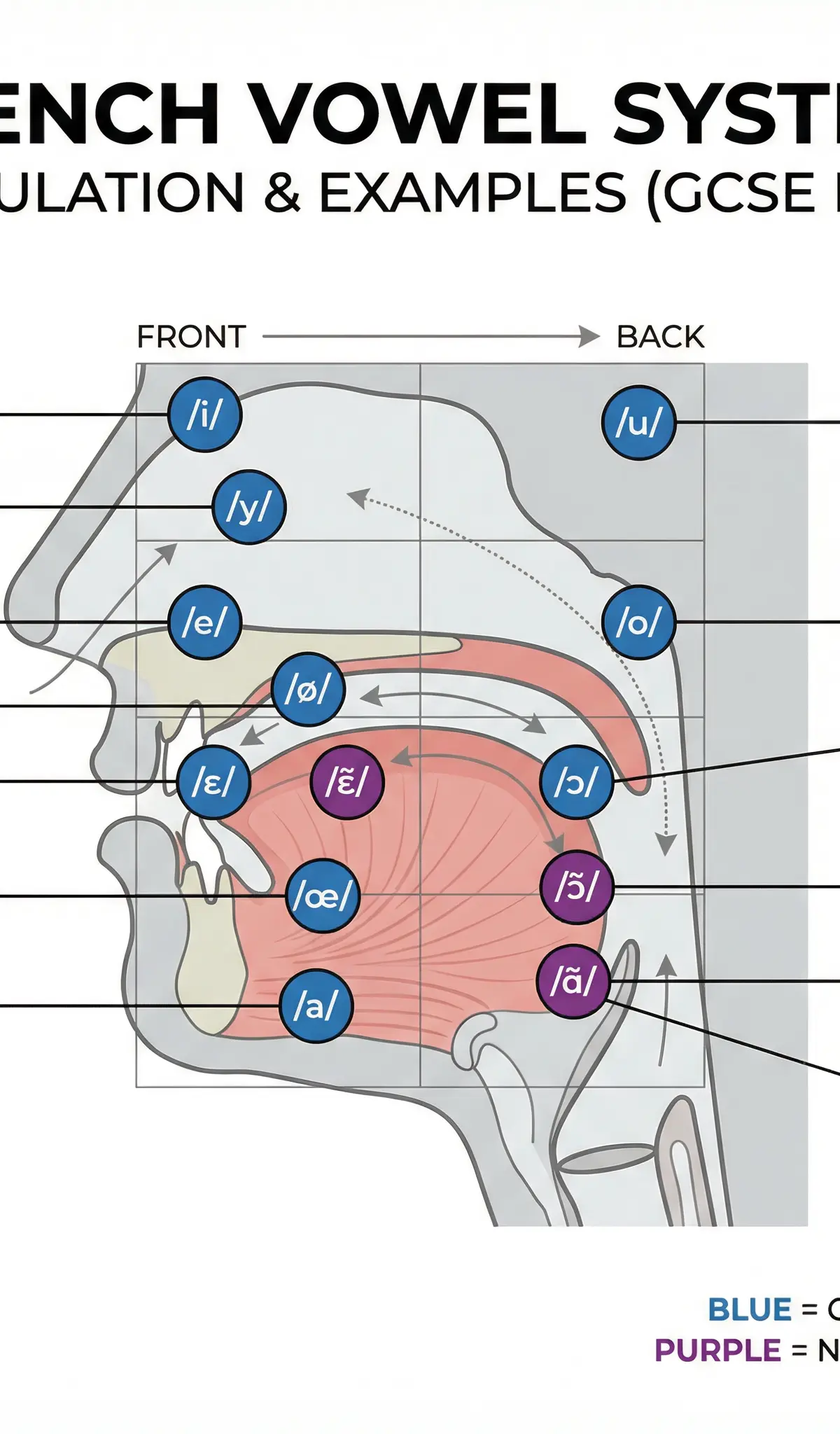
What it is: French has more vowel sounds than English, and many are produced in a different part of the mouth. The distinction between sounds like 'u' and 'ou' is crucial for meaning.
Why it matters: Incorrect vowel sounds can change the meaning of a word (e.g., 'rue' vs. 'roue'). Examiners award marks for clear, unambiguous vowel production.
Specific Knowledge: Candidates must be able to produce front rounded vowels like /y/ (in 'tu') and nasal vowels like /ɑ̃/ (in 'dans').
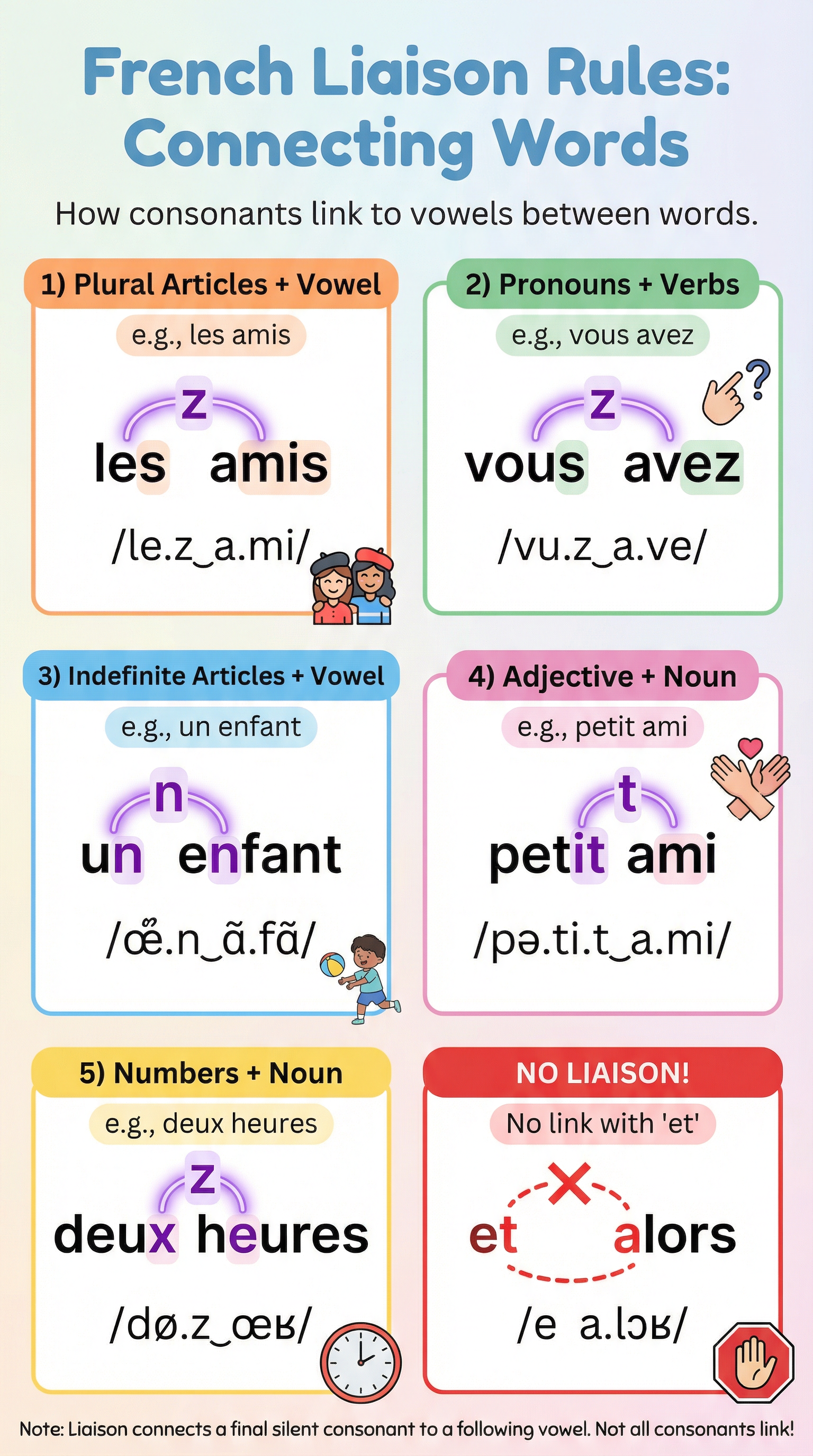
Silent Consonants and Liaison
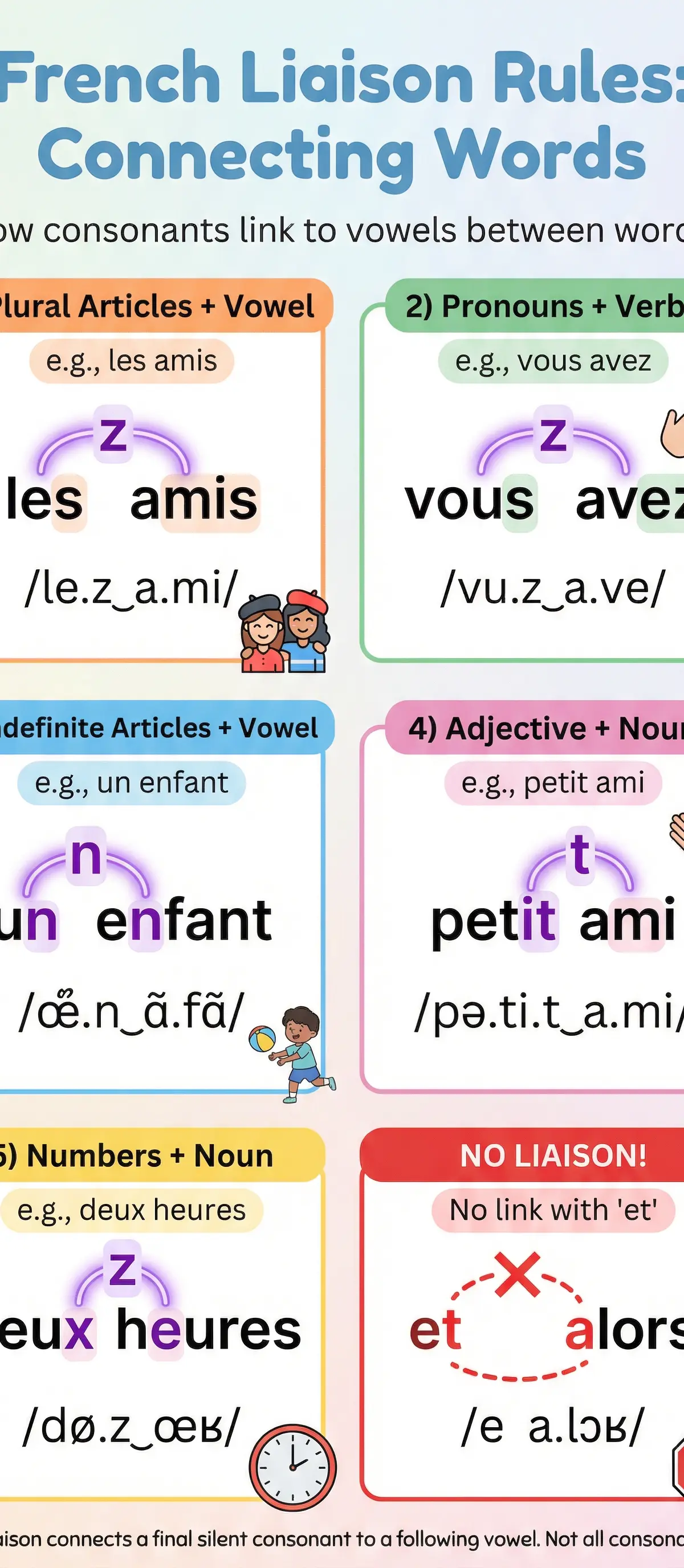
What it is: Many final consonants in French are silent (e.g., the 't' in 'chat'). However, these silent consonants are often pronounced when the next word begins with a vowel, a process called 'liaison'.
Why it matters: Correctly applying liaison demonstrates fluency and a sophisticated understanding of French phonology. It is a key feature that examiners listen for.
Specific Knowledge: Be prepared to use liaison in common phrases like 'les_amis', 'vous_avez', and 'un_enfant'.
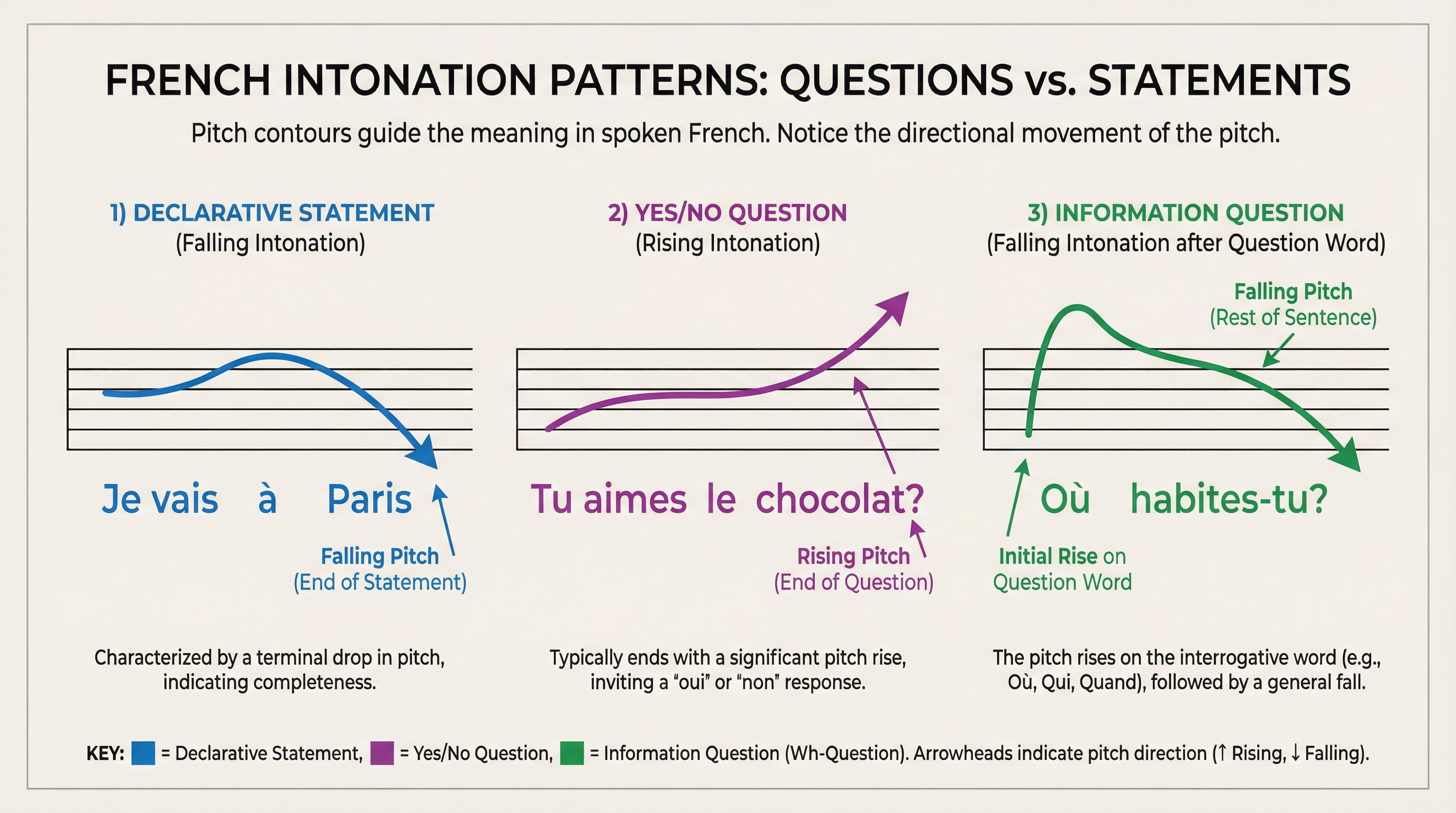
Intonation Patterns
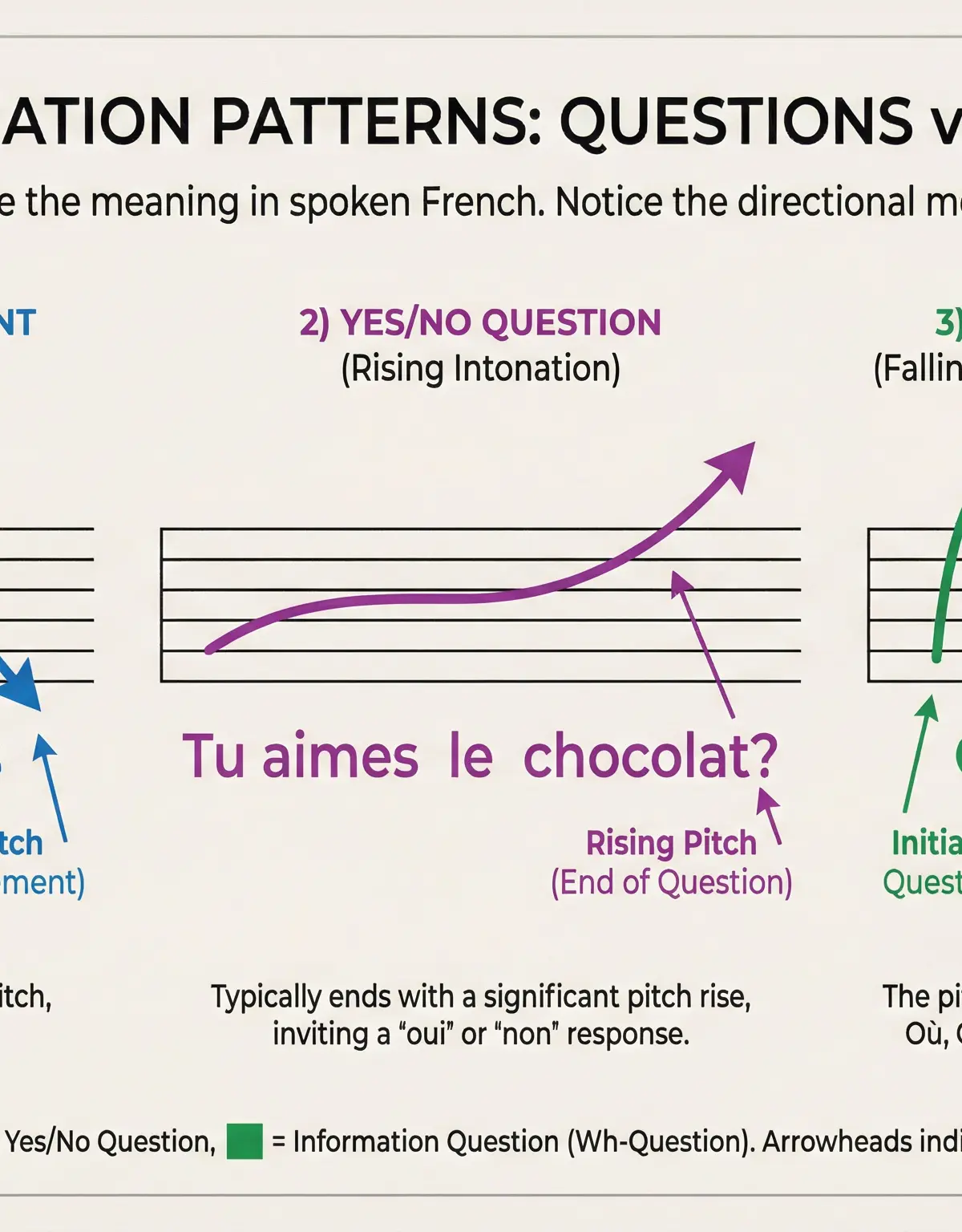
What it is: Intonation is the 'melody' of the language. In French, statements typically have a falling pitch at the end, while yes/no questions have a rising pitch.
Why it matters: Using flat, English-style intonation for questions can make you sound uncertain or even rude. Correct intonation makes your speech expressive and easy to understand.
Specific Knowledge: Practice the rising intonation for questions like 'Tu aimes le chocolat?' and the falling intonation for statements like 'J'habite à Londres.'
Key Individuals
This section is not applicable to the topic of Pronunciation and Intonation.
Second-Order Concepts
This section is not applicable to the topic of Pronunciation and Intonation.
Source Skills
This section is not applicable to the topic of Pronunciation and Intonation.
Worked Examples
3 worked examples — open one to explore the question and available guidance.
Practice Questions
Test your understanding — click to reveal model answers
You are talking to your French friend. Ask them if they like sport.
Hint: Remember to use rising intonation for a yes/no question.
How do you say 'I have a friend' in French, paying attention to the pronunciation?
Hint: Think about the nasal vowel in 'un' and the liaison.
Read the following sentence aloud: 'Ils sont très intelligents.'
Hint: Pay attention to silent letters, the French 'r', and liaisons.
Explain why the 's' is pronounced in 'les amis' but not in 'les garçons'.
Hint: This is about the rules of liaison.
Describe the mouth shape needed to produce the French vowel sound in the word 'deux'.
Hint: Think about your lips and tongue.