OCR · GCSE · History
Course version: J410 · Version from Mar 2026
Form and Function c.1000–1750 (J410/12 and J410/13) - Key events…
Full specification wording
Castles: Form and Function c.1000–1750 (J410/12 and J410/13) - Key events associated with Kenilworth Castle at different times in its history: Connections to events including: baronial and other rebellions, border warfare, civil war sieges.
Kenilworth Castle's history is bound up with national conflict across the period c.1000–1750.
Checked against the OCR J410 specification (opens in a new tab) on .
- 4 key terms
Study notes
From the checked teaching notes for this specification point.
The idea
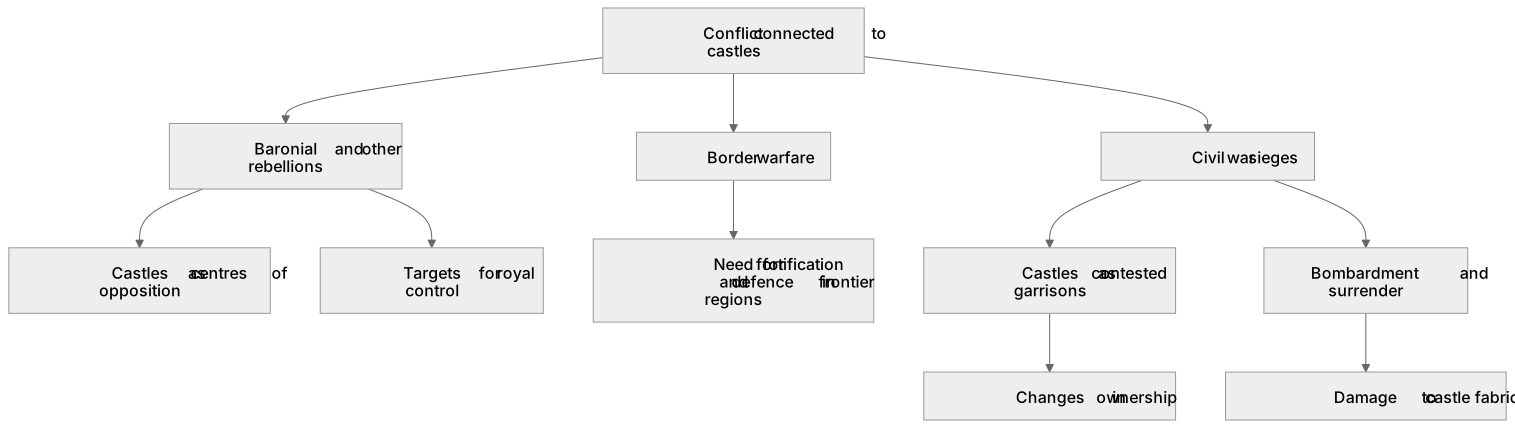
Kenilworth Castle's history is bound up with national conflict across the period c.1000–1750. Baronial and other rebellions saw castles become centres of opposition and targets for royal forces, so control of a stronghold mattered politically. Border warfare shaped which castles were fortified and how, because frontier regions needed defence against incursion. Civil war sieges, notably in the seventeenth century, turned castles into contested garrisons, with bombardment and surrender affecting their fabric. A learner should connect a given event type to its effect on a castle: rebellions raise questions of loyalty and control, border warfare drives fortification, and sieges test defences and cause damage. Recognising these links helps explain why a castle was strengthened, attacked or altered at particular times.
What earns the marks
- Links baronial and other rebellions to castles as centres of opposition and targets for royal control.
- Links border warfare to the need for fortification and defence in frontier regions.
- Links civil war sieges to castles as contested garrisons subject to bombardment and surrender.
- Explains how a named event type affected a castle's defences, ownership or fabric.
- Distinguishes between the different event types rather than treating all conflict as identical.
Common mistakes and how to put them right
Treats all conflict as the same.
Put it right: Distinguish rebellions, border warfare and civil war sieges by their causes and effects.
Assumes sieges only damaged castles.
Put it right: Sieges also changed ownership and prompted rebuilding or strengthening.
Ignores the link between event and castle.
Put it right: Connect each event type to a specific effect on defence or control.
Exam tips
- Name the event type clearly before explaining its effect on the castle.
- Give a concrete consequence, such as strengthened walls or a garrison's surrender.
- Keep examples within the period c.1000–1750 to stay inside the assessed scope.
Try the lesson
The start of the Castles: Form and Function c.1000–1750 (J410/12 and J410/13) - Key events associated with Kenilworth Castle at different times in its history: Connections to events including: baronial and other rebellions, border warfare, civil war sieges. lesson, made from checked teaching notes for this specification point.
Have a go first
In 1266 Kenilworth Castle was the base of rebels who held out against King Henry III. Which type of conflict does this episode belong to?
Listen
Kenilworth Castle's history is bound up with national conflict across the period c.1000–1750. Baronial and other rebellions saw castles become centres of opposition and targets for royal forces, so control of a stronghold mattered politically. Border warfare shaped which castles were fortified and how, because frontier regions needed defence against incursion. Civil war sieges, notably in the seventeenth century, turned castles into contested garrisons, with bombardment and surrender affecting their fabric. A learner should connect a given event type to its effect on a castle: rebellions raise questions of loyalty and control, border warfare drives fortification, and sieges test defences and cause damage. Recognising these links helps explain why a castle was strengthened, attacked or altered at particular times. A strong answer earns marks for these points. Links baronial and other rebellions to castles as centres of opposition and targets for royal control. Links border warfare to the need for fortification and defence in frontier regions. Links civil war sieges to castles as contested garrisons subject to bombardment and surrender. Explains how a named event type affected a castle's defences, ownership or fabric. Exam tip: Name the event type clearly before explaining its effect on the castle.
See it
Key words
Say what each word means before you turn the card.
Baronial and other rebellions
Try answering aloud or in your head before turning the card.
Border warfare
Try answering aloud or in your head before turning the card.
Civil war sieges
Try answering aloud or in your head before turning the card.
Castles as political and military strongholds
Try answering aloud or in your head before turning the card.
See every definition
- Baronial and other rebellions
- Events in which castles became centres of opposition and targets for royal forces, so control of a stronghold mattered politically.
- Border warfare
- Conflict that shaped which castles were fortified and how, because frontier regions needed defence against incursion.
- Civil war sieges
- Seventeenth-century events that turned castles into contested garrisons, with bombardment and surrender affecting their fabric.
- Castles as political and military strongholds
- Strongholds whose control mattered politically and whose defences were tested by sieges, causing damage.
Label the diagram
Some boxes have lost their names. Pick the right name for each number.
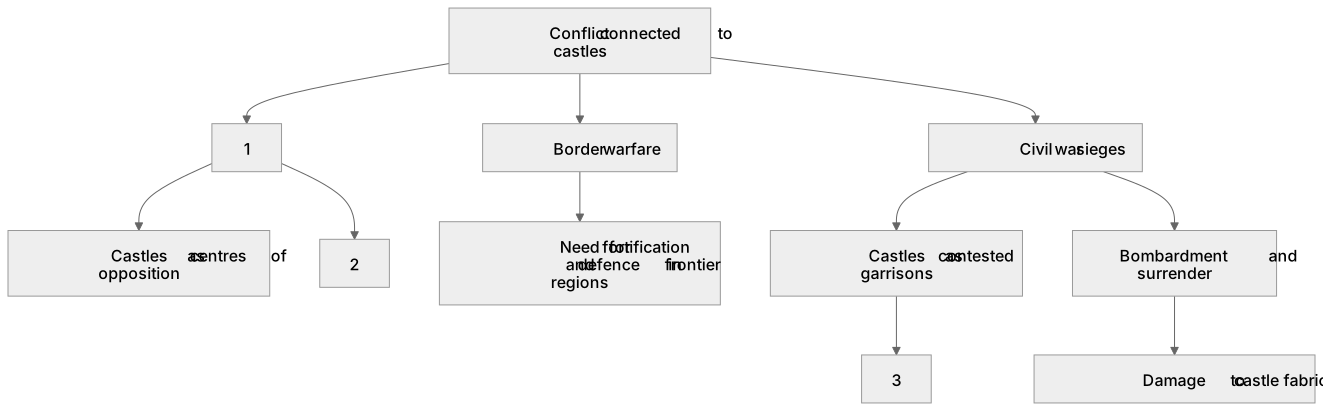
1Box 1
2Box 2
3Box 3
There is more to this lesson
The full lesson goes on to check your understanding and help you earn the marks. Create a free account to carry on, with your progress saved.
A week of Premium from your first lesson · Then the free plan continues · No card, no charge
Test your understanding of Castles: Form and Function c.1000–1750 (J410/12 and J410/13) - Key events associated with Kenilworth Castle at different times in its history: Connections to events including: baronial and other rebellions, border warfare, civil war sieges.
Active recall beats re-reading. Take an instant quiz now to test what you’ve learned and lock it into long-term memory.
A week of Premium from your first lesson · Then the free plan continues · No card, no charge