AQA · A-Level · Physical Education
Applied anatomy and physiology
Applied anatomy and physiology is the cornerstone of GCSE PE, exploring how the body responds to and recovers from exercise. Understanding the cardiovascular, respiratory, and muscular systems, along with the energy continuum, is crucial for both the theory exam and analysing your own practical performance.
- 6 min read
- 3 worked examples
- 4 practice questions
- 6 key terms
Study Notes
Overview
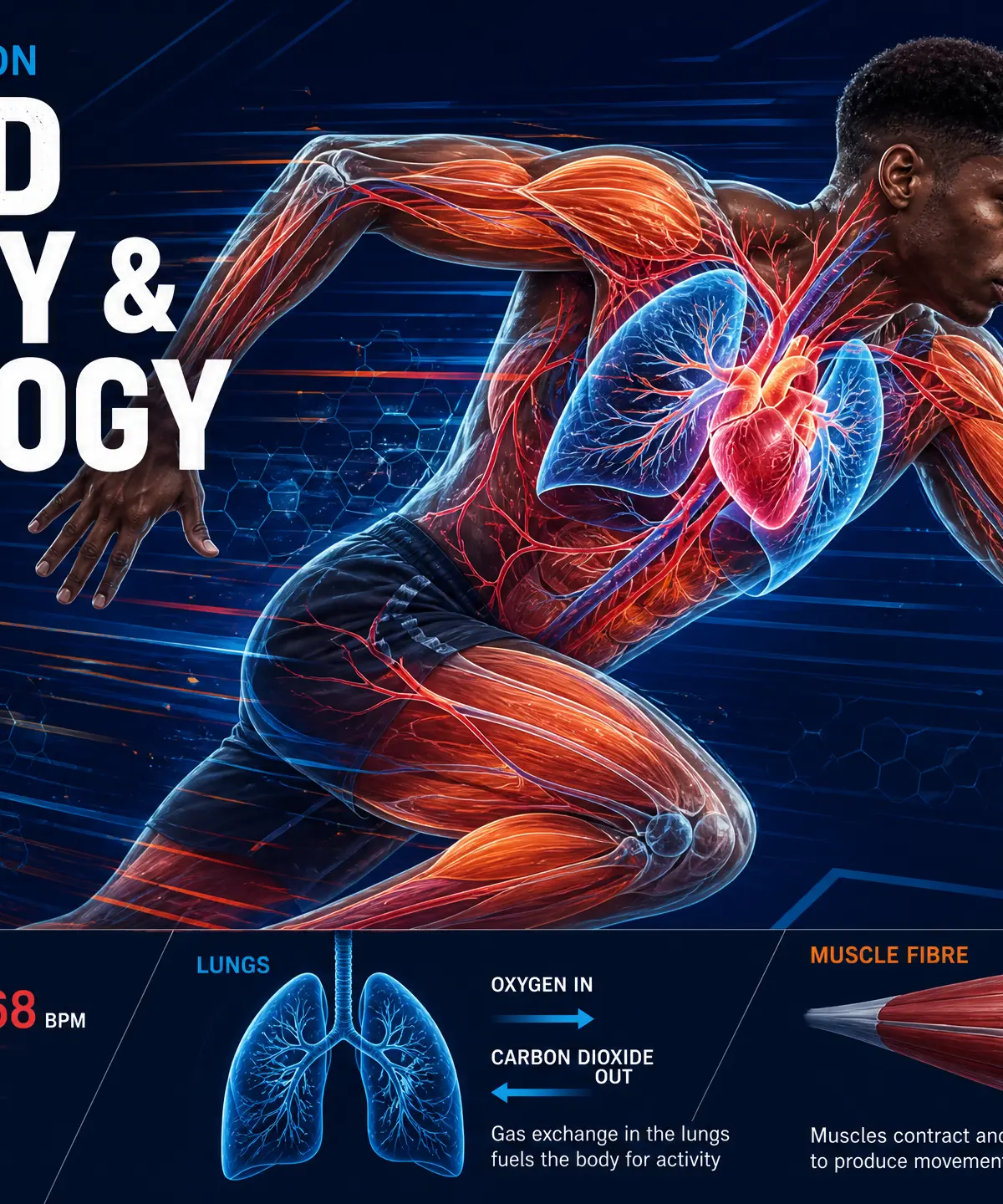
Applied anatomy and physiology covers the study of the musculo-skeletal, cardio-respiratory, and neuromuscular systems, as well as energy systems. It focuses on how these systems respond to exercise of varying intensities and durations, the recovery process, and the long-term adaptations resulting from training. This topic bridges the gap between biological theory and practical sporting performance.
Key Knowledge & Theory
The Cardio-Respiratory System
The cardiovascular and respiratory systems work in tandem to deliver oxygen to working muscles and remove carbon dioxide. During exercise, the demand for oxygen increases significantly.
Cardiac Output (Q) is the volume of blood pumped by the heart per minute. It is calculated by multiplying Heart Rate (HR) by Stroke Volume (SV).
Q = HR \times SV
When exercise begins, chemoreceptors detect rising carbon dioxide levels in the blood. They send impulses to the medulla oblongata, which stimulates the sympathetic nervous system to increase heart rate. Simultaneously, increased venous return stretches the heart walls, leading to a more forceful contraction and increased stroke volume (the Frank-Starling mechanism).
Similarly, Minute Ventilation (V_E) is the volume of air breathed in or out per minute. It is the product of Breathing Rate (f) and Tidal Volume (TV).
V_E = f \times TV
The Energy Systems
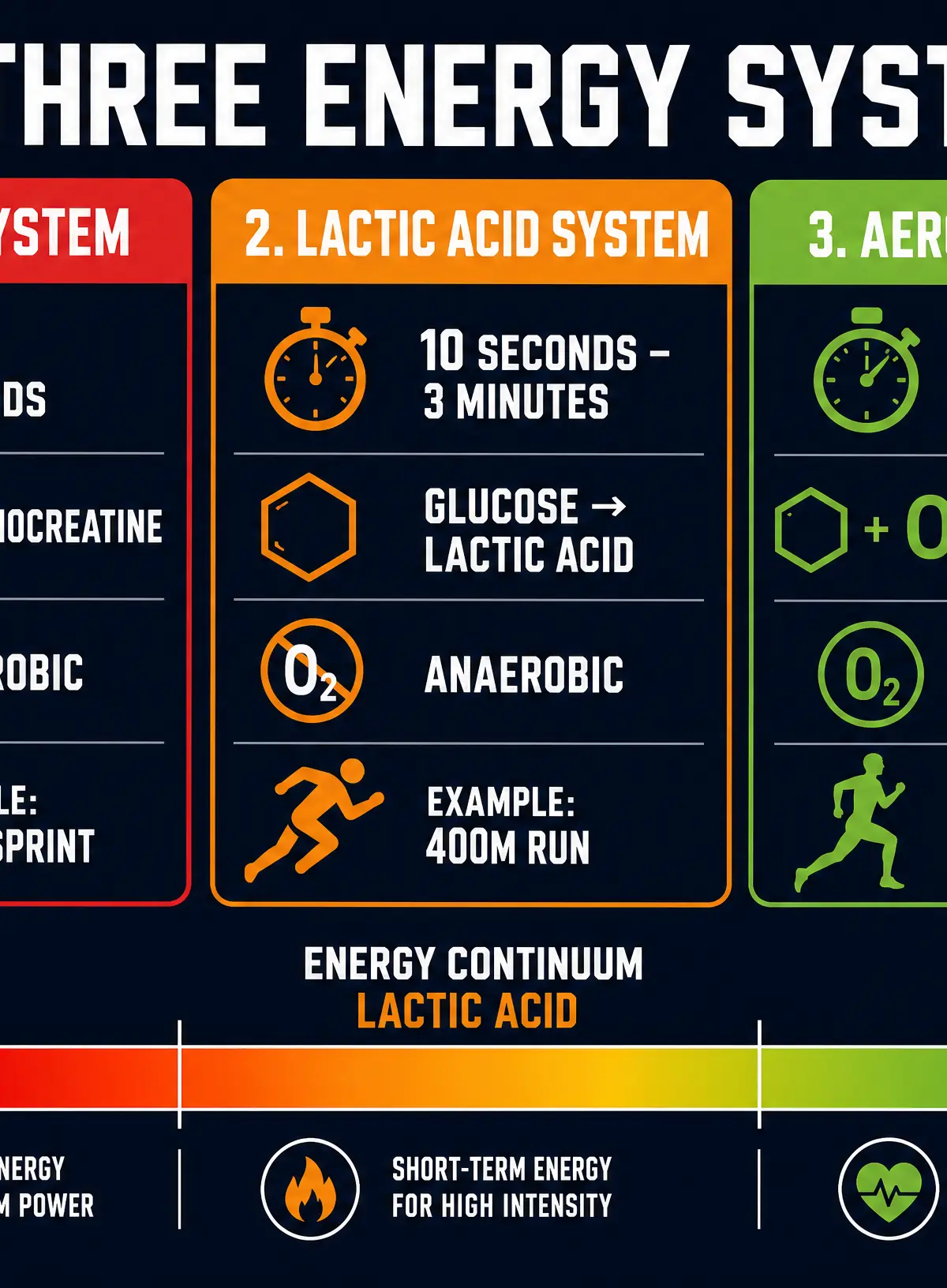
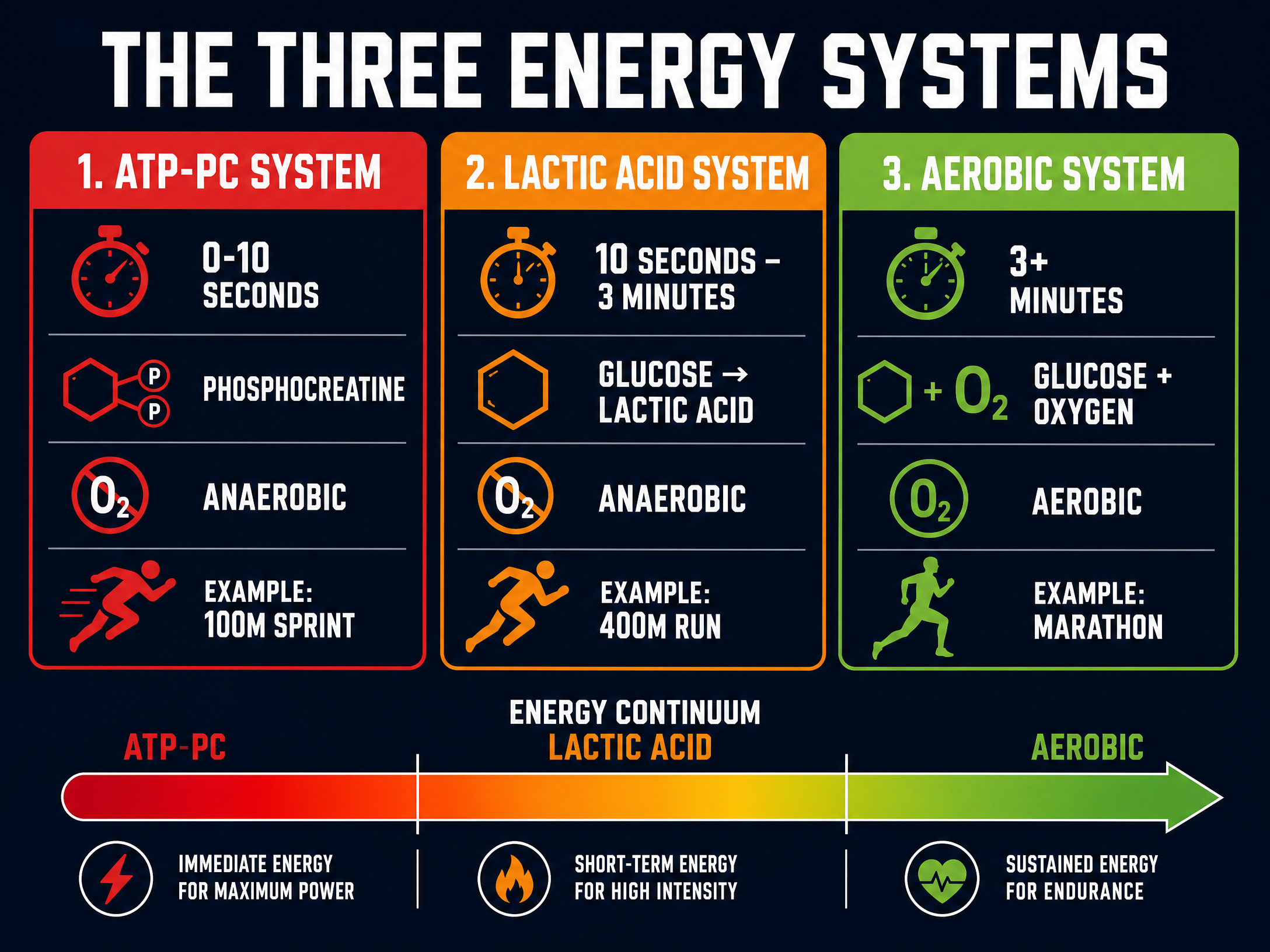
The body uses three energy systems to resynthesise ATP, the body's energy currency. These systems operate on a continuum, meaning all three are active at any given time, but one will be dominant depending on the intensity and duration of the exercise.
- ATP-PC System (Anaerobic): Provides immediate energy for maximum intensity activities lasting up to 10 seconds (e.g., 100m sprint, shot put). It uses phosphocreatine stored in the muscles.
- Lactic Acid System (Anaerobic Glycolysis): Provides energy for high-intensity activities lasting between 10 seconds and 3 minutes (e.g., 400m run). It breaks down glucose without oxygen, producing lactic acid as a fatiguing by-product.
- Aerobic System: Provides sustained energy for moderate to low-intensity activities lasting longer than 3 minutes (e.g., marathon running). It breaks down glucose (and fats) in the presence of oxygen, producing large amounts of ATP.
Muscle Fibre Types
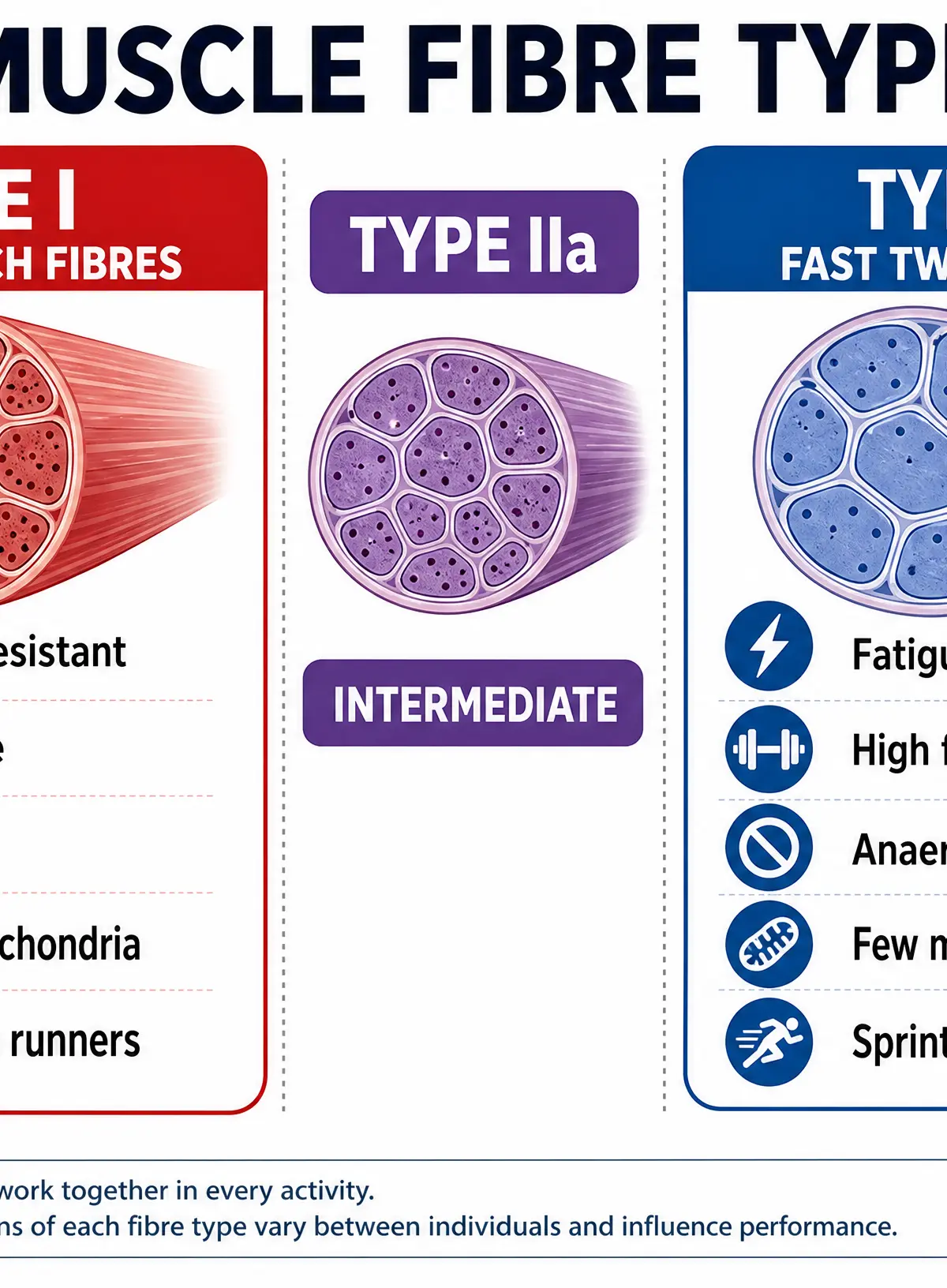
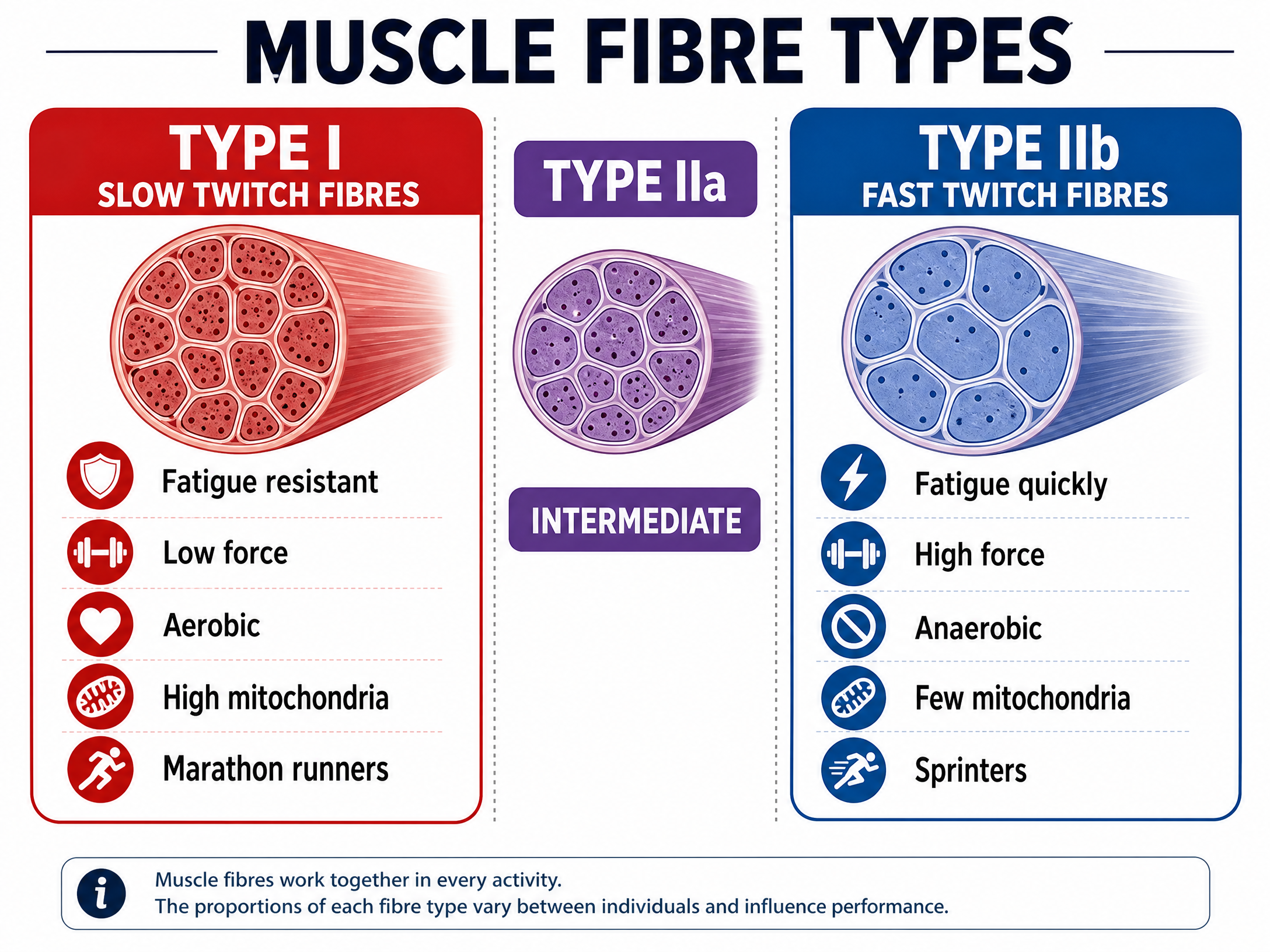
Muscles are made up of different types of fibres, each suited to different types of activity. The proportion of each fibre type is largely genetically determined but can be influenced by training.
- Type I (Slow Twitch): Fatigue-resistant, rely on aerobic respiration, have a high density of mitochondria and myoglobin (hence they are red). Ideal for endurance events like long-distance running.
- Type IIa (Fast Oxidative Glycolytic): Intermediate fibres that can produce moderate force and have moderate fatigue resistance. They can be trained to become more aerobic or more anaerobic.
- Type IIb (Fast Glycolytic): Produce maximum force very quickly but fatigue rapidly. They rely entirely on anaerobic respiration and have few mitochondria. Ideal for explosive events like sprinting and weightlifting.
Recovery and EPOC
After exercise, the body must return to its resting state. This process requires oxygen, leading to Excess Post-exercise Oxygen Consumption (EPOC). EPOC is used to:
- Resynthesise ATP and phosphocreatine stores (fast component).
- Remove lactic acid and convert it back to glucose or glycogen (slow component).
- Replenish myoglobin with oxygen.
- Maintain elevated heart and breathing rates to facilitate recovery.
Listen to the Podcast

Practical Application & Performance
Applying Theory to Sport
Examiners consistently reward candidates who can link physiological theory to specific sporting actions. When discussing energy systems, always provide a concrete example. For instance, rather than just stating the ATP-PC system is for short bursts, explain that a rugby player uses the ATP-PC system during a powerful tackle or a short, explosive sprint to break the defensive line.
Movement Analysis
Understanding anatomy is crucial for movement analysis. You must be able to identify the agonist (prime mover) and antagonist muscles during specific joint actions (e.g., flexion, extension, abduction, adduction) across different planes of movement (sagittal, frontal, transverse) and axes of rotation (transverse, sagittal, longitudinal).
Exam Component Preparation
Interpreting Data
A significant portion of the theory exam involves interpreting graphs and tables related to physiological responses. Practice reading graphs showing heart rate during exercise and recovery, or lactic acid accumulation over time. Always read the axes carefully, quote specific data points in your answer, and then use your physiological knowledge to explain why the trend occurs.
Command Words
Pay close attention to command words. 'Identify' requires a simple statement. 'Describe' needs a factual account. 'Explain' requires you to give reasons or mechanisms (the 'how' and 'why'). 'Evaluate' or 'Discuss' demands a balanced argument, often looking at pros and cons or comparing different systems.
Interactive Diagrams
1 interactive diagram to visualise key concepts
Conceptual Flow Outline
Neural Regulation of Heart Rate
Worked Examples
3 worked examples — open one to explore the question and available guidance.
Practice Questions
Test your understanding — click to reveal model answers
Identify the main energy system used by a gymnast when performing a vault that lasts 5 seconds.
Hint: Think about the duration and intensity. It's very short and explosive.
Describe the process of EPOC following a high-intensity interval training (HIIT) session. (3 marks)
Hint: What does EPOC stand for, and what two main things does the body need to 'repay' or remove?
Explain how the respiratory system responds to the start of exercise to meet the demands of the working muscles. (4 marks)
Hint: Start with the receptors, then the control centre, then the muscles involved in breathing.
Evaluate the importance of a high VO2 max for a midfield football player compared to a goalkeeper. (6 marks)
Hint: Define VO2 max first. Then look at the distance covered and intensity profile of both positions.