AQA · GCSE · Religious Studies
Course version: 8062 · Version from Sept 2018
The four aims of human life: dharma, artha, kama, moksha.
Full specification wording
Hinduism - 3.1.4.1 Beliefs and teachings: The four aims of human life: dharma, artha, kama, moksha.
In Hinduism, human life is guided by four fundamental aims (purusharthas) that balance spiritual and material needs.
- Point 18 of 19
- 4 key terms
Study notes
From the teaching notes for this specification point.
The idea
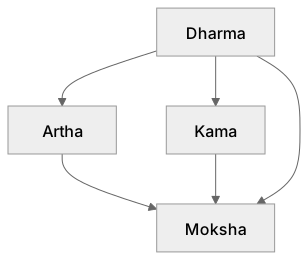
In Hinduism, human life is guided by four fundamental aims (purusharthas) that balance spiritual and material needs. Dharma is the foundational duty to live ethically and righteously, guiding all other pursuits. Artha involves the legitimate pursuit of wealth, career, and material prosperity to support oneself and society, such as earning an honest living. Kama is the pursuit of sensory pleasure, love, and emotional fulfilment, enjoyed responsibly within the bounds of dharma. Finally, moksha is the ultimate spiritual goal: liberation from the cycle of rebirth (samsara) and union with the divine. Hindus strive to balance dharma, artha, and kama during their worldly lives to eventually achieve moksha.
What earns the marks
- Define dharma as ethical duty, righteousness, or moral obligation.
- Define artha as the pursuit of material wealth, prosperity, and career success.
- Define kama as the pursuit of pleasure, love, and emotional fulfilment.
- Define moksha as the ultimate goal of liberation from the cycle of samsara.
- Explain how dharma regulates both artha and kama to ensure they are pursued ethically and do not hinder spiritual progress.
Common mistakes and how to put them right
Thinking kama only refers to negative or selfish desires.
Put it right: Kama includes positive emotional fulfilment, love, and aesthetic pleasure when pursued ethically.
Believing artha is discouraged in Hinduism.
Put it right: Artha is a necessary and respected aim, provided wealth is acquired honestly and used to support family and society.
Confusing moksha with a temporary heavenly afterlife.
Put it right: Moksha is the permanent liberation from the cycle of rebirth (samsara).
Exam tips
- Use the Sanskrit terms (dharma, artha, kama, moksha) confidently and provide clear English translations for each.
- Explain the relationship between the aims, specifically how dharma acts as a moral foundation for artha and kama.
- When evaluating the importance of the aims, contrast the ultimate, long-term goal of moksha with the practical, worldly goals of artha and kama.
Try the lesson
The start of the Hinduism - 3.1.4.1 Beliefs and teachings: The four aims of human life: dharma, artha, kama, moksha. lesson, made from teaching notes for this specification point.
Have a go first
Which of the following correctly lists the four aims of human life (purusharthas) in Hinduism?
Listen
In Hinduism, human life is guided by four fundamental aims (purusharthas) that balance spiritual and material needs. Dharma is the foundational duty to live ethically and righteously, guiding all other pursuits. Artha involves the legitimate pursuit of wealth, career, and material prosperity to support oneself and society, such as earning an honest living. Kama is the pursuit of sensory pleasure, love, and emotional fulfilment, enjoyed responsibly within the bounds of dharma. Finally, moksha is the ultimate spiritual goal: liberation from the cycle of rebirth (samsara) and union with the divine. Hindus strive to balance dharma, artha, and kama during their worldly lives to eventually achieve moksha. A strong answer earns marks for these points. Define dharma as ethical duty, righteousness, or moral obligation. Define artha as the pursuit of material wealth, prosperity, and career success. Define kama as the pursuit of pleasure, love, and emotional fulfilment. Define moksha as the ultimate goal of liberation from the cycle of samsara. A common slip: Thinking kama only refers to negative or selfish desires. Instead, Kama includes positive emotional fulfilment, love, and aesthetic pleasure when pursued ethically. Exam tip: Use the Sanskrit terms (dharma, artha, kama, moksha) confidently and provide clear English translations for each.
See it
Key words
Say what each word means before you turn the card.
Purusharthas
Try answering aloud or in your head before turning the card.
Dharma
Try answering aloud or in your head before turning the card.
Artha
Try answering aloud or in your head before turning the card.
Moksha
Try answering aloud or in your head before turning the card.
See every definition
- Purusharthas
- The four fundamental aims that guide human life in Hinduism, balancing spiritual and material needs.
- Dharma
- The foundational duty to live ethically and righteously, guiding all other pursuits.
- Artha
- The legitimate pursuit of wealth, career and material prosperity to support oneself and society.
- Moksha
- The ultimate spiritual goal of liberation from the cycle of rebirth and union with the divine.
Label the diagram
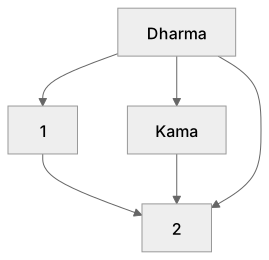
Some boxes have lost their names. Pick the right name for each number.
1Box 1
2Box 2
There is more to this lesson
The full lesson goes on to check your understanding and help you earn the marks. Create a free account to carry on, with your progress saved.
A week of Premium from your first lesson · Then the free plan continues · No card, no charge
Test your understanding of Hinduism - 3.1.4.1 Beliefs and teachings: The four aims of human life: dharma, artha, kama, moksha.
Active recall beats re-reading. Take an instant quiz now to test what you’ve learned and lock it into long-term memory.
A week of Premium from your first lesson · Then the free plan continues · No card, no charge