AQA · GCSE · Religious Studies
Course version: 8062 · Version from Sept 2018
Hinduism - 3.1.4.1 Beliefs and teachings: within the heart
In Hindu theology, the divine is not only a vast cosmic force but is also intimately present within the heart of every living being.
- Point 5 of 19
- 4 key terms
Study notes
From the teaching notes for this specification point.
The idea
In Hindu theology, the divine is not only a vast cosmic force but is also intimately present within the heart of every living being. This concept is known as Antaryami, which translates to the 'controller within'. Hindus believe that God resides in the spiritual heart, guiding individuals and witnessing their actions. This presence within the heart is closely connected to the Atman, or the eternal soul. Because the divine dwells within, Hindus believe that true spiritual awakening and connection with God can be achieved through inward meditation and self-reflection, rather than just outward rituals. Greeting others with 'Namaste' acknowledges this divine presence within the heart of the other person, showing deep spiritual respect.
What earns the marks
- Identify the concept of Antaryami as the presence of the divine within the heart.
- Explain the relationship between the divine presence in the heart and the Atman (soul).
- Describe how the belief in God within the heart influences Hindu practices, such as meditation and self-reflection.
- Explain how the greeting 'Namaste' reflects the belief that the divine resides within the heart of everyone.
Common mistakes and how to put them right
Taking 'within the heart' as a purely biological reference.
Put it right: Clarify that this refers to the spiritual heart or the core of a person's being, not the physical organ.
Believing that God is only external.
Put it right: Emphasise that Hinduism teaches God is both transcendent (beyond) and immanent (within the heart).
Confusing the mind with the heart in Hindu theology.
Put it right: Specify that the divine presence and the Atman are traditionally located within the spiritual heart, which is the seat of consciousness.
Exam tips
- Use the term 'Antaryami' to specifically describe the aspect of God that dwells within the heart.
- Link the concept of God within the heart to the practice of yoga and meditation, which aim to realise this inner divinity.
- When evaluating the nature of God, contrast the intimate presence within the heart with the vast, omnipresent nature of Brahman.
Try the lesson
The start of the Hinduism - 3.1.4.1 Beliefs and teachings: within the heart lesson, made from teaching notes for this specification point.
Have a go first
In Hinduism, which term specifically describes the belief that the divine is present 'within the heart' of all living beings?
Listen
In Hindu theology, the divine is not only a vast cosmic force but is also intimately present within the heart of every living being. This concept is known as Antaryami, which translates to the 'controller within'. Hindus believe that God resides in the spiritual heart, guiding individuals and witnessing their actions. This presence within the heart is closely connected to the Atman, or the eternal soul. Because the divine dwells within, Hindus believe that true spiritual awakening and connection with God can be achieved through inward meditation and self-reflection, rather than just outward rituals. Greeting others with 'Namaste' acknowledges this divine presence within the heart of the other person, showing deep spiritual respect. A strong answer earns marks for these points. Identify the concept of Antaryami as the presence of the divine within the heart. Explain the relationship between the divine presence in the heart and the Atman (soul). Describe how the belief in God within the heart influences Hindu practices, such as meditation and self-reflection. Explain how the greeting 'Namaste' reflects the belief that the divine resides within the heart of everyone. A common slip: Taking 'within the heart' as a purely biological reference. Instead, Clarify that this refers to the spiritual heart or the core of a person's being, not the physical organ. Exam tip: Use the term 'Antaryami' to specifically describe the aspect of God that dwells within the heart.
See it
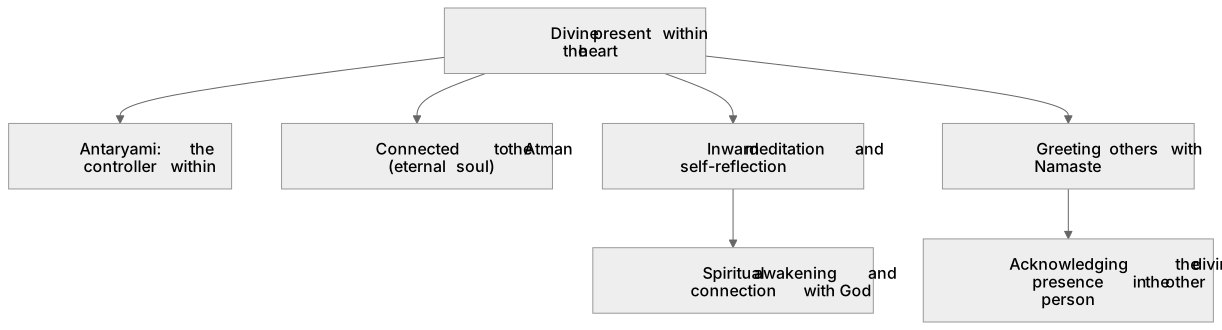
Key words
Say what each word means before you turn the card.
Antaryami
Try answering aloud or in your head before turning the card.
Atman
Try answering aloud or in your head before turning the card.
Namaste
Try answering aloud or in your head before turning the card.
Immanence
Try answering aloud or in your head before turning the card.
See every definition
- Antaryami
- The concept of the divine being intimately present within the heart of every living being, translating to the 'controller within'.
- Atman
- The eternal soul, closely connected to the presence of the divine within the spiritual heart.
- Namaste
- A greeting that acknowledges the divine presence within the heart of the other person, showing deep spiritual respect.
- Immanence
- The belief that God is present within the heart, as well as being transcendent and beyond.
Label the diagram
Some boxes have lost their names. Pick the right name for each number.
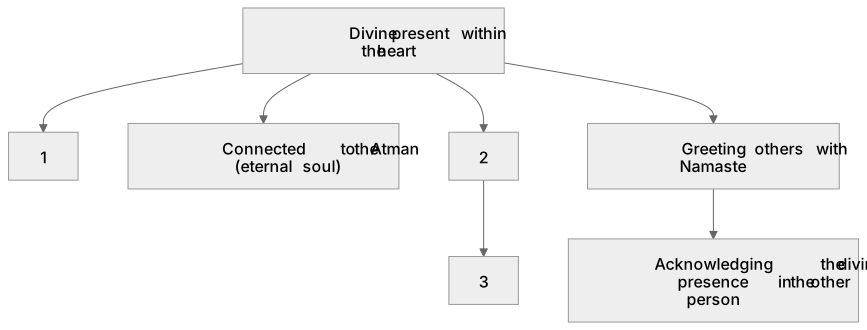
1Box 1
2Box 2
3Box 3
There is more to this lesson
The full lesson goes on to check your understanding and help you earn the marks. Create a free account to carry on, with your progress saved.
A week of Premium from your first lesson · Then the free plan continues · No card, no charge
Test your understanding of Hinduism - 3.1.4.1 Beliefs and teachings: within the heart
Active recall beats re-reading. Take an instant quiz now to test what you’ve learned and lock it into long-term memory.
A week of Premium from your first lesson · Then the free plan continues · No card, no charge