AQA · GCSE · Religious Studies
Course version: 8062 · Version from Sept 2018
Hinduism - 3.1.4.2 Practices: devotion (bhakti yoga).
Bhakti yoga is the path of loving devotion to a personal deity, considered by many Hindus as the most accessible route to achieving moksha.
- Point 18 of 26
- 4 key terms
Study notes
From the teaching notes for this specification point.
The idea
Bhakti yoga is the path of loving devotion to a personal deity, considered by many Hindus as the most accessible route to achieving moksha. Unlike the rigorous meditation of astanga yoga, bhakti focuses on cultivating a deep, emotional connection with God through acts of worship, prayer, and chanting. Practitioners might express their devotion by offering puja (worship) at a home shrine, singing bhajans (devotional songs), or participating in festivals dedicated to deities like Krishna, Rama, or Shiva. This path emphasises that God's grace is available to everyone, regardless of caste, gender, or intellectual ability, making it a highly popular and practical spiritual practice for everyday Hindus seeking liberation from samsara.
What earns the marks
- Bhakti yoga is the spiritual path of loving devotion and surrender to a personal deity.
- Bhakti yoga emphasises the grace of the deity in helping the devotee overcome karma and escape the cycle of samsara.
Common mistakes and how to put them right
Assuming bhakti yoga is only practiced in temples.
Put it right by explaining that daily puja at home shrines is a central part of bhakti.
Confusing bhakti yoga with karma yoga.
Put it right by distinguishing bhakti as loving devotion to a deity, whereas karma yoga is the path of selfless action.
Claiming bhakti yoga is only for specific castes.
Put it right by highlighting that bhakti is universally accessible to all Hindus regardless of social status.
Exam tips
- Provide specific examples of bhakti practices, such as offering flowers during puja or singing kirtan, to support your explanations.
- Explain why bhakti yoga is often viewed as the most suitable path for people living busy, modern lives.
- Use the Bhagavad Gita as a source of wisdom, as it heavily promotes the path of loving devotion to Krishna.
Try the lesson
The start of the Hinduism - 3.1.4.2 Practices: devotion (bhakti yoga). lesson, made from teaching notes for this specification point.
Have a go first
What is the primary focus of bhakti yoga in Hinduism?
Listen
Bhakti yoga is the path of loving devotion to a personal deity, considered by many Hindus as the most accessible route to achieving moksha. Unlike the rigorous meditation of astanga yoga, bhakti focuses on cultivating a deep, emotional connection with God through acts of worship, prayer, and chanting. Practitioners might express their devotion by offering puja (worship) at a home shrine, singing bhajans (devotional songs), or participating in festivals dedicated to deities like Krishna, Rama, or Shiva. This path emphasises that God's grace is available to everyone, regardless of caste, gender, or intellectual ability, making it a highly popular and practical spiritual practice for everyday Hindus seeking liberation from samsara. A strong answer earns marks for these points. Bhakti yoga is the spiritual path of loving devotion and surrender to a personal deity. Bhakti yoga emphasises the grace of the deity in helping the devotee overcome karma and escape the cycle of samsara. A common slip: Assuming bhakti yoga is only practiced in temples. Instead, explaining that daily puja at home shrines is a central part of bhakti. Exam tip: Provide specific examples of bhakti practices, such as offering flowers during puja or singing kirtan, to support your explanations.
See it
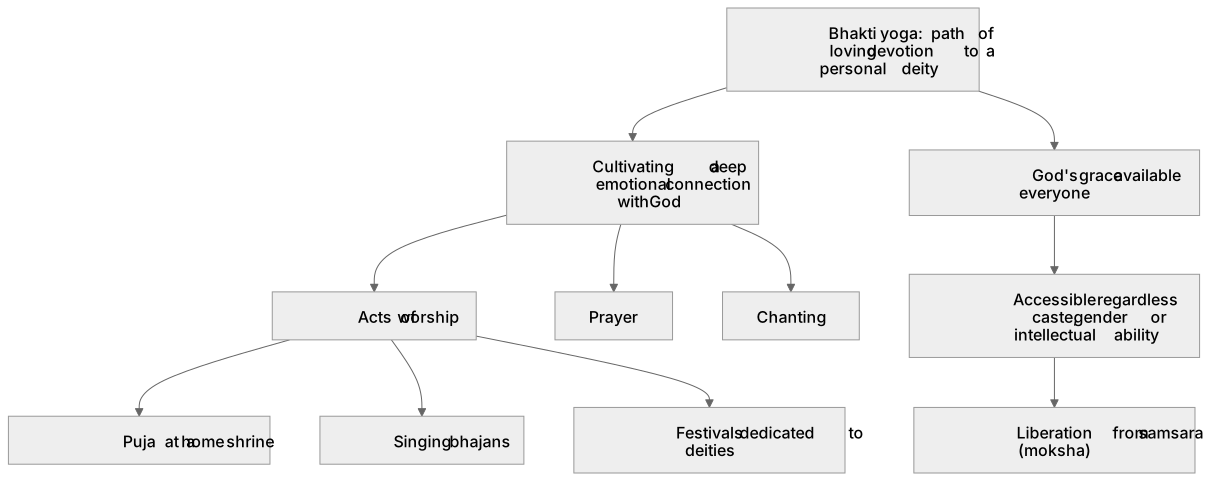
Key words
Say what each word means before you turn the card.
Devotion and worship
Try answering aloud or in your head before turning the card.
Moksha and grace
Try answering aloud or in your head before turning the card.
Personal deities (Saguna Brahman)
Try answering aloud or in your head before turning the card.
Accessibility of salvation
Try answering aloud or in your head before turning the card.
See every definition
- Devotion and worship
- Bhakti yoga is the path of loving devotion to a personal deity, expressed through acts of worship, prayer and chanting.
- Moksha and grace
- God's grace is available to everyone and helps the devotee overcome karma and escape the cycle of samsara, achieving moksha.
- Personal deities (Saguna Brahman)
- Bhakti focuses on cultivating a deep, emotional connection with God, with festivals dedicated to deities like Krishna, Rama or Shiva.
- Accessibility of salvation
- Bhakti is widely considered the most accessible path to moksha because it does not require extensive scriptural study or rigorous physical asceticism.
Label the diagram
Some boxes have lost their names. Pick the right name for each number.
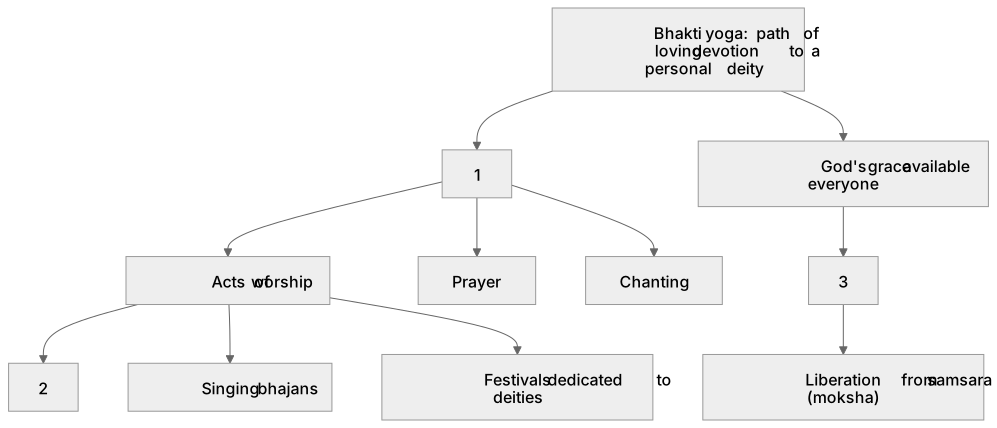
1Box 1
2Box 2
3Box 3
There is more to this lesson
The full lesson goes on to check your understanding and help you earn the marks. Create a free account to carry on, with your progress saved.
A week of Premium from your first lesson · Then the free plan continues · No card, no charge
Test your understanding of Hinduism - 3.1.4.2 Practices: devotion (bhakti yoga).
Active recall beats re-reading. Take an instant quiz now to test what you’ve learned and lock it into long-term memory.
A week of Premium from your first lesson · Then the free plan continues · No card, no charge