AQA · GCSE · Religious Studies
Course version: 8062 · Version from Sept 2018
Key moral principles including justice, healing the world, charity and…
Full specification wording
Judaism - 3.1.6.1 Beliefs and teachings: Key moral principles including justice, healing the world, charity and kindness to others.
Judaism is built upon key moral principles that guide daily life and ethical decision-making.
- Point 12 of 15
- 4 key terms
Study notes
From the teaching notes for this specification point.
The idea
Judaism is built upon key moral principles that guide daily life and ethical decision-making. Justice (Tzedek) requires pursuing fairness and equality, often expressed through the prophetic command to 'let justice roll on like a river'. Healing the world (Tikkun Olam) is the active responsibility to repair societal brokenness through social action, environmental care, and volunteering. Charity (Tzedakah) is viewed not merely as generosity but as a strict legal obligation to give a proportion of wealth to those in need. Finally, kindness to others (Chesed) involves acts of loving-kindness, such as visiting the sick or comforting mourners, reflecting God's own compassion towards humanity.
What earns the marks
- Define Tzedek (justice) as a fundamental Jewish obligation to ensure fairness and uphold the law in society.
- Explain Tikkun Olam (healing the world) as the duty to take action to improve the world, often through environmental or social justice initiatives.
- Describe Tzedakah (charity) as a mandatory act of justice rather than optional philanthropy, typically involving giving ten percent of one's income.
- Illustrate Chesed (kindness to others) with practical examples, such as hospitality, supporting the vulnerable, and showing compassion.
Common mistakes and how to put them right
Translating Tzedakah simply as 'charity' in the Western sense.
Put it right by explaining it stems from the Hebrew word for justice and is a religious obligation.
Treating Tikkun Olam as a purely modern, secular concept.
Put it right by linking it to traditional Jewish teachings about partnering with God to sustain creation.
Confusing Chesed and Tzedakah.
Put it right by distinguishing Chesed as acts of loving-kindness (giving time or emotional support) and Tzedakah as the obligation to give material wealth.
Exam tips
- Use the Hebrew terms (Tzedek, Tikkun Olam, Tzedakah, Chesed) alongside their English translations to demonstrate deeper subject knowledge.
- Provide concrete examples of how a Jewish person might practice Tikkun Olam today, such as participating in a climate change charity or a food bank.
- Link these moral principles to the concept of Pikuach Nefesh (saving a life) when discussing Jewish ethical priorities in evaluation questions.
Try the lesson
The start of the Judaism - 3.1.6.1 Beliefs and teachings: Key moral principles including justice, healing the world, charity and kindness to others. lesson, made from teaching notes for this specification point.
Have a go first
Which Hebrew term refers to the key Jewish moral principle of 'healing the world' or 'repairing the world'?
Listen
Judaism is built upon key moral principles that guide daily life and ethical decision-making. Justice (Tzedek) requires pursuing fairness and equality, often expressed through the prophetic command to 'let justice roll on like a river'. Healing the world (Tikkun Olam) is the active responsibility to repair societal brokenness through social action, environmental care, and volunteering. Charity (Tzedakah) is viewed not merely as generosity but as a strict legal obligation to give a proportion of wealth to those in need. Finally, kindness to others (Chesed) involves acts of loving-kindness, such as visiting the sick or comforting mourners, reflecting God's own compassion towards humanity. A strong answer earns marks for these points. Define Tzedek (justice) as a fundamental Jewish obligation to ensure fairness and uphold the law in society. Explain Tikkun Olam (healing the world) as the duty to take action to improve the world, often through environmental or social justice initiatives. Describe Tzedakah (charity) as a mandatory act of justice rather than optional philanthropy, typically involving giving ten percent of one's income. Illustrate Chesed (kindness to others) with practical examples, such as hospitality, supporting the vulnerable, and showing compassion. A common slip: Translating Tzedakah simply as 'charity' in the Western sense. Instead, explaining it stems from the Hebrew word for justice and is a religious obligation. Exam tip: Use the Hebrew terms (Tzedek, Tikkun Olam, Tzedakah, Chesed) alongside their English translations to demonstrate deeper subject knowledge.
See it
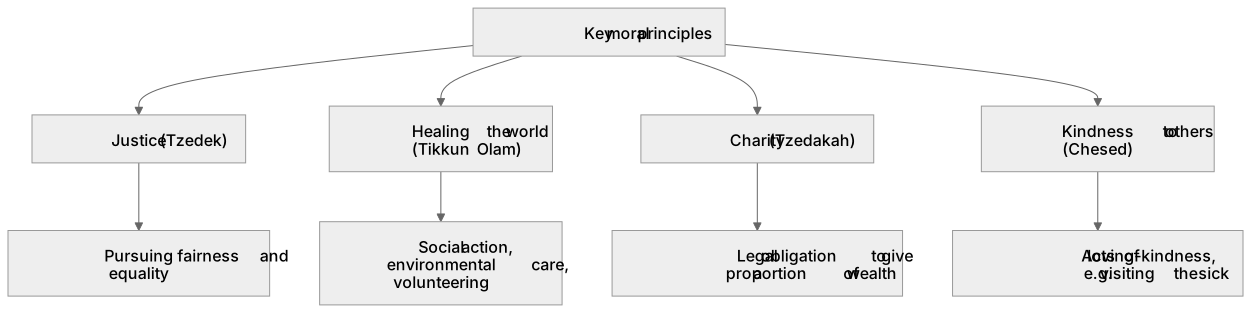
Key words
Say what each word means before you turn the card.
Tzedek
Try answering aloud or in your head before turning the card.
Tikkun Olam
Try answering aloud or in your head before turning the card.
Tzedakah
Try answering aloud or in your head before turning the card.
Chesed
Try answering aloud or in your head before turning the card.
See every definition
- Tzedek
- A fundamental Jewish obligation to ensure fairness and uphold the law in society.
- Tikkun Olam
- The duty to take action to improve the world, often through environmental or social justice initiatives.
- Tzedakah
- A mandatory act of justice rather than optional philanthropy, typically involving giving ten percent of one's income.
- Chesed
- Acts of loving-kindness, such as hospitality, supporting the vulnerable, and showing compassion.
Label the diagram
Some boxes have lost their names. Pick the right name for each number.
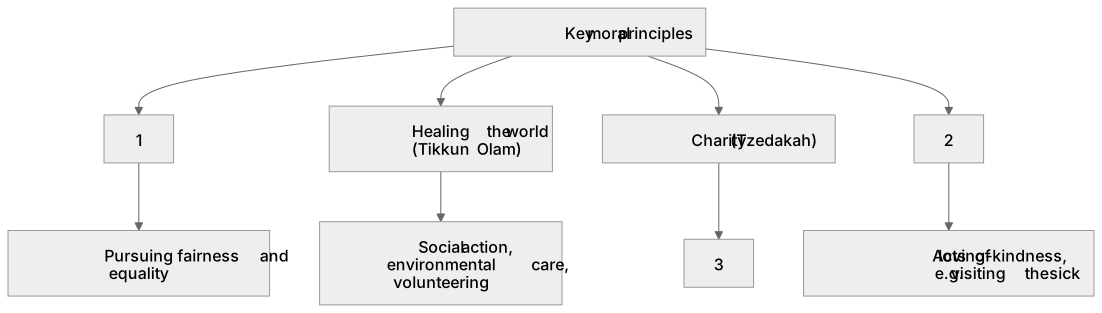
1Box 1
2Box 2
3Box 3
There is more to this lesson
The full lesson goes on to check your understanding and help you earn the marks. Create a free account to carry on, with your progress saved.
A week of Premium from your first lesson · Then the free plan continues · No card, no charge
Test your understanding of Judaism - 3.1.6.1 Beliefs and teachings: Key moral principles including justice, healing the world, charity and kindness to others.
Active recall beats re-reading. Take an instant quiz now to test what you’ve learned and lock it into long-term memory.
A week of Premium from your first lesson · Then the free plan continues · No card, no charge