AQA · GCSE · Religious Studies
Course version: 8062 · Version from Sept 2018
Judaism - 3.1.6.1 Beliefs and teachings: The Covenant and the mitzvot
A covenant is a binding agreement between God and the Jewish people, establishing a unique relationship.
- Point 9 of 15
- 2 key terms
Study notes
From the teaching notes for this specification point.
The idea
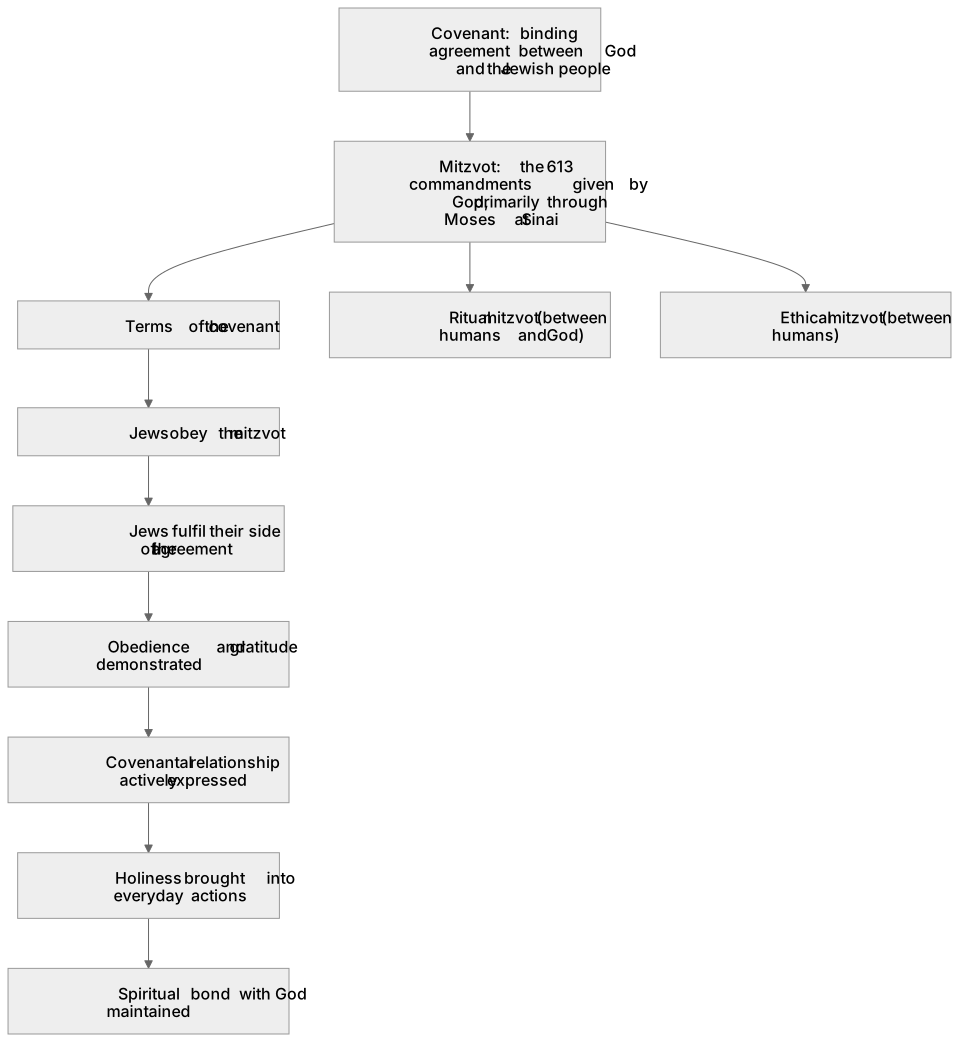
A covenant is a binding agreement between God and the Jewish people, establishing a unique relationship. The mitzvot (singular: mitzvah) are the 613 commandments given by God, primarily through Moses at Sinai, which form the terms of this covenant. By obeying the mitzvot, Jews fulfil their side of the agreement, demonstrating obedience and gratitude. These laws cover all aspects of life, from dietary rules (kashrut) to ethical behaviour (tzedakah). Keeping the mitzvot is not just about following rules; it is the active expression of the covenantal relationship, bringing holiness into everyday actions and maintaining the spiritual bond with God.
What earns the marks
- Define 'covenant' as a sacred, binding agreement between God and the Jewish people.
- Explain that the mitzvot are the 613 commandments found in the Torah that guide Jewish life.
- Connect the two concepts: observing the mitzvot is the practical way Jews fulfil their covenantal duties.
- Distinguish between ritual mitzvot (between humans and God) and ethical mitzvot (between humans).
Common mistakes and how to put them right
Stating there are only 10 mitzvot.
Put it right: Clarify that while the Ten Commandments are central, there are 613 mitzvot in total within the Torah.
Viewing the covenant as a purely historical event.
Put it right: Explain that the covenant is an ongoing, living relationship maintained daily through the mitzvot.
Confusing 'mitzvot' with 'good deeds' in a secular sense.
Put it right: Define mitzvot specifically as divine commandments given by God, not just general acts of kindness.
Exam tips
- Use the term 'mitzvot' rather than just 'rules' or 'laws' to demonstrate subject-specific vocabulary.
- When evaluating the importance of the covenant, use examples of specific mitzvot (like keeping kosher or observing Shabbat) to illustrate your points.
- Link the concept of the covenant to the idea of Jews being the 'chosen people', explaining this means chosen for responsibility, not privilege.
Try the lesson
The start of the Judaism - 3.1.6.1 Beliefs and teachings: The Covenant and the mitzvot lesson, made from teaching notes for this specification point.
Have a go first
In Judaism, what is the meaning of the term 'mitzvot' in the context of the Covenant?
Listen
A covenant is a binding agreement between God and the Jewish people, establishing a unique relationship. The mitzvot (singular: mitzvah) are the 613 commandments given by God, primarily through Moses at Sinai, which form the terms of this covenant. By obeying the mitzvot, Jews fulfil their side of the agreement, demonstrating obedience and gratitude. These laws cover all aspects of life, from dietary rules (kashrut) to ethical behaviour (tzedakah). Keeping the mitzvot is not just about following rules; it is the active expression of the covenantal relationship, bringing holiness into everyday actions and maintaining the spiritual bond with God. A strong answer earns marks for these points. Define 'covenant' as a sacred, binding agreement between God and the Jewish people. Explain that the mitzvot are the 613 commandments found in the Torah that guide Jewish life. Connect the two concepts: observing the mitzvot is the practical way Jews fulfil their covenantal duties. Distinguish between ritual mitzvot (between humans and God) and ethical mitzvot (between humans). A common slip: Stating there are only 10 mitzvot. Instead, Clarify that while the Ten Commandments are central, there are 613 mitzvot in total within the Torah. Exam tip: Use the term 'mitzvot' rather than just 'rules' or 'laws' to demonstrate subject-specific vocabulary.
See it
Key words
Say what each word means before you turn the card.
Covenant
Try answering aloud or in your head before turning the card.
Mitzvot
Try answering aloud or in your head before turning the card.
See every definition
- Covenant
- A binding agreement between God and the Jewish people, establishing a unique relationship.
- Mitzvot
- The 613 commandments given by God, primarily through Moses at Sinai, which form the terms of this covenant.
Label the diagram
Some boxes have lost their names. Pick the right name for each number.
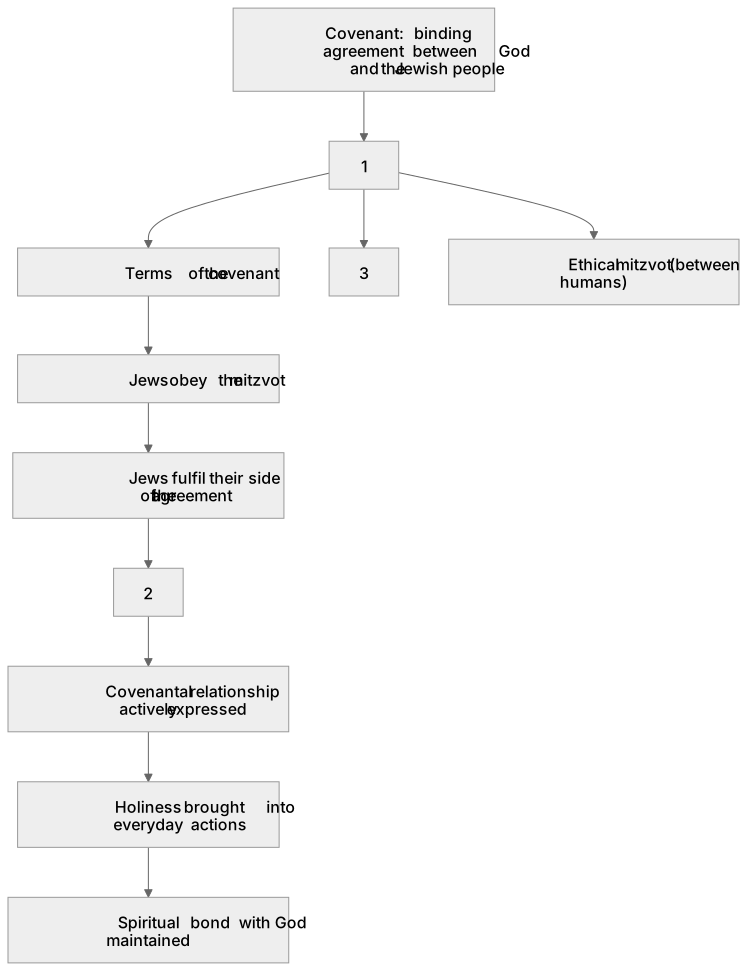
1Box 1
2Box 2
3Box 3
There is more to this lesson
The full lesson goes on to check your understanding and help you earn the marks. Create a free account to carry on, with your progress saved.
A week of Premium from your first lesson · Then the free plan continues · No card, no charge
Test your understanding of Judaism - 3.1.6.1 Beliefs and teachings: The Covenant and the mitzvot
Active recall beats re-reading. Take an instant quiz now to test what you’ve learned and lock it into long-term memory.
A week of Premium from your first lesson · Then the free plan continues · No card, no charge