AQA · GCSE · Religious Studies
Course version: 8062 · Version from Sept 2018
Judaism - 3.1.6.1 Beliefs and teachings: The nature of God:
In Judaism, the nature of God is fundamentally monotheistic, defining God as One, indivisible, and the sole object of worship, as declared in the Shema.
- Point 2 of 15
- 4 key terms
Study notes
From the teaching notes for this specification point.
The idea
In Judaism, the nature of God is fundamentally monotheistic, defining God as One, indivisible, and the sole object of worship, as declared in the Shema. God is revered as the Creator of the universe out of nothing (ex nihilo), demonstrating omnipotence and omnipresence. Furthermore, God is understood as the Law-Giver, having provided the Torah and its mitzvot to Moses at Mount Sinai to guide human behaviour. Finally, God is the ultimate Judge, evaluating human actions with a perfect balance of justice and mercy, particularly highlighted during the festival of Rosh Hashanah. These attributes collectively shape how Jewish people perceive their relationship with the divine.
What earns the marks
- Explain the concept of God as One (monotheism), emphasising that God is an indivisible unity without physical form.
- Describe God's role as Creator, responsible for the universe's existence and its ongoing sustenance.
- Discuss God as the Law-Giver who revealed the 613 mitzvot to the Jewish people, establishing a moral and religious framework.
- Analyse God's role as Judge, balancing divine justice (Din) with divine mercy (Rachamim) in evaluating human deeds.
Common mistakes and how to put them right
Describing God in physical or human terms.
Put it right by emphasising that Judaism teaches God is incorporeal and without physical form.
Viewing God's justice as purely punitive.
Put it right by explaining that God's judgement is always perfectly balanced with mercy and compassion.
Failing to connect God's nature to Jewish practice.
Put it right by linking God as Law-Giver directly to the daily observance of the mitzvot.
Exam tips
- Quote or reference the Shema ('Hear O Israel, the Lord our God, the Lord is One') to support answers about God's unity.
- Use the festival of Rosh Hashanah as a concrete example when discussing God's role as Judge.
- Ensure you explain how the belief in God as Creator influences Jewish attitudes towards the environment and the sanctity of life.
Try the lesson
The start of the Judaism - 3.1.6.1 Beliefs and teachings: The nature of God: lesson, made from teaching notes for this specification point.
Have a go first
Which of the following best describes the Jewish belief about the oneness of God?
Listen
In Judaism, the nature of God is fundamentally monotheistic, defining God as One, indivisible, and the sole object of worship, as declared in the Shema. God is revered as the Creator of the universe out of nothing (ex nihilo), demonstrating omnipotence and omnipresence. Furthermore, God is understood as the Law-Giver, having provided the Torah and its mitzvot to Moses at Mount Sinai to guide human behaviour. Finally, God is the ultimate Judge, evaluating human actions with a perfect balance of justice and mercy, particularly highlighted during the festival of Rosh Hashanah. These attributes collectively shape how Jewish people perceive their relationship with the divine. A strong answer earns marks for these points. Explain the concept of God as One (monotheism), emphasising that God is an indivisible unity without physical form. Describe God's role as Creator, responsible for the universe's existence and its ongoing sustenance. Discuss God as the Law-Giver who revealed the 613 mitzvot to the Jewish people, establishing a moral and religious framework. Analyse God's role as Judge, balancing divine justice (Din) with divine mercy (Rachamim) in evaluating human deeds. A common slip: Describing God in physical or human terms. Instead, emphasising that Judaism teaches God is incorporeal and without physical form. Exam tip: Quote or reference the Shema ('Hear O Israel, the Lord our God, the Lord is One') to support answers about God's unity.
See it

Key words
Say what each word means before you turn the card.
Monotheism
Try answering aloud or in your head before turning the card.
Creation
Try answering aloud or in your head before turning the card.
Revelation
Try answering aloud or in your head before turning the card.
Divine Justice
Try answering aloud or in your head before turning the card.
See every definition
- Monotheism
- The belief that God is One, indivisible, and the sole object of worship, as declared in the Shema.
- Creation
- God is revered as the Creator of the universe out of nothing (ex nihilo), demonstrating omnipotence and omnipresence.
- Revelation
- God as the Law-Giver provided the Torah and its mitzvot to Moses at Mount Sinai to guide human behaviour.
- Divine Justice
- God is the ultimate Judge, evaluating human actions with a perfect balance of justice and mercy, particularly highlighted during Rosh Hashanah.
Label the diagram
Some boxes have lost their names. Pick the right name for each number.
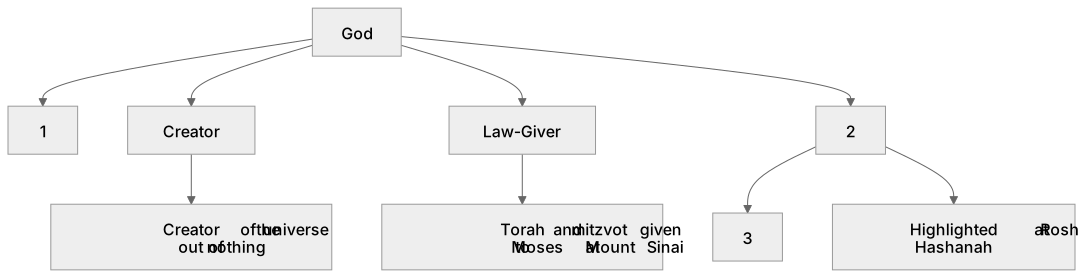
1Box 1
2Box 2
3Box 3
There is more to this lesson
The full lesson goes on to check your understanding and help you earn the marks. Create a free account to carry on, with your progress saved.
A week of Premium from your first lesson · Then the free plan continues · No card, no charge
Test your understanding of Judaism - 3.1.6.1 Beliefs and teachings: The nature of God:
Active recall beats re-reading. Take an instant quiz now to test what you’ve learned and lock it into long-term memory.
A week of Premium from your first lesson · Then the free plan continues · No card, no charge