AQA · GCSE · Religious Studies
Course version: 8062 · Version from Sept 2018
Practices: Rosh Hashanah and Yom Kippur
Rosh Hashanah and Yom Kippur are the most solemn days in the Jewish calendar, known as the High Holy Days.
Checked against the AQA 8062 specification (opens in a new tab) on .
- Point 20 of 37
- 4 key terms
Study notes
From the checked teaching notes for this specification point.
The idea
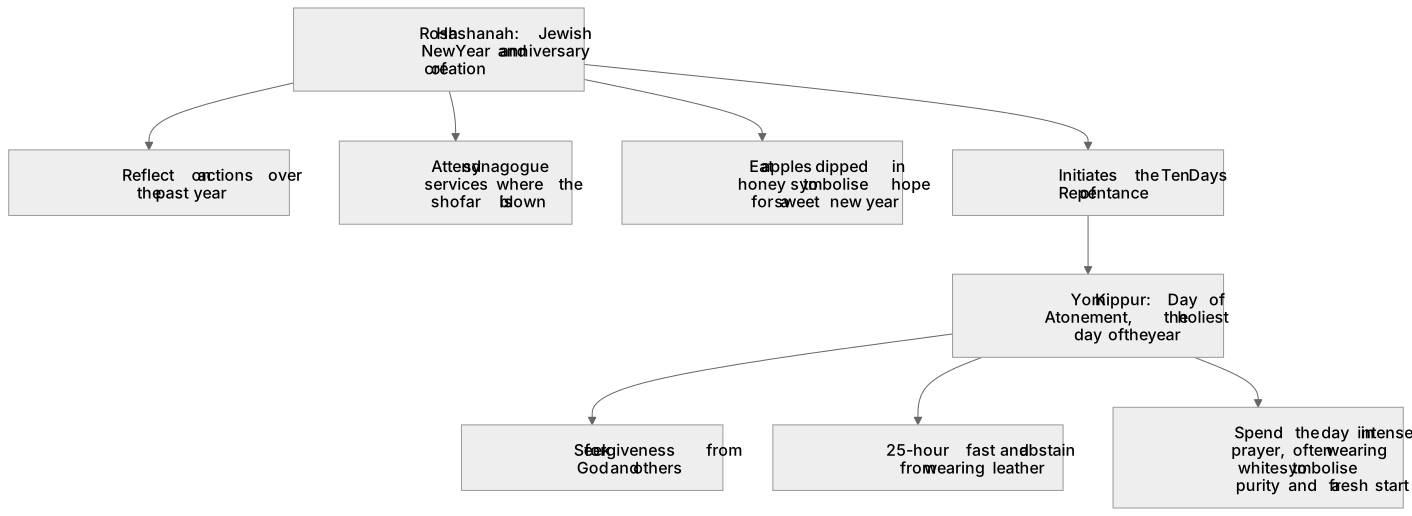
Rosh Hashanah and Yom Kippur are the most solemn days in the Jewish calendar, known as the High Holy Days. Rosh Hashanah marks the Jewish New Year and the anniversary of creation. Jews reflect on their actions over the past year, attend synagogue services where the shofar (ram's horn) is blown, and eat apples dipped in honey to symbolise hope for a sweet new year. This initiates the Ten Days of Repentance, culminating in Yom Kippur, the Day of Atonement. Yom Kippur is the holiest day of the year, focused on seeking forgiveness from God and others. Observant Jews undertake a 25-hour fast, abstain from wearing leather, and spend the day in intense prayer, often wearing white to symbolise purity and a fresh start.
What earns the marks
- Explain the significance of Rosh Hashanah as the Jewish New Year and the anniversary of God's creation of the world.
- Describe the rituals of Rosh Hashanah, including the blowing of the shofar and eating sweet foods like apples and honey.
- Explain the purpose of Yom Kippur as the Day of Atonement, focusing on repentance and seeking forgiveness from God.
- Detail the observances of Yom Kippur, such as the 25-hour fast, wearing white, and attending extended synagogue services.
Common mistakes and how to put them right
Confusing the two festivals.
Put it right: Rosh Hashanah is the New Year focused on celebration and reflection, while Yom Kippur is the Day of Atonement focused on fasting and repentance.
Stating that Yom Kippur only requires asking God for forgiveness.
Put it right: Jews must also seek forgiveness from other people they have wronged before Yom Kippur begins.
Believing the shofar is blown throughout Yom Kippur.
Put it right: The shofar is primarily blown during Rosh Hashanah services, though a single blast marks the very end of Yom Kippur.
Exam tips
- Use specific terminology like 'shofar', 'repentance', and 'atonement' to demonstrate accurate subject knowledge.
- Link the practices of these festivals to Jewish beliefs about God as a judge and creator.
- When evaluating the importance of these festivals, contrast the personal reflection of Yom Kippur with the communal celebration of other festivals.
Try the lesson
The start of the Practices: Rosh Hashanah and Yom Kippur lesson, made from checked teaching notes for this specification point.
Have a go first
Which of the following best describes the primary purpose of Yom Kippur in Judaism?
Listen
Rosh Hashanah and Yom Kippur are the most solemn days in the Jewish calendar, known as the High Holy Days. Rosh Hashanah marks the Jewish New Year and the anniversary of creation. Jews reflect on their actions over the past year, attend synagogue services where the shofar (ram's horn) is blown, and eat apples dipped in honey to symbolise hope for a sweet new year. This initiates the Ten Days of Repentance, culminating in Yom Kippur, the Day of Atonement. Yom Kippur is the holiest day of the year, focused on seeking forgiveness from God and others. Observant Jews undertake a 25-hour fast, abstain from wearing leather, and spend the day in intense prayer, often wearing white to symbolise purity and a fresh start. A strong answer earns marks for these points. Explain the significance of Rosh Hashanah as the Jewish New Year and the anniversary of God's creation of the world. Describe the rituals of Rosh Hashanah, including the blowing of the shofar and eating sweet foods like apples and honey. Explain the purpose of Yom Kippur as the Day of Atonement, focusing on repentance and seeking forgiveness from God. Detail the observances of Yom Kippur, such as the 25-hour fast, wearing white, and attending extended synagogue services. A common slip: Confusing the two festivals. Instead, Rosh Hashanah is the New Year focused on celebration and reflection, while Yom Kippur is the Day of Atonement focused on fasting and repentance. Exam tip: Use specific terminology like 'shofar', 'repentance', and 'atonement' to demonstrate accurate subject knowledge.
See it
Key words
Say what each word means before you turn the card.
The High Holy Days
Try answering aloud or in your head before turning the card.
Repentance and forgiveness
Try answering aloud or in your head before turning the card.
Ritual and symbolism
Try answering aloud or in your head before turning the card.
God as Creator and Judge
Try answering aloud or in your head before turning the card.
See every definition
- The High Holy Days
- The most solemn days in the Jewish calendar, namely Rosh Hashanah and Yom Kippur.
- Repentance and forgiveness
- Reflecting on actions over the past year and seeking forgiveness from God and others, which Yom Kippur is focused on.
- Ritual and symbolism
- Practices such as blowing the shofar, eating apples dipped in honey, fasting and wearing white to symbolise purity and a fresh start.
- God as Creator and Judge
- Beliefs linked to these festivals, as Rosh Hashanah marks the anniversary of creation and the days focus on seeking forgiveness from God.
Label the diagram
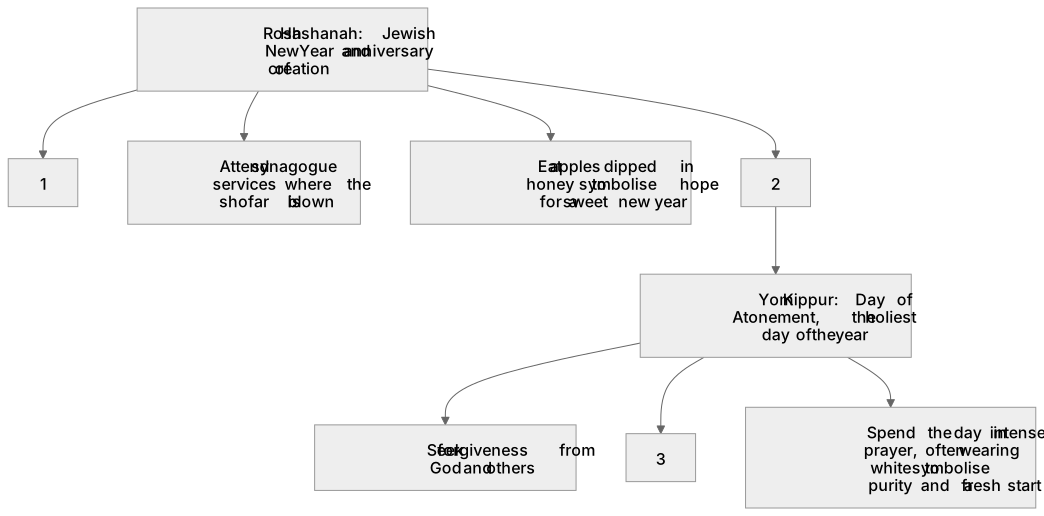
Some boxes have lost their names. Pick the right name for each number.
1Box 1
2Box 2
3Box 3
There is more to this lesson
The full lesson goes on to check your understanding and help you earn the marks. Create a free account to carry on, with your progress saved.
A week of Premium from your first lesson · Then the free plan continues · No card, no charge
Test your understanding of Practices: Rosh Hashanah and Yom Kippur
Active recall beats re-reading. Take an instant quiz now to test what you’ve learned and lock it into long-term memory.
A week of Premium from your first lesson · Then the free plan continues · No card, no charge