AQA · GCSE · Religious Studies
Course version: 8062 · Version from Sept 2018
The initiation ceremony (Amrit Sanskar), including the meaning and…
Full specification wording
Practices: The initiation ceremony (Amrit Sanskar), including the meaning and importance of the Khalsa and the five Ks, and the different perspectives of sahajdhari and amritdhari Sikhs.
The Amrit Sanskar is the Sikh initiation ceremony, establishing a Sikh as a member of the Khalsa (community of the pure).
Checked against the AQA 8062 specification (opens in a new tab) on .
- Point 36 of 37
- 4 key terms
Study notes
From the checked teaching notes for this specification point.
The idea
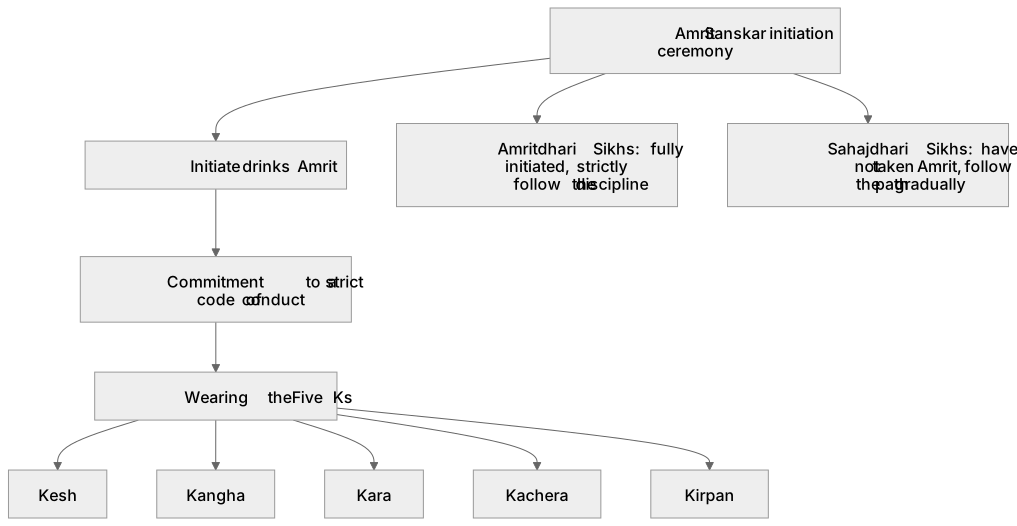
The Amrit Sanskar is the Sikh initiation ceremony, establishing a Sikh as a member of the Khalsa (community of the pure). Initiates drink Amrit (sugar water stirred with a double-edged sword) and commit to a strict code of conduct, including wearing the Five Ks: Kesh (uncut hair), Kangha (wooden comb), Kara (steel bracelet), Kachera (cotton underwear), and Kirpan (small sword). These symbolise devotion, discipline, and readiness to defend the faith. Amritdhari Sikhs are fully initiated and strictly follow this discipline. In contrast, Sahajdhari Sikhs believe in the Gurus but have not taken Amrit, often viewing initiation as a personal choice or a future goal rather than an immediate requirement for being a good Sikh.
What earns the marks
- Describe the Amrit Sanskar ritual, including the drinking of Amrit prepared by the Panj Pyare (five beloved ones).
- Explain the symbolic meaning of each of the Five Ks (for example, the Kara representing God's eternity and a restraint from evil).
- Discuss the importance of the Khalsa as a dedicated community committed to defending faith and protecting the vulnerable.
- Contrast the perspectives of Amritdhari Sikhs, who have taken initiation, with Sahajdhari Sikhs, who follow the path gradually without formal initiation.
Common mistakes and how to put them right
Stating that Sahajdhari Sikhs are not considered real Sikhs.
Put it right: Explain that Sahajdhari Sikhs are accepted within the community and follow Sikh teachings, even if they have not taken Amrit.
Misidentifying the Five Ks or their meanings.
Put it right: Ensure all five (Kesh, Kangha, Kara, Kachera, Kirpan) are correctly named and linked to their specific symbolic meanings, such as Kesh representing God's creation.
Claiming the Amrit Sanskar is compulsory for all Sikhs at a specific age.
Put it right: Clarify that it is a voluntary commitment made when an individual is mature enough to understand the responsibilities.
Exam tips
- Memorise the Punjabi names for the Five Ks and be able to explain the specific spiritual or practical significance of each.
- Use the terms 'Amritdhari' and 'Sahajdhari' accurately to contrast different levels of formal commitment within Sikhism.
- When discussing the Khalsa, reference its historical origins with Guru Gobind Singh in 1699 to add depth to your answer.
Try the lesson
The start of the Practices: The initiation ceremony (Amrit Sanskar), including the meaning and importance of the Khalsa and the five Ks, and the different perspectives of sahajdhari and amritdhari Sikhs. lesson, made from checked teaching notes for this specification point.
Have a go first
What is the name of the Sikh initiation ceremony where an individual officially joins the Khalsa?
Listen
The Amrit Sanskar is the Sikh initiation ceremony, establishing a Sikh as a member of the Khalsa (community of the pure). Initiates drink Amrit (sugar water stirred with a double-edged sword) and commit to a strict code of conduct, including wearing the Five Ks: Kesh (uncut hair), Kangha (wooden comb), Kara (steel bracelet), Kachera (cotton underwear), and Kirpan (small sword). These symbolise devotion, discipline, and readiness to defend the faith. Amritdhari Sikhs are fully initiated and strictly follow this discipline. In contrast, Sahajdhari Sikhs believe in the Gurus but have not taken Amrit, often viewing initiation as a personal choice or a future goal rather than an immediate requirement for being a good Sikh. A strong answer earns marks for these points. Describe the Amrit Sanskar ritual, including the drinking of Amrit prepared by the Panj Pyare (five beloved ones). Explain the symbolic meaning of each of the Five Ks (for example, the Kara representing God's eternity and a restraint from evil). Discuss the importance of the Khalsa as a dedicated community committed to defending faith and protecting the vulnerable. Contrast the perspectives of Amritdhari Sikhs, who have taken initiation, with Sahajdhari Sikhs, who follow the path gradually without formal initiation. A common slip: Stating that Sahajdhari Sikhs are not considered real Sikhs. Instead, Explain that Sahajdhari Sikhs are accepted within the community and follow Sikh teachings, even if they have not taken Amrit. Exam tip: Memorise the Punjabi names for the Five Ks and be able to explain the specific spiritual or practical significance of each.
See it
Key words
Say what each word means before you turn the card.
Amrit Sanskar
Try answering aloud or in your head before turning the card.
Khalsa
Try answering aloud or in your head before turning the card.
Amritdhari
Try answering aloud or in your head before turning the card.
Sahajdhari
Try answering aloud or in your head before turning the card.
See every definition
- Amrit Sanskar
- The Sikh initiation ceremony, establishing a Sikh as a member of the Khalsa.
- Khalsa
- The community of the pure, a dedicated community committed to defending faith and protecting the vulnerable.
- Amritdhari
- Sikhs who are fully initiated and strictly follow this discipline.
- Sahajdhari
- Sikhs who believe in the Gurus but have not taken Amrit, often viewing initiation as a personal choice or a future goal.
Label the diagram
Some boxes have lost their names. Pick the right name for each number.
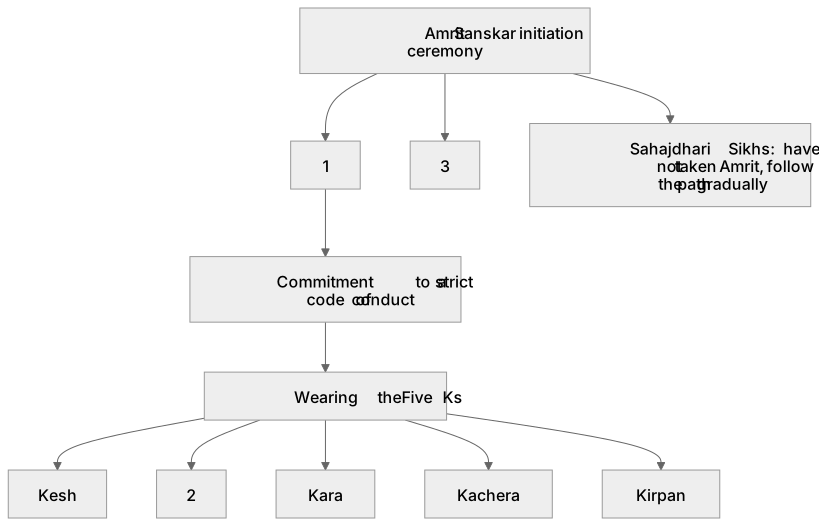
1Box 1
2Box 2
3Box 3
There is more to this lesson
The full lesson goes on to check your understanding and help you earn the marks. Create a free account to carry on, with your progress saved.
A week of Premium from your first lesson · Then the free plan continues · No card, no charge
Test your understanding of Practices: The initiation ceremony (Amrit Sanskar), including the meaning and importance of the Khalsa and the five Ks, and the different perspectives of sahajdhari and amritdhari Sikhs.
Active recall beats re-reading. Take an instant quiz now to test what you’ve learned and lock it into long-term memory.
A week of Premium from your first lesson · Then the free plan continues · No card, no charge