AQA · GCSE · Religious Studies
Course version: 8062 · Version from Sept 2018
The nature of human life as an opportunity to unite with God, including…
Full specification wording
Sikhism - 3.1.7.1 Beliefs and teachings: The nature of human life as an opportunity to unite with God, including the development of Sikh virtues such as wisdom, truthful living, justice, temperance, self-control, patience, courage, humility, contentment.
Sikhs view human life as a rare and precious opportunity to achieve Mukti, the ultimate goal of uniting with God and escaping the cycle of rebirth.
Checked against the AQA 8062 specification (opens in a new tab) on .
- Point 6 of 16
Study notes
From the checked teaching notes for this specification point.
The idea
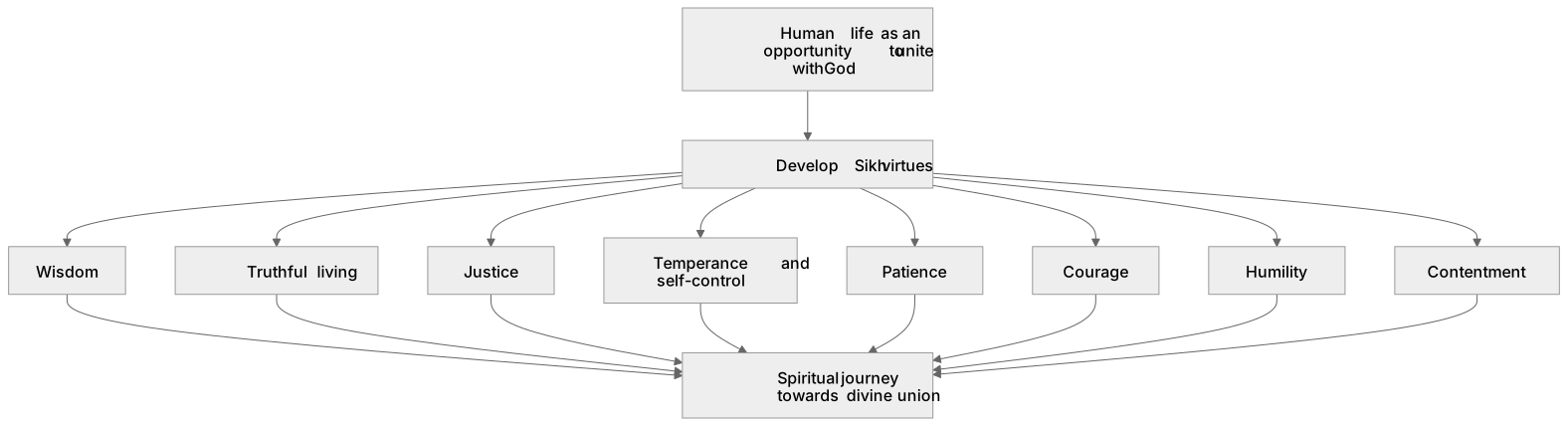
Sikhs view human life as a rare and precious opportunity to achieve Mukti, the ultimate goal of uniting with God and escaping the cycle of rebirth. To achieve this union, Sikhs must actively develop specific virtues that align their lives with God's will (Hukam). This involves cultivating wisdom to understand spiritual truths and practising truthful living in daily actions. Sikhs must uphold justice and demonstrate temperance and self-control to overcome selfish desires (haumai). Furthermore, developing patience, courage to face adversity, humility to serve others (sewa), and contentment with what God provides are essential. Practising these virtues transforms human life into a spiritual journey towards divine union.
What earns the marks
- Explain that human life is considered a unique opportunity to achieve Mukti (liberation) and unite with God.
- Identify that developing virtues helps Sikhs overcome haumai (ego) and align with God's will (Hukam).
- Provide examples of active virtues, such as truthful living and justice, which require moral action in society.
- Explain how internal virtues like temperance, self-control, patience, humility, and contentment prepare the mind for spiritual union.
Common mistakes and how to put them right
Listing virtues without linking them to the goal of uniting with God.
Put it right: Explain that developing virtues like humility and contentment is the method by which Sikhs achieve Mukti.
Confusing temperance with complete abstinence from worldly life.
Put it right: Explain that temperance and self-control mean living a balanced family life (grast) without being consumed by material desires.
Treating truthful living as merely not lying.
Put it right: Define truthful living as actively living in accordance with God's truth, including honest labour (kirat karna).
Exam tips
- Memorise at least four of the specific virtues listed in the specification to use as concrete examples in your answers.
- Link the development of virtues to the concept of overcoming the five evils (lust, anger, greed, attachment, ego) to show deeper understanding.
- Use the term 'Mukti' when discussing the ultimate goal of uniting with God to demonstrate strong subject vocabulary.
Try the lesson
The start of the Sikhism - 3.1.7.1 Beliefs and teachings: The nature of human life as an opportunity to unite with God, including the development of Sikh virtues such as wisdom, truthful living, justice, temperance, self-control, patience, courage, humility, contentment. lesson, made from checked teaching notes for this specification point.
Have a go first
According to Sikh teachings, what is the primary purpose of human life?
Listen
Sikhs view human life as a rare and precious opportunity to achieve Mukti, the ultimate goal of uniting with God and escaping the cycle of rebirth. To achieve this union, Sikhs must actively develop specific virtues that align their lives with God's will (Hukam). This involves cultivating wisdom to understand spiritual truths and practising truthful living in daily actions. Sikhs must uphold justice and demonstrate temperance and self-control to overcome selfish desires (haumai). Furthermore, developing patience, courage to face adversity, humility to serve others (sewa), and contentment with what God provides are essential. Practising these virtues transforms human life into a spiritual journey towards divine union. A strong answer earns marks for these points. Explain that human life is considered a unique opportunity to achieve Mukti (liberation) and unite with God. Identify that developing virtues helps Sikhs overcome haumai (ego) and align with God's will (Hukam). Provide examples of active virtues, such as truthful living and justice, which require moral action in society. Explain how internal virtues like temperance, self-control, patience, humility, and contentment prepare the mind for spiritual union. A common slip: Listing virtues without linking them to the goal of uniting with God. Instead, explain that developing virtues like humility and contentment is the method by which Sikhs achieve Mukti. Exam tip: Memorise at least four of the specific virtues listed in the specification to use as concrete examples in your answers.
See it
Label the diagram
Some boxes have lost their names. Pick the right name for each number.
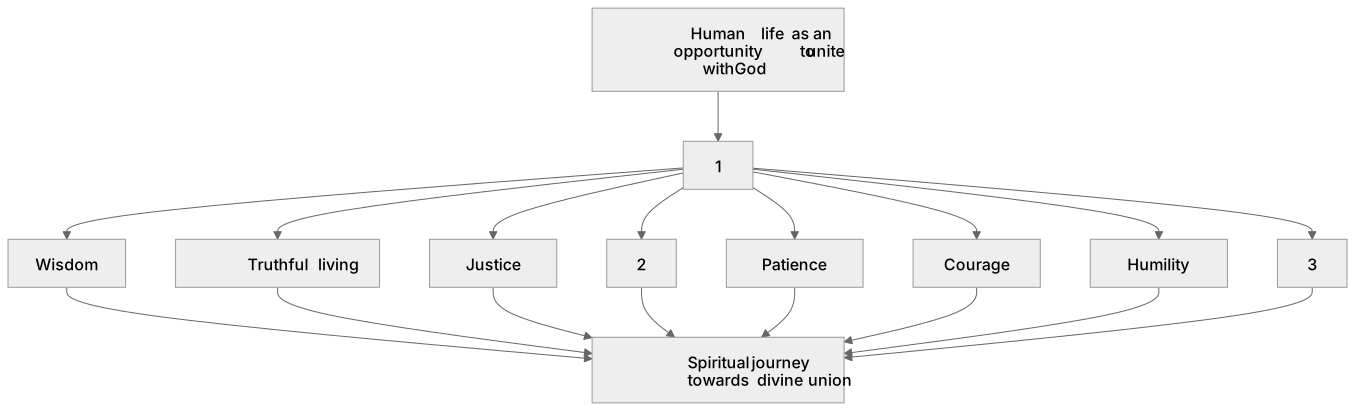
1Box 1
2Box 2
3Box 3
There is more to this lesson
The full lesson goes on to check your understanding and help you earn the marks. Create a free account to carry on, with your progress saved.
A week of Premium from your first lesson · Then the free plan continues · No card, no charge
Test your understanding of Sikhism - 3.1.7.1 Beliefs and teachings: The nature of human life as an opportunity to unite with God, including the development of Sikh virtues such as wisdom, truthful living, justice, temperance, self-control, patience, courage, humility, contentment.
Active recall beats re-reading. Take an instant quiz now to test what you’ve learned and lock it into long-term memory.
A week of Premium from your first lesson · Then the free plan continues · No card, no charge