AQA · GCSE · Religious Studies
Course version: 8062 · Version from Sept 2018
Students should study the beliefs, teachings and practices of Sikhism…
Full specification wording
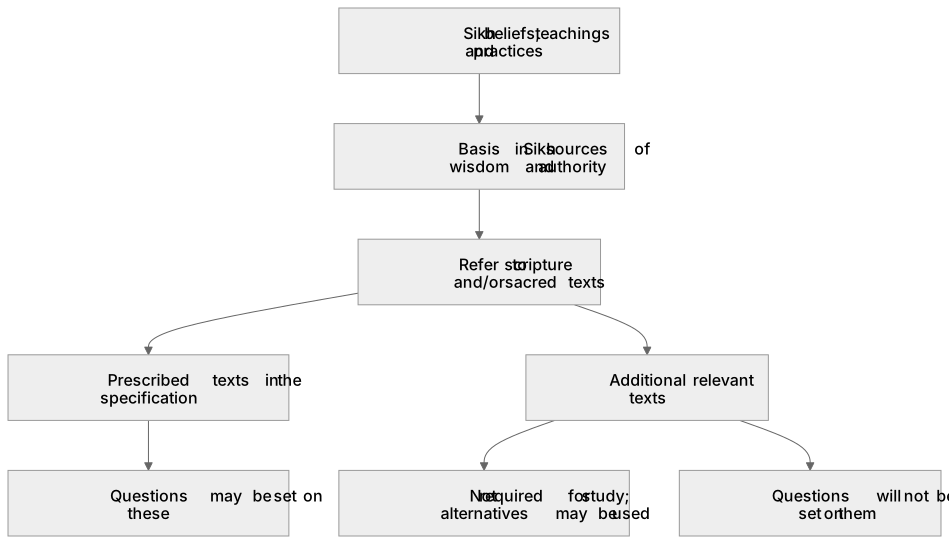
Sikhism: Students should study the beliefs, teachings and practices of Sikhism specified below and their basis in Sikh sources of wisdom and authority. They should be able to refer to scripture and/or sacred texts as appropriate. Some texts are prescribed for study in the content set out below and questions may be set on them. Students may refer to any relevant text in their answers and AQA will publish a list of appropriate texts as part of the supporting material for this specification. These additional texts will not be required for study, alternatives may be used, and questions will not be set on them.
You must be able to reference sacred texts to support your arguments.
Checked against the AQA 8062 specification (opens in a new tab) on .
- Point 2 of 4
- 4 key terms
Study notes
From the checked teaching notes for this specification point.
The idea
You must be able to reference sacred texts to support your arguments. The specification prescribes specific texts that you must study, as direct questions may be set on these exact passages. However, you are also encouraged to use additional relevant texts or alternative scriptures to strengthen your answers. While the exam board provides a supplementary list of appropriate texts, these are optional; you will not face questions specifically requiring them, but using them effectively demonstrates a comprehensive grasp of how scripture underpins Sikh daily life and worship.
What earns the marks
- Demonstrate how specific Sikh beliefs and practices are rooted in sources of wisdom and authority.
- Accurately reference prescribed sacred texts, such as the Guru Granth Sahib, to support explanations and arguments.
- Analyse the meaning and application of the specific prescribed texts detailed in the specification content.
- Incorporate relevant alternative or supplementary scriptural references to enhance the depth of evaluation responses.
Common mistakes and how to put them right
Making claims about Sikh beliefs without scriptural backing.
Put it right: Link teachings and practices to a source of wisdom or authority.
Worrying about memorising the entire supplementary text list.
Put it right: Focus on the prescribed texts for direct questions, using supplementary texts only to add breadth to your answers.
Providing vague references like 'the holy book says'.
Put it right: Name the Guru Granth Sahib or specific Gurus when citing sources of authority.
Exam tips
- Memorise short, versatile quotes from the prescribed texts that can be applied to multiple topics, such as equality or the nature of God.
- If you forget an exact quote, paraphrase the teaching accurately and attribute it to the Guru Granth Sahib or a specific Guru.
- Use phrases like 'This practice is rooted in the teaching of...' to explicitly link practices to their authoritative sources.
Try the lesson
The start of the Sikhism: Students should study the beliefs, teachings and practices of Sikhism specified below and their basis in Sikh sources of wisdom and authority. They should be able to refer to scripture and/or sacred texts as appropriate. Some texts are prescribed for study in the content set out below and questions may be set on them. Students may refer to any relevant text in their answers and AQA will publish a list of appropriate texts as part of the supporting material for this specification. These additional texts will not be required for study, alternatives may be used, and questions will not be set on them. lesson, made from checked teaching notes for this specification point.
Have a go first
In Sikhism, which of the following serves as the ultimate source of spiritual wisdom and authority for beliefs and practices?
Listen
You must be able to reference sacred texts to support your arguments. The specification prescribes specific texts that you must study, as direct questions may be set on these exact passages. However, you are also encouraged to use additional relevant texts or alternative scriptures to strengthen your answers. While the exam board provides a supplementary list of appropriate texts, these are optional; you will not face questions specifically requiring them, but using them effectively demonstrates a comprehensive grasp of how scripture underpins Sikh daily life and worship. A strong answer earns marks for these points. Demonstrate how specific Sikh beliefs and practices are rooted in sources of wisdom and authority. Accurately reference prescribed sacred texts, such as the Guru Granth Sahib, to support explanations and arguments. Analyse the meaning and application of the specific prescribed texts detailed in the specification content. Incorporate relevant alternative or supplementary scriptural references to enhance the depth of evaluation responses. A common slip: Making claims about Sikh beliefs without scriptural backing. Instead, link teachings and practices to a source of wisdom or authority. Exam tip: Memorise short, versatile quotes from the prescribed texts that can be applied to multiple topics, such as equality or the nature of God.
See it
Key words
Say what each word means before you turn the card.
Sources of wisdom
Try answering aloud or in your head before turning the card.
Scriptural authority
Try answering aloud or in your head before turning the card.
Beliefs and practices
Try answering aloud or in your head before turning the card.
The Guru Granth Sahib
Try answering aloud or in your head before turning the card.
See every definition
- Sources of wisdom
- The basis in Sikh sources of wisdom and authority on which students should study the beliefs, teachings and practices of Sikhism specified.
- Scriptural authority
- The basis in Sikh sources of wisdom and authority on which students should study the beliefs, teachings and practices of Sikhism specified.
- Beliefs and practices
- The beliefs, teachings and practices of Sikhism specified below, which students should study and their basis in Sikh sources of wisdom and authority.
- The Guru Granth Sahib
- A sacred text that students should be able to refer to as appropriate when studying the beliefs, teachings and practices of Sikhism.
Label the diagram
Some boxes have lost their names. Pick the right name for each number.
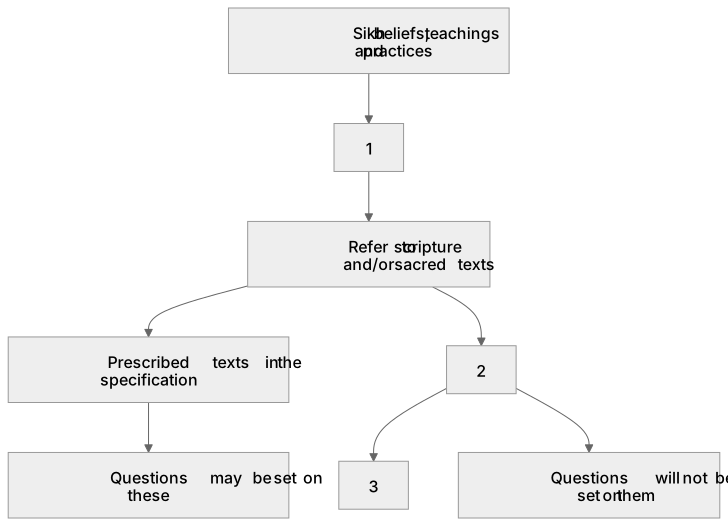
1Box 1
2Box 2
3Box 3
There is more to this lesson
The full lesson goes on to check your understanding and help you earn the marks. Create a free account to carry on, with your progress saved.
A week of Premium from your first lesson · Then the free plan continues · No card, no charge
Test your understanding of Sikhism: Students should study the beliefs, teachings and practices of Sikhism specified below and their basis in Sikh sources of wisdom and authority. They should be able to refer to scripture and/or sacred texts as appropriate. Some texts are prescribed for study in the content set out below and questions may be set on them. Students may refer to any relevant text in their answers and AQA will publish a list of appropriate texts as part of the supporting material for this specification. These additional texts will not be required for study, alternatives may be used, and questions will not be set on them.
Active recall beats re-reading. Take an instant quiz now to test what you’ve learned and lock it into long-term memory.
A week of Premium from your first lesson · Then the free plan continues · No card, no charge