AQA · GCSE · Religious Studies
Textual studies
Dive into the fast-paced, action-packed Gospel of Mark, the earliest written account of Jesus' life. Discover how Mark's portrayal of a suffering, active Messiah provided hope to persecuted early Christians, and why its radical themes of discipleship and inclusion remain deeply significant today.
- 4 min read
- 3 worked examples
- 2 practice questions
- 6 key terms
Study Notes
Overview
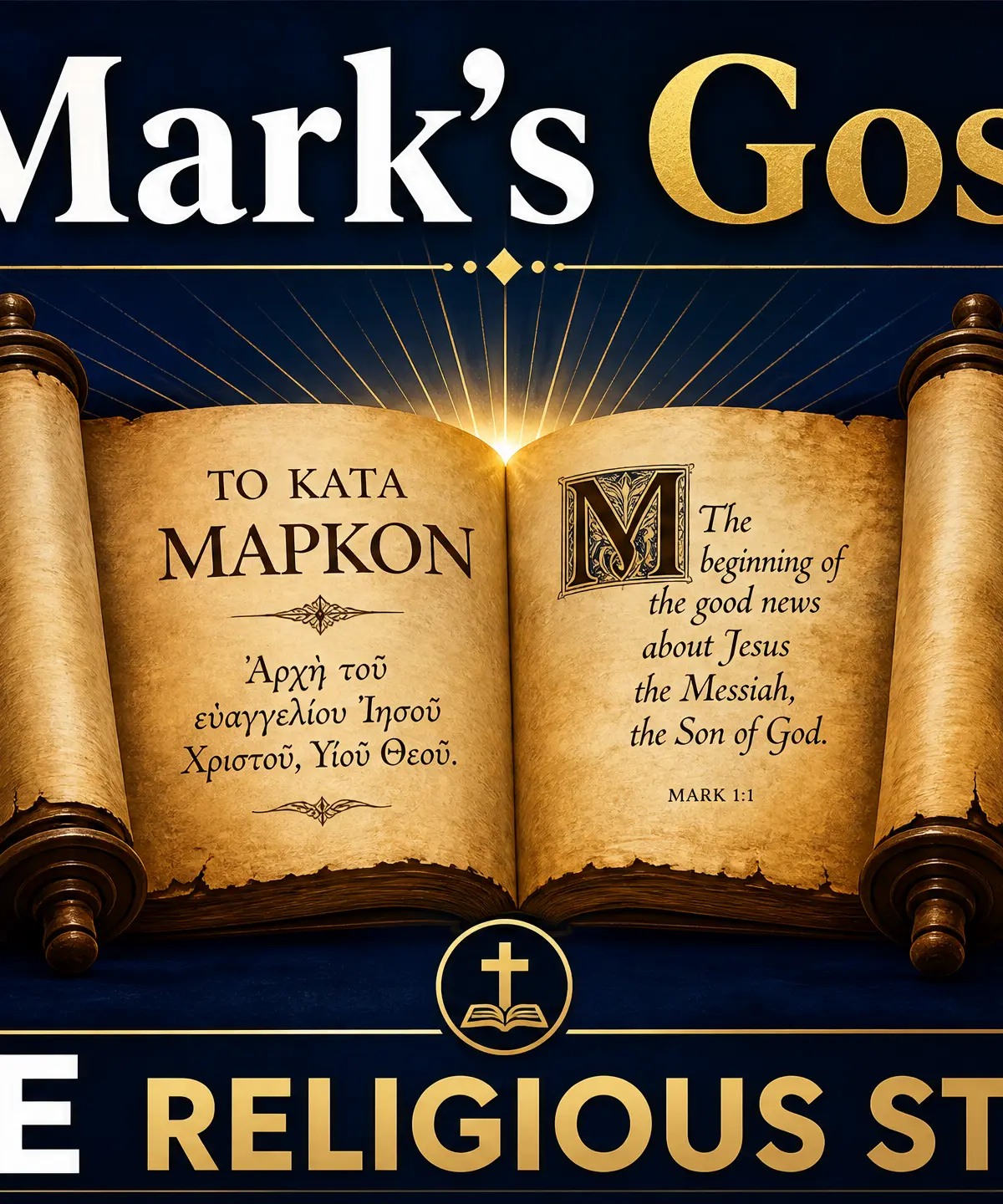
St Mark's Gospel is widely considered the earliest of the four Gospels, written around 65-70 CE for a Roman Christian community facing intense persecution under Emperor Nero. Because of this context, Mark portrays Jesus not as a distant philosopher, but as a man of urgent action and profound suffering. The Gospel is fast-paced, using the word 'immediately' (euthys) repeatedly to drive the narrative forward. For your GCSE exam (Themes G and H), examiners expect you to go beyond simply retelling the stories. You must be able to analyse the theological significance of Jesus' actions, evaluate contrasting interpretations of key concepts like the Kingdom of God, and explain what these ancient texts mean for twenty-first-century Christians.
Listen to the Podcast

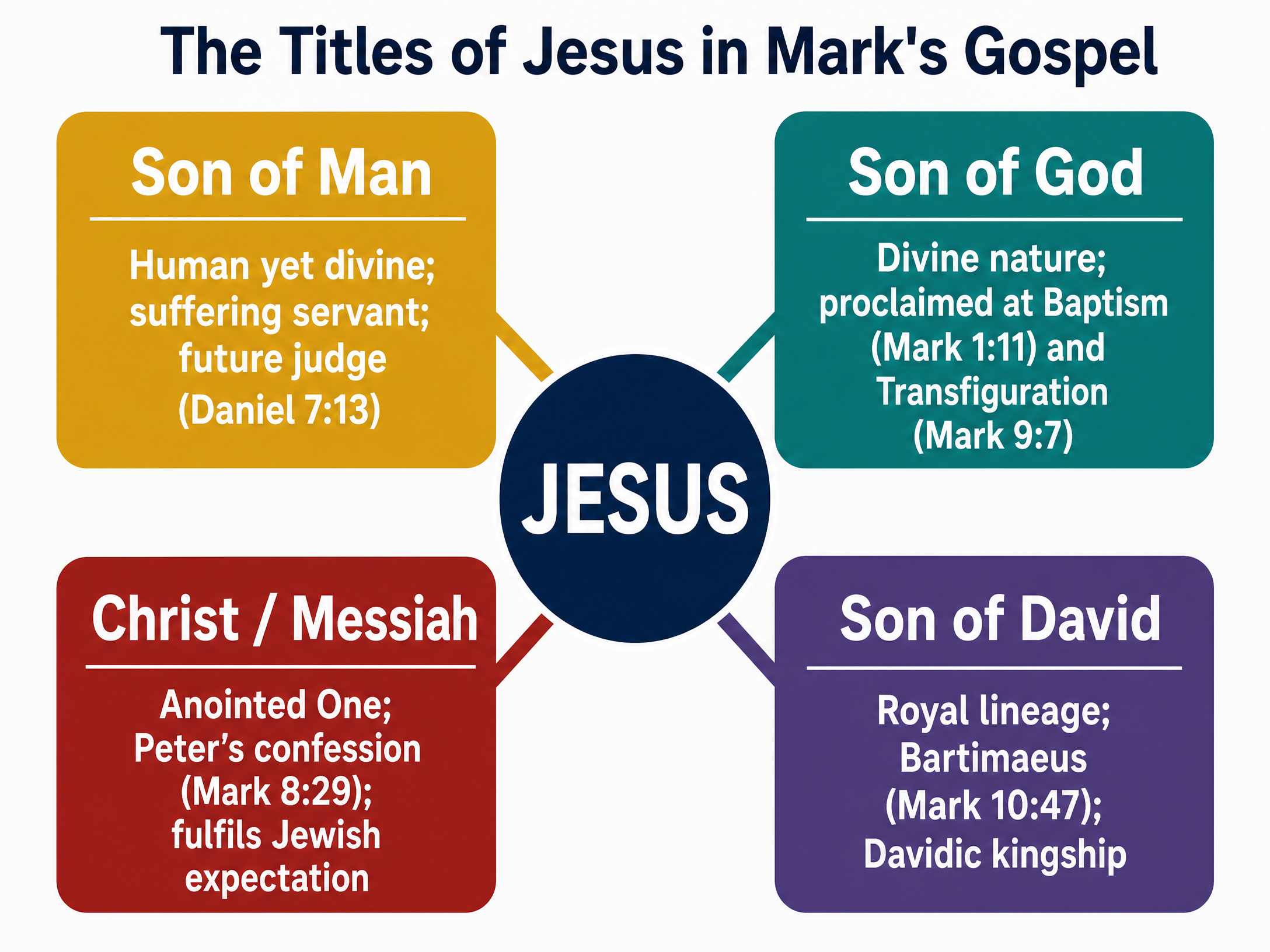
Key Titles of Jesus
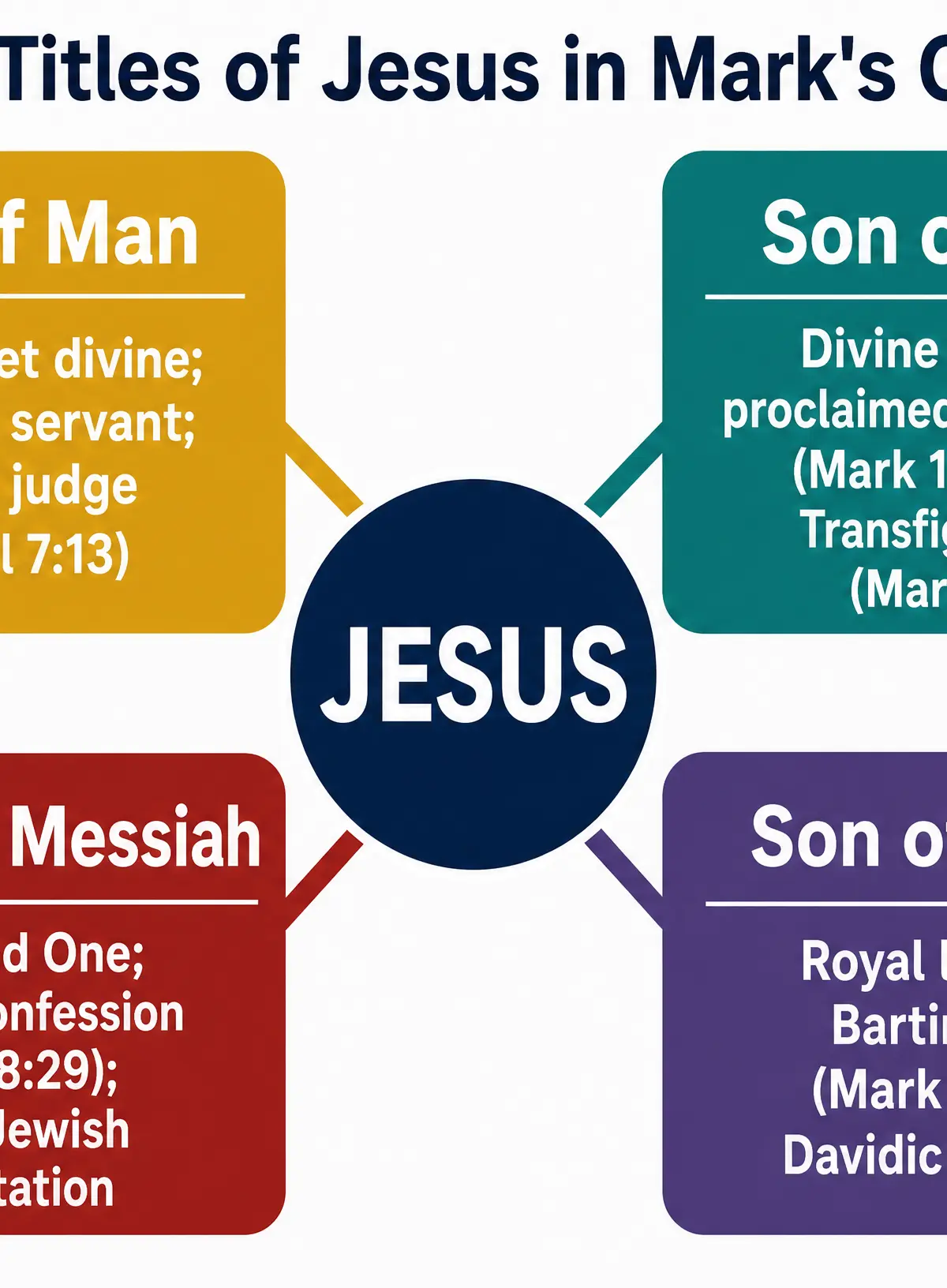
Son of Man
Significance: The title Jesus uses most frequently for himself. It holds a dual meaning: a heavenly figure of authority (from Daniel 7:13) and a human figure destined to suffer (Mark 8:31).
Exam Relevance: Shows the tension between Jesus' divine authority and his human vulnerability.
Son of God
Significance: Used by Mark in the opening verse (1:1), confirmed by God at the Baptism (1:11) and Transfiguration (9:7), and remarkably recognised by a Roman centurion at the crucifixion (15:39).
Exam Relevance: Central to understanding Jesus' divine nature and authority.
Christ / Messiah
Significance: Means 'Anointed One'. Jews expected a military/political leader to overthrow the Romans. Jesus redefines it as a suffering servant after Peter's confession (Mark 8:29).
Exam Relevance: Crucial for 'explain' questions about Jewish expectations vs Jesus' reality.
Son of David
Significance: Connects Jesus to the royal lineage of Israel's greatest king. Used by the blind beggar Bartimaeus (Mark 10:47).
Exam Relevance: Highlights how the marginalised often recognised Jesus when the religious elite did not.
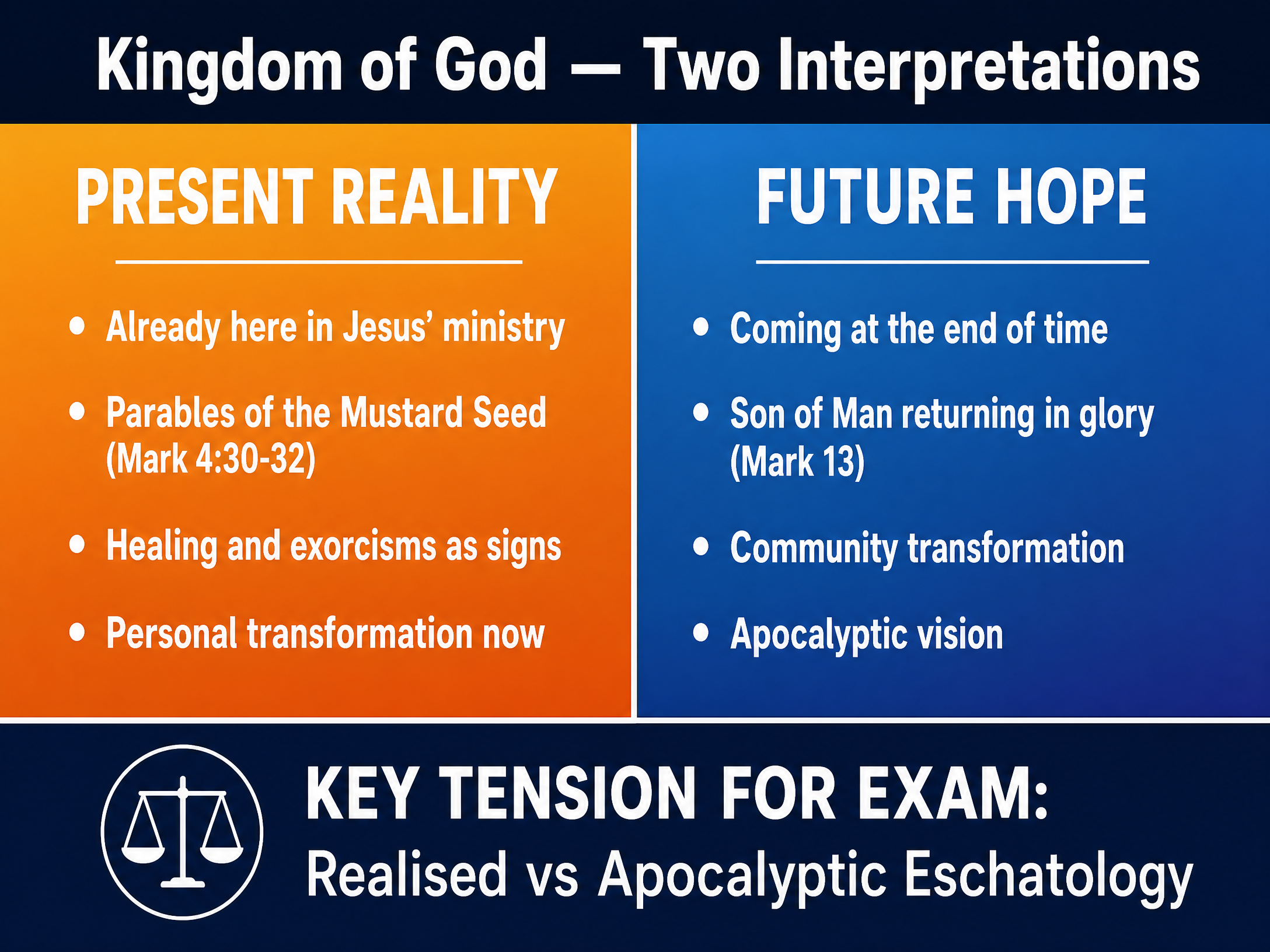
The Kingdom of God
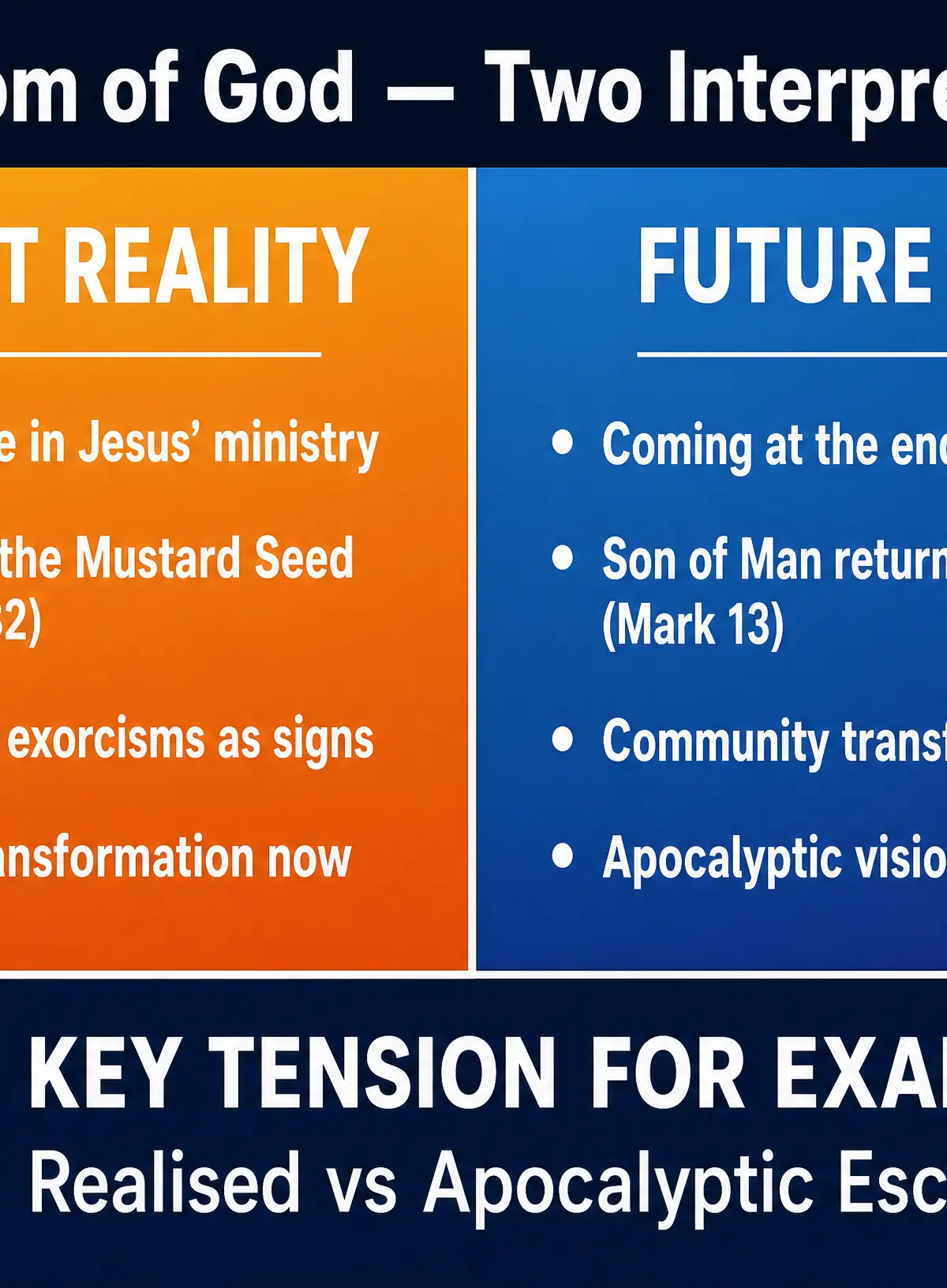
The Kingdom of God (Basileia tou Theou) is not a physical place, but the rule and reign of God. There are two contrasting interpretations you must know:
Present Reality (Realised Eschatology)
The belief that the Kingdom is already here, breaking into the world through Jesus' ministry. Evidence includes his healings, exorcisms, and the Parable of the Mustard Seed (Mark 4:30-32), which shows the Kingdom starting small but growing significantly.
Future Hope (Apocalyptic Eschatology)
The belief that the Kingdom will arrive fully at the end of time. Evidence includes Jesus' apocalyptic teachings in Mark 13, where he describes the Son of Man returning in clouds with great power and glory.
Discipleship and the Marginalised
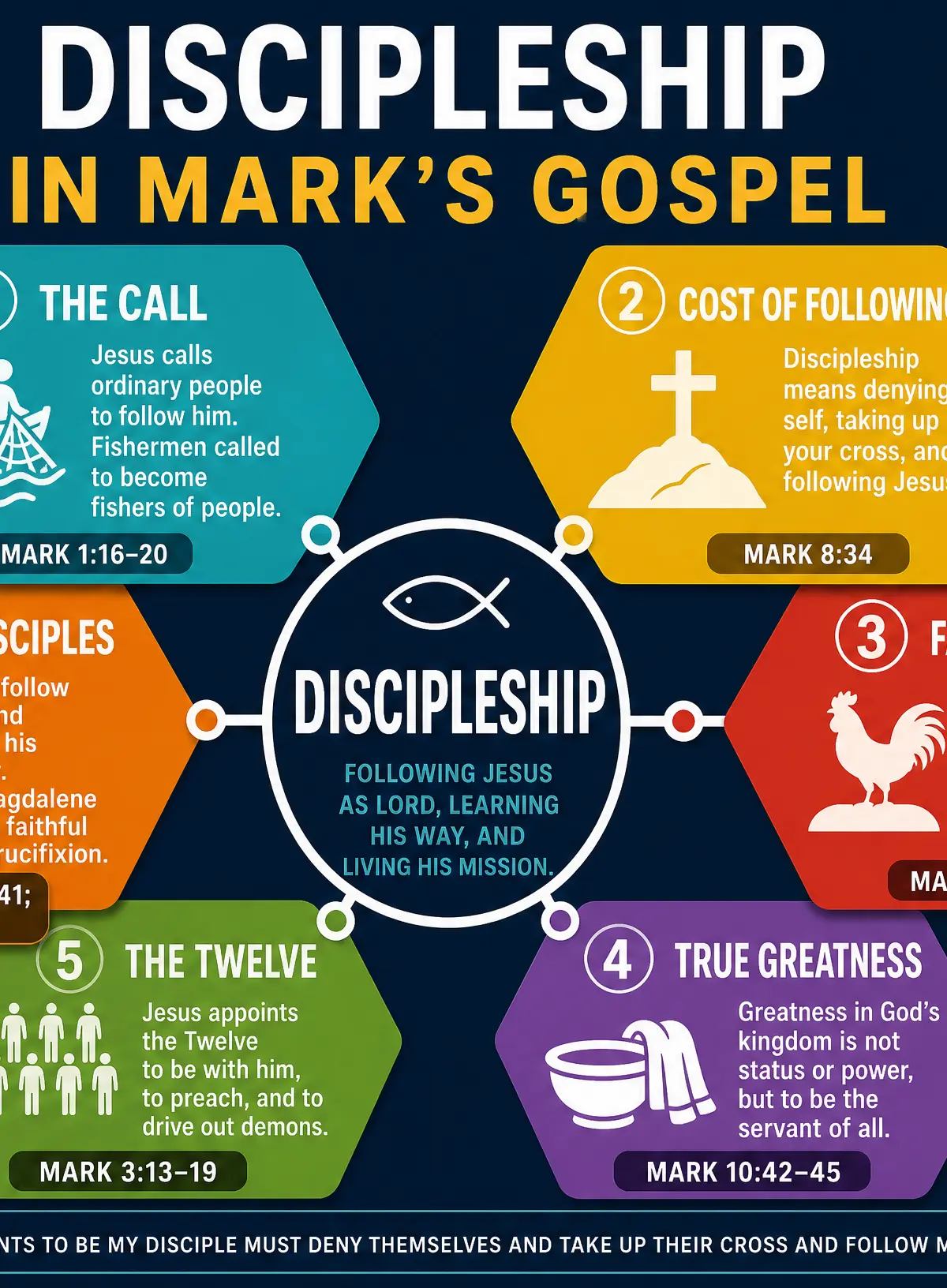
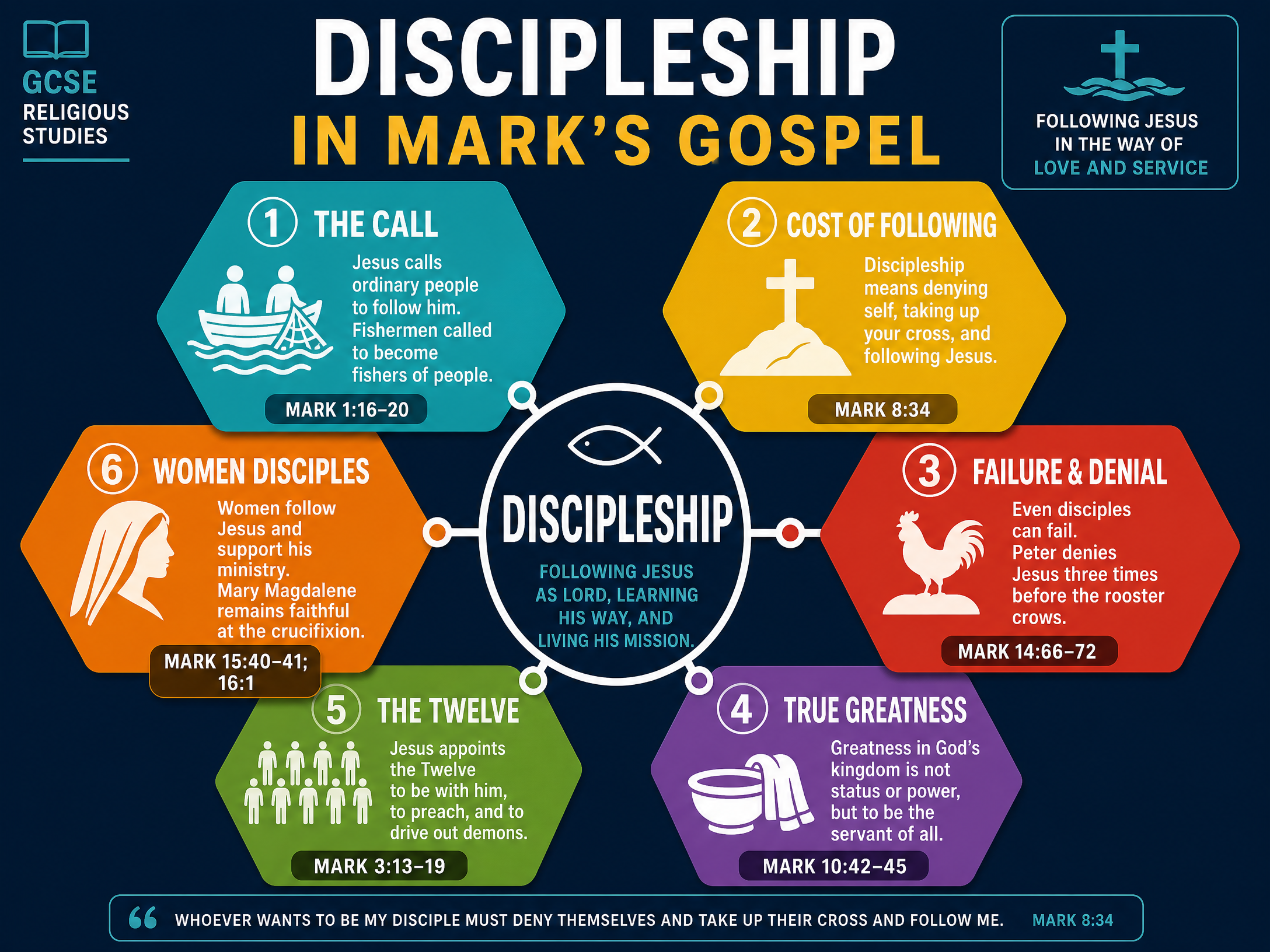
The Nature of Discipleship
Discipleship in Mark is honest. The disciples are called immediately (Mark 1:16-20), but they often fail, misunderstand, and deny Jesus (e.g., Peter in Mark 14:66-72). Jesus defines true discipleship as self-denial and taking up one's cross (Mark 8:34), a radical call to self-sacrifice.
Jesus and the Marginalised
Jesus consistently breaks social and religious taboos to reach out to those excluded by society: lepers, tax collectors, women, and Gentiles. For example, healing the woman with the haemorrhage (Mark 5:25-34) restores her social dignity and challenges purity laws. For 21st-century Christians, this sets a mandate for social justice and inclusion.
Visual Resources
3 diagrams and illustrations
Interactive Diagrams
1 interactive diagram to visualise key concepts
Conceptual Flow Outline
Interpretations of the Kingdom of God
Worked Examples
3 worked examples — open one to explore the question and available guidance.
Practice Questions
Test your understanding — click to reveal model answers
Describe the calling of the first disciples in Mark's Gospel. (5 marks)
Hint: Focus on who was called, what they were doing, what Jesus said, and how they reacted.
‘A 21st-century Christian cannot be expected to take up their cross.’ Evaluate this statement. (12 marks)
Hint: Contrast literal first-century crucifixion with metaphorical 21st-century sacrifice.