AQA · GCSE · Religious Studies
The synagogue and worship
This study guide covers the synagogue, the central institution of Jewish worship, study, and community. It explores the key physical features of the synagogue, the structure of Shabbat services, and the crucial differences between Orthodox and Reform practices, all of which are essential for GCSE Religious Studies exams.
- 5 min read
- 3 worked examples
- 1 practice question
- 6 key terms
Study Notes
Overview
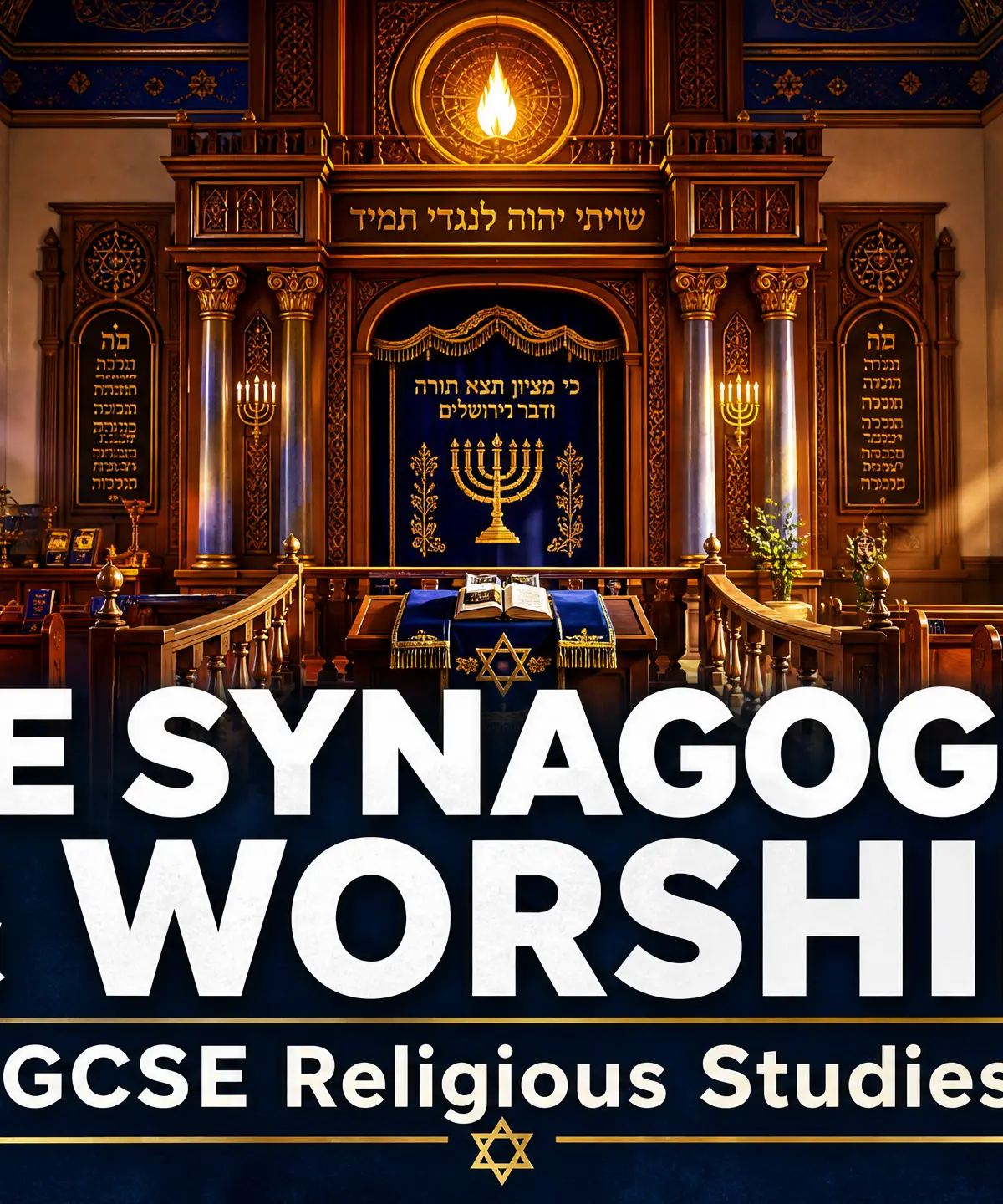
The synagogue (from the Greek for 'assembly', or Beit Knesset in Hebrew) is the heart of the Jewish community. Following the destruction of the Second Temple in 70 CE, the synagogue became the focal point for Jewish prayer (tefillah), study (Beit Midrash), and communal gathering. For GCSE Religious Studies, candidates must understand not only the physical layout and sacred objects within the synagogue but also how these features are used in worship, particularly during Shabbat. Examiners expect candidates to explain the significance of these features, not just describe them, and to confidently compare Orthodox and Reform practices.
Listen to the Podcast
Key Features of the Synagogue

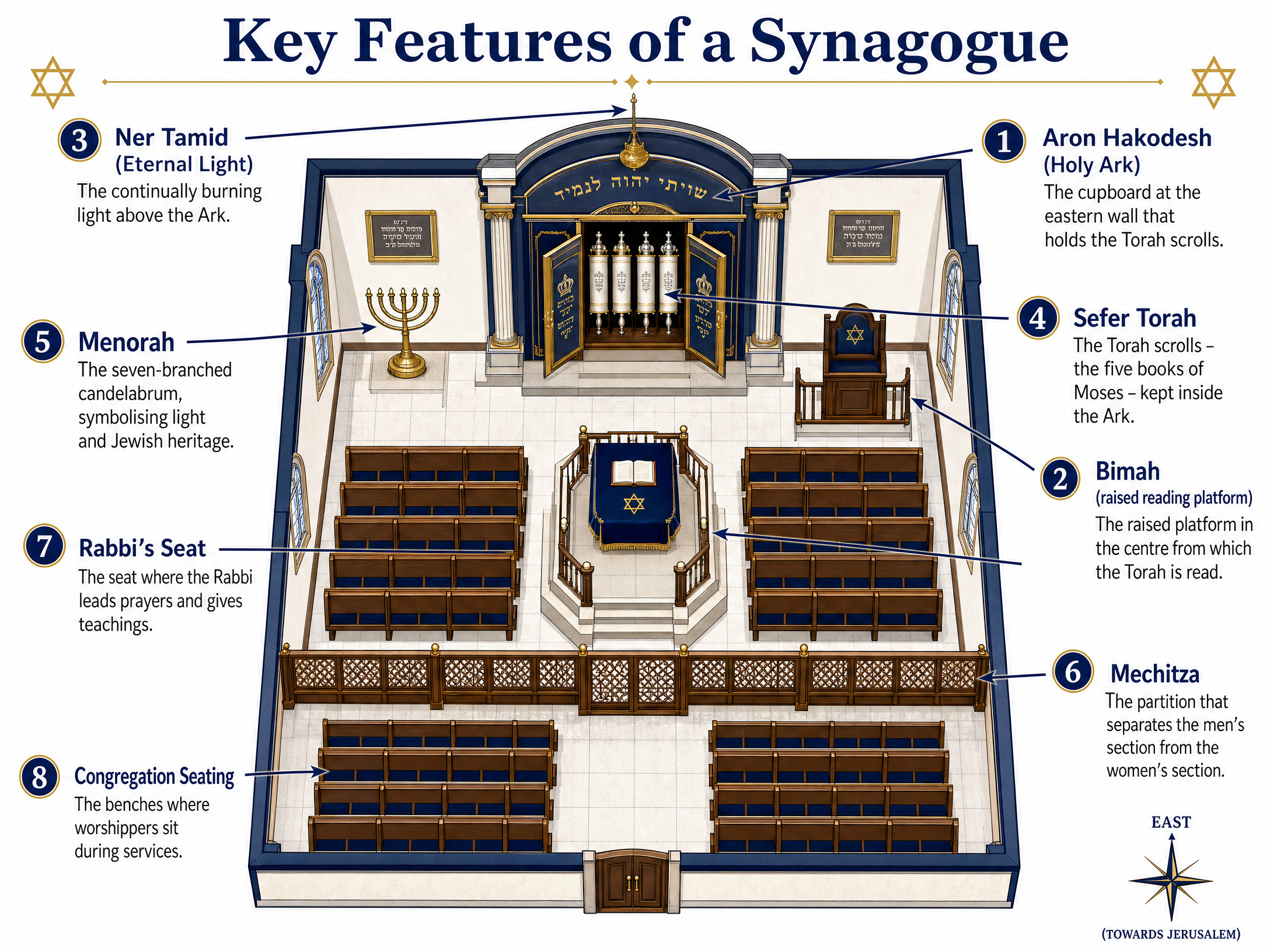
Aron Hakodesh (The Holy Ark)
What it is: A large cabinet or cupboard, usually set into or against the wall facing Jerusalem (the eastern wall in the UK).
Significance: It is the holiest place in the synagogue because it houses the Sefer Torah (Torah scrolls). It represents the original Ark of the Covenant that held the Ten Commandments. When the doors of the Ark are opened, the congregation stands as a mark of deep respect for God's laws.
Ner Tamid (The Eternal Light)
What it is: A light that burns continuously above or in front of the Aron Hakodesh.
Significance: It symbolises God's eternal presence (Shekhinah) and serves as a reminder of the menorah that burned constantly in the ancient Temple in Jerusalem. It reassures worshippers that God is always with the Jewish people.
Bimah (The Reading Platform)
What it is: A raised platform from which the Torah is read during services.
Significance: In Orthodox synagogues, it is placed in the centre, symbolising that the Torah is at the heart of Jewish life and the community. In Reform synagogues, it is often at the front, combining the roles of the Ark and the reading desk to create a unified focal point for the congregation.
Sefer Torah (The Torah Scrolls)
What it is: Handwritten parchment scrolls containing the Five Books of Moses, kept inside the Aron Hakodesh.
Significance: It is the most sacred object in Judaism, containing the word of God given to Moses. It is treated with immense reverence—dressed in velvet, adorned with silver (rimmonim), and never touched with bare hands (a pointer, or yad, is used).
Mechitza
What it is: A partition or balcony that separates men and women during worship.
Significance: Found only in Orthodox synagogues, it ensures that worshippers are not distracted by the opposite sex, allowing complete focus on prayer to God. Reform synagogues do not use a mechitza, believing in the equality of men and women in worship.
Worship in the Synagogue: The Shabbat Service
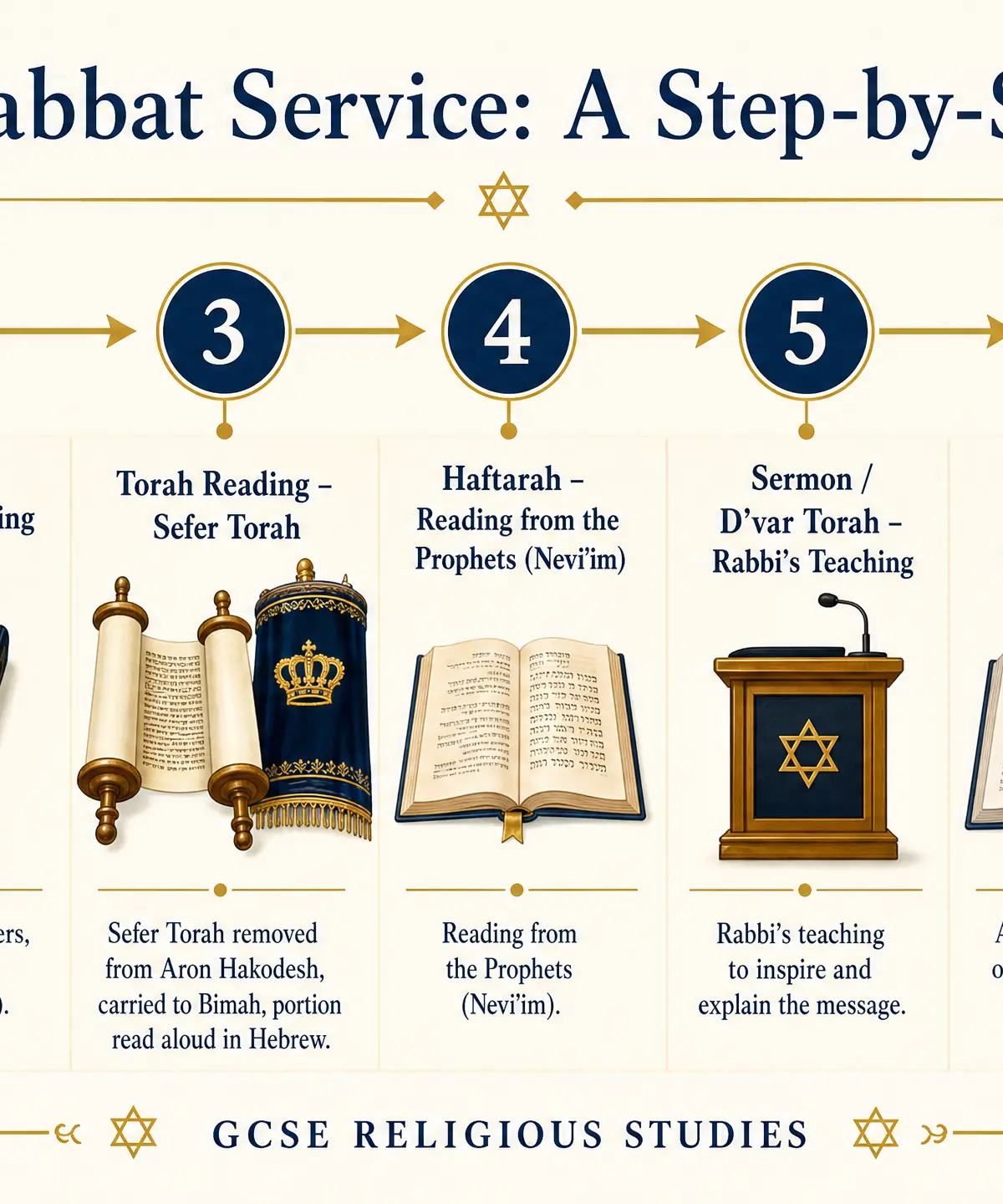
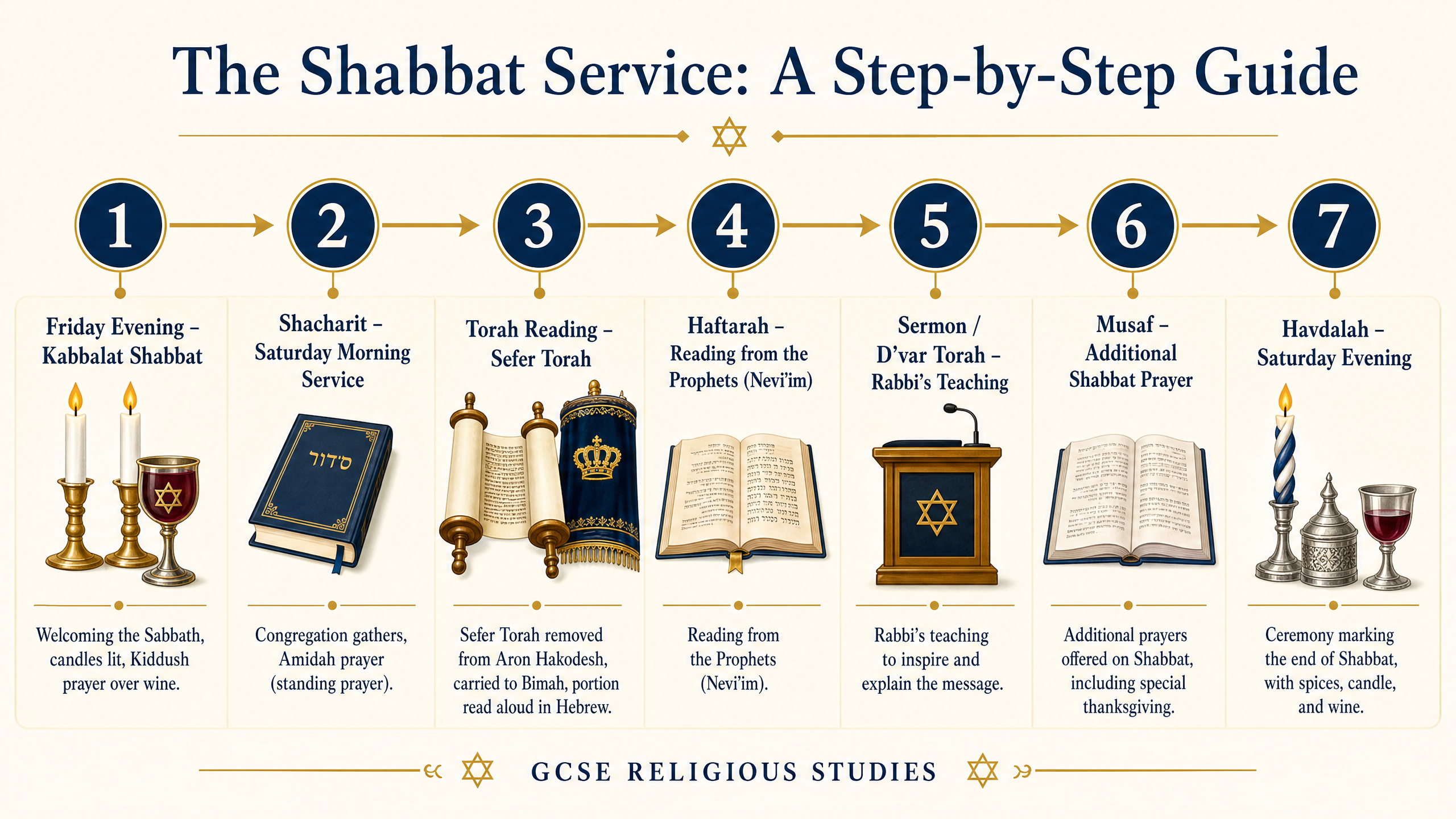
Shabbat (the Sabbath) is the most important day of the week, beginning at sunset on Friday and ending at nightfall on Saturday. Synagogue services are central to its observance.
Friday Evening (Kabbalat Shabbat)
This service welcomes the Sabbath like a bride. It includes the lighting of candles, singing of Psalms (such as Lecha Dodi), and the Kiddush (a blessing over wine to sanctify the day).
Saturday Morning (Shacharit)
The main service of the week. Key elements include:
- The Shema: The fundamental declaration of Jewish faith ('Hear O Israel, the Lord our God, the Lord is One').
- The Amidah: The 'standing prayer', containing 19 blessings (reduced to 7 on Shabbat), recited silently while facing Jerusalem.
- The Torah Reading: The Sefer Torah is paraded through the synagogue, placed on the Bimah, and the weekly portion (Parasha) is read.
- The Sermon: The Rabbi gives a teaching (D'var Torah) based on the reading.
Saturday Evening (Havdalah)
A brief ceremony marking the end of Shabbat. It uses wine, sweet-smelling spices, and a multi-wicked candle to separate the holy day from the ordinary working week.
Orthodox vs Reform Worship

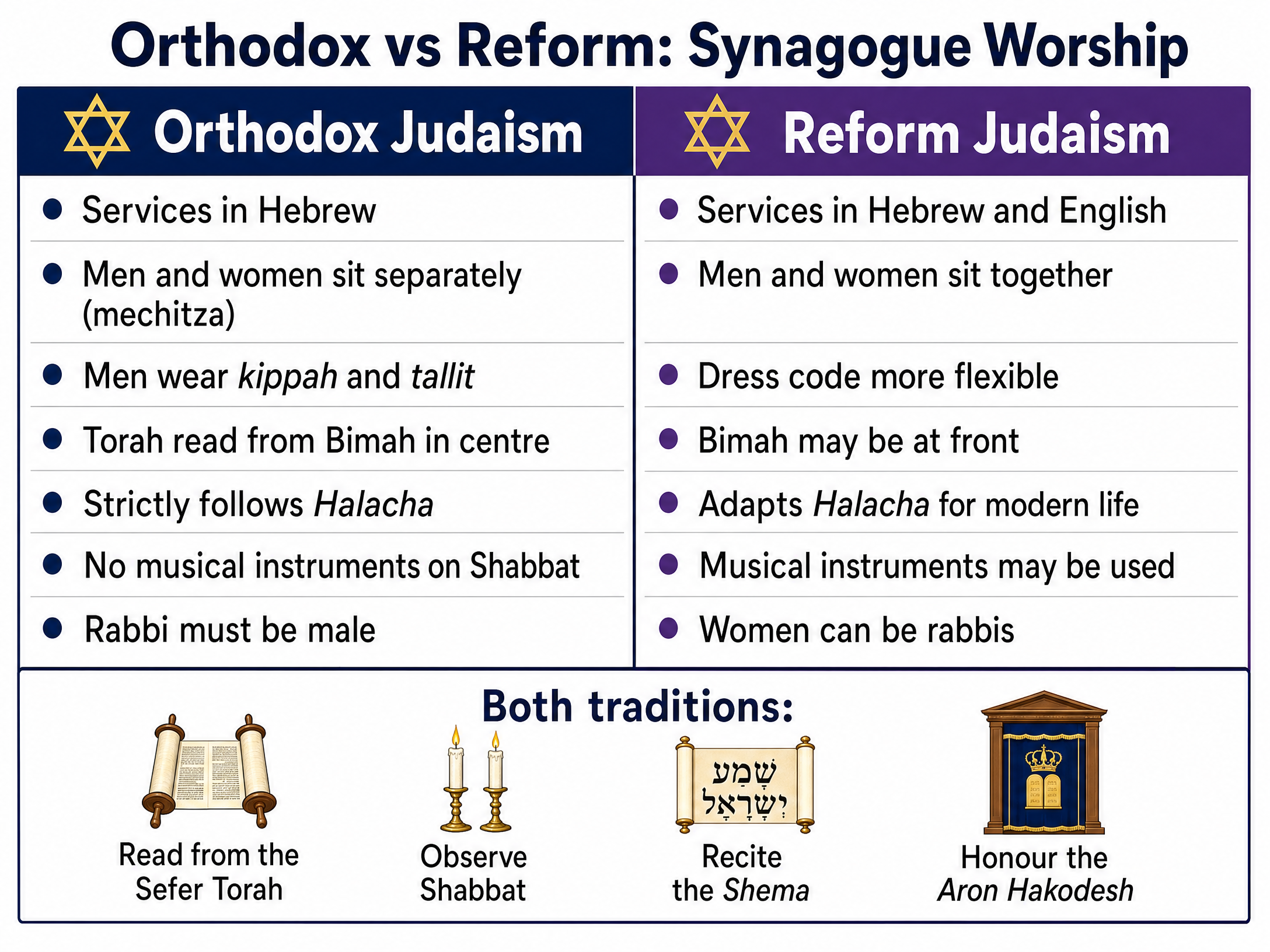
Examiners frequently ask candidates to compare Orthodox and Reform practices. Understanding these differences is crucial for higher-level marks.
- Language: Orthodox services are entirely in Hebrew; Reform services use a mix of Hebrew and English.
- Seating: Orthodox synagogues separate men and women (mechitza); Reform synagogues allow mixed family seating.
- Leadership: Orthodox Rabbis and cantors (chazzanim) must be male; Reform Judaism ordains female Rabbis and cantors.
- Music: Orthodox synagogues do not use musical instruments on Shabbat (it is considered work); Reform synagogues often use choirs and instruments like organs or guitars.
- The Bimah: Orthodox (centre); Reform (usually at the front).
Worked Examples
3 worked examples — open one to explore the question and available guidance.
Practice Questions
Test your understanding — click to reveal model answers
Explain two reasons why the synagogue is important for the Jewish community. (5 marks)
Hint: Think about its three Hebrew names: Beit Knesset (assembly), Beit Tefillah (prayer), and Beit Midrash (study).