AQA · GCSE · Religious Studies
Course version: 8062 · Version from Sept 2018
Religion, human rights and social justice: Students should study religious…
Full specification wording
Theme F: Religion, human rights and social justice: Students should study religious teachings, and religious, philosophical and ethical arguments, relating to the issues that follow, and their impact and influence in the modern world. They should be aware of contrasting perspectives in contemporary British society on all of these issues.
This foundational statement requires students to analyse human rights and social justice issues through multiple lenses.
- Point 1 of 23
Study notes
From the teaching notes for this specification point.
The idea
This foundational statement requires students to analyse human rights and social justice issues through multiple lenses. You must explore specific religious teachings, such as scriptural quotes on equality, alongside broader philosophical and ethical arguments like utilitarianism or humanism. It is crucial to evaluate how these ideas actively influence the modern world, for example, by inspiring religious charities to fight poverty or prejudice. Furthermore, you must demonstrate an awareness of contrasting perspectives within contemporary British society. This means acknowledging that Britain is pluralistic; views on wealth, prejudice, and human rights vary significantly between different religious denominations, secular groups, and individuals based on diverse ethical frameworks.
What earns the marks
- Identify and accurately apply specific religious teachings and sacred texts to contemporary social justice issues.
- Distinguish between religious, philosophical, and ethical arguments when evaluating human rights topics.
- Explain the practical impact of religious beliefs in the modern world, such as the work of religious charities or activism.
- Demonstrate knowledge of contrasting perspectives within contemporary British society, including secular and diverse religious viewpoints.
Common mistakes and how to put them right
Providing only religious arguments without acknowledging secular or philosophical views.
Put it right: Include ethical frameworks like humanism or utilitarianism to reflect contemporary British society.
Treating contemporary British society as having a single viewpoint.
Put it right: Explicitly contrast different perspectives, such as traditional religious views versus modern secular attitudes.
Failing to link teachings to their real-world impact.
Put it right: Provide concrete examples of how beliefs influence actions, such as campaigning for social justice.
Exam tips
- In 12-mark questions, always include at least one non-religious or contrasting perspective to reflect contemporary British society.
- Use specific examples of religious charities to demonstrate the impact of teachings in the modern world.
- Clearly label your arguments as religious, philosophical, or ethical to show the examiner you are addressing all parts of the specification.
Try the lesson
The start of the Theme F: Religion, human rights and social justice: Students should study religious teachings, and religious, philosophical and ethical arguments, relating to the issues that follow, and their impact and influence in the modern world. They should be aware of contrasting perspectives in contemporary British society on all of these issues. lesson, made from teaching notes for this specification point.
Have a go first
In contemporary British society, which of the following represents a realistic contrast in perspectives regarding the right to freedom of religious expression?
Listen
This foundational statement requires students to analyse human rights and social justice issues through multiple lenses. You must explore specific religious teachings, such as scriptural quotes on equality, alongside broader philosophical and ethical arguments like utilitarianism or humanism. It is crucial to evaluate how these ideas actively influence the modern world, for example, by inspiring religious charities to fight poverty or prejudice. Furthermore, you must demonstrate an awareness of contrasting perspectives within contemporary British society. This means acknowledging that Britain is pluralistic; views on wealth, prejudice, and human rights vary significantly between different religious denominations, secular groups, and individuals based on diverse ethical frameworks. A strong answer earns marks for these points. Identify and accurately apply specific religious teachings and sacred texts to contemporary social justice issues. Distinguish between religious, philosophical, and ethical arguments when evaluating human rights topics. Explain the practical impact of religious beliefs in the modern world, such as the work of religious charities or activism. Demonstrate knowledge of contrasting perspectives within contemporary British society, including secular and diverse religious viewpoints. A common slip: Providing only religious arguments without acknowledging secular or philosophical views. Instead, include ethical frameworks like humanism or utilitarianism to reflect contemporary British society. Exam tip: In 12-mark questions, always include at least one non-religious or contrasting perspective to reflect contemporary British society.
See it
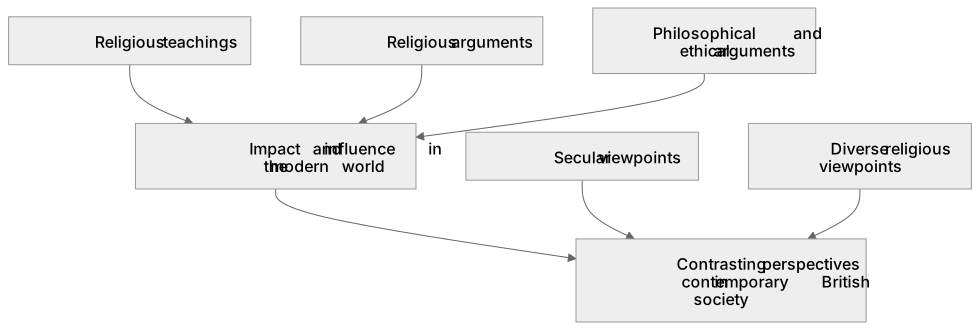
Label the diagram
Some boxes have lost their names. Pick the right name for each number.
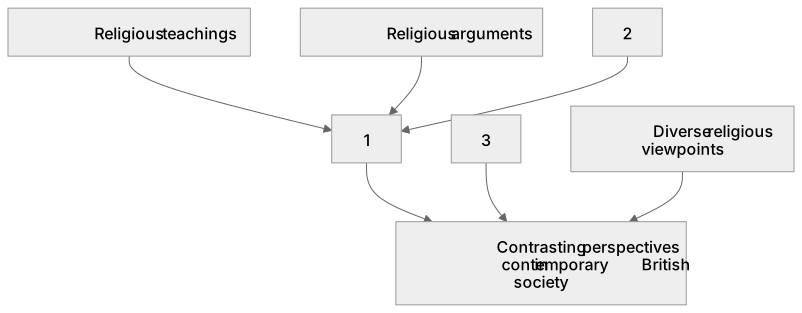
1Box 1
2Box 2
3Box 3
There is more to this lesson
The full lesson goes on to check your understanding and help you earn the marks. Create a free account to carry on, with your progress saved.
A week of Premium from your first lesson · Then the free plan continues · No card, no charge
Test your understanding of Theme F: Religion, human rights and social justice: Students should study religious teachings, and religious, philosophical and ethical arguments, relating to the issues that follow, and their impact and influence in the modern world. They should be aware of contrasting perspectives in contemporary British society on all of these issues.
Active recall beats re-reading. Take an instant quiz now to test what you’ve learned and lock it into long-term memory.
A week of Premium from your first lesson · Then the free plan continues · No card, no charge