AQA · GCSE · Religious Studies
Wealth and poverty
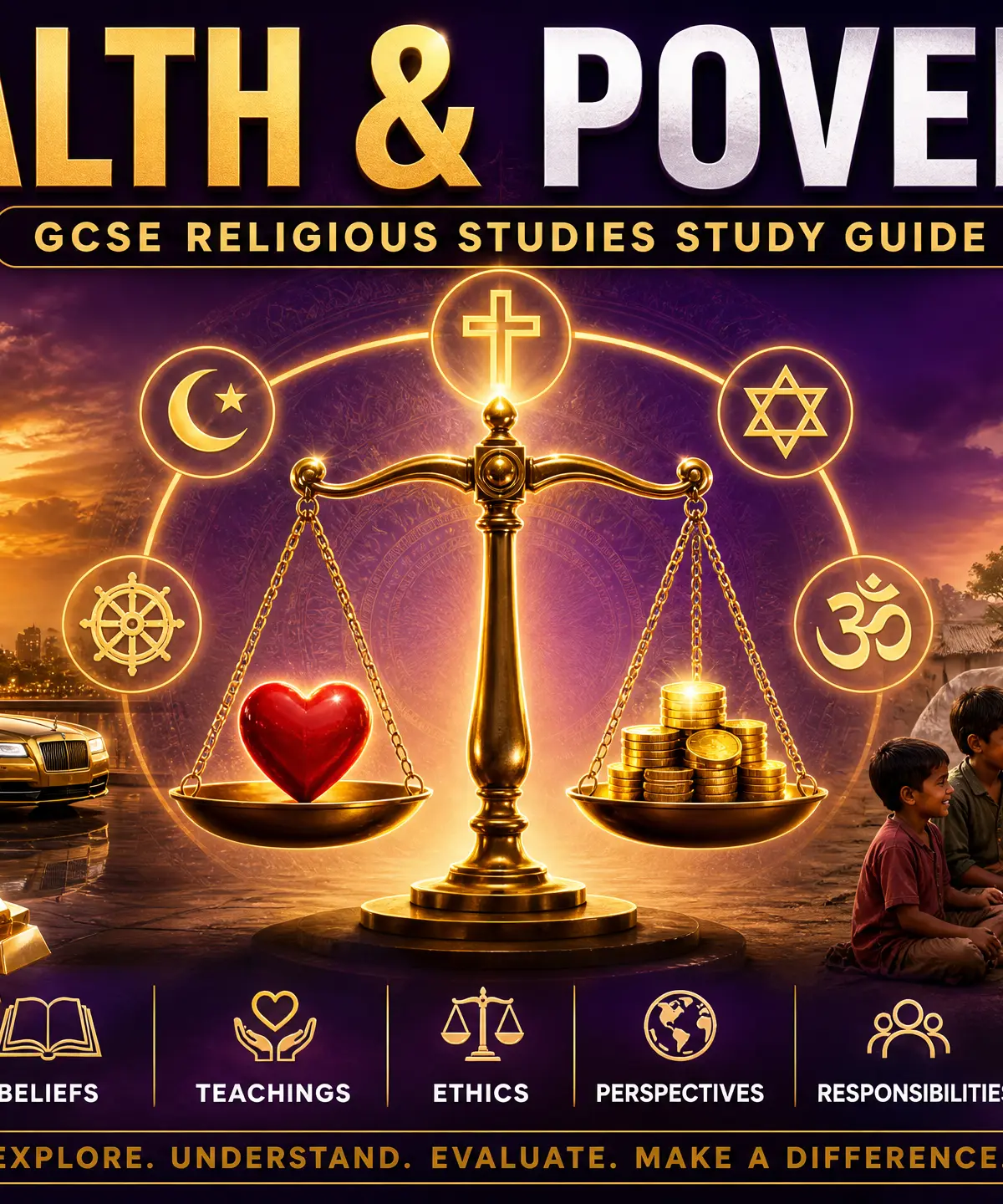
This study guide covers the crucial GCSE Religious Studies topic of Wealth and Poverty. It explores how major world religions view money, the moral responsibilities of wealth, the structural causes of poverty, and how religious organisations actively work to create a more just society.
- 7 min read
- 3 worked examples
- 3 practice questions
- 6 key terms
Study Notes
Overview
Wealth and Poverty is a fundamental theme in GCSE Religious Studies because it bridges the gap between abstract theology and real-world ethics. Examiners want to see that you understand not just what religions teach about money, but why they teach it, and how these beliefs are put into action.
At its core, no major world religion teaches that wealth is inherently evil. Instead, they teach that wealth is a test of character and a tool that brings significant moral responsibility. In this topic, you must be able to contrast the Christian emphasis on stewardship and agape (unconditional love) with the Islamic framework of Zakah (obligatory charity) and wealth as an amanah (trust from Allah). Furthermore, you must demonstrate an understanding of the structural causes of global poverty and evaluate the effectiveness of religious charities like CAFOD, Christian Aid, and Islamic Relief in addressing both short-term emergencies and long-term systemic injustice.
Religious Teachings on Wealth
Christianity
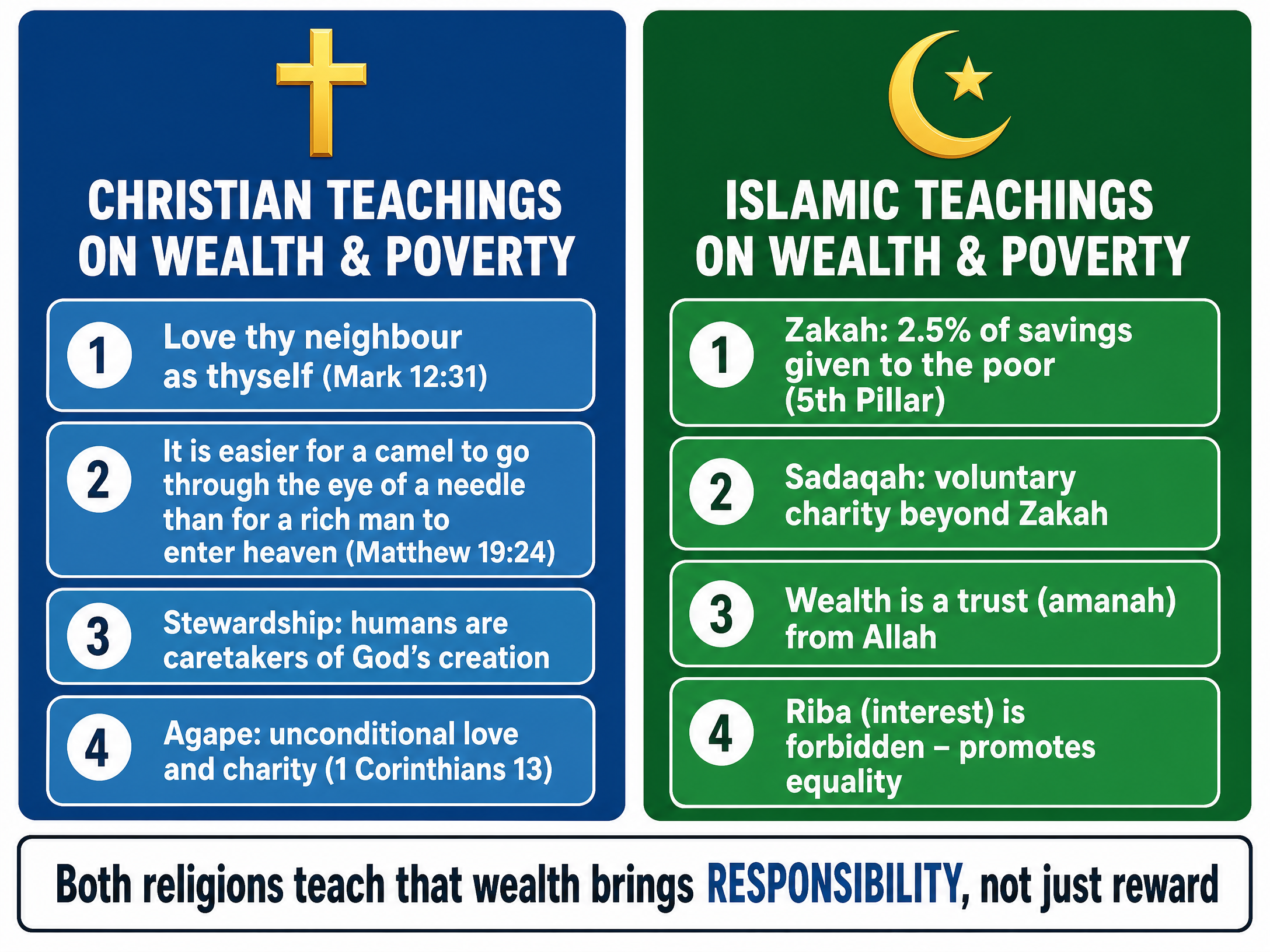
Key Concept: StewardshipChristians believe that God created the world and everything in it. Therefore, humans do not truly 'own' their wealth; they are merely caretakers, or stewards, of God's resources. This means wealth must be used responsibly and generously to care for others and the planet.
Key Concept: Agape
Agape is the Greek word used in the New Testament for unconditional, selfless love. Jesus demonstrated this love throughout his ministry, particularly towards the poor and marginalized. Christians are called to show agape through acts of charity, campaigning for justice, and sharing their resources.
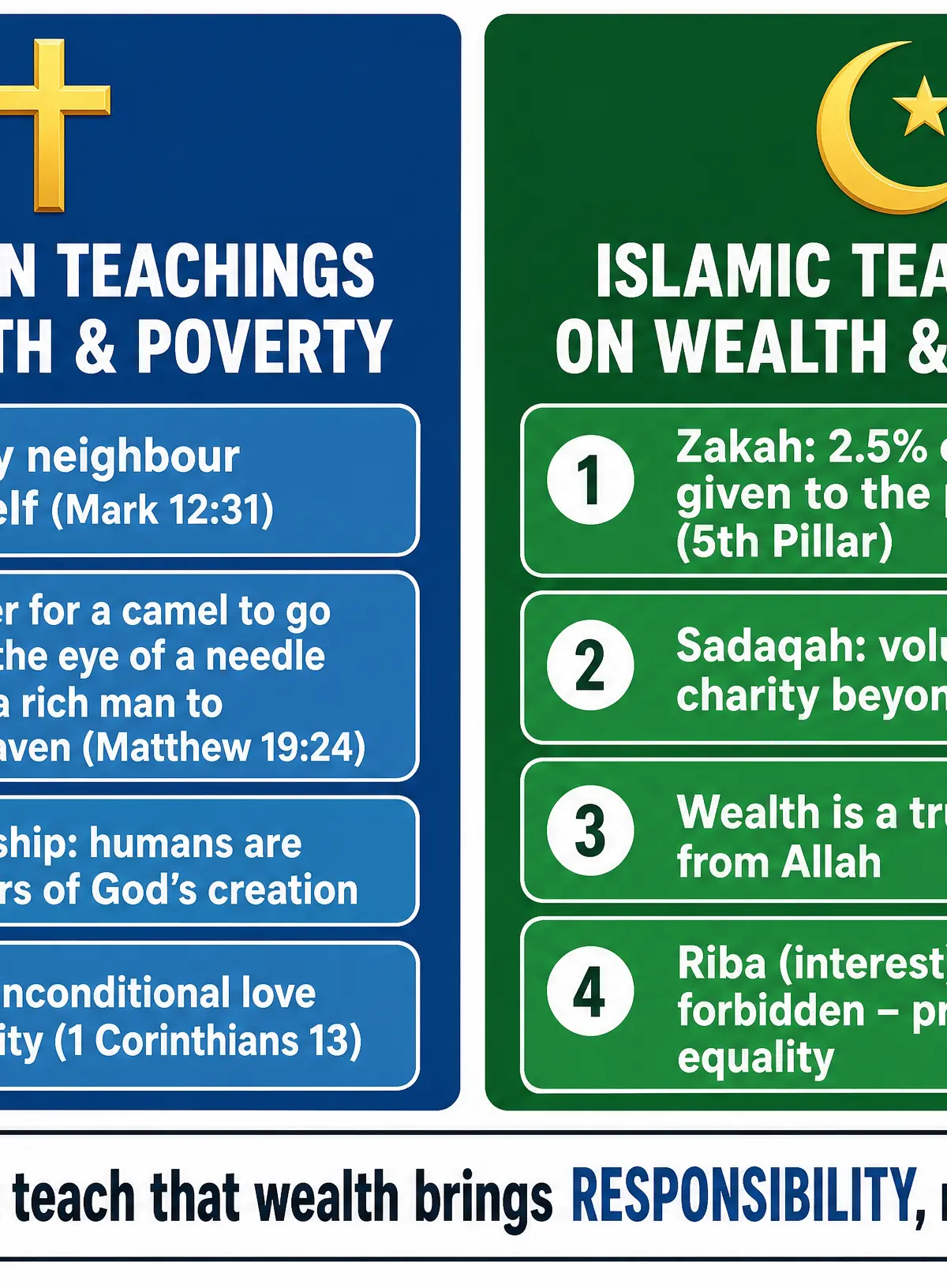
The Dangers of WealthThe Bible contains strong warnings about the spiritual dangers of greed. In Matthew 19:24, Jesus states: "It is easier for a camel to go through the eye of a needle than for a rich man to enter the kingdom of God." This illustrates that an obsession with wealth can distract a person from God and prevent them from showing compassion to their neighbour. Similarly, 1 Timothy 6:10 warns that "the love of money is the root of all evil" — highlighting that it is the attachment to money, rather than the money itself, that causes sin.
Islam
**Key Concept: Wealth as an Amanah (Trust)**In Islam, everything ultimately belongs to Allah. Any wealth a person acquires is seen as an amanah (a trust or loan) from God. Muslims believe they will be judged on the Day of Judgement regarding how they acquired and spent their wealth. It must be earned honestly (halal) and spent responsibly.
Key Concept: Zakah and Sadaqah
Zakah is the Third Pillar of Islam. It is a compulsory act of worship requiring Muslims who meet a certain threshold of wealth (nisab) to give 2.5% of their annual savings to the poor. The word Zakah means 'purification' — giving this money purifies the rest of a Muslim's wealth and helps prevent greed. Sadaqah refers to any voluntary act of charity given above and beyond Zakah, given out of compassion (rahma).
The Prohibition of RibaIslam strictly forbids Riba (charging or paying interest on loans). This is because interest exploits those who are already vulnerable, trapping the poor in cycles of debt while making the rich richer without any productive effort. Islamic finance instead relies on sharing risk and profit fairly.
Causes of Poverty
Examiners expect you to understand that poverty is rarely just the fault of the individual; it is often caused by structural and systemic issues. Religious teachings on social justice demand that these root causes are challenged.
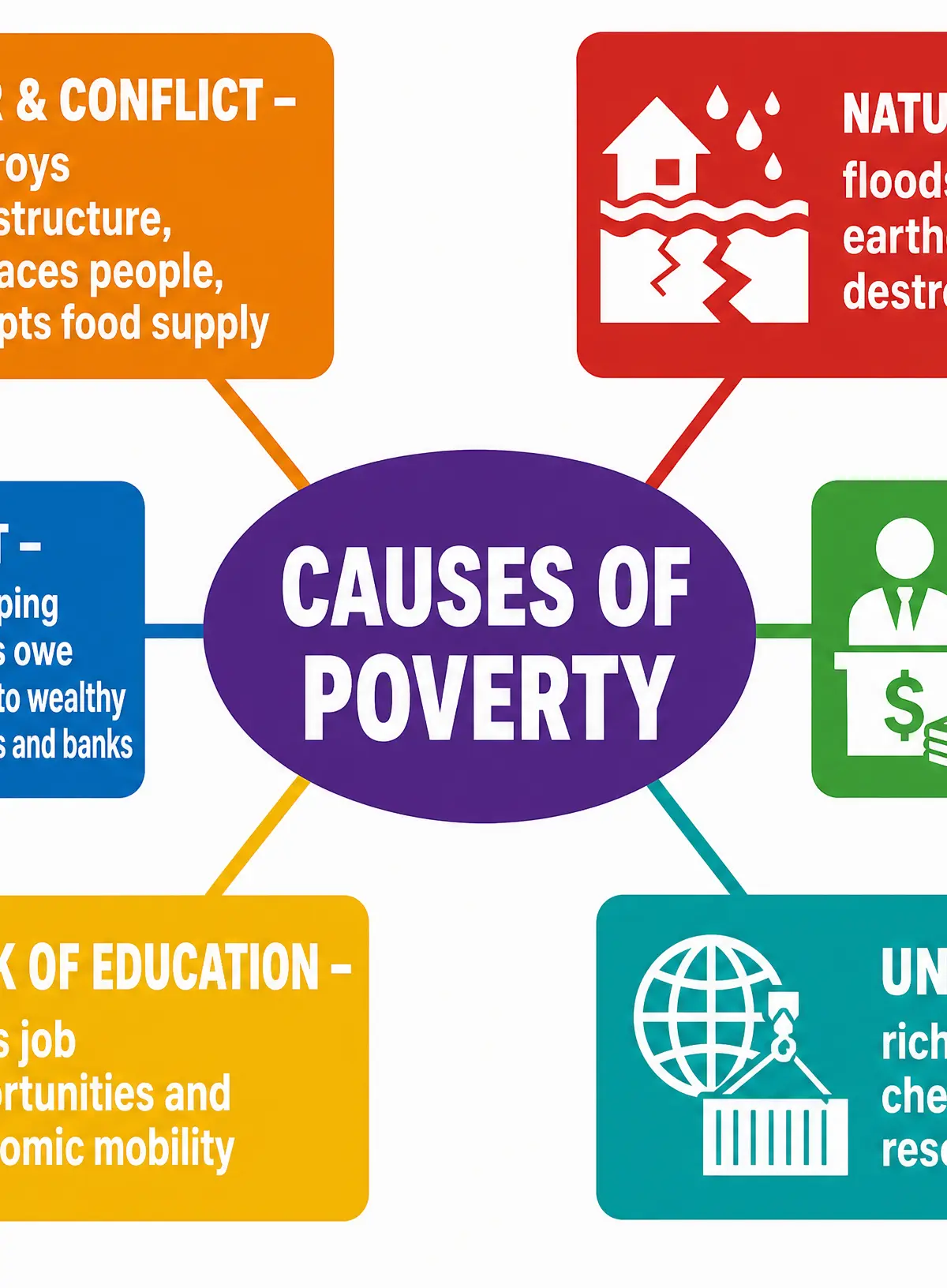
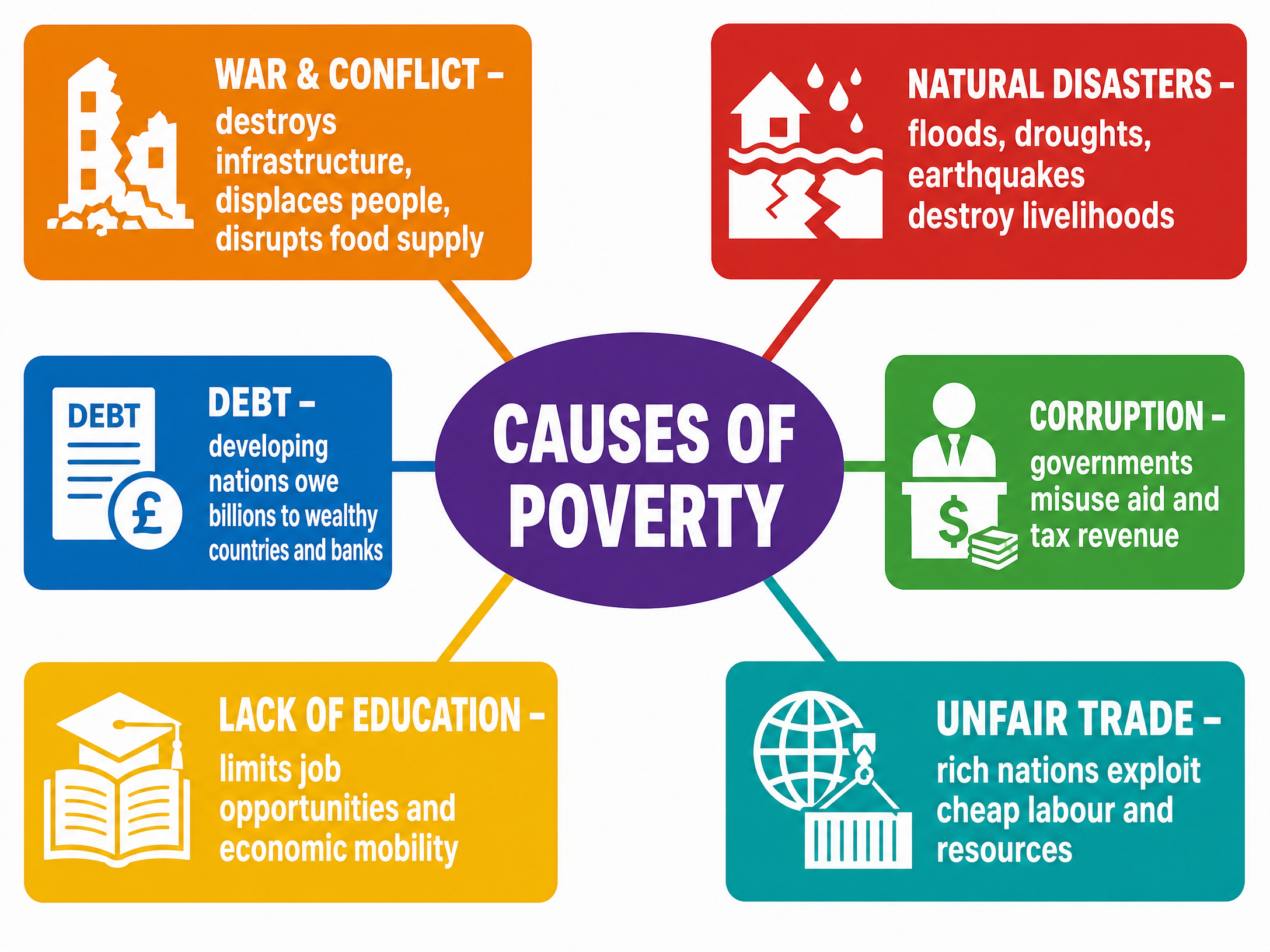
1. War and ConflictArmed conflict destroys infrastructure (schools, hospitals, roads), displaces millions of people, and disrupts farming and trade. Resources that could be used for development are instead spent on weapons.
2. Natural Disasters and Climate ChangeEvents like floods, droughts, and earthquakes can wipe out a community's livelihood overnight. Climate change is exacerbating these issues, disproportionately affecting poorer nations that lack the infrastructure to recover quickly.
3. Unfair TradeGlobal trade rules often favour wealthy nations. Developing countries may be forced to sell raw materials at low prices, while workers are exploited in sweatshops to produce cheap goods for Western consumers.
4. DebtMany developing nations owe billions in debt to wealthy countries and international institutions. The interest payments on these loans often exceed what the country spends on healthcare and education combined.
5. CorruptionIn some nations, corrupt governments misuse tax revenues or foreign aid, siphoning money away from public services and into private bank accounts.
Religious Organisations in Action
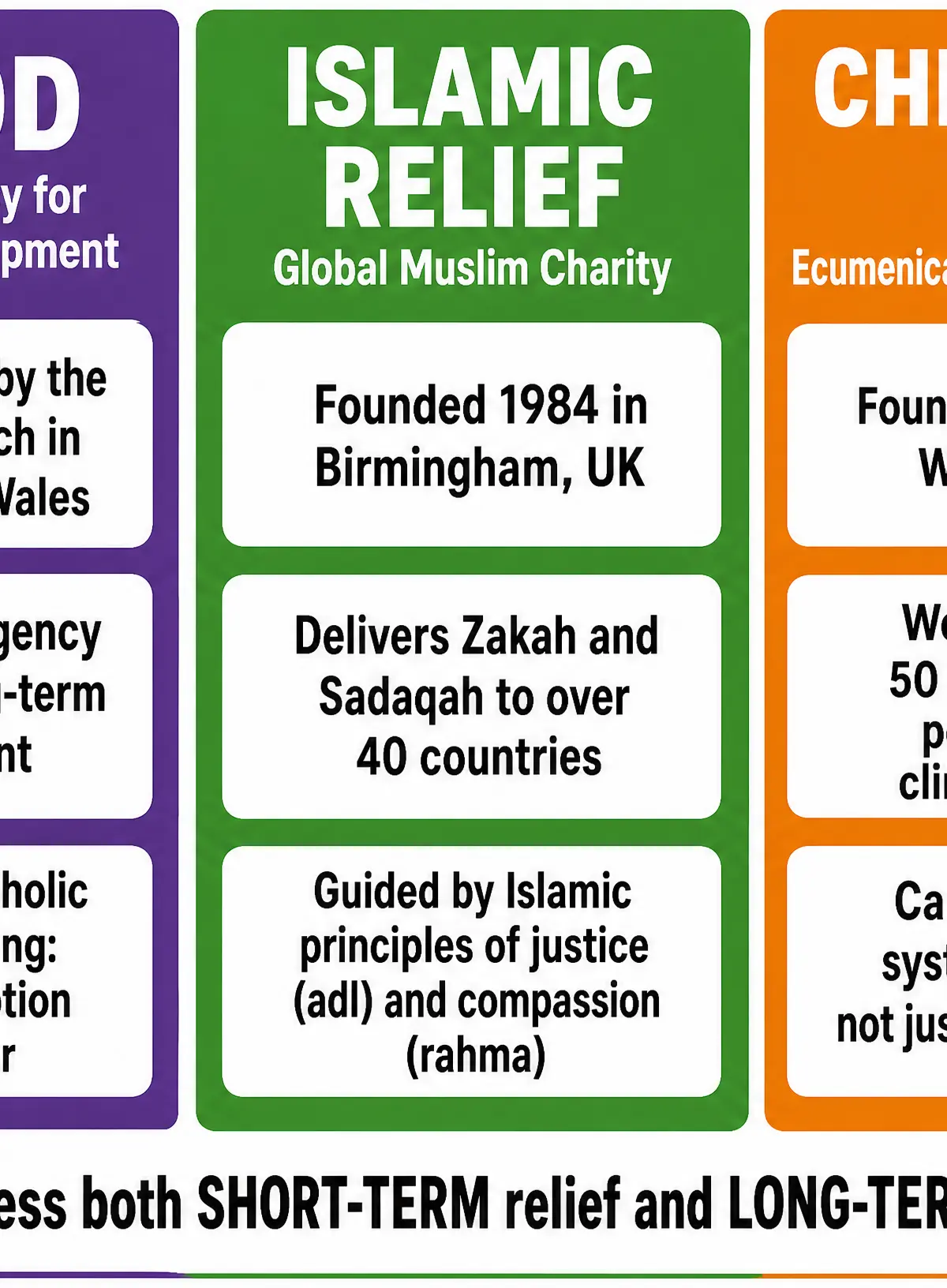
Religions do not just preach about poverty; they actively work to eradicate it. You must be able to name specific charities and explain how their religious beliefs motivate their work. All major religious charities focus on two areas: short-term emergency relief (e.g., providing food and shelter after a disaster) and long-term development (e.g., building schools, digging wells, and campaigning for fair trade).
CAFOD (Catholic Agency for Overseas Development)
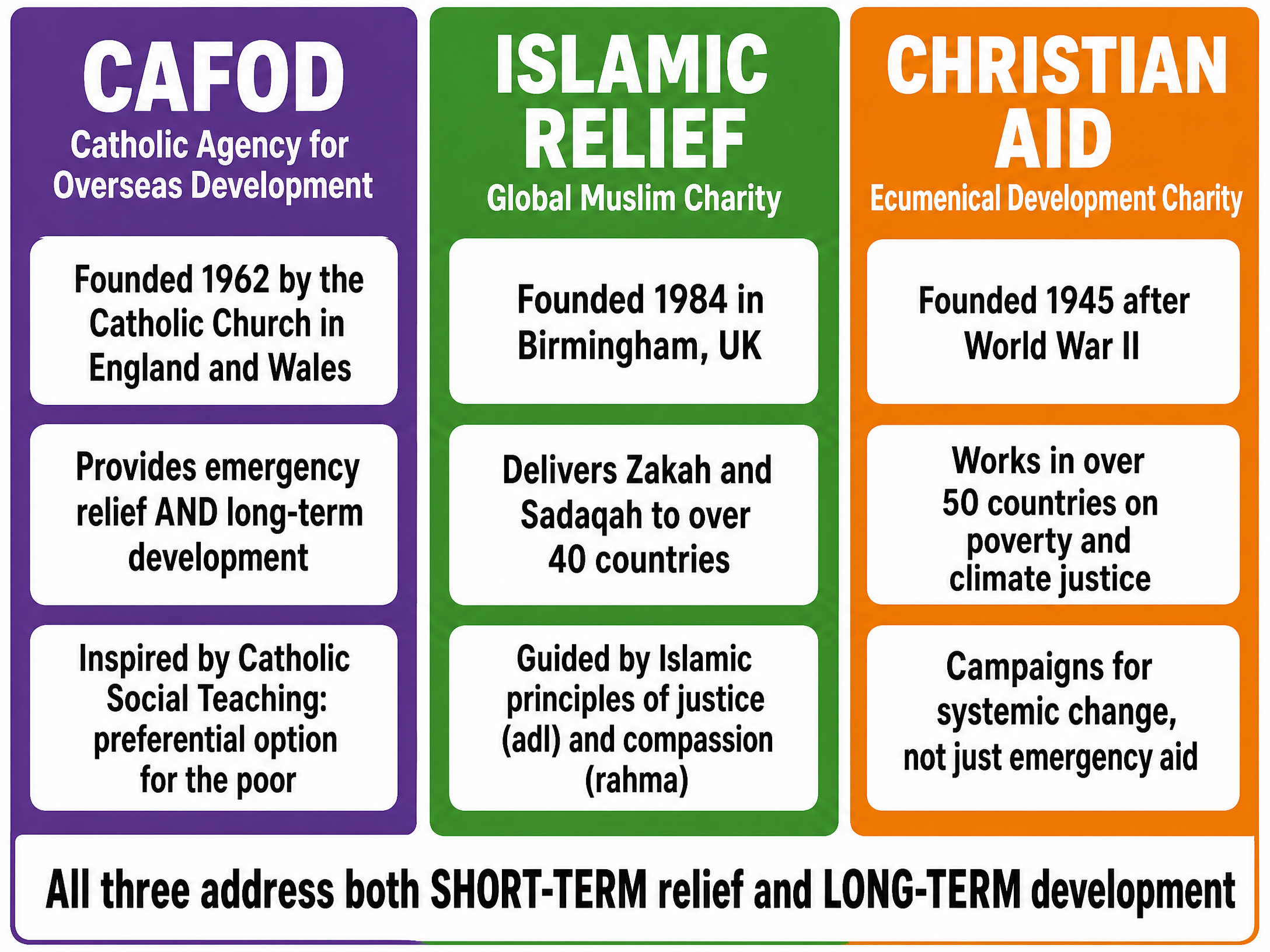
CAFOD is the official aid agency of the Catholic Church in England and Wales. Its work is deeply rooted in Catholic Social Teaching, particularly the principle of the "preferential option for the poor" — the belief that society must be judged by how it treats its most vulnerable members. CAFOD provides emergency aid but also works on long-term projects like sustainable agriculture and climate justice.
Islamic Relief
Founded in the UK, Islamic Relief is a global charity inspired by the Islamic values of adl (justice) and rahma (compassion). It distributes Zakah and Sadaqah to millions of people in over 40 countries. Their projects range from providing emergency food parcels in conflict zones like Yemen, to funding orphan sponsorships and building water infrastructure.
Christian Aid
Christian Aid is an ecumenical charity (supported by multiple Christian denominations). While they provide extensive emergency relief, they are particularly known for their strong advocacy and campaigning work. They lobby governments to drop unjust debts, tackle climate change, and reform unfair tax systems, reflecting the Christian belief that true agape requires fighting systemic injustice, not just treating its symptoms.
Listen to the Podcast
For a comprehensive review of this topic, listen to our 10-minute revision podcast. It covers the key concepts, specific quotes, and crucial exam technique advice to help you secure top marks.

Visual Resources
3 diagrams and illustrations
Interactive Diagrams
1 interactive diagram to visualise key concepts
Conceptual Flow Outline
Flowchart connecting religious concepts of wealth to charitable action
Worked Examples
3 worked examples — open one to explore the question and available guidance.
Practice Questions
Test your understanding — click to reveal model answers
Explain two ways in which religious believers might try to reduce poverty. (4 marks)
Hint: Think about both individual actions (like giving money) and collective actions (like campaigning).
Explain two religious teachings about charity. Refer to sacred writings or another source of religious belief and teaching in your answer. (5 marks)
Hint: You must include a specific quote or reference to get the 5th mark.
'Religious charities should only focus on emergency relief, not long-term development.' Evaluate this statement. (12 marks)
Hint: Contrast the immediate need to save lives (emergency relief) with the religious duty to fight systemic injustice (long-term development).