AQA · A-Level · Sociology
Course version: 7192 · Version from Sept 2015
Stratification and differentiation by social class, gender, ethnicity and…
Full specification wording
Stratification and Differentiation: stratification and differentiation by social class, gender, ethnicity and age
Social stratification is the hierarchical ranking of individuals into divisions of power and wealth, whereas differentiation distinguishes between people based on social characteristics.
Checked against the AQA 7192 specification (opens in a new tab) on .
- Point 1 of 3
- 4 key terms
Study notes
From the checked teaching notes for this specification point.
The idea
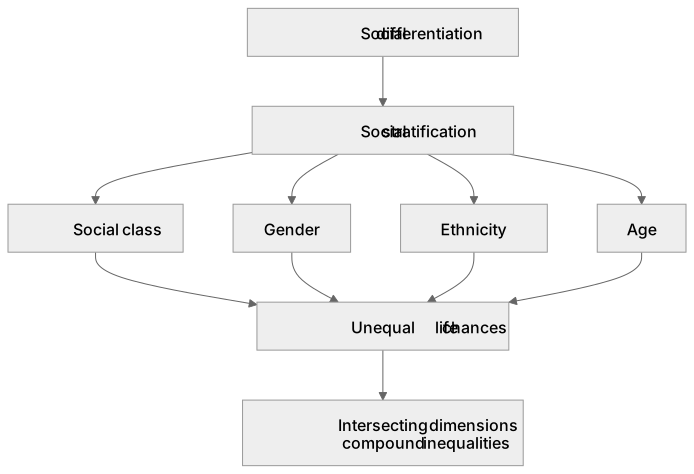
Social stratification is the hierarchical ranking of individuals into divisions of power and wealth, whereas differentiation distinguishes between people based on social characteristics. Sociologists analyse how these processes operate across four key dimensions: social class, gender, ethnicity, and age. Class stratification involves economic inequalities and unequal access to resources. Gender differentiation examines patriarchal structures and unequal life chances. Ethnicity-based stratification explores how discrimination and institutional biases create social hierarchies. Finally, age stratification looks at how different age groups, such as the youth or the elderly, experience varying levels of status and power. Understanding these intersecting dimensions is crucial for explaining structural inequalities.
What earns the marks
- Define social stratification as a system of unequal rewards and hierarchical ranking within a society.
- Define social differentiation as the process of categorising people based on differences such as age, gender, or ethnicity.
- Identify how social class creates stratification through the unequal distribution of wealth, income, and occupational status.
- Explain how gender, ethnicity, and age act as bases for stratification, leading to differing life chances and experiences of discrimination or patriarchy.
Common mistakes and how to put them right
Confusing stratification with differentiation.
Put it right: Differentiation is merely recognising social differences, whereas stratification involves ranking those differences hierarchically to create inequality.
Treating the four dimensions in isolation.
Put it right: Recognise that class, gender, ethnicity, and age often intersect to compound inequalities, a concept known as intersectionality.
Assuming age stratification only affects the elderly.
Put it right: Age stratification affects all age groups, including children and youths who may lack power, autonomy, and economic independence.
Exam tips
- When discussing stratification, always link the dimension (such as gender or ethnicity) to specific life chances, such as health, education, or employment outcomes.
- Use specific sociological perspectives, such as Marxism for class or Feminism for gender, to explain why stratification exists and persists.
- Remember to clearly distinguish between differentiation (differences) and stratification (inequalities) in introductory definitions.
Try the lesson
The start of the Stratification and Differentiation: stratification and differentiation by social class, gender, ethnicity and age lesson, made from checked teaching notes for this specification point.
Have a go first
In sociology, how does the concept of social differentiation differ from social stratification?
Listen
Social stratification is the hierarchical ranking of individuals into divisions of power and wealth, whereas differentiation distinguishes between people based on social characteristics. Sociologists analyse how these processes operate across four key dimensions: social class, gender, ethnicity, and age. Class stratification involves economic inequalities and unequal access to resources. Gender differentiation examines patriarchal structures and unequal life chances. Ethnicity-based stratification explores how discrimination and institutional biases create social hierarchies. Finally, age stratification looks at how different age groups, such as the youth or the elderly, experience varying levels of status and power. Understanding these intersecting dimensions is crucial for explaining structural inequalities. A strong answer earns marks for these points. Define social stratification as a system of unequal rewards and hierarchical ranking within a society. Define social differentiation as the process of categorising people based on differences such as age, gender, or ethnicity. Identify how social class creates stratification through the unequal distribution of wealth, income, and occupational status. Explain how gender, ethnicity, and age act as bases for stratification, leading to differing life chances and experiences of discrimination or patriarchy. A common slip: Confusing stratification with differentiation. Instead, Differentiation is merely recognising social differences, whereas stratification involves ranking those differences hierarchically to create inequality. Exam tip: When discussing stratification, always link the dimension (such as gender or ethnicity) to specific life chances, such as health, education, or employment outcomes.
See it
Key words
Say what each word means before you turn the card.
Social stratification
Try answering aloud or in your head before turning the card.
Social differentiation
Try answering aloud or in your head before turning the card.
Intersectionality
Try answering aloud or in your head before turning the card.
Life chances
Try answering aloud or in your head before turning the card.
See every definition
- Social stratification
- The hierarchical ranking of individuals into divisions of power and wealth, involving unequal rewards within a society.
- Social differentiation
- The process of categorising people based on differences such as age, gender, or ethnicity, merely recognising social differences.
- Intersectionality
- A concept recognising that class, gender, ethnicity, and age often intersect to compound inequalities.
- Life chances
- The differing outcomes and experiences that bases for stratification lead to for different social groups.
Label the diagram
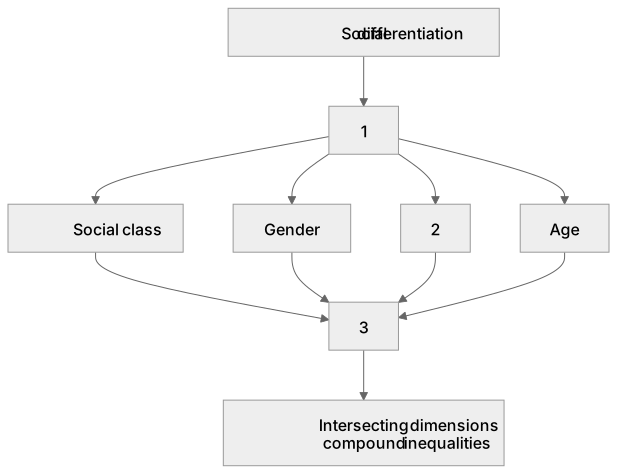
Some boxes have lost their names. Pick the right name for each number.
1Box 1
2Box 2
3Box 3
There is more to this lesson
The full lesson goes on to check your understanding and help you earn the marks. Create a free account to carry on, with your progress saved.
A week of Premium from your first lesson · Then the free plan continues · No card, no charge
Test your understanding of Stratification and Differentiation: stratification and differentiation by social class, gender, ethnicity and age
Active recall beats re-reading. Take an instant quiz now to test what you’ve learned and lock it into long-term memory.
A week of Premium from your first lesson · Then the free plan continues · No card, no charge