AQA · A-Level · Business
Course version: 7132 · Version from Sept 2023
Using the marketing mix: The influences on and effects of changes in the…
Full specification wording
Making marketing decisions: using the marketing mix: The influences on and effects of changes in the elements of the marketing mix (to include: The marketing mix should be considered for goods and services, both industrial and consumer.)
The marketing mix is dynamic.
- Point 2 of 9
- 4 key terms
Study notes
From the teaching notes for this specification point.
The idea
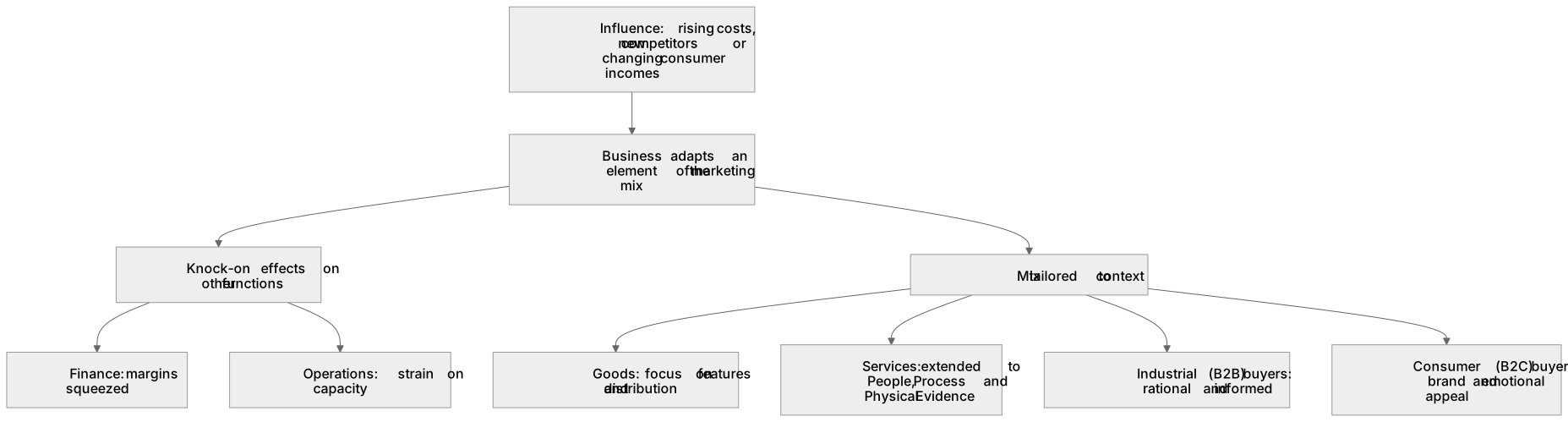
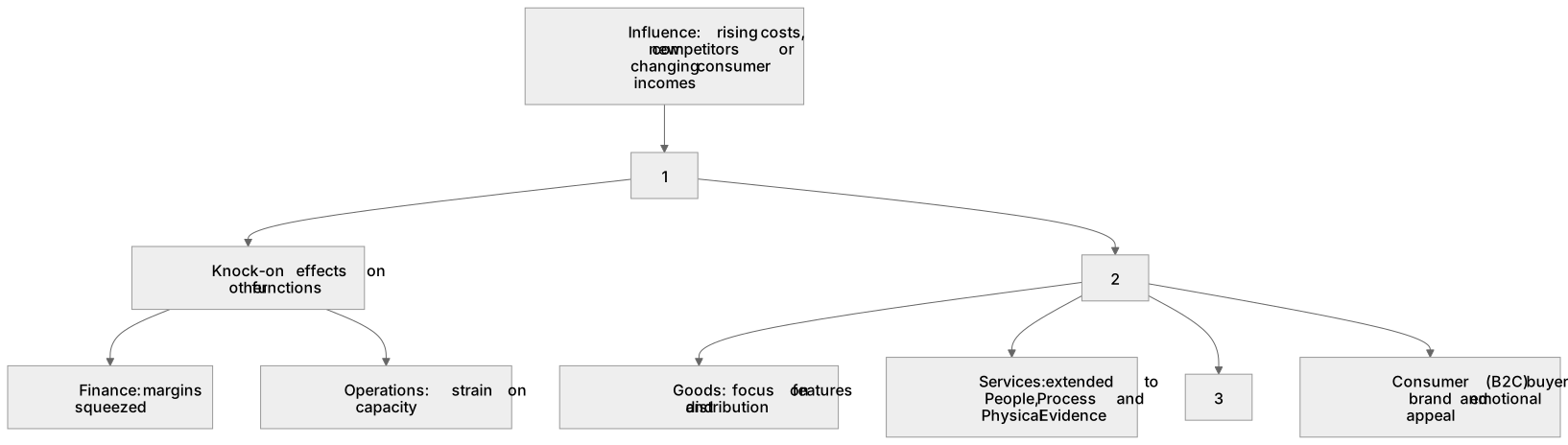
The marketing mix is dynamic. Influences like rising costs, new competitors, or changing consumer incomes force businesses to adapt. Any change has knock-on effects: a price cut might boost volume but squeeze margins and strain operations. The mix must be tailored to the context. For tangible goods, the focus is on features and distribution. For intangible services, the mix is often extended to include People (staff delivering the service), Process (the customer experience), and Physical Evidence (tangible clues about quality). The customer type also matters. Industrial (B2B) buyers are often rational and informed, valuing technical support and credit terms, whereas consumer (B2C) marketing may focus more on brand and emotional appeal.
What earns the marks
- Picking a specific influence out of the case study, such as a rival launch, and tracing its effect on one element of the mix.
- Explaining how the marketing mix for a service differs from that for a good, for example by focusing on the 'People' or 'Process' elements.
- Distinguishing an industrial (B2B) buyer from a consumer (B2C), recommending tools like personal selling for the former and mass advertising for the latter.
- Recognising that a change in the mix affects other functions, explaining whether operations, human resources or finance feels the impact first.
Common mistakes and how to put them right
Applying a marketing mix suitable for physical goods to a service business, for example ignoring the importance of staff training ('People').
Assuming every firm sells to households, so an answer about a components manufacturer discusses television advertising instead of trade credit.
Claiming that a price cut always raises revenue, which only holds if demand is price elastic.
Put it right: This is often not the case for branded products.
Exam tips
- Data response items often give sales figures before and after a change in the mix; use these numbers to calculate the impact on revenue or profit.
- The specification mentions goods/services and industrial/consumer markets as a signal that questions may be set in unfamiliar contexts. First, identify the product and customer type.
Try the lesson
The start of the Making marketing decisions: using the marketing mix: The influences on and effects of changes in the elements of the marketing mix (to include: The marketing mix should be considered for goods and services, both industrial and consumer.) lesson, made from teaching notes for this specification point.
Have a go first
Which element of the marketing mix refers to the channels a business uses to make a product available to customers?
Listen
The marketing mix is dynamic. Influences like rising costs, new competitors, or changing consumer incomes force businesses to adapt. Any change has knock-on effects: a price cut might boost volume but squeeze margins and strain operations. The mix must be tailored to the context. For tangible goods, the focus is on features and distribution. For intangible services, the mix is often extended to include People (staff delivering the service), Process (the customer experience), and Physical Evidence (tangible clues about quality). The customer type also matters. Industrial (B2B) buyers are often rational and informed, valuing technical support and credit terms, whereas consumer (B2C) marketing may focus more on brand and emotional appeal. A strong answer earns marks for these points. Picking a specific influence out of the case study, such as a rival launch, and tracing its effect on one element of the mix. Explaining how the marketing mix for a service differs from that for a good, for example by focusing on the 'People' or 'Process' elements. Distinguishing an industrial (B2B) buyer from a consumer (B2C), recommending tools like personal selling for the former and mass advertising for the latter. Recognising that a change in the mix affects other functions, explaining whether operations, human resources or finance feels the impact first. Exam tip: Data response items often give sales figures before and after a change in the mix; use these numbers to calculate the impact on revenue or profit.
See it
Key words
Say what each word means before you turn the card.
influences on the marketing mix
Try answering aloud or in your head before turning the card.
goods vs services marketing
Try answering aloud or in your head before turning the card.
industrial vs consumer marketing
Try answering aloud or in your head before turning the card.
interrelatedness of business functions
Try answering aloud or in your head before turning the card.
See every definition
- influences on the marketing mix
- Rising costs, new competitors or changing consumer incomes force businesses to adapt the marketing mix, which is dynamic.
- goods vs services marketing
- For tangible goods the focus is on features and distribution, while for intangible services the mix is often extended to include People, Process and Physical Evidence.
- industrial vs consumer marketing
- Industrial (B2B) buyers are often rational and informed, valuing technical support and credit terms, whereas consumer (B2C) marketing may focus more on brand and emotional appeal.
- interrelatedness of business functions
- Any change in the mix has knock-on effects, so a price cut might boost volume but squeeze margins and strain operations.
Label the diagram
Some boxes have lost their names. Pick the right name for each number.
1Box 1
2Box 2
3Box 3
There is more to this lesson
The full lesson goes on to check your understanding and help you earn the marks. Create a free account to carry on, with your progress saved.
A week of Premium from your first lesson · Then the free plan continues · No card, no charge
Test your understanding of Making marketing decisions: using the marketing mix: The influences on and effects of changes in the elements of the marketing mix (to include: The marketing mix should be considered for goods and services, both industrial and consumer.)
Active recall beats re-reading. Take an instant quiz now to test what you’ve learned and lock it into long-term memory.
A week of Premium from your first lesson · Then the free plan continues · No card, no charge