AQA · GCSE · Business
Course version: 8132 · Version from Sept 2017
Good customer services
This study guide covers the critical role of customer service in business success. It explains the methods used, the financial and reputational impacts of good versus poor service, and how ICT has revolutionised customer interactions.
- Point 13 of 19
- 4 min read
- 3 worked examples
- 5 practice questions
- 4 key terms
Study Notes
Overview
Customer service is the experience a business provides for its customers before, during, and after a purchase. In GCSE Business, examiners expect you to understand that customer service is not just about 'being nice'—it is a strategic function that directly impacts a business's reputation, revenue, and profitability. You must be able to identify specific methods of delivering good service, explain the consequences of both good and poor service, and analyse how Information and Communication Technology (ICT) has transformed the way businesses interact with their customers.
Methods of Good Customer Service
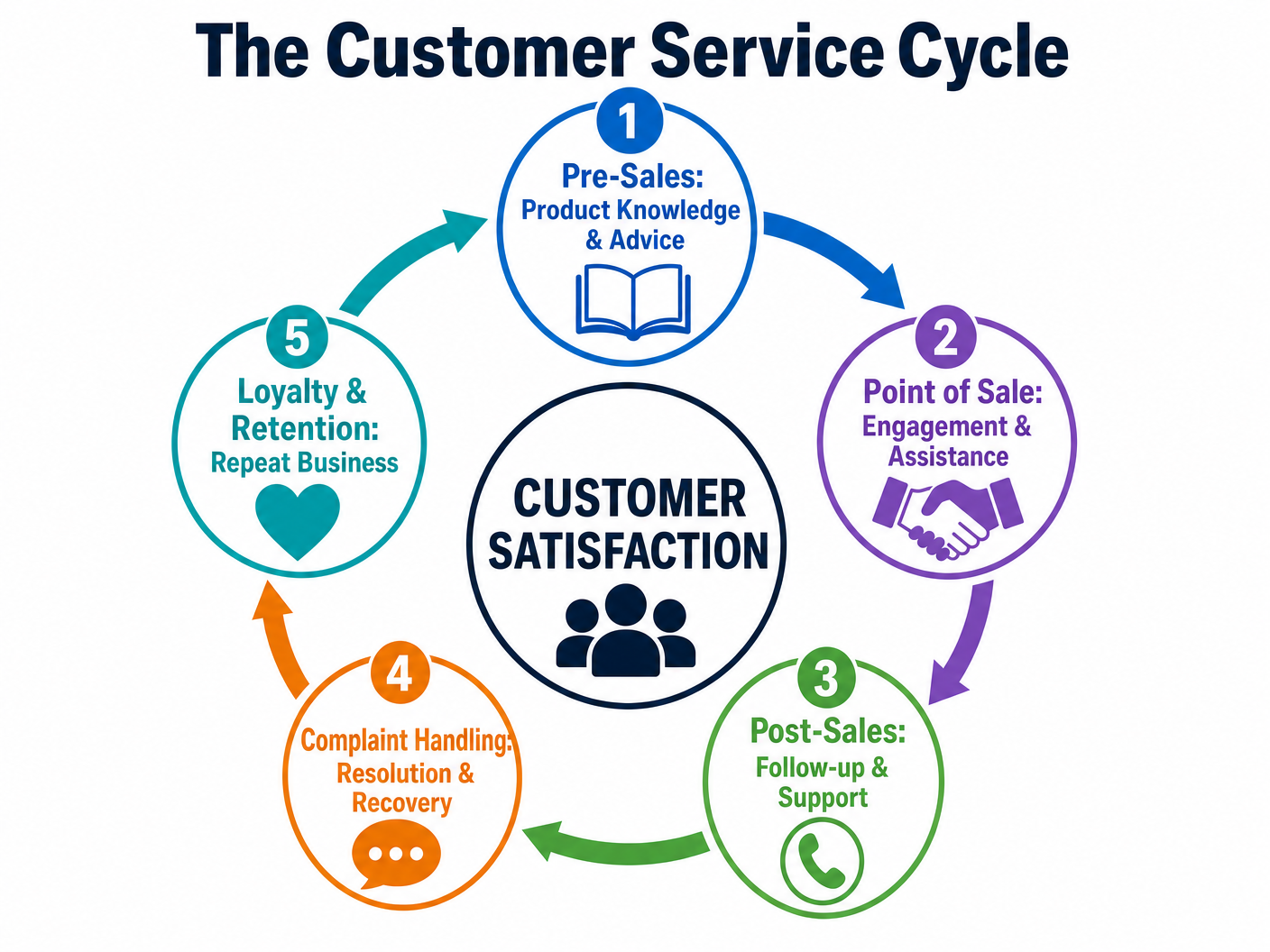
Product Knowledge
What it is: Staff having a deep understanding of the products or services they are selling.
Why it matters: It allows staff to provide accurate advice, helping customers make informed decisions. This builds trust and increases the likelihood of a sale. For example, an Apple Store employee advising a customer on which iPad best suits their needs.
Customer Engagement
What it is: The way staff interact with customers—being polite, approachable, and responsive.
Why it matters: Positive interactions make customers feel valued. This includes greeting them, answering questions promptly, and resolving issues efficiently. A friendly and helpful attitude can differentiate a business from its competitors.
Post-Sales Services
What it is: The support provided after a purchase has been made.
Why it matters: This includes warranties, clear returns policies, delivery updates, and follow-up communications. Strong post-sales support (like John Lewis's generous returns policy) reassures customers and builds long-term loyalty.
 Open full-size image (opens in a new tab)
The Impact of Customer Service
Benefits of Good Customer Service
Customer Satisfaction: Meeting or exceeding expectations leaves customers feeling positive about their experience.
Customer Loyalty: Satisfied customers are more likely to return for repeat purchases.
Increased Revenue and Profit: Loyal customers spend more over time. Furthermore, good service generates positive word-of-mouth (free marketing), attracting new customers and driving up sales and profit margins.
Enhanced Reputation: A strong reputation for excellent service can become a unique selling point (USP), giving the business a competitive advantage.
Dangers of Poor Customer Service
Dissatisfied Customers: Customers who feel ignored or poorly treated will take their business elsewhere.
Poor Reputation: In the digital age, a bad experience can quickly escalate through negative online reviews (e.g., on Trustpilot) or social media complaints. This damages the brand's image.
Reduction in Revenue: Lost customers and a damaged reputation inevitably lead to falling sales and lower profits.
The Role of ICT in Customer Service
Information and Communication Technology (ICT) has drastically changed customer service expectations and delivery.
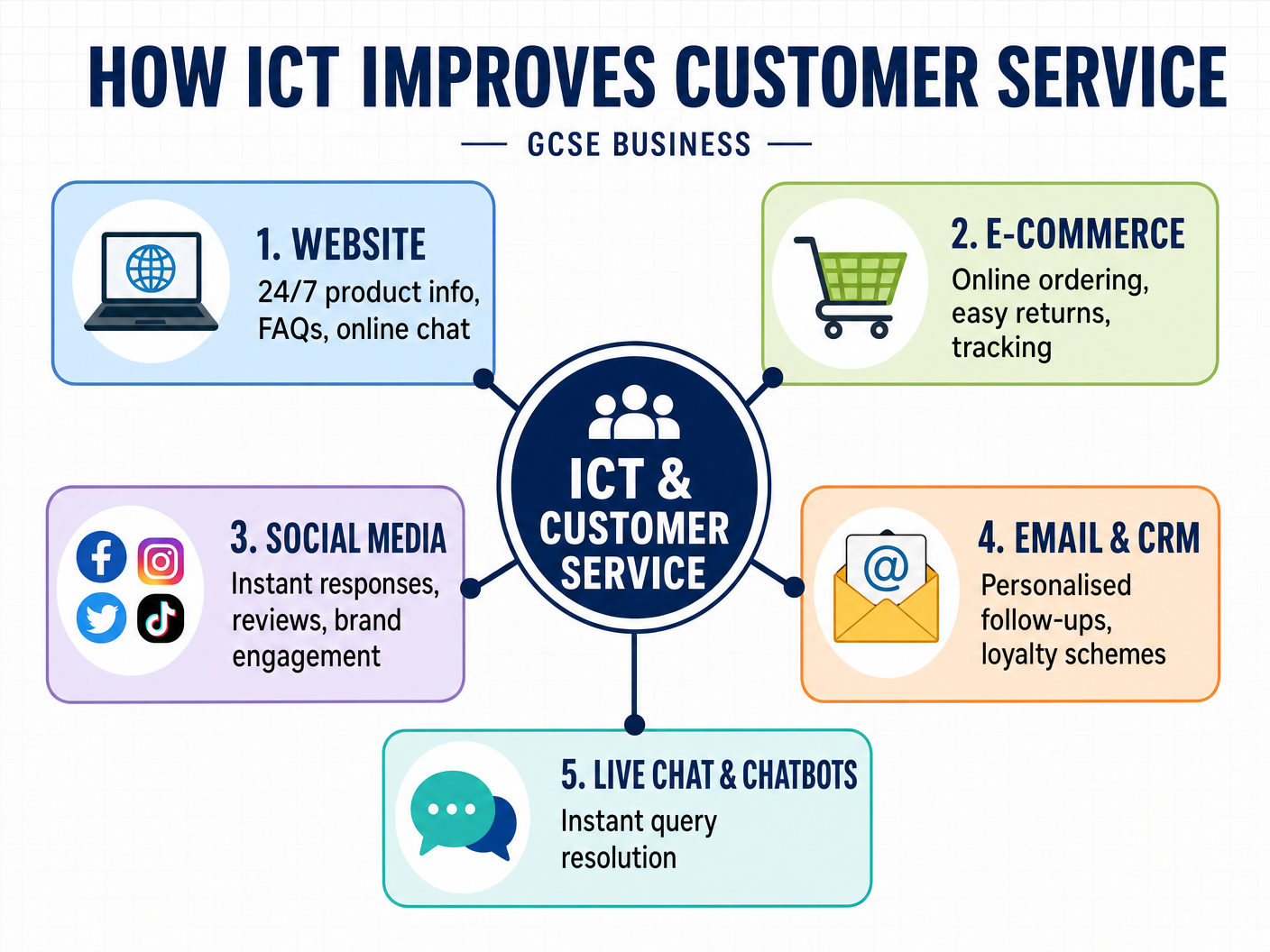
Websites and E-Commerce
Businesses use websites to provide 24/7 access to product information, FAQs, and contact details. E-commerce platforms allow for seamless online ordering, order tracking, and easy returns, increasing convenience for the customer.
Social Media
Platforms like X (formerly Twitter), Facebook, and Instagram allow businesses to engage directly with customers. They can respond to queries or complaints in real-time, often publicly, demonstrating their commitment to customer care.
Customer Relationship Management (CRM) Systems
CRM software stores customer data, including purchase history and preferences. This allows businesses to send personalised offers, targeted marketing, and tailored follow-up emails, making the customer feel valued.
 Open full-size image (opens in a new tab)
Audio Revision
Listen to our 10-minute podcast episode covering all the key concepts, exam tips, and a quick-fire recall quiz:
Try the lesson
The start of the Good customer services lesson, made from teaching notes for this specification point.
Have a go first
Which of the following is the most likely consequence for a business that has a high number of dissatisfied customers?
Listen
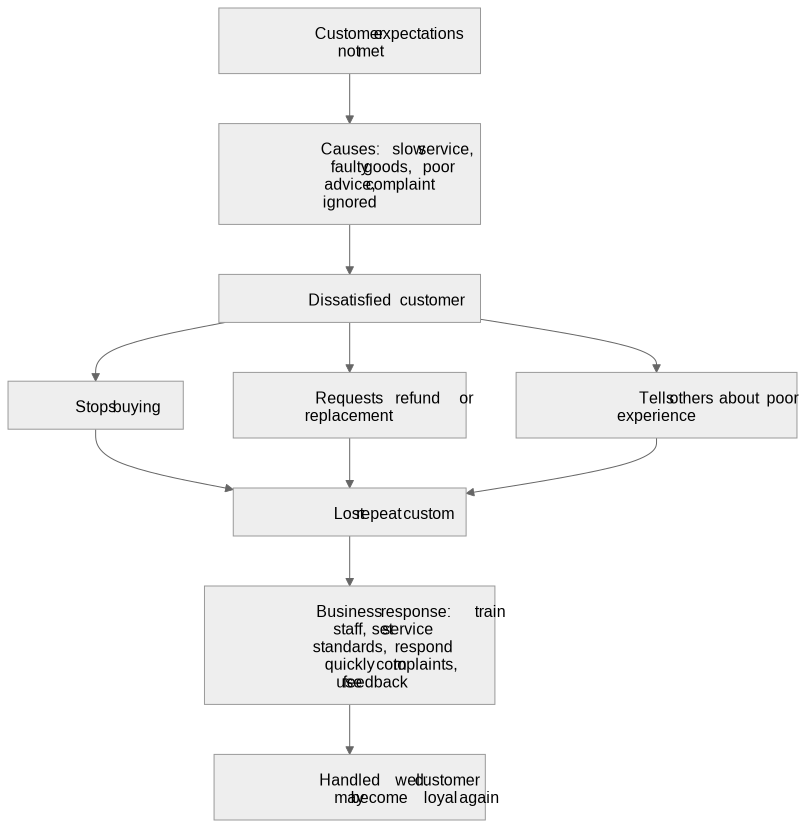
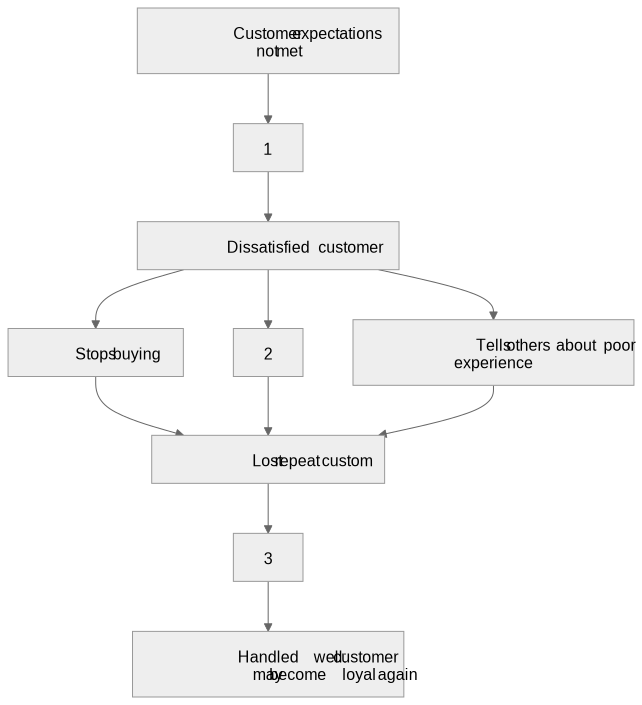
Dissatisfied customers are buyers whose expectations of a product or service have not been met, so they feel let down by the business. Poor customer service is a common cause: a customer may wait too long, receive a faulty item, get inaccurate advice or find a complaint ignored. The consequence is not simply one lost sale. A dissatisfied customer may stop buying, request a refund or replacement, and tell others about the poor experience. For a small business, losing repeat custom matters because regular customers provide reliable revenue and are cheaper to keep than to attract anew. Businesses can reduce dissatisfaction by training staff, setting clear service standards, responding quickly to complaints and using feedback to fix recurring problems. A dissatisfied customer who is handled well can sometimes become loyal again, so complaint handling is itself part of good customer service. A strong answer earns marks for these points. Defines dissatisfied customers as buyers whose expectations have not been met by the product or service received. Explains at least one cause of dissatisfaction, such as slow service, faulty goods, poor advice or an unresolved complaint. Explains a consequence for the business, such as lost repeat sales, refunds, wasted staff time or damage to reputation. Uses a relevant example, such as a café customer kept waiting and then choosing a rival café in future. A common slip: Treating dissatisfaction as only a lost sale. Instead, recognise wider effects such as refunds, complaint-handling costs and lost repeat custom. Exam tip: Link each point to business impact, for example lost repeat custom or higher staff time spent resolving complaints.
See it
Key words
Say what each word means before you turn the card.
Dissatisfied customers
Try answering aloud or in your head before turning the card.
Complaint handling
Try answering aloud or in your head before turning the card.
Repeat custom and revenue
Try answering aloud or in your head before turning the card.
Business reputation
Try answering aloud or in your head before turning the card.
See every definition
- Dissatisfied customers
- Buyers whose expectations of a product or service have not been met, so they feel let down by the business.
- Complaint handling
- Responding quickly to complaints, which is itself part of good customer service and can sometimes make a dissatisfied customer loyal again.
- Repeat custom and revenue
- Regular customers provide reliable revenue and are cheaper to keep than to attract anew, so losing them matters for a small business.
- Business reputation
- Damage to it is a consequence for the business when a dissatisfied customer tells others about the poor experience.
Label the diagram
Some boxes have lost their names. Pick the right name for each number.
1Box 1
2Box 2
3Box 3
There is more to this lesson
The full lesson goes on to check your understanding and help you earn the marks. Create a free account to carry on, with your progress saved.
A week of Premium from your first lesson · Then the free plan continues · No card, no charge
Worked Examples
3 worked examples — open one to explore the question and available guidance.
Practice Questions
Try the question, then reveal an answer plan or example response
State two methods a business could use to provide good customer service. (2 marks)
Hint: Think about what happens before and after a sale.
Explain how poor product knowledge could affect a business. (3 marks)
Hint: What happens if a customer asks a question and the staff member doesn't know the answer?
Analyse how a clothing retailer could use ICT to improve its customer service. (6 marks)
Hint: Think about websites, social media, and how they make shopping easier for the customer.
Evaluate the importance of post-sales service to a manufacturer of expensive electronics. (9 marks)
Hint: Why do people need reassurance when buying expensive items? What happens if it breaks?
Explain one way a business could use a CRM (Customer Relationship Management) system. (3 marks)
Hint: What data does a CRM hold and how can it be used to target customers?
Ready to test yourself interactively?
Active recall beats reading alone. Answer questions on Good customer services with instant AI scoring and mark scheme guidance.
A week of Premium from your first lesson · Then the free plan continues · No card, no charge
Exam technique
How to turn what you know into marks
How to approach the question
Always link customer service actions to business outcomes (revenue, profit, reputation).
How to structure your answer
- Analyse questions
- Two developed paragraphs showing detailed chains of impact, using connective language.
- Explain questions
- Point → Explanation → Development (Show the chain of consequence).
- Evaluate questions
- Arguments for → Arguments against / Alternatives → Justified conclusion.
Timing
Approximately 1 minute per mark.
Common pitfalls
- Confusing customer service with marketing or advertising.
- Writing 'customers will be happy' without linking it to loyalty, revenue, or profit.
- Failing to give specific examples of ICT (e.g., just saying 'computers' instead of 'CRM systems' or 'e-commerce').
What the command words want
- Analyse
- Show a detailed chain of cause and effect (6 marks).
- Explain
- Give a reason or benefit and develop it to show the impact (3 marks).
- Evaluate
- Look at both sides of an argument and make a final judgement (9-12 marks).
- State/Identify
- Give a simple fact or list item (1 mark).
Test your understanding of Good customer services
Active recall beats re-reading. Take an instant quiz now to test what you’ve learned and lock it into long-term memory.
A week of Premium from your first lesson · Then the free plan continues · No card, no charge