Pearson Edexcel · GCSE · Combined Science
Animal coordination, control and homeostasis
Master the body's elegant system for regulating blood glucose through the pancreas, insulin, and glucagon. This topic is heavily tested in exams, particularly the crucial differences between Type 1 and Type 2 diabetes and the calculations for Body Mass Index (BMI).
- 6 min read
- 3 worked examples
- 5 practice questions
- 6 key terms
Study Notes
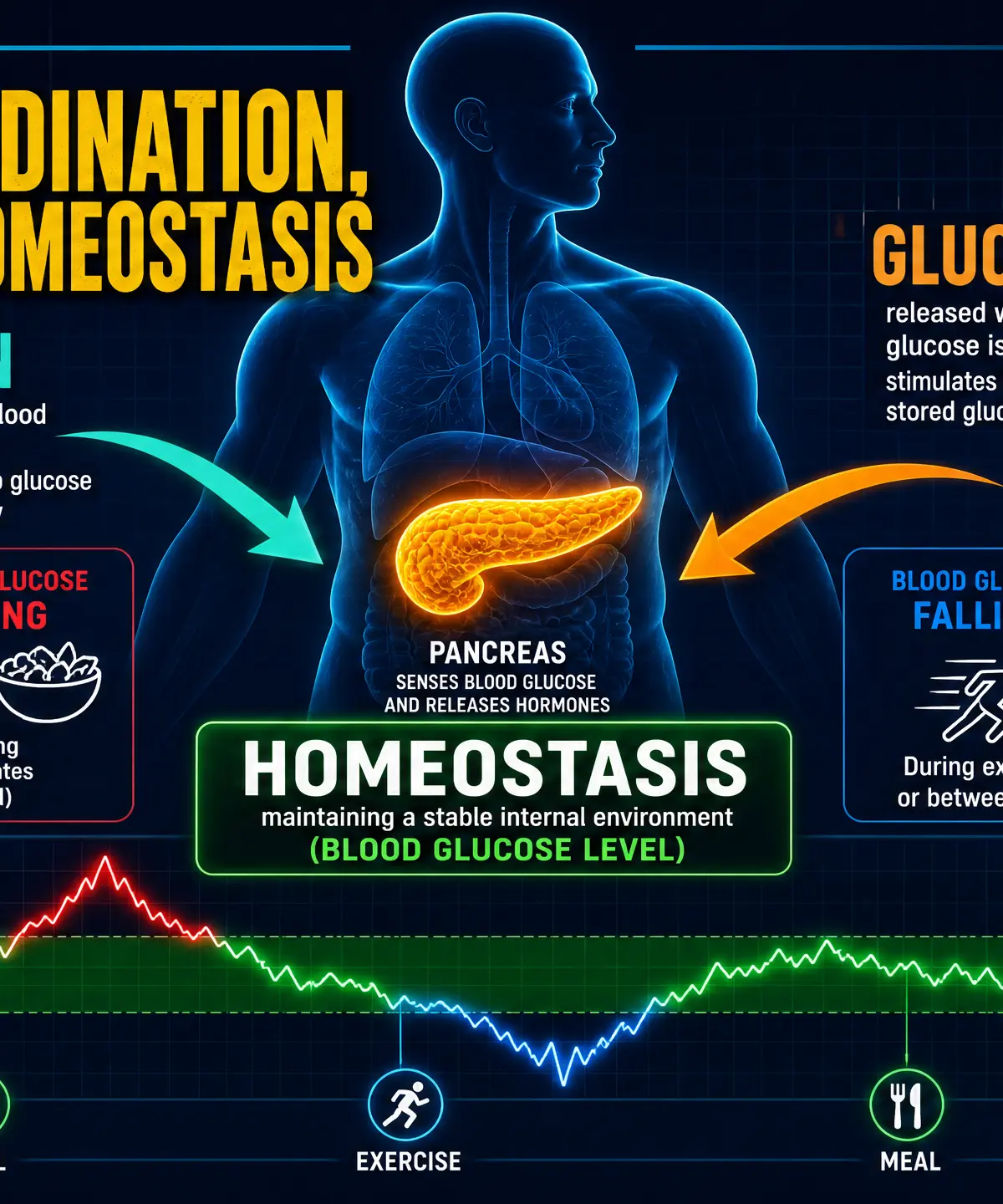
Overview
Welcome to Topic 7: Animal Coordination, Control and Homeostasis. This topic is fundamental to understanding how the human body maintains a stable internal environment—a process known as homeostasis. Without homeostasis, our cells would rapidly die from conditions being too hot, too cold, or having the wrong chemical balance.
In this section, we focus specifically on how the body regulates blood glucose concentration. You will learn how the pancreas acts as the control centre, using the hormones insulin and glucagon to keep blood glucose within a very narrow, safe range. This is a classic example of a negative feedback loop.
This topic is heavily tested in Combined Science exams. Examiners love to test your understanding of the differences between Type 1 and Type 2 diabetes, and they frequently include mathematical questions requiring you to calculate Body Mass Index (BMI). You must be precise with your terminology here—confusing insulin and glucagon, or the causes of the two types of diabetes, will cost you marks.
Listen to the companion podcast for a full walkthrough of this topic:

Key Concepts
Concept 1: The Need for Glucose Regulation
Glucose is the primary fuel for respiration in all living cells. A constant supply of glucose in the blood is essential, especially for the brain. However, if blood glucose concentration rises too high, it lowers the water potential of the blood, causing water to leave cells by osmosis, which can damage them. If it falls too low, cells cannot respire and release the energy they need. Therefore, blood glucose must be kept within strict limits.
Concept 2: The Role of the Pancreas and Insulin (Lowering Blood Glucose)
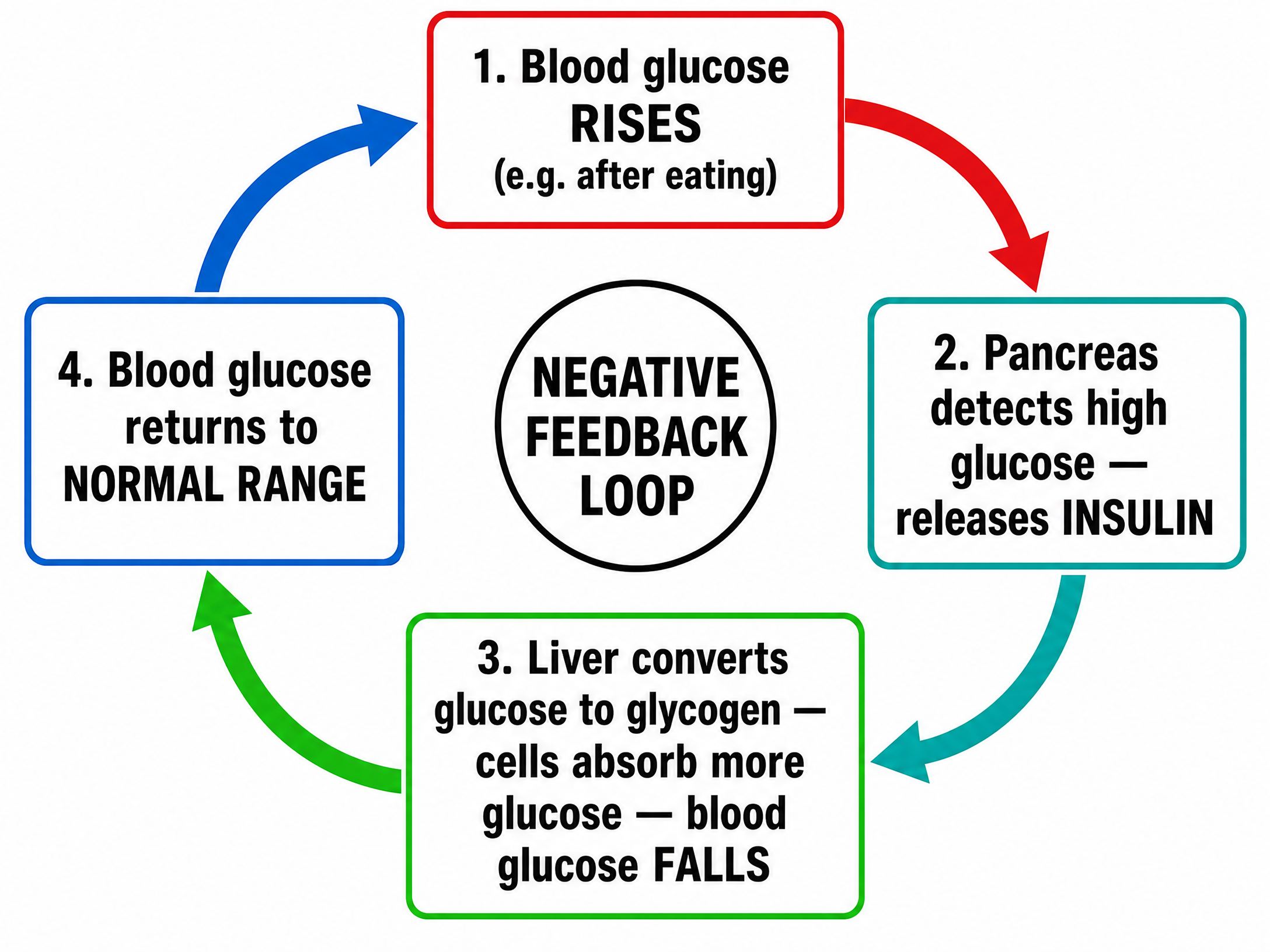
When you eat a meal containing carbohydrates, they are digested into glucose, which is absorbed into the blood.
- The pancreas detects this rise in blood glucose concentration.
- The pancreas secretes the hormone insulin into the bloodstream.
- Insulin travels to target organs, primarily the liver and muscle cells.
- Insulin causes these cells to take up more glucose from the blood.
- In the liver and muscle cells, insulin also stimulates the conversion of soluble glucose into an insoluble storage carbohydrate called glycogen.
- As a result, the blood glucose concentration falls back to the normal range.
Concept 3: The Role of Glucagon (Raising Blood Glucose) - Higher Tier Only
When you exercise, or if you haven't eaten for a while, your cells use up glucose for respiration, causing blood glucose levels to fall.
- The pancreas detects this drop in blood glucose concentration.
- The pancreas secretes the hormone glucagon into the bloodstream.
- Glucagon travels to the liver.
- Glucagon stimulates the liver to break down stored glycogen back into glucose.
- This glucose is released into the bloodstream.
- As a result, the blood glucose concentration rises back to the normal range.
This interaction between insulin and glucagon is a perfect example of negative feedback.
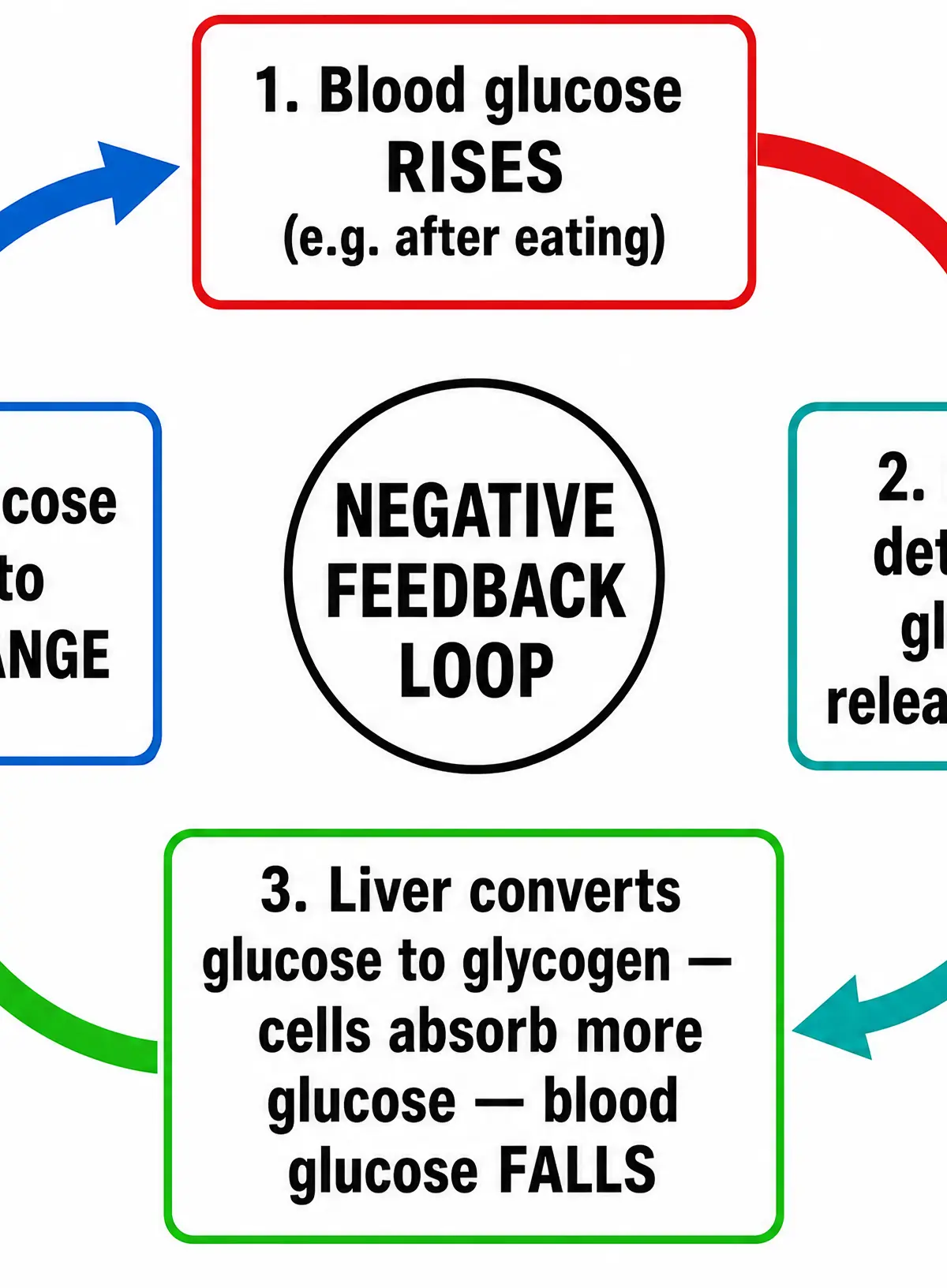
Concept 4: Type 1 Diabetes
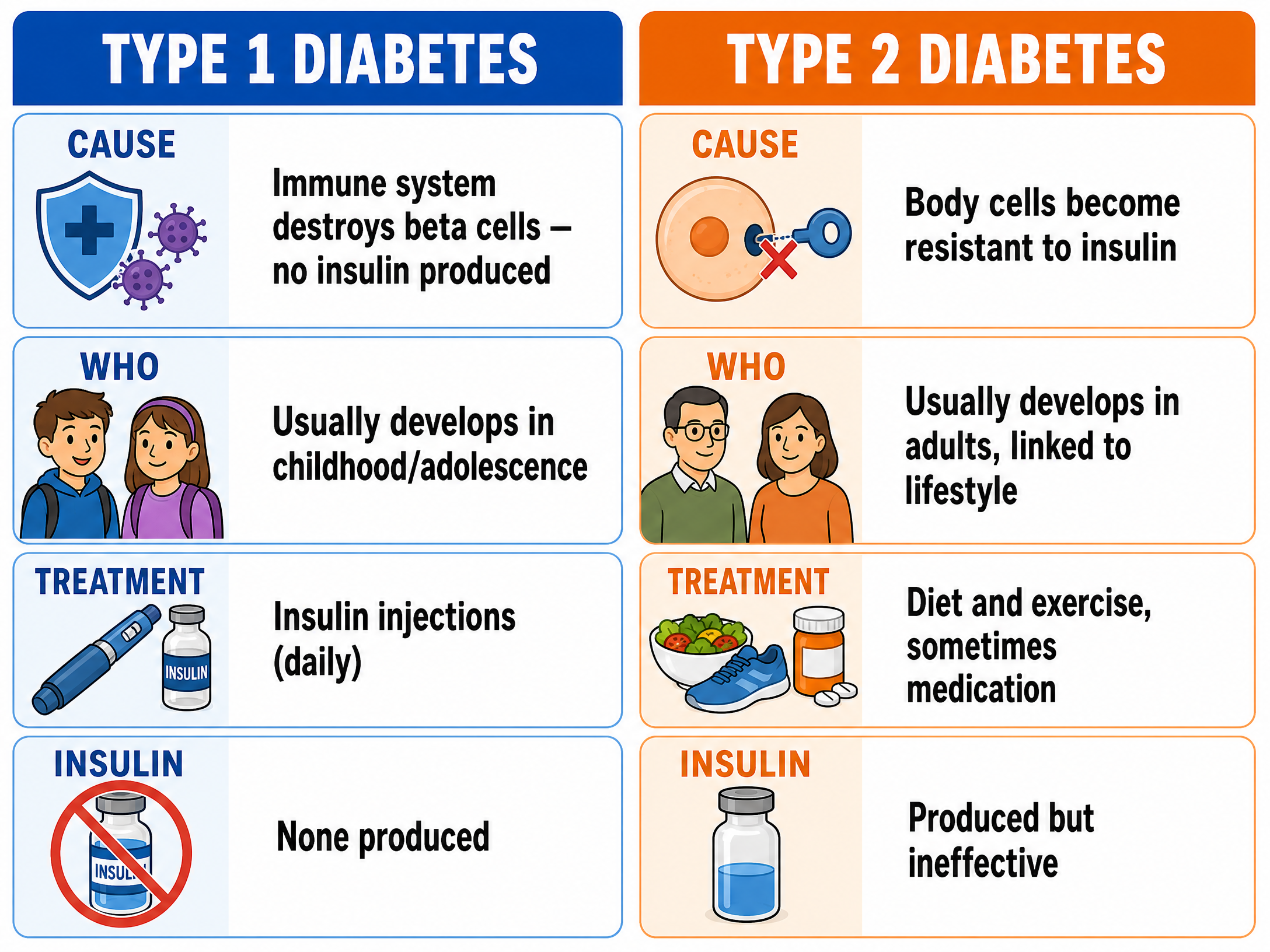
Type 1 diabetes is a disorder in which the pancreas fails to produce sufficient insulin. It is an autoimmune condition where the body's immune system destroys the insulin-producing cells.
- Cause: Lack of insulin production by the pancreas.
- Result: Blood glucose levels can rise to dangerously high levels after eating.
- Treatment: It is normally treated with regular insulin injections, usually before meals. This allows glucose to be taken into cells and converted into glycogen, keeping blood glucose levels stable.
- Management: People with Type 1 diabetes also need to monitor their carbohydrate intake and exercise levels.
Concept 5: Type 2 Diabetes
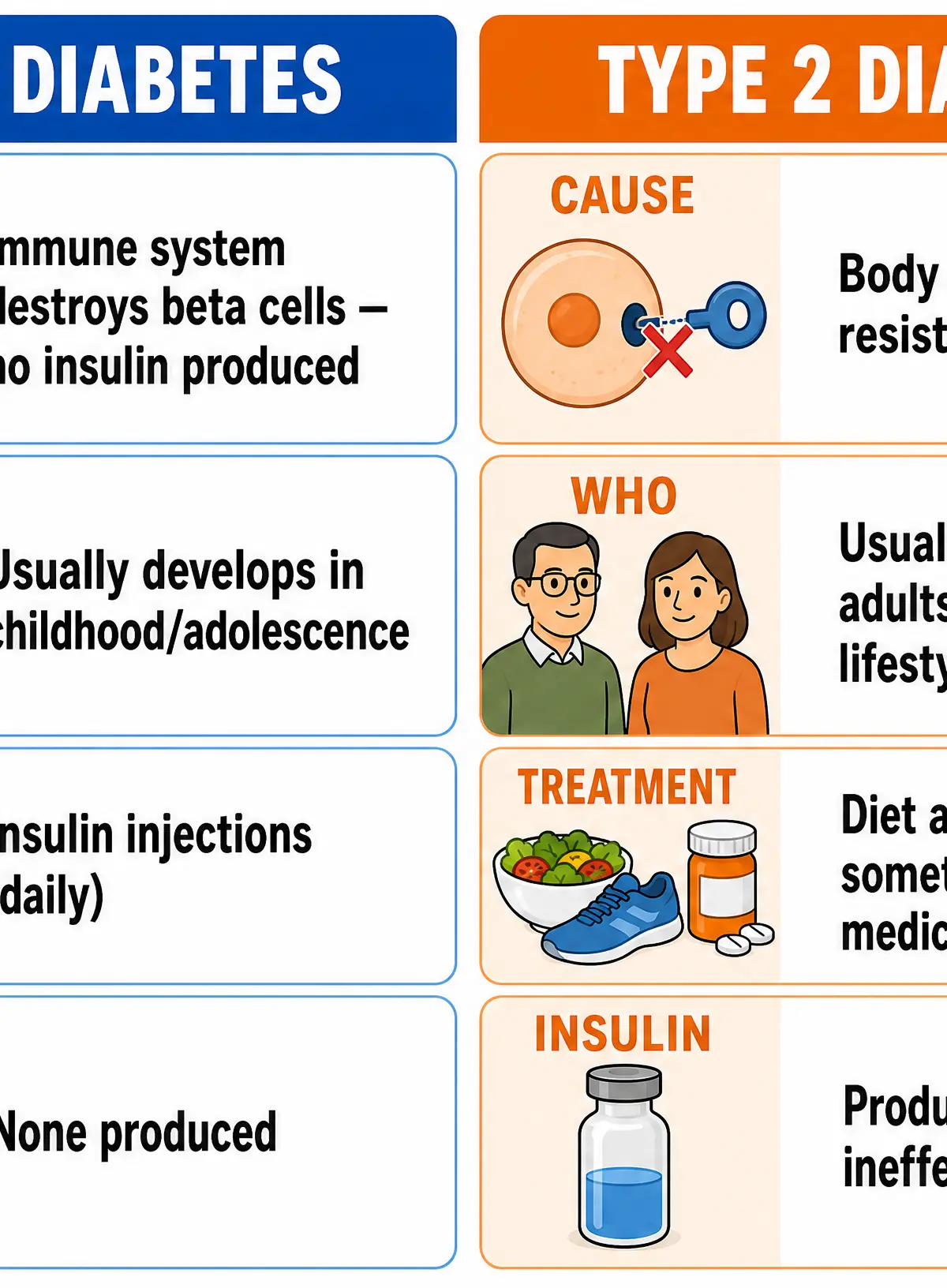
Type 2 diabetes is a disorder where the body cells no longer respond to the insulin produced by the pancreas. The pancreas still makes insulin, but the cells become resistant to it.
- Cause: Body cells become resistant to insulin.
- Result: Blood glucose levels remain high because cells do not take up glucose effectively.
- Treatment: It is primarily controlled by a carbohydrate-controlled diet and an exercise regime. In some cases, medication or insulin may be required later.
- Risk Factors: Obesity is a major risk factor for Type 2 diabetes. There is a strong positive correlation between high body mass and the incidence of Type 2 diabetes.
Mathematical/Scientific Relationships
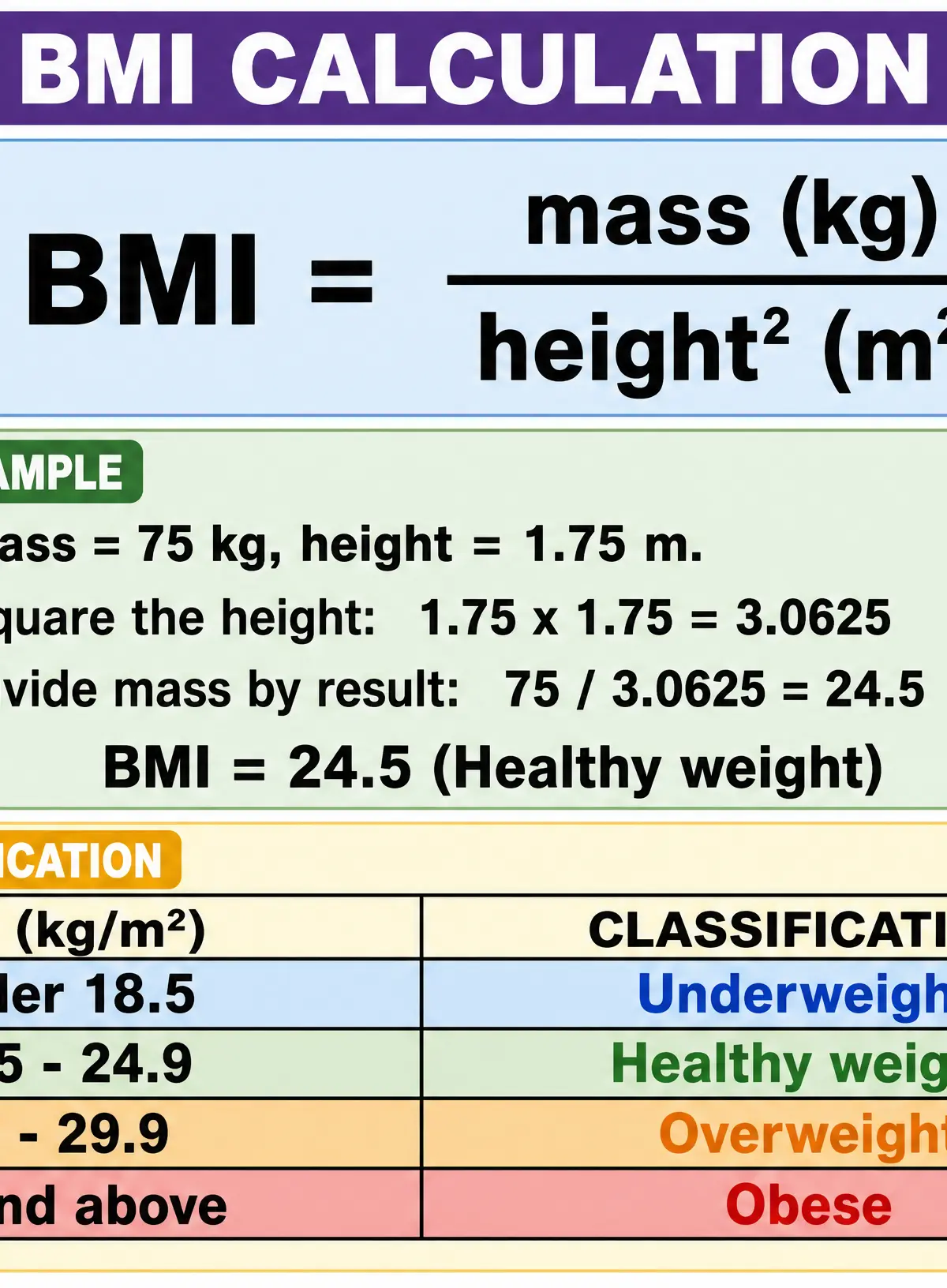
Body Mass Index (BMI)
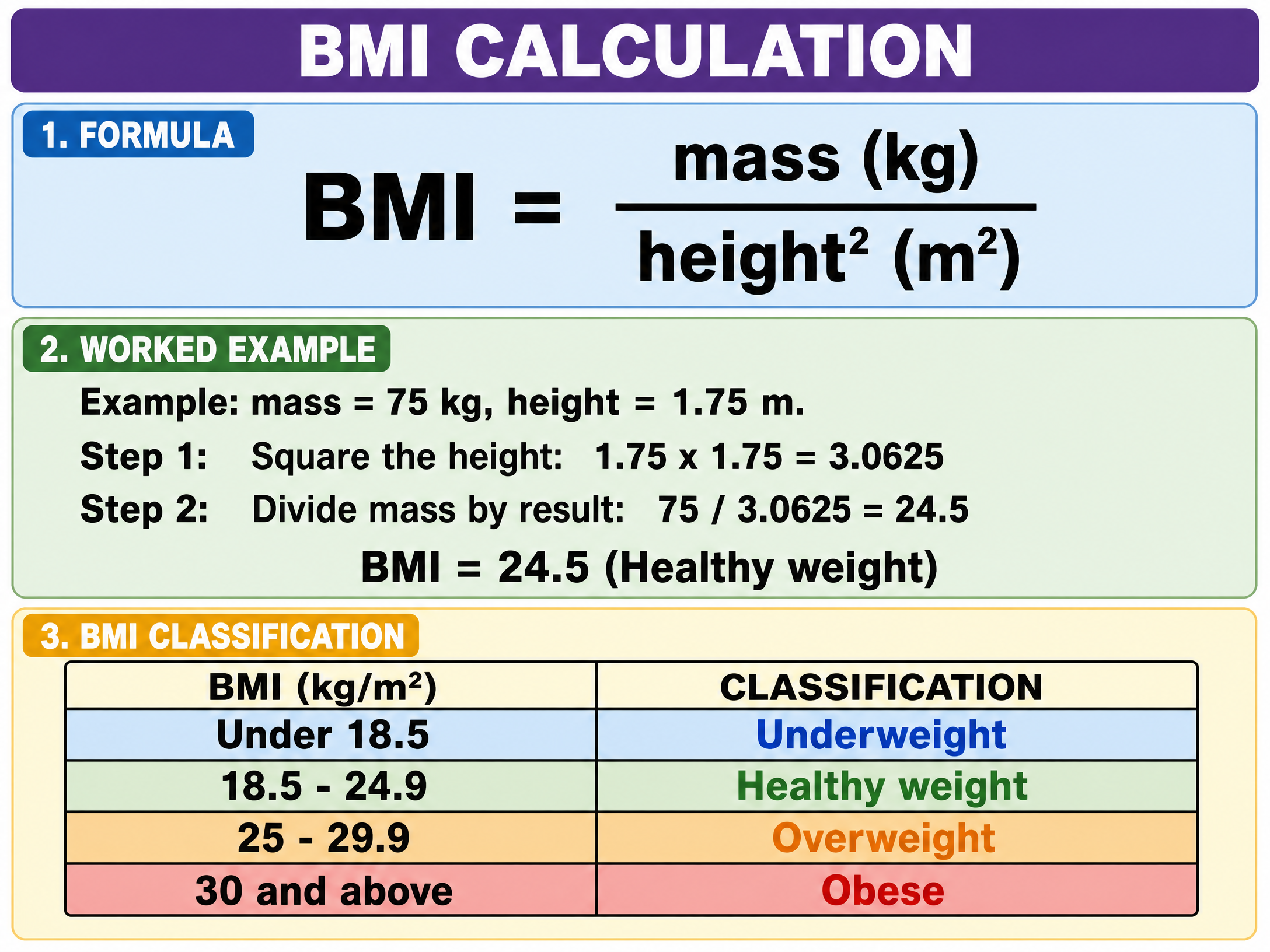
BMI is a mathematical tool used to classify a person's weight relative to their height. It is used to identify if someone is underweight, a healthy weight, overweight, or obese. Obesity is a significant risk factor for Type 2 diabetes.
Formula (Must memorise):
BMI = mass (kg) / (height (m))^2
- mass must be in kilograms (kg)
- height must be in metres (m)
- Crucial step: You must square the height before dividing the mass by it.
BMI Classifications:
- Under 18.5: Underweight
- 18.5 - 24.9: Healthy weight
- 25.0 - 29.9: Overweight
- 30.0 and above: Obese
Waist-to-Hip Ratio
Where fat is stored on the body is also important. Fat stored around the abdomen is more strongly linked to Type 2 diabetes than fat stored elsewhere.
Formula:
Waist-to-hip ratio = waist circumference / hip circumference
A ratio above 1.0 for men or 0.85 for women indicates abdominal obesity and a higher risk of developing Type 2 diabetes.
Practical Applications
Understanding blood glucose regulation is crucial for managing diabetes, a condition that affects millions of people globally. Medical science has advanced from extracting insulin from pigs and cows to using genetically engineered bacteria to produce human insulin for Type 1 diabetics. For Type 2 diabetes, public health campaigns focus on the importance of diet and exercise to reduce the incidence of the disease.
Visual Resources
3 diagrams and illustrations
Interactive Diagrams
2 interactive diagrams to visualise key concepts
Conceptual Flow Outline
Flowchart showing the action of insulin in lowering blood glucose.
Conceptual Flow Outline
Flowchart showing the action of glucagon in raising blood glucose (Higher Tier).
Worked Examples
3 worked examples — open one to explore the question and available guidance.
Practice Questions
Test your understanding — click to reveal model answers
Which organ monitors and controls blood glucose concentration?
Hint: It is a gland located behind the stomach.
Explain how insulin lowers blood glucose concentration. (3 marks)
Hint: Think about where insulin goes and what it forces cells to do with the glucose.
A patient has a BMI of 31. Explain why this patient might be advised to change their diet and exercise more. (3 marks)
Hint: What category does a BMI of 31 fall into, and what condition is this a risk factor for?
Describe the role of glucagon in the regulation of blood glucose. (3 marks) Higher Tier
Hint: When is glucagon released, and what exactly does it do to glycogen?
Explain how the control of blood glucose concentration is an example of negative feedback. (4 marks)
Hint: Define negative feedback and then apply it to the glucose-insulin system.