Pearson Edexcel · GCSE · Computer Science
Environmental
This topic covers the full lifecycle of digital technology, from the mining of rare earth metals to the growing crisis of e-waste. Examiners love testing this area because it connects the digital world to real-world environmental consequences, making it a high-value topic for picking up marks.
- 5 min read
- 3 worked examples
- 5 practice questions
- 6 key terms
Study Notes
Overview
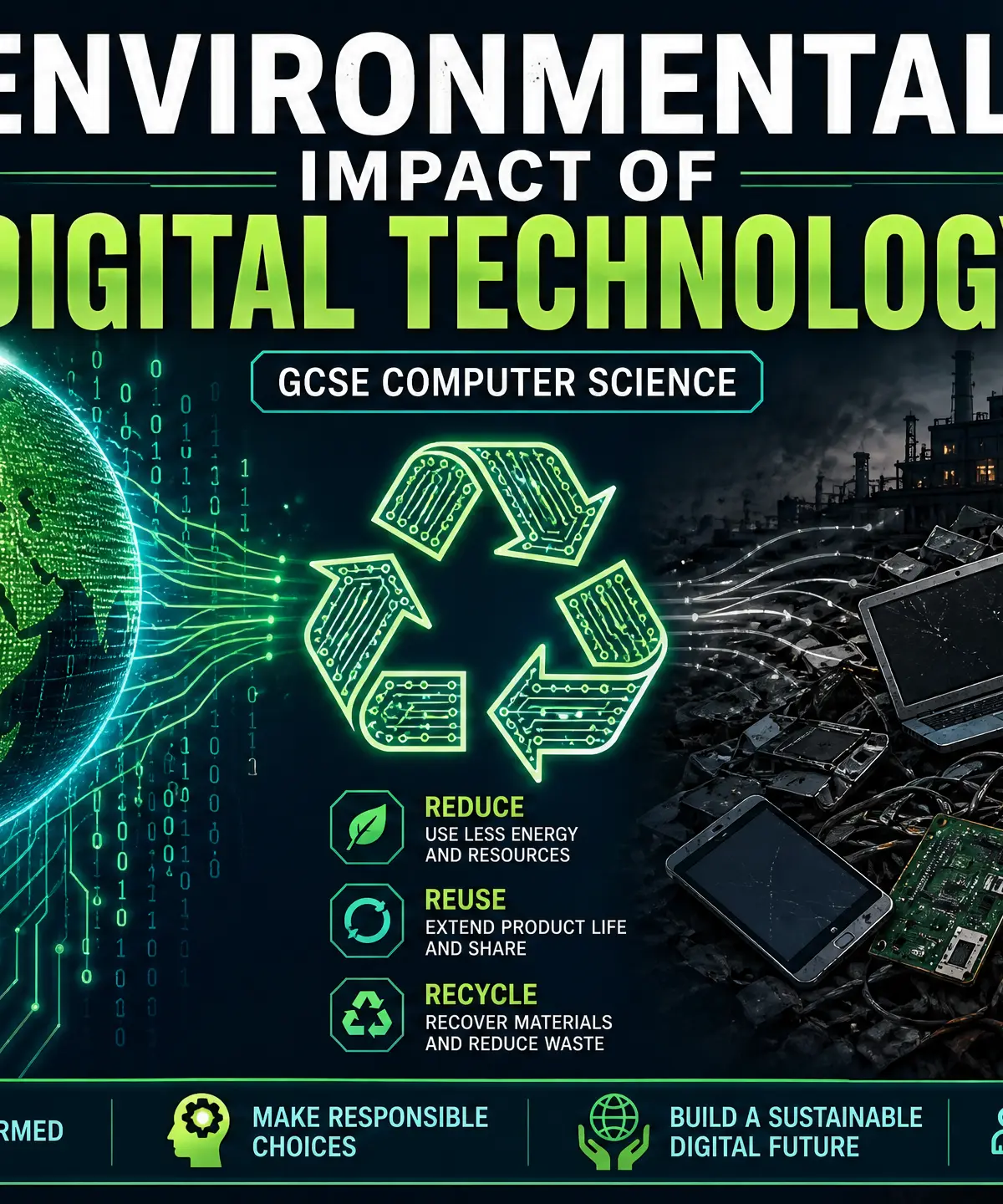
The environmental impact of digital technology is a crucial topic in modern Computer Science. It explores the hidden costs of our digital lives, tracing the journey of devices from the extraction of raw materials to their eventual disposal.
This topic is important because the tech industry is one of the fastest-growing contributors to global carbon emissions and resource depletion. Understanding these impacts is not just about passing an exam; it's about making informed, responsible choices as consumers and future technologists.
In the exam, questions on this topic often require you to think synoptically—connecting hardware, networks, and data storage to their physical environmental footprints. You will typically face 'Discuss' or 'Explain' questions (worth 4-6 marks) that ask you to evaluate the impact of manufacturing, usage, or disposal, or to propose methods for reducing these impacts.
Key Concepts
Concept 1: The Full Device Lifecycle
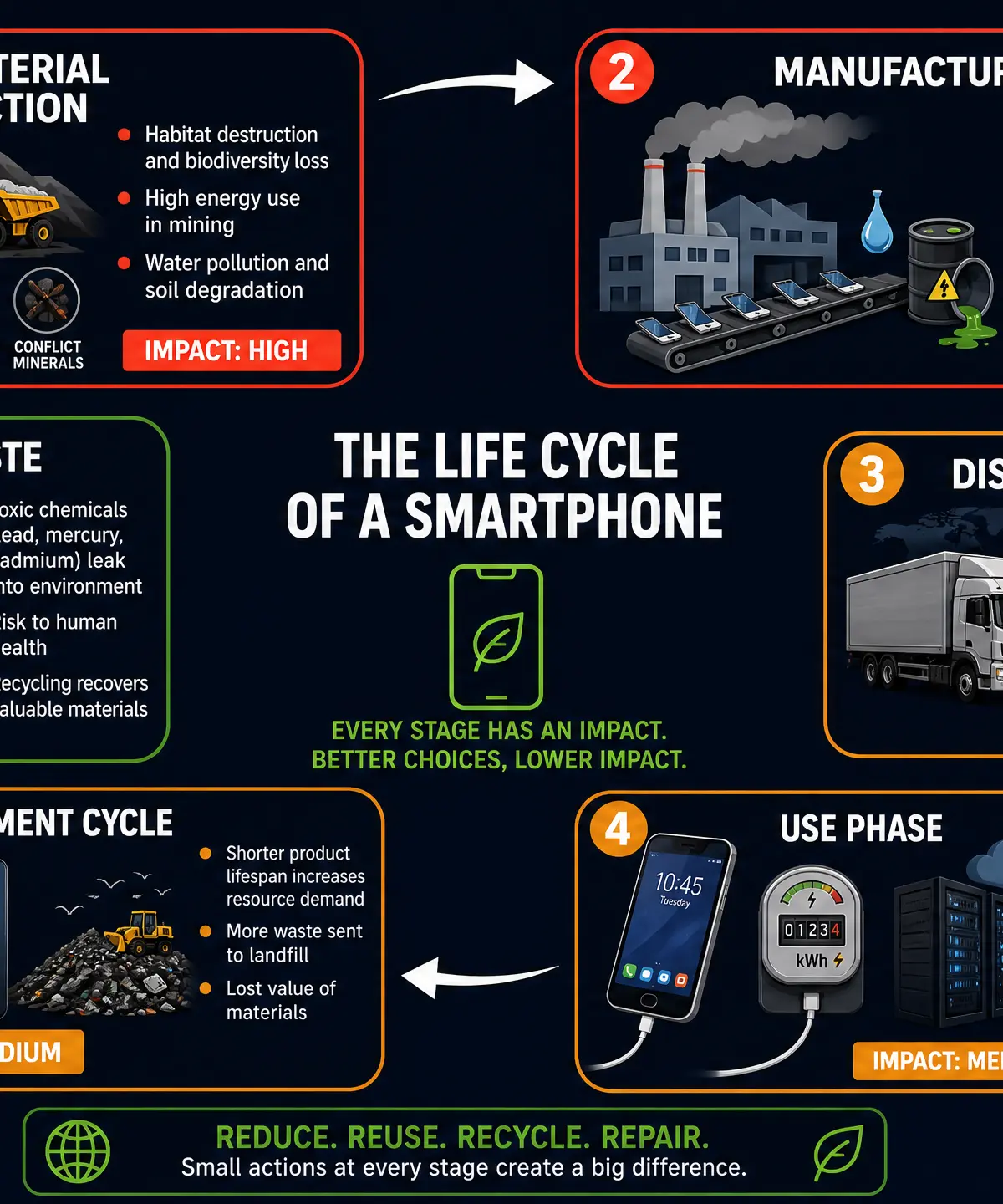
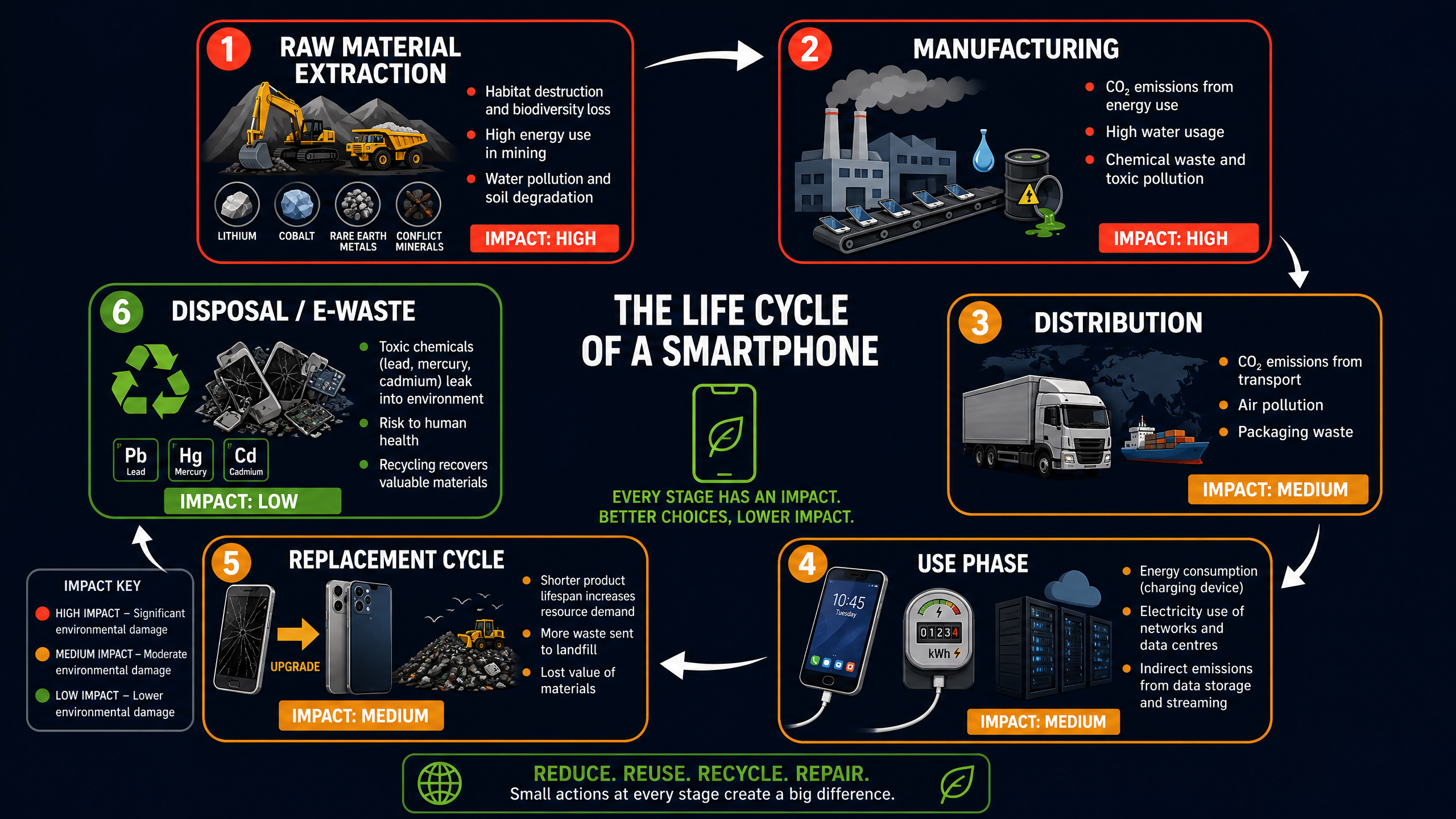
To fully understand the environmental impact of digital technology, candidates must consider the entire lifecycle of a device. Examiners often penalise answers that only focus on the electricity used to charge a phone. The lifecycle includes:
- Raw Material Extraction: Mining for rare earth metals (like lithium, cobalt, and neodymium) destroys habitats, pollutes water, and requires massive amounts of energy.
- Manufacturing: The production of microchips and screens involves toxic chemicals and high carbon emissions.
- Distribution: Shipping devices globally adds significantly to their carbon footprint.
- Use Phase: The energy consumed by the device itself, plus the infrastructure required to support it (networks and data centres).
- Disposal: The challenges of e-waste and toxic leaching when devices are thrown away.
Example: The manufacturing of a typical smartphone accounts for roughly 75-80% of its total lifetime carbon footprint. This means the environmental damage is largely done before you even take it out of the box.
Concept 2: Energy Consumption and Infrastructure
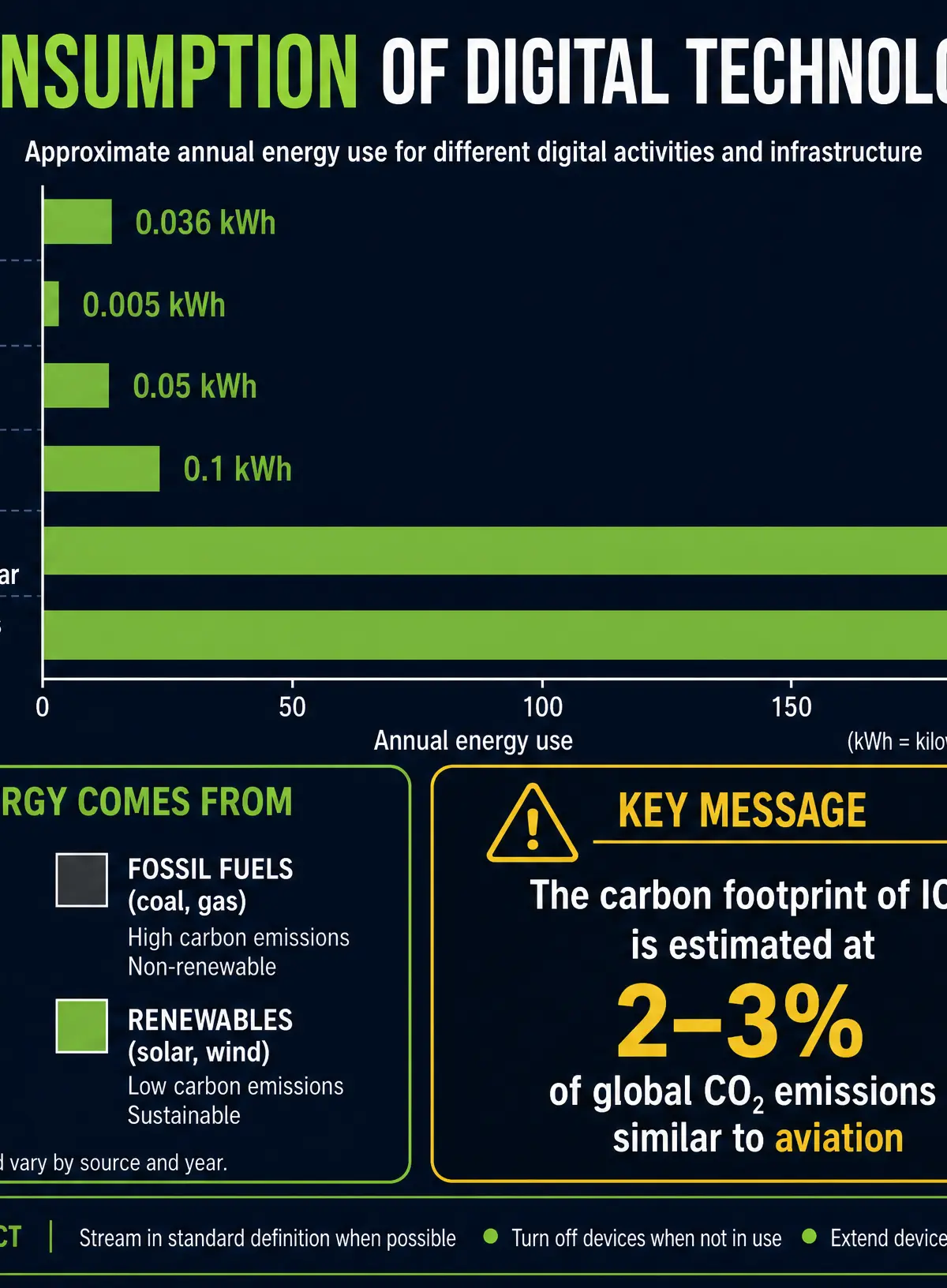
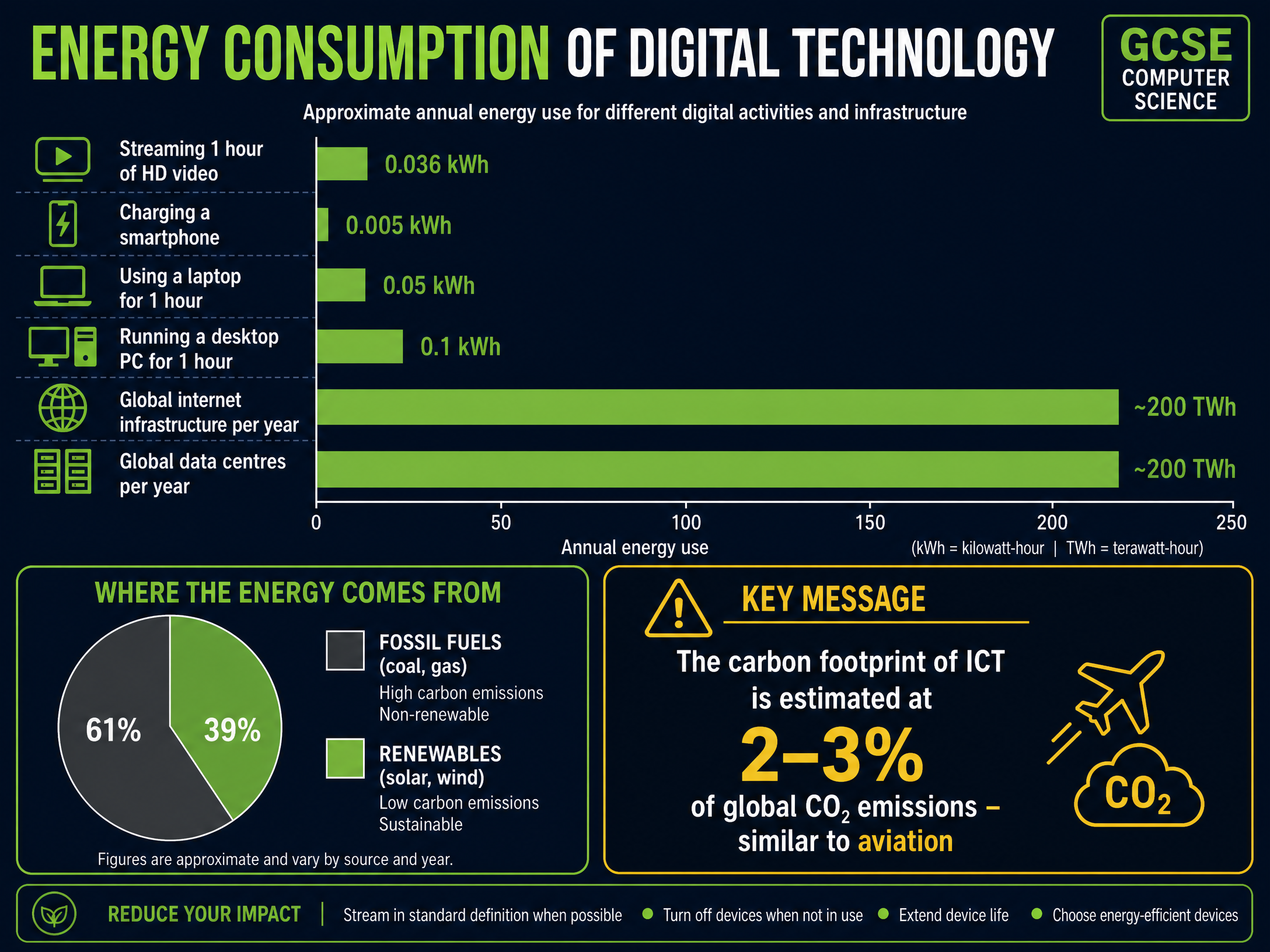
While individual devices (like a smartphone) use relatively little electricity to charge, the infrastructure required to keep them connected uses an enormous amount.
Data centres—massive facilities housing thousands of servers—run 24/7 to store our photos, stream our videos, and host websites. These servers generate immense heat and require powerful air conditioning systems to prevent overheating.
Currently, data centres account for around 1-2% of global electricity demand. If this electricity is generated by burning fossil fuels (coal, oil, gas), it contributes heavily to greenhouse gas emissions and global warming.
Example: Streaming a 4K video for an hour doesn't just use your TV's power; it uses power at the data centre hosting the video and across the network routing the data to your home.
Concept 3: The Replacement Cycle
The technology industry operates on a model of rapid replacement. Consumers are encouraged to upgrade their smartphones, laptops, and tablets every 1-2 years, driven by new features, software obsolescence (when old devices can no longer run new software), and declining battery life.
This rapid replacement cycle drastically accelerates environmental damage. A shorter lifespan means more devices must be manufactured (increasing resource extraction and manufacturing emissions) and more old devices are discarded (increasing e-waste).
Concept 4: Electronic Waste (E-Waste)
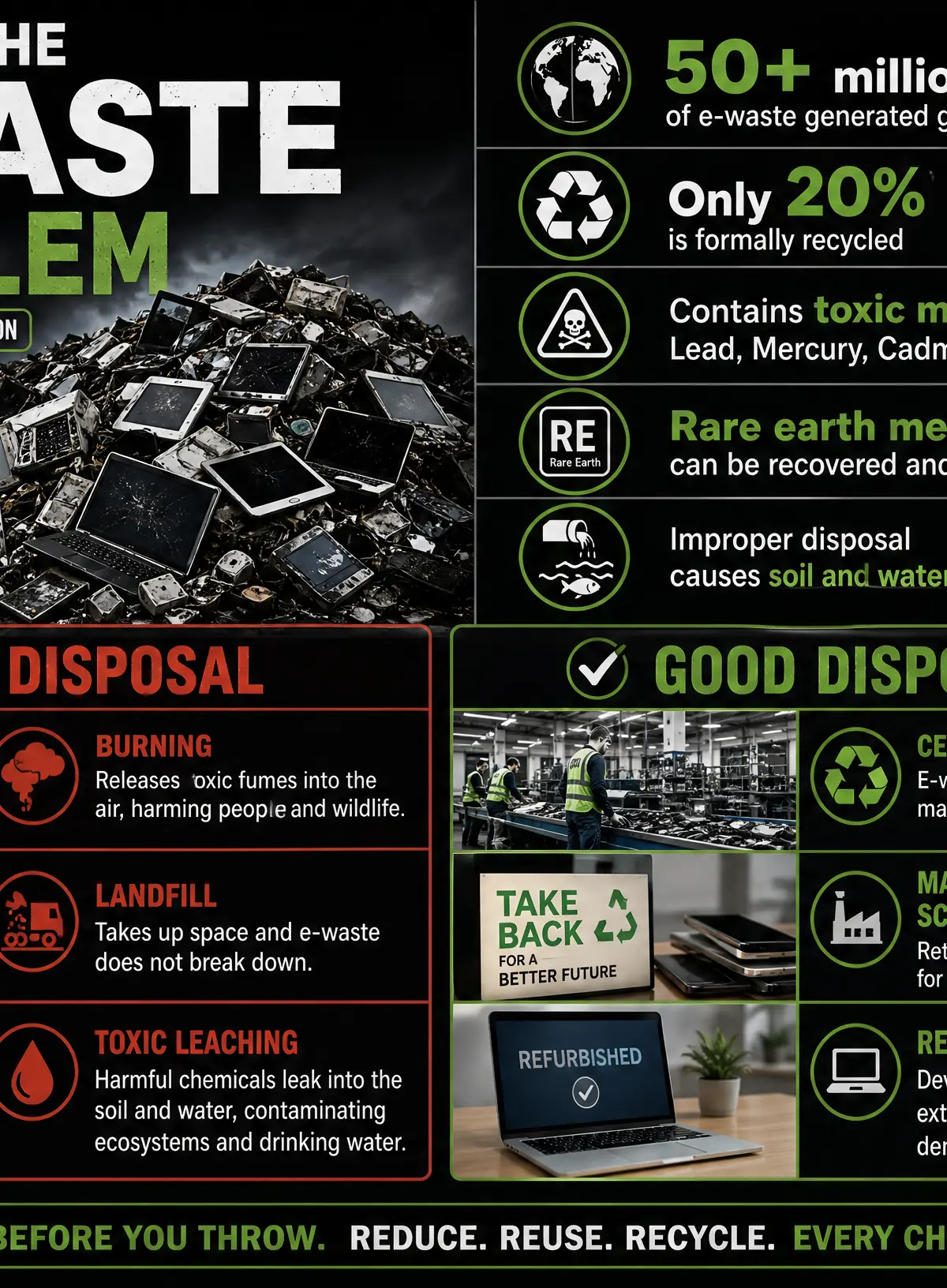
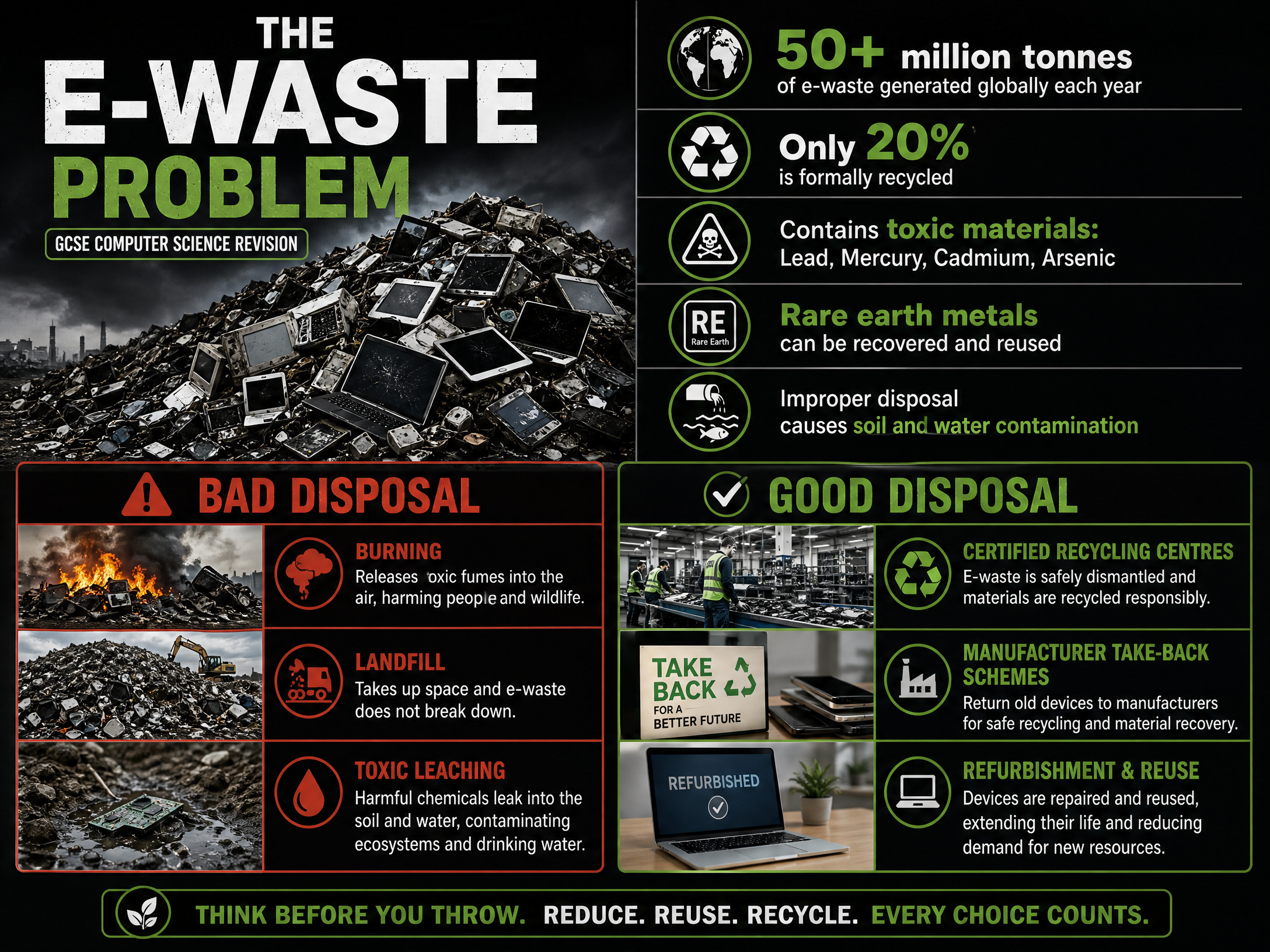
E-waste is one of the fastest-growing waste streams globally. When digital devices are discarded improperly, they pose severe environmental and health risks.
Devices contain toxic materials such as lead, mercury, cadmium, and arsenic. If e-waste is sent to landfill, these chemicals can leach into the soil and contaminate groundwater. If it is incinerated, toxic fumes are released into the air.
Furthermore, throwing away devices means losing valuable resources like gold, silver, and copper. Responsible recycling and manufacturer take-back schemes are essential to recover these materials and reduce the need for further mining.
Listen to the Podcast

Practical Applications
Understanding these concepts allows us to implement solutions:
- Extending Device Lifespan: Repairing devices instead of replacing them directly reduces manufacturing demand.
- Energy Efficient Settings: Using sleep modes, reducing screen brightness, and turning off devices when not in use.
- Responsible Recycling: Taking old devices to certified e-waste recycling centres rather than throwing them in general waste.
- Green Hosting: Choosing cloud providers that power their data centres with 100% renewable energy (solar, wind).
Visual Resources
3 diagrams and illustrations
Interactive Diagrams
2 interactive diagrams to visualise key concepts
Conceptual Flow Outline
The linear vs circular lifecycle of a digital device.
Conceptual Flow Outline
The hidden energy infrastructure behind streaming.
Worked Examples
3 worked examples — open one to explore the question and available guidance.
Practice Questions
Test your understanding — click to reveal model answers
State one environmental issue caused by the disposal of electronic devices in a landfill. (1 mark)
Hint: Think about what happens when rain washes over broken electronics.
Explain why data centres have a significant environmental impact. (3 marks)
Hint: Consider what servers need to run constantly, and what they generate that needs managing.
A school is upgrading all of its computers. Describe two ways the school could minimise the environmental impact of this upgrade. (4 marks)
Hint: Think about what they can do with the old computers, and what choices they can make when buying the new ones.
Discuss the environmental arguments for and against the use of smartphones. (6 marks)
Hint: You need to evaluate both sides. How do smartphones harm the environment? But also, how might they help reduce our impact in other areas?
Explain how software design can impact the energy consumption of a device. (3 marks)
Hint: Think about what happens to the processor and battery when code is poorly written.