Pearson Edexcel · GCSE · Computer Science
Ethical and legal
Master the ethical and legal challenges of modern technology. This topic covers the critical balance between innovation and regulation, exploring data privacy laws (GDPR), intellectual property protection, and the societal impacts of AI and robotics.
- 5 min read
- 3 worked examples
- 5 practice questions
- 6 key terms
Study Notes
Overview
Welcome to Topic 5.2: Ethical and Legal Issues in Computing. This topic explores the profound impact that digital technology has on society, the law, and our moral responsibilities. As a computer scientist, you are not just learning how to build systems; you are learning how to evaluate the consequences of those systems.
This topic is crucial because technology often evolves faster than the law can adapt. You will learn to distinguish between what is legal (governed by statute) and what is ethical (governed by moral principles). Examiners frequently test your ability to apply these concepts to real-world scenarios, such as the deployment of artificial intelligence, the collection of personal data, and the protection of intellectual property. Understanding these tensions will help you secure top marks in extended response questions.
Key Concepts
Concept 1: Ethical vs Legal Considerations
It is essential to understand the difference between ethical and legal issues. Legal issues relate to what is permitted by law. If you break the law, you can face prosecution, fines, or imprisonment. Ethical issues relate to what is considered morally right or wrong by society.
Example: A social media platform might legally update its terms of service to allow it to use user photos for advertising without explicit notification. However, many users would argue this is unethical because it violates their expectation of privacy and ownership. Examiners often ask you to evaluate a scenario from both perspectives.
Concept 2: Data Privacy and the GDPR
Data is incredibly valuable. The General Data Protection Regulation (GDPR) is the legal framework in the UK and Europe that governs how personal data must be collected, stored, and processed.
Organisations must adhere to key principles:
- Lawfulness, fairness and transparency: Data must be processed legally and the user must know what is happening.
- Purpose limitation: Data can only be collected for a specific, stated purpose.
- Data minimisation: Only the necessary data should be collected.
- Accuracy: Data must be kept up to date.
- Storage limitation: Data should not be kept longer than necessary.
- Integrity and confidentiality: Data must be kept secure.
Example: A fitness app tracking user locations must explicitly ask for consent to use that data for targeted advertising. Pre-ticked boxes are not considered valid consent under GDPR.
Concept 3: Intellectual Property Protection
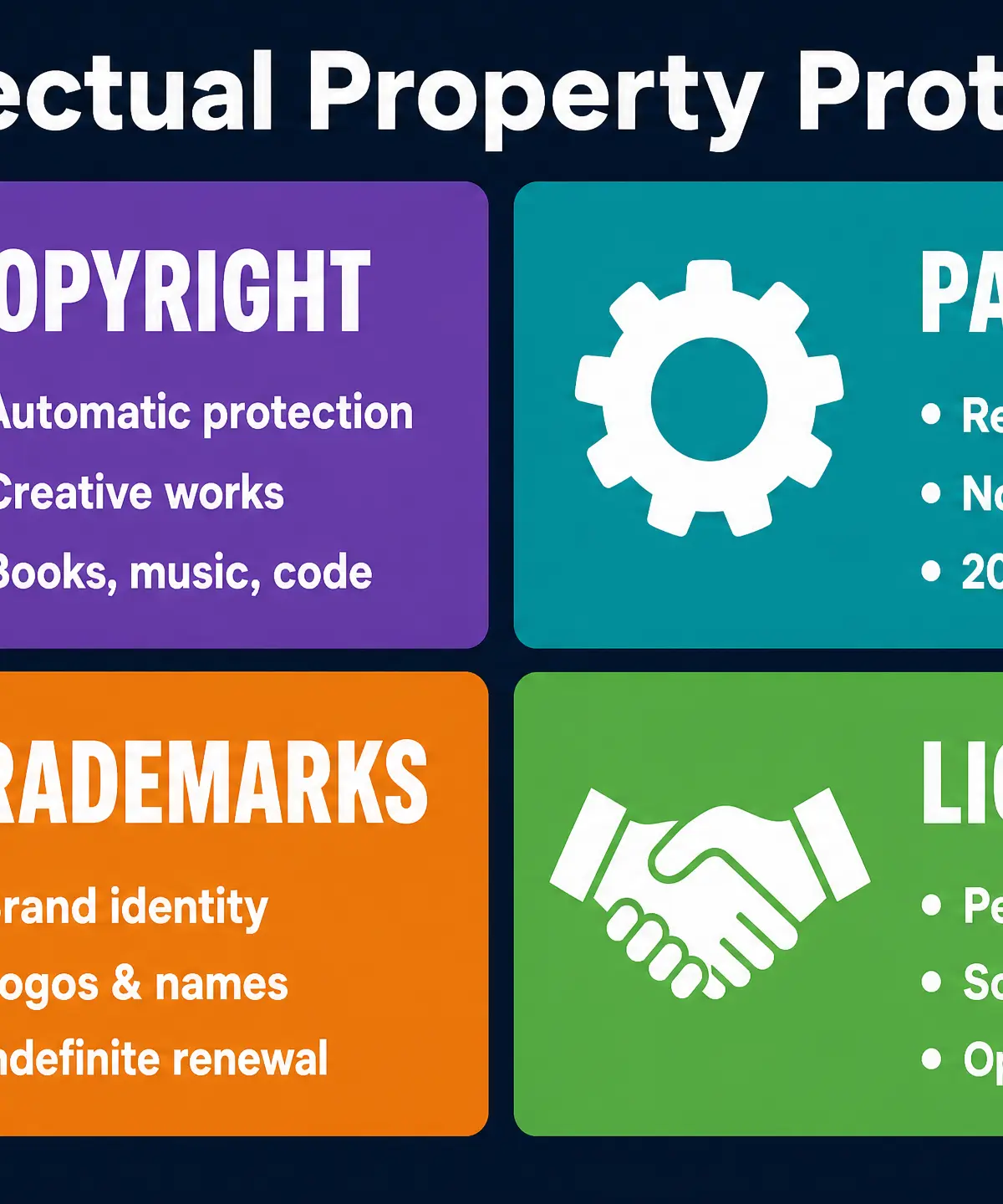
Intellectual Property (IP) refers to creations of the mind. There are four main ways to protect IP:
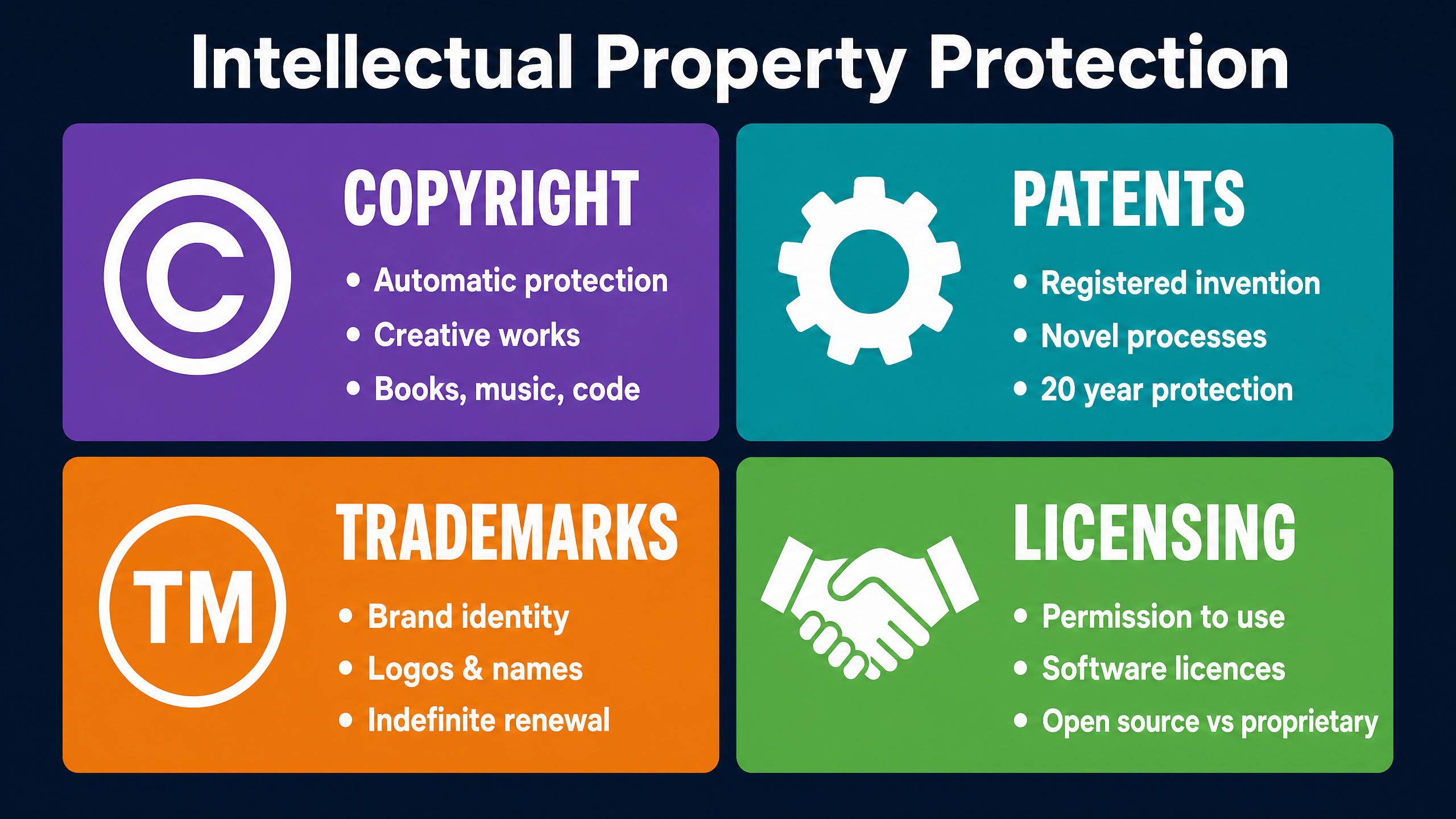
- Copyright: Automatically protects creative works (e.g., source code, music, books) from being copied without permission.
- Patents: Must be registered. They protect novel inventions or processes for a set period (usually 20 years).
- Trademarks: Must be registered. They protect brand identities, such as logos and company names.
- Licensing: A legal agreement where the owner grants permission for someone else to use their IP under specific conditions (e.g., Open Source vs. Proprietary software licenses).
Concept 4: AI, Machine Learning, and Robotics
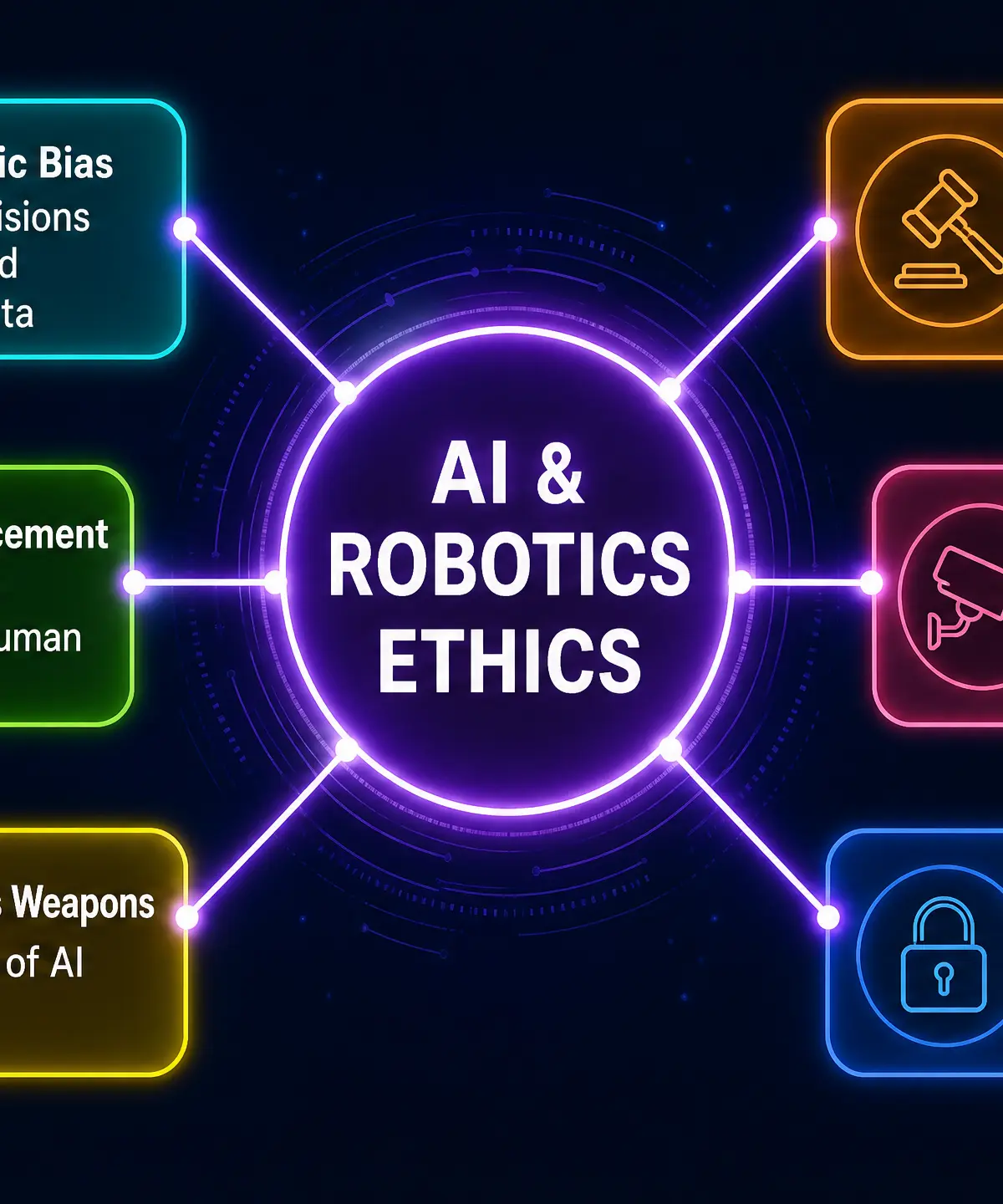
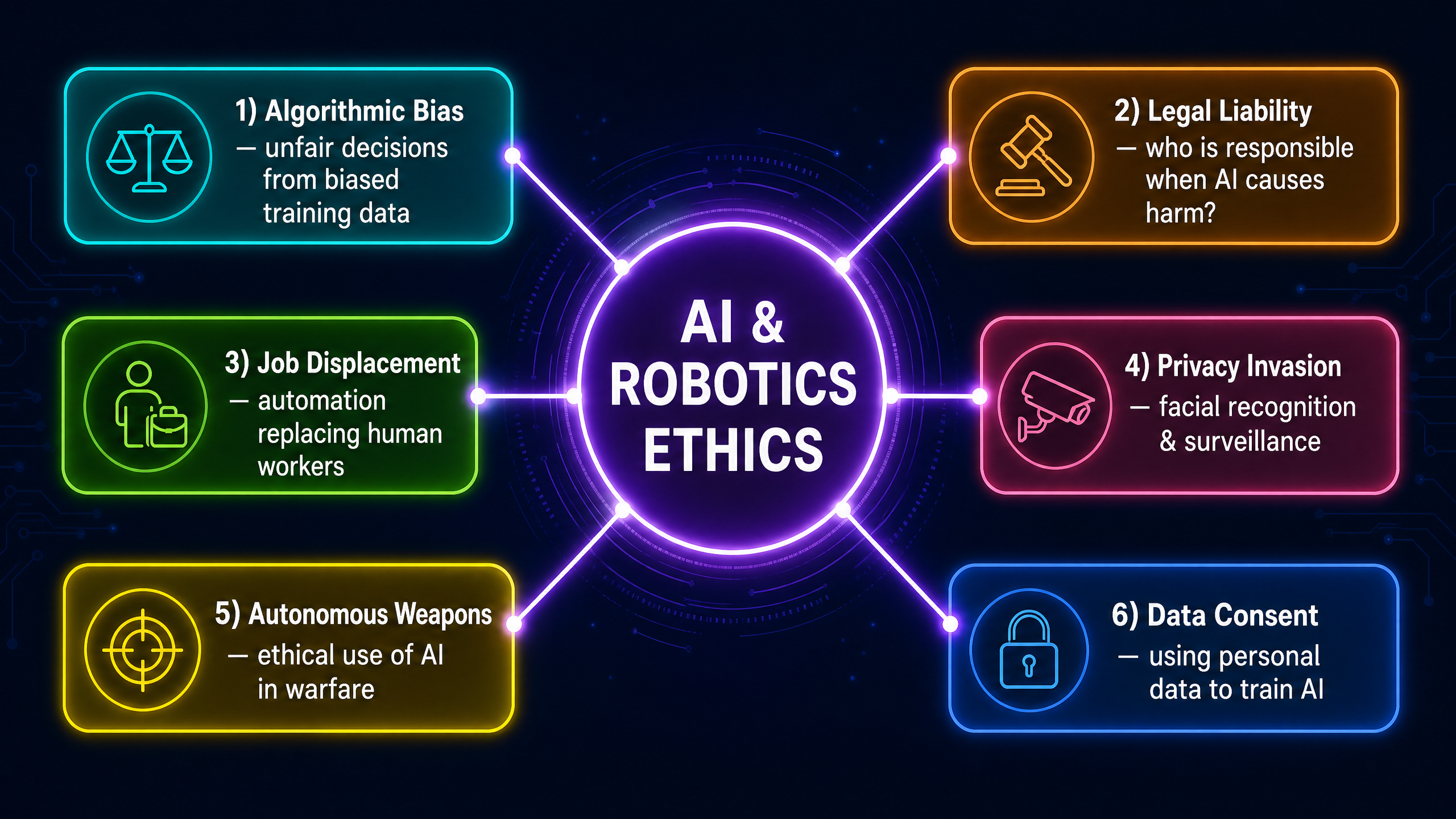
The rapid advancement of Artificial Intelligence (AI) and robotics introduces complex ethical dilemmas.
- Algorithmic Bias: AI systems learn from historical data. If that data contains human biases, the AI will replicate and amplify them. This can lead to discriminatory outcomes in areas like recruitment or law enforcement.
- Legal Liability: When an autonomous system (like a self-driving car) causes an accident, it is difficult to determine who is legally responsible—the manufacturer, the programmer, or the user.
- Job Displacement: Automation can lead to job losses in certain sectors, raising ethical questions about society's responsibility to retrain displaced workers.
Practical Applications
Understanding these issues is vital for anyone entering the tech industry. For example, a software developer must ensure their code does not infringe on existing patents or copyright. A data scientist must design algorithms that mitigate bias to ensure fair treatment of users. When answering exam questions, always try to link the theoretical concept to a practical, real-world application.
Podcast Revision
Listen to the revision podcast below for a comprehensive summary of this topic, including exam tips and a quick-fire quiz:

Visual Resources
2 diagrams and illustrations
Interactive Diagrams
2 interactive diagrams to visualise key concepts
Conceptual Flow Outline
Decision flowchart for software licensing models.
Conceptual Flow Outline
The feedback loop of algorithmic bias.
Worked Examples
3 worked examples — open one to explore the question and available guidance.
Practice Questions
Test your understanding — click to reveal model answers
State the purpose of the General Data Protection Regulation (GDPR).
Hint: Think about what the letters stand for and who it protects.
Explain the difference between copyright and a patent.
Hint: Consider what types of things each protects and how you get the protection.
A company is developing a facial recognition system for police use. Discuss the ethical concerns associated with this technology.
Hint: Think about accuracy, bias, and the impact on society.
Describe two benefits to a developer of releasing their software under an open-source license.
Hint: Think about community and improvement.
Explain why determining legal liability is a challenge when an autonomous vehicle is involved in a collision.
Hint: Who is usually responsible in a car crash? Why is an AI different?