Pearson Edexcel · A-Level · Design and Technology
Part 2: Designing a prototype
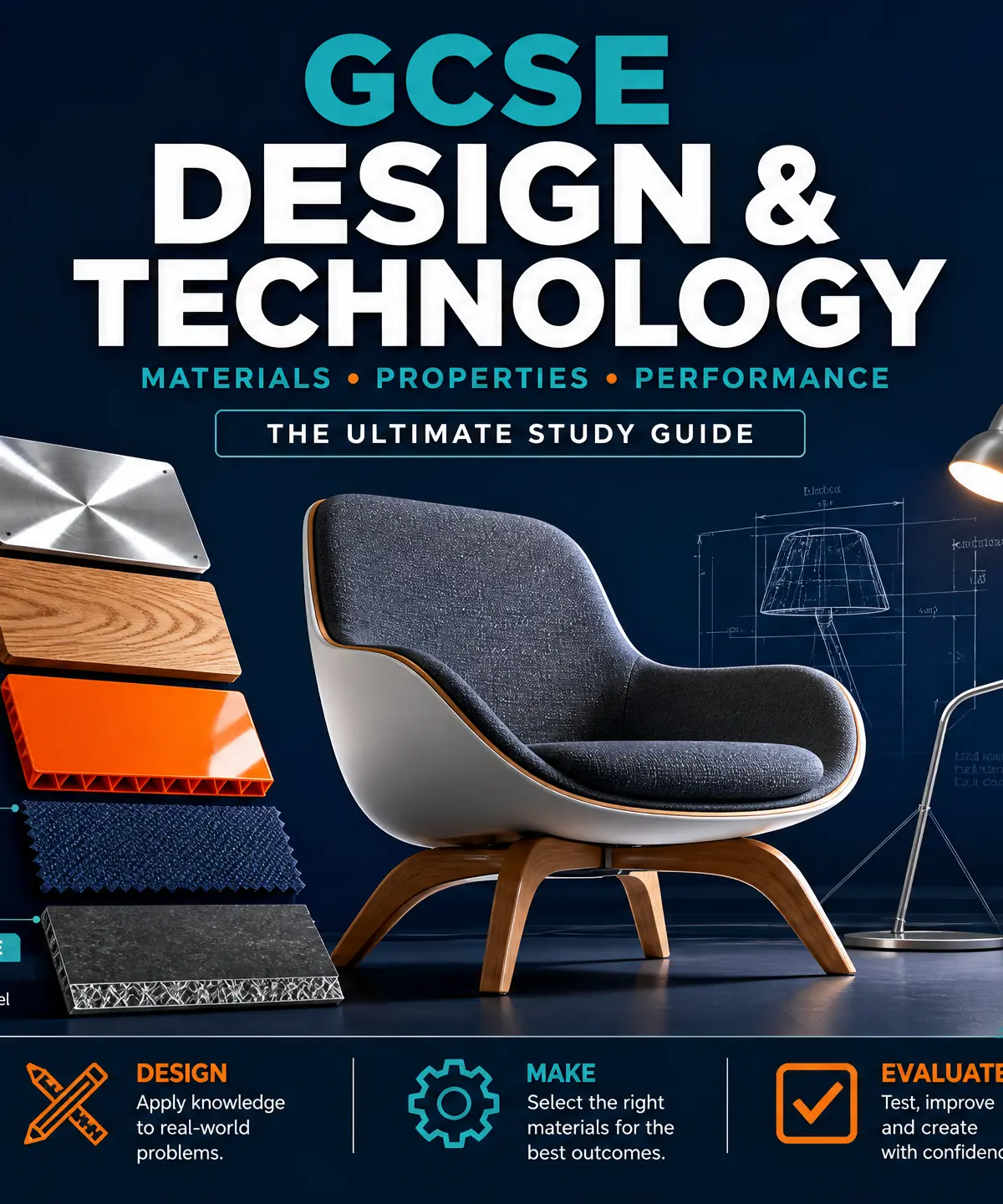
This topic covers the essential performance characteristics of materials — including woods, metals, polymers, and smart materials — and how to discriminate between them. Mastering this knowledge is critical for making informed design decisions and achieving high marks in both the written exam and your Non-Examined Assessment (NEA).
- 6 min read
- 3 worked examples
- 3 practice questions
- 6 key terms
Study Notes
Overview
When designing a prototype, selecting the right material is one of the most critical decisions you will make. To do this effectively, you must understand the performance characteristics of different materials. This means knowing not just what a material is, but why it behaves the way it does, and how those properties make it suitable (or unsuitable) for a specific product or application. Examiners expect candidates to discriminate between materials and justify their choices using precise technical vocabulary.
Listen to the companion podcast for a full breakdown of these concepts:

Key Knowledge & Theory
Core Concepts: The 10 Performance Characteristics
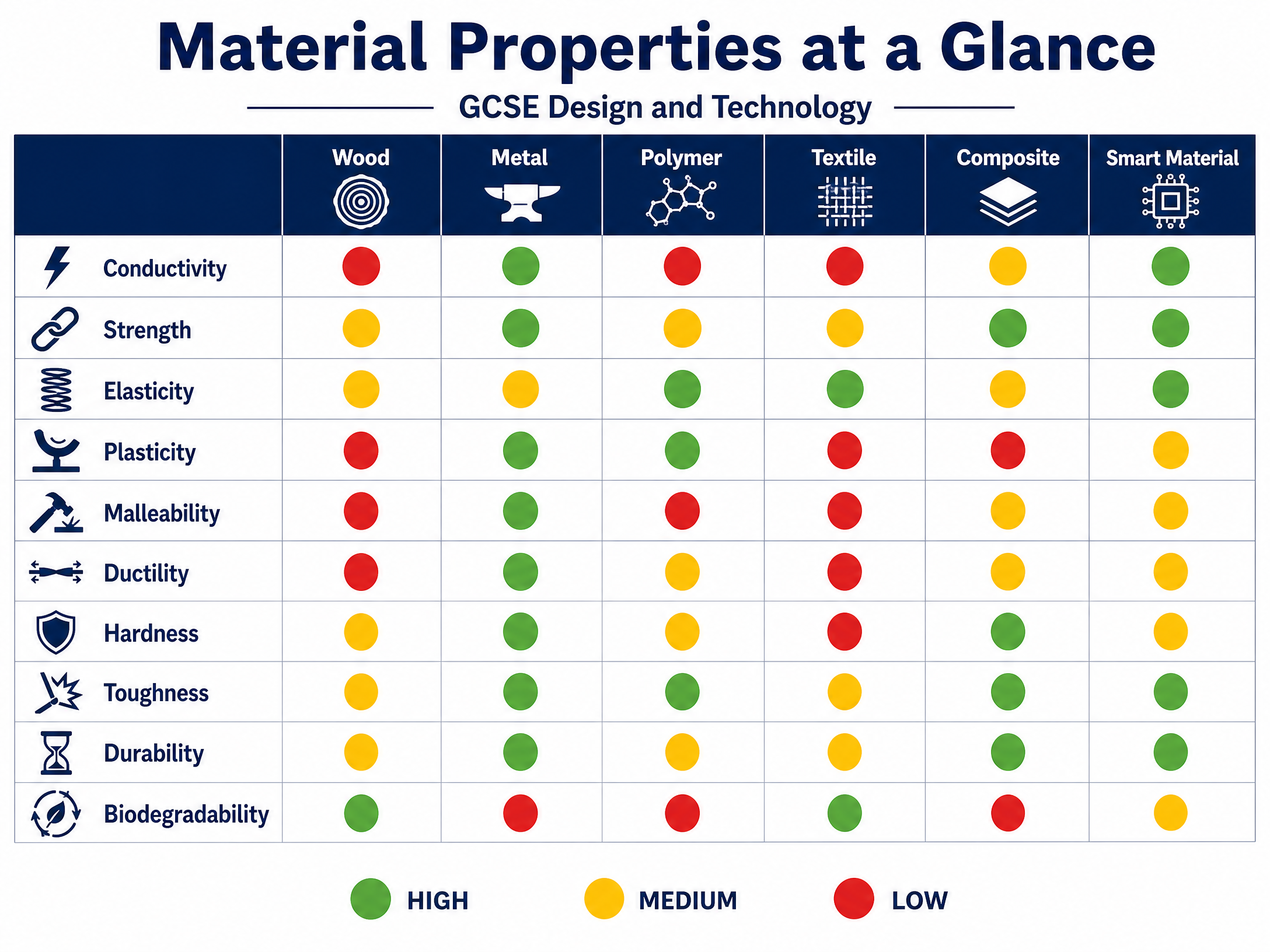
To succeed in GCSE Design and Technology, you must confidently define and apply these ten characteristics:
- Conductivity: The ability of a material to transfer heat or electricity. Metals generally have high conductivity, while polymers and woods have low conductivity (making them good insulators).
- Strength: The ability of a material to withstand an applied force without breaking or deforming permanently. Key types include tensile strength (resistance to pulling) and compressive strength (resistance to squashing).
- Elasticity: The ability of a material to return to its original shape after a deforming force is removed. (Do not confuse this with general flexibility).
- Plasticity: The ability of a material to be permanently deformed without breaking. Thermoplastics exhibit high plasticity when heated.
- Malleability: The ability of a material to be hammered or rolled into thin sheets without cracking (e.g., aluminium foil).
- Ductility: The ability of a material to be drawn out into a wire or thin rod without breaking (e.g., copper wire).
- Hardness: The resistance of a material to surface indentation, scratching, or wear.
- Toughness: The ability of a material to absorb energy and resist fracturing or breaking under impact. A tough material will deform rather than shatter.
- Durability: The ability of a material to withstand wear, pressure, and damage over time, particularly in its intended environment.
- Biodegradability: The ability of a material to be broken down naturally by bacteria or other living organisms.
Material Categories at a Glance
| Category | Key Sub-types | Typical Characteristics | Common Applications |
|---|---|---|---|
| Woods | Hardwoods (Oak, Mahogany), Softwoods (Pine), Engineered Boards (MDF, Plywood) | Good strength-to-weight ratio, biodegradable, insulators. | Furniture, construction, interior fittings. |
| Metals | Ferrous (Steel, Cast Iron), Non-Ferrous (Aluminium, Copper) | High conductivity, malleable, ductile, tough. | Car bodies, electrical wiring, structural frameworks. |
| Polymers | Thermoplastics (Acrylic, ABS), Thermosetting (Epoxy resin, Melamine) | Good insulators, high plasticity when heated (thermoplastics), lightweight. | Product casings, packaging, electrical fittings. |
| Textiles | Natural (Cotton, Wool), Synthetic (Nylon, Polyester) | Flexible, varying durability and breathability. | Clothing, upholstery, technical fabrics (Gore-Tex). |
| Composites | Carbon Fibre Reinforced Polymer (CFRP), Glass Reinforced Plastic (GRP) | Combine properties of constituent materials (e.g., high strength, low weight). | Aerospace components, sports equipment, boat hulls. |
| Smart Materials | Shape Memory Alloys (Nitinol), Thermochromic Pigments | Properties change in response to an external stimulus (heat, light, pressure). | Medical stents, colour-changing products, sensors. |
Practical Skills
Techniques & Processes
When working on your NEA, your material choice dictates your manufacturing processes:
- Forming: Shaping materials using heat or pressure. For example, vacuum forming high-impact polystyrene (HIPS) relies on its plasticity when heated.
- Wasting: Removing material through cutting, drilling, or turning. The hardness of the tool must exceed the hardness of the material being worked.
- Addition/Joining: Combining materials using adhesives, welding, or mechanical fixings. The strength and durability of the joint must match the product's requirements.
Materials & Equipment
Always select tools appropriate for the material's properties. For example, cutting high-carbon steel requires specialized abrasive cutting tools due to its extreme hardness, whereas softwoods can be easily cut with standard hand saws.
Portfolio/Coursework Guidance
Assessment Criteria
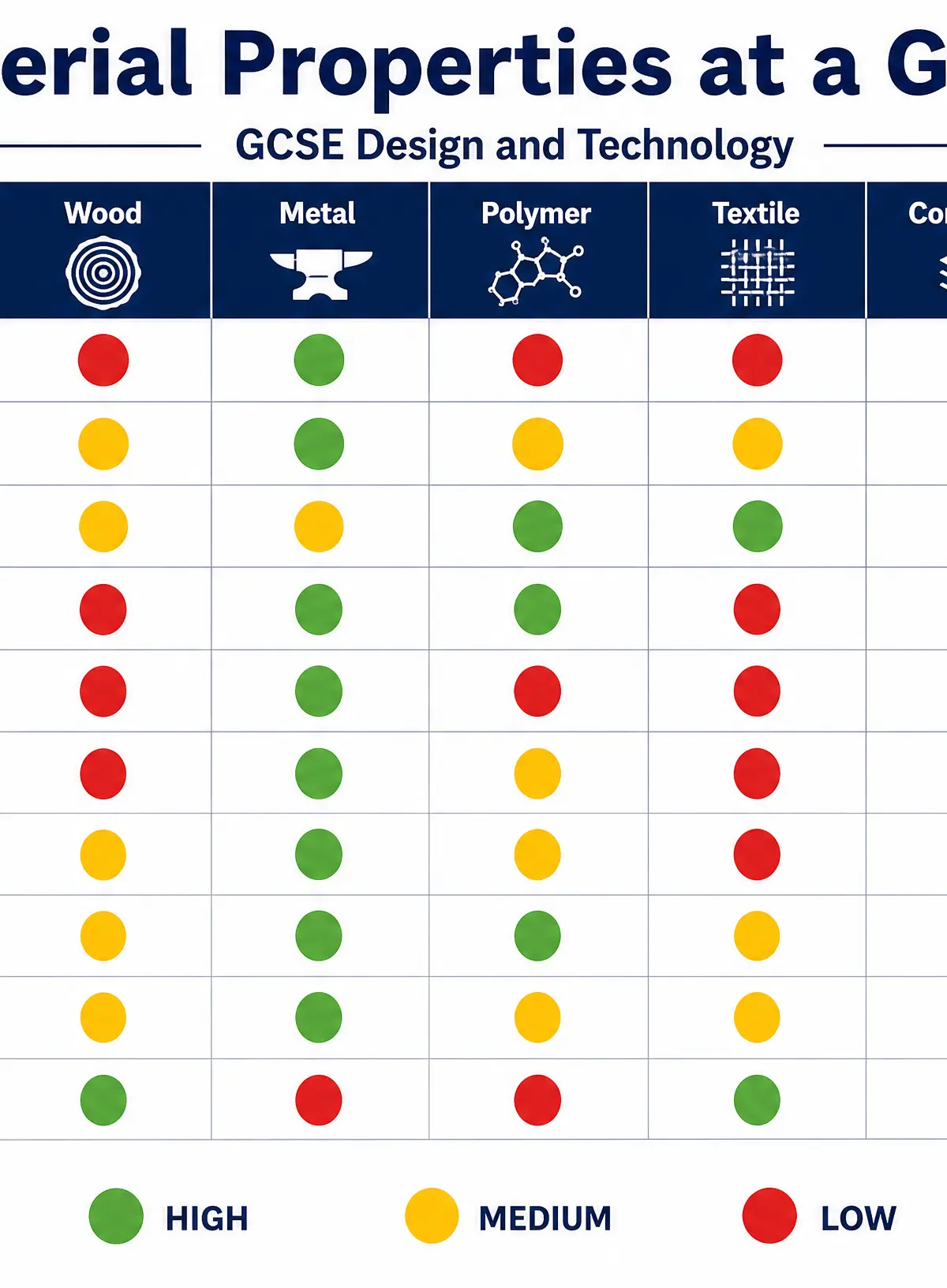
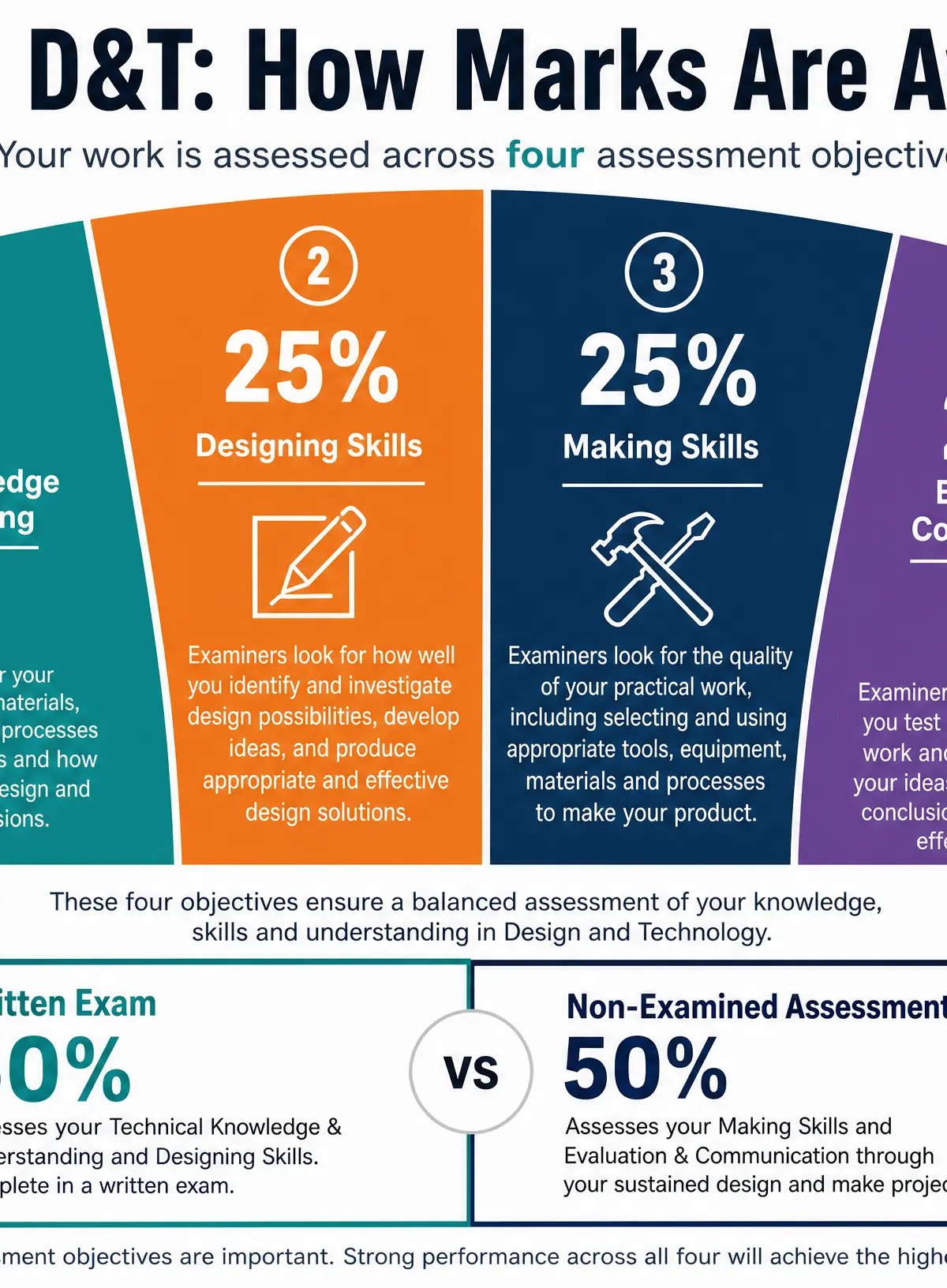
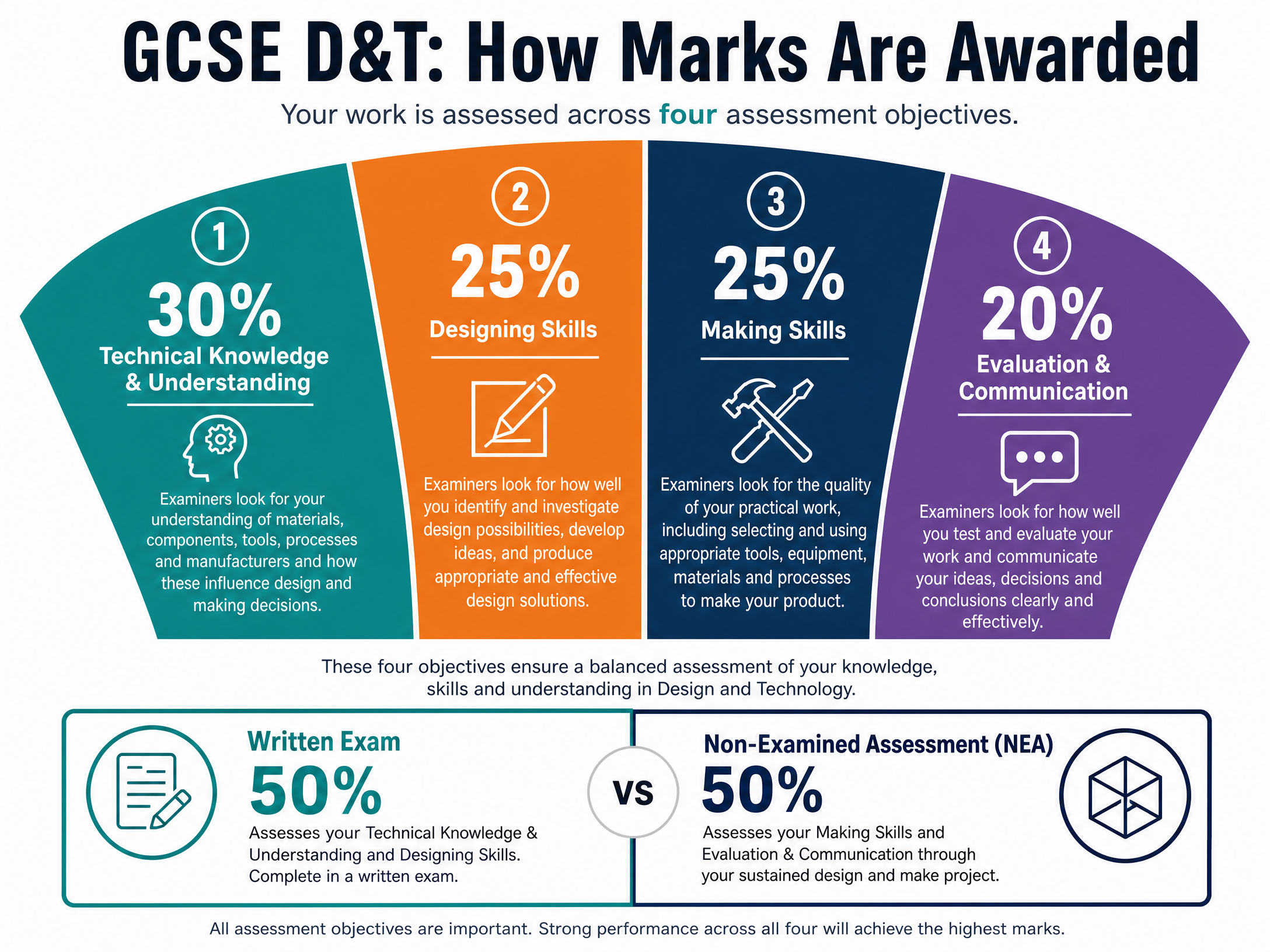
Your NEA is worth 50% of your final grade. Examiners assess your work across specific objectives. Your material choices heavily influence the 'Designing Skills' and 'Making Skills' sections.
Building a Strong Portfolio
To secure high marks in your portfolio:
- Justify Every Choice: Never simply state, "I am using acrylic." Always explain why: "I have selected acrylic for the casing because its high plasticity allows it to be easily line-bent to the required 90-degree angle, and its durability will protect the internal components."
- Evidence Experimentation: Show that you have tested different materials. Photograph your tests and evaluate the results based on performance characteristics.
- Link to the Context: Ensure your material choices align with your target market and the environment in which the prototype will be used.
Exam Component
Written Exam Knowledge
In the written paper (50% of the GCSE), you will face questions requiring you to apply your knowledge of material properties to specific contexts. Expect to see questions asking you to evaluate the suitability of a material for a given product, or to compare two different materials.
Exam Strategy
Always read the context of the question carefully. If the question is about a product used outdoors, durability and resistance to corrosion (for metals) or rot (for woods) are critical points to mention. If the product is disposable, biodegradability and sustainability should be key focus areas.
Visual Resources
2 diagrams and illustrations
Interactive Diagrams
1 interactive diagram to visualise key concepts
Conceptual Flow Outline
The Material Selection Process
Worked Examples
3 worked examples — open one to explore the question and available guidance.
Practice Questions
Test your understanding — click to reveal model answers
Identify one smart material and state its primary characteristic. (2 marks)
Hint: Think about materials that react to heat or light.
Explain why carbon fibre reinforced polymer (CFRP) is increasingly used in the manufacture of high-performance bicycles instead of steel. (4 marks)
Hint: Consider the specific requirements of a racing bicycle (weight, strength) and how composites work.
Evaluate the suitability of corrugated cardboard versus expanded polystyrene (EPS) for packaging a new electronic smart speaker. (6 marks)
Hint: Discuss protection (toughness/impact resistance), environmental impact, and manufacturing. You must make a final judgement.