Pearson Edexcel · A-Level · Design and Technology
Topic 2: Performance characteristics of materials
This topic covers the fundamental performance characteristics of materials, which is the bedrock of all Design and Technology decisions. Understanding these properties enables you to justify material choices, evaluate existing products, and score highly in both the written exam and your NEA coursework.
- 8 min read
- 3 worked examples
- 3 practice questions
- 6 key terms
Study Notes
Overview
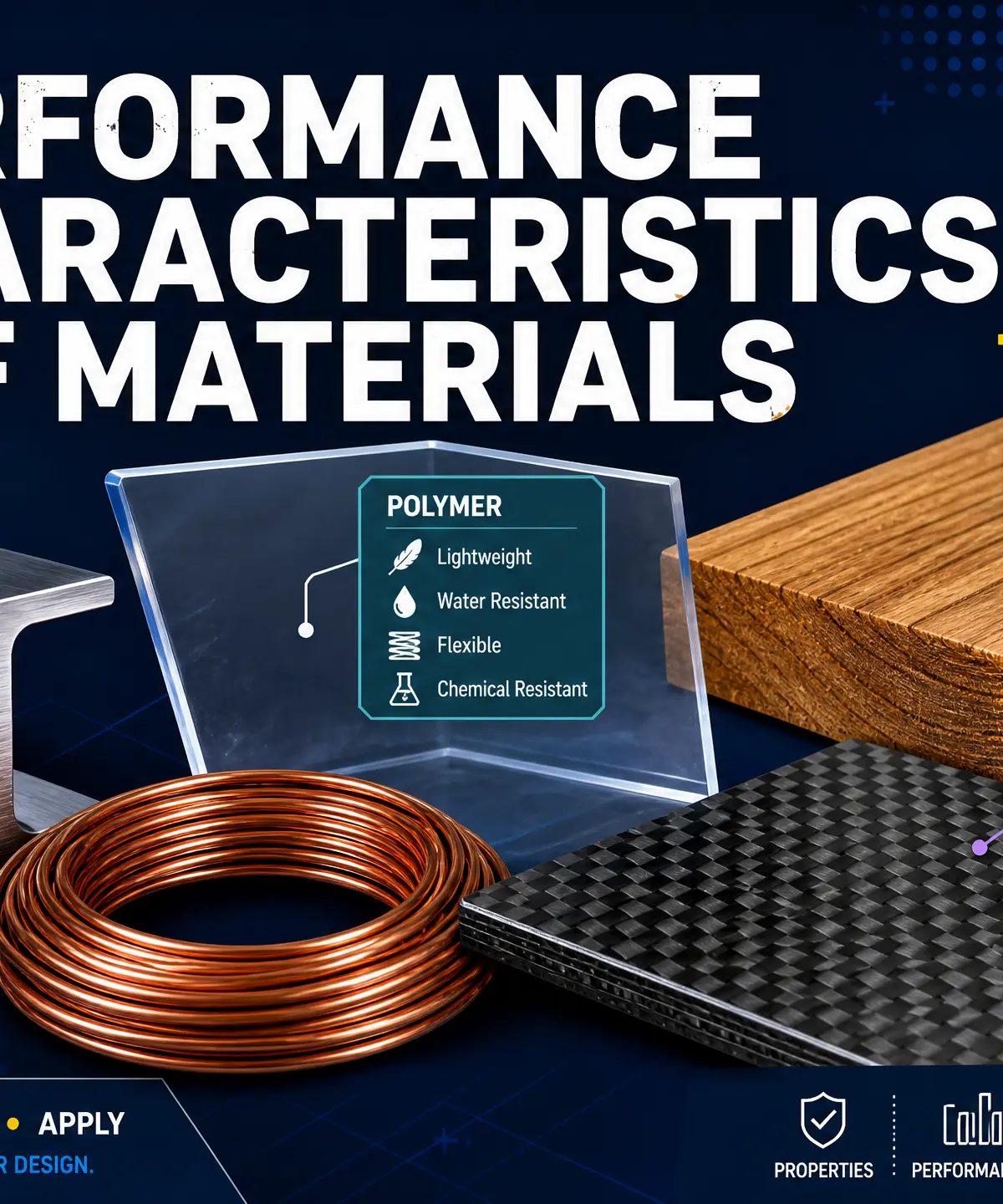
Welcome to Topic 2: Performance Characteristics of Materials. In Design and Technology, everything begins with materials. Whether you are designing a sleek new polymer casing for a smart device, constructing a robust timber frame, or engineering a high-performance composite for aerospace, your success depends entirely on selecting the right material for the job.
This topic is not just about memorising definitions; it is about application. Examiners want to see that you can identify a property, explain what it means, and most importantly, justify why it makes a material suitable (or unsuitable) for a specific product. This knowledge is equally crucial for your Non-Exam Assessment (NEA), where you must justify your material choices to access the highest mark bands.
Key Knowledge & Theory
Core Concepts: The Ten Key Properties
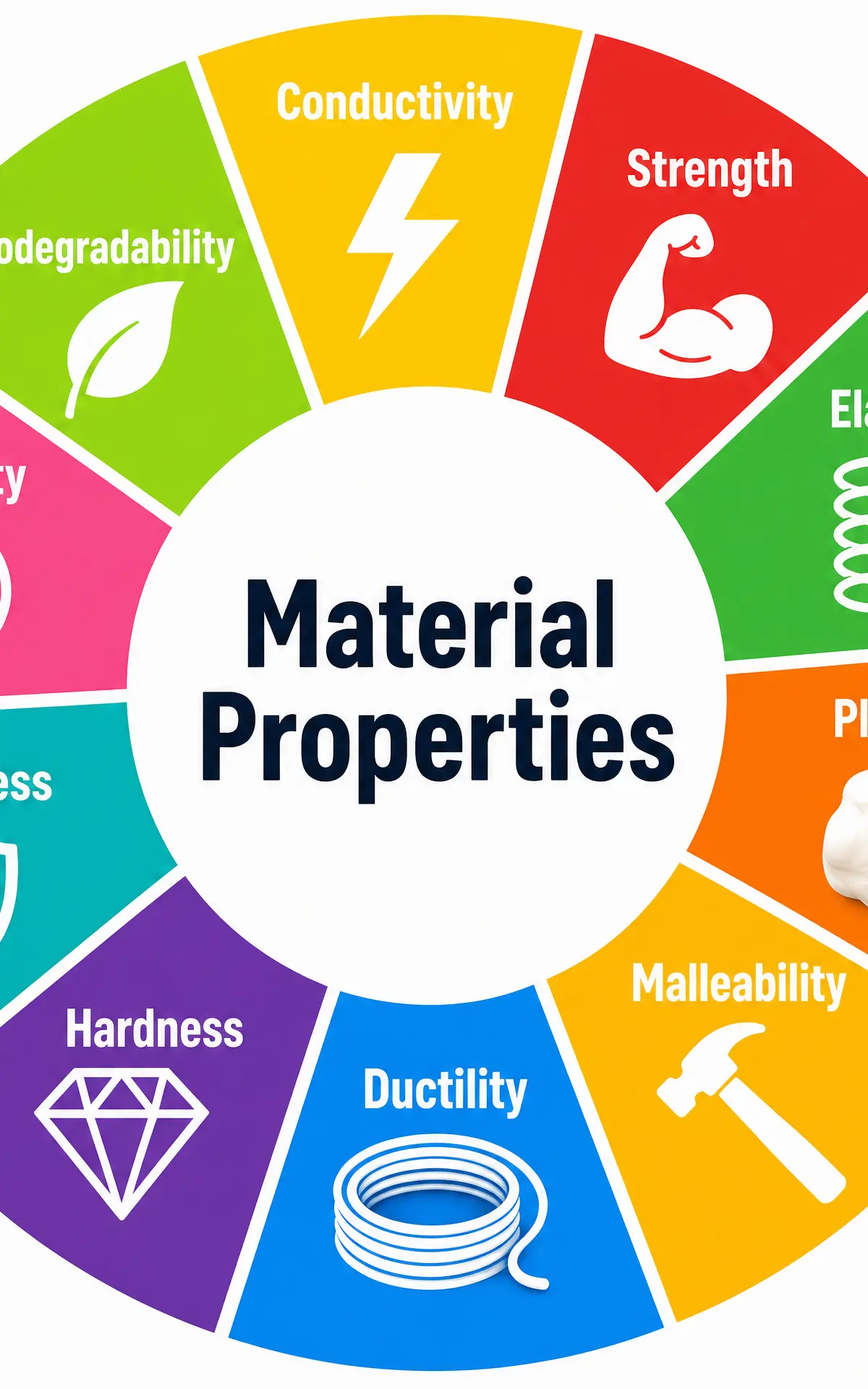
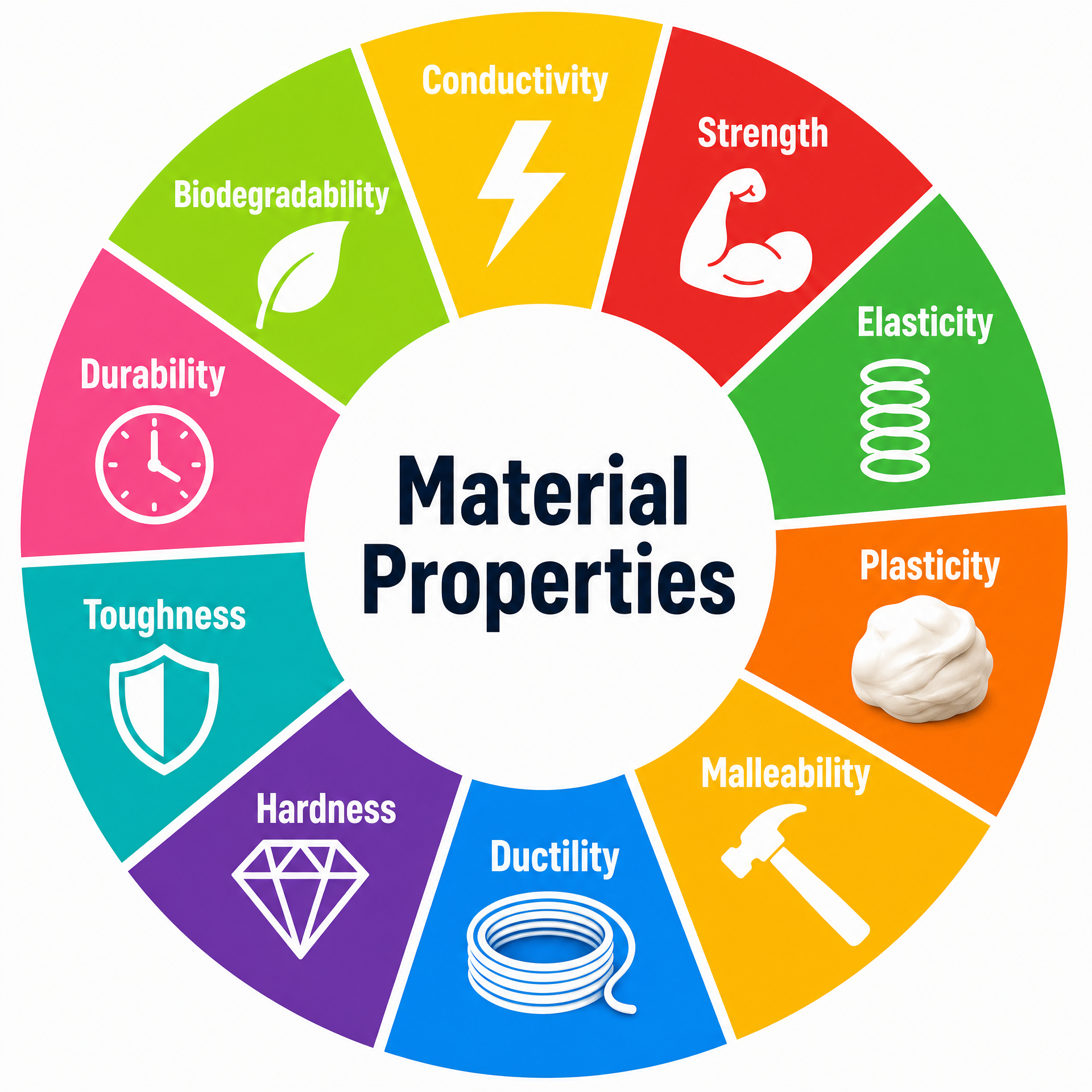
To succeed in this topic, you must master ten specific performance characteristics. Examiners frequently test these, often asking you to distinguish between similar properties like toughness and hardness, or malleability and ductility.
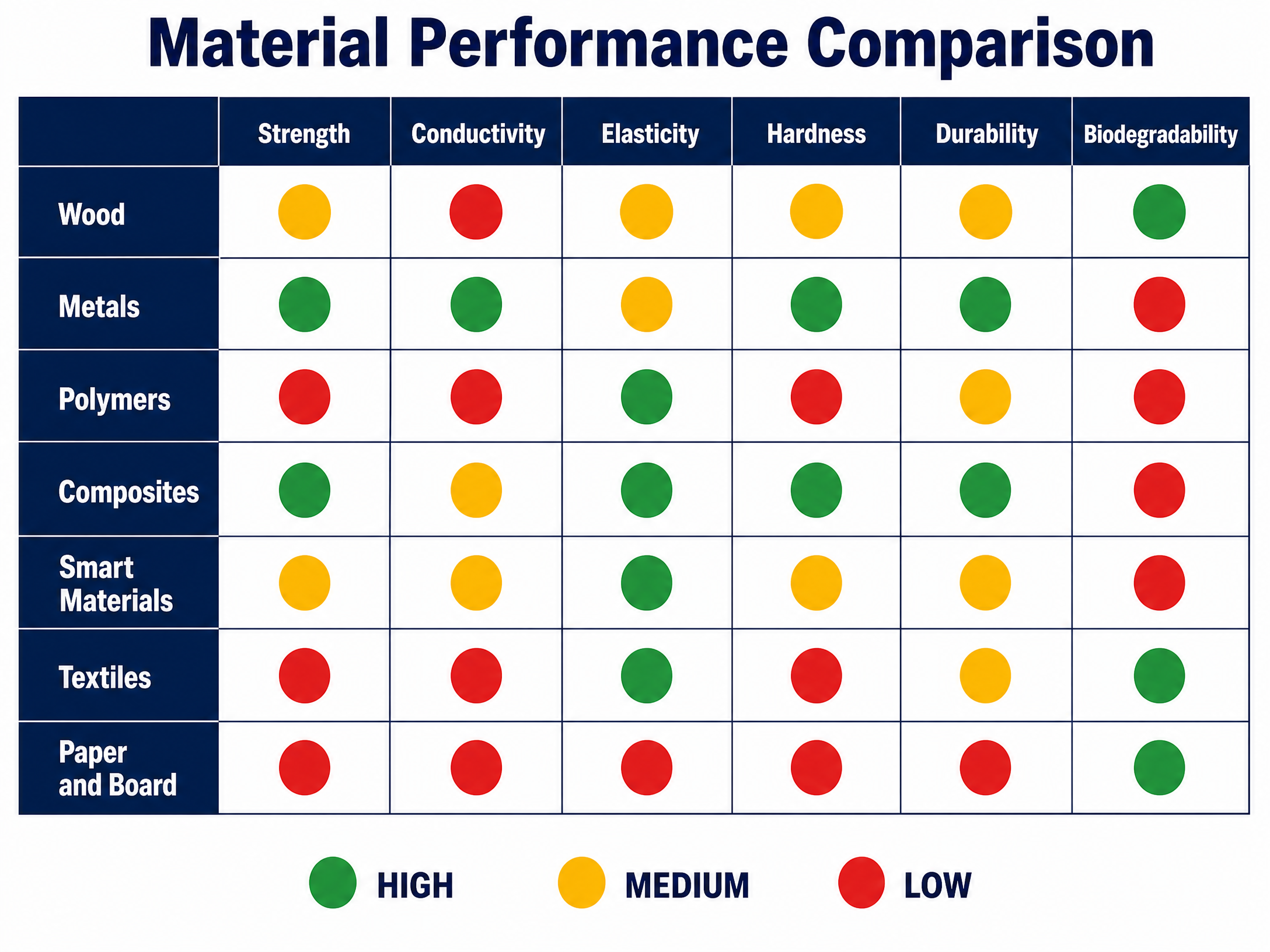
- Conductivity (Electrical and Thermal): The ability of a material to allow electricity or heat to pass through it. Metals like copper and aluminium are excellent conductors. Polymers and woods are poor conductors, making them excellent insulators.
- Strength: The ability of a material to withstand an applied force without breaking or permanently deforming. You must specify the type of strength: Tensile (resisting pulling), Compressive (resisting squashing), or Shear (resisting sliding/cutting).
- Elasticity: The ability of a material to return to its original shape after an applied force is removed (e.g., a rubber band or a steel spring).
- Plasticity: The ability of a material to be permanently deformed and retain its new shape without breaking when a force is applied (e.g., modelling clay or heated thermoplastics).
- Malleability: The ability of a material to be hammered, pressed, or rolled into thin sheets without cracking. Gold and aluminium are highly malleable.
- Ductility: The ability of a material to be drawn out into a long wire without breaking. Copper is highly ductile, which is why it is used for electrical wiring.
- Hardness: The ability of a material to resist scratching, indentation, or wear on its surface. Diamond is the hardest natural material; high-carbon steel is hardened for use in cutting tools.
- Toughness: The ability of a material to absorb impact energy and resist fracturing or cracking. A tough material will deform rather than shatter. Mild steel is tough; glass is hard but brittle (not tough).
- Durability: The ability of a material to withstand wear, pressure, and environmental damage over time. This is closely linked to a product's lifespan and sustainability.
- Biodegradability: The ability of a material to be broken down naturally by microorganisms. Natural woods and papers are biodegradable; most synthetic polymers are not.
Material Categories and Their Typical Characteristics
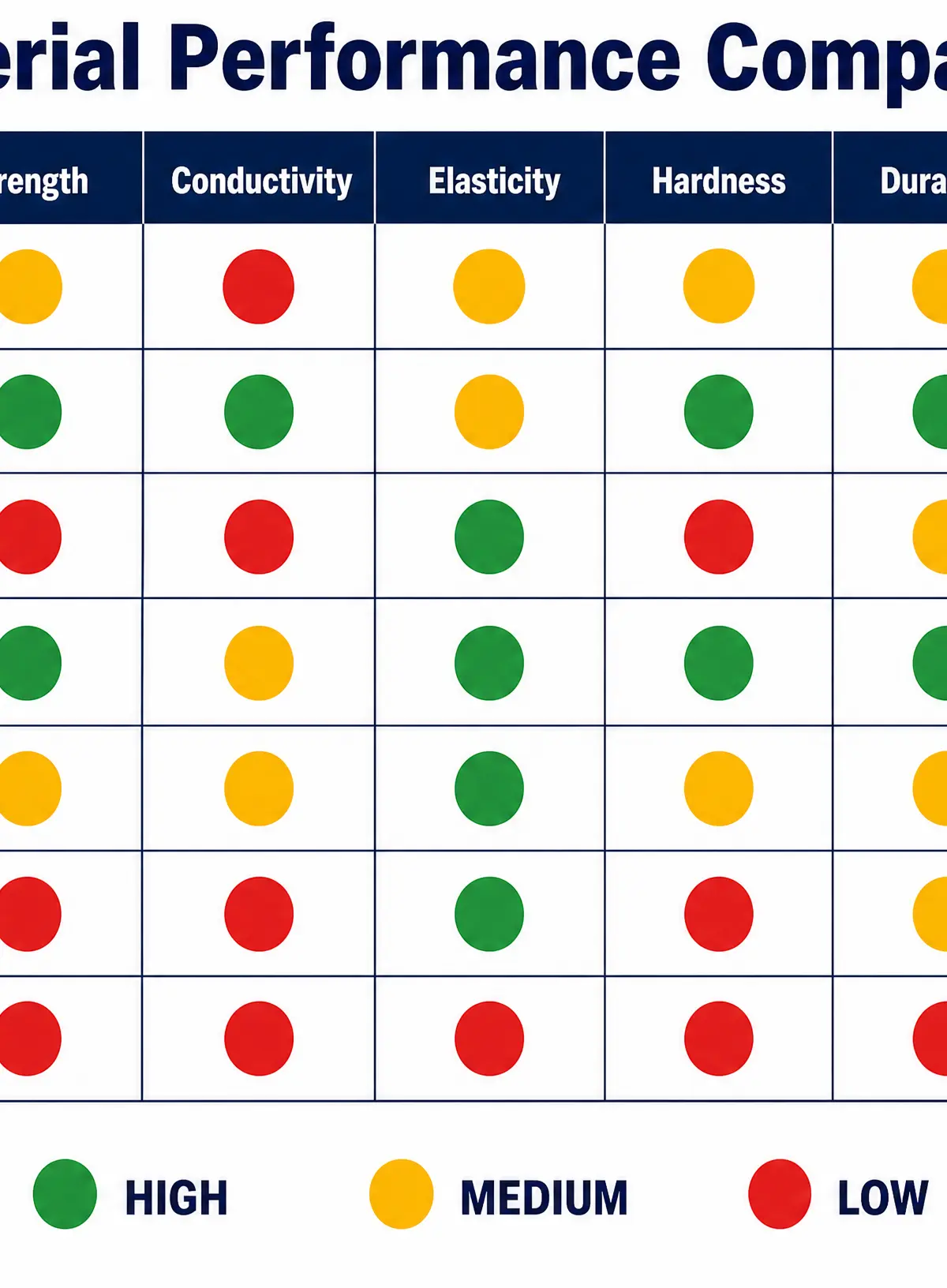
| Material Category | Typical High-Performing Characteristics | Typical Limitations | Common Applications |
|---|---|---|---|
| Woods (Timber) | Good strength-to-weight ratio, aesthetically pleasing, biodegradable | Susceptible to moisture/rot, anisotropic (different properties depending on grain direction) | Furniture, construction, interior fittings |
| Metals | High strength, hardness, toughness, excellent conductivity, malleable, ductile | Can be heavy, susceptible to corrosion (ferrous metals), high embodied energy | Structural beams, electrical wiring, vehicle bodies |
| Polymers | Lightweight, excellent electrical/thermal insulators, corrosion-resistant, easily moulded (high plasticity when heated) | Poor high-temperature performance, mostly non-biodegradable, low stiffness compared to metals | Product casings, packaging, plumbing pipes |
| Composites | Exceptional specific strength (strength-to-weight ratio), tailor-made properties | Expensive, difficult to recycle, complex manufacturing processes | Aerospace components, sports equipment, boat hulls |
Practical Skills
Applying Material Properties to Manufacturing
Understanding performance characteristics is essential for selecting the correct manufacturing process. You cannot vacuum form a thermosetting polymer, because it does not possess the necessary plasticity when heated. You cannot draw cast iron into a wire, because it lacks ductility.
When planning your practical work, consider:
- Workability: How easily can the material be cut, shaped, and joined? Softwoods are easier to work with hand tools than dense hardwoods.
- Forming: Does the material require heat to become plastic? Thermoplastics (like acrylic or HIPS) must be heated to specific temperatures before they can be line-bent or vacuum-formed.
- Finishing: Does the material require a surface finish to improve its durability or aesthetics? Ferrous metals require painting, galvanising, or powder coating to prevent oxidation (rusting).
Audio Revision: The Materials Podcast
Listen to our comprehensive 10-minute podcast covering all ten properties, exam tips, and a quick-fire recall quiz. This is perfect for revising on the go.

Portfolio/Coursework Guidance (NEA)
Assessment Criteria for Material Selection
In your Non-Exam Assessment (NEA), examiners award marks in the 'Development of Design Proposals' and 'Making' sections based on your material choices. To access the highest mark bands, you must:
- Select appropriate materials based on their performance characteristics, working properties, and environmental impact.
- Justify your choices clearly, linking the specific properties of the material to the functional requirements of your product.
- Demonstrate understanding of how the material's properties dictate the manufacturing processes you use.
Building a Strong Portfolio
Do not just state: "I will use acrylic because it looks nice."
Instead, write: "I have selected cast acrylic (a thermoplastic polymer) for the casing because it possesses high plasticity when heated, allowing it to be easily line-bent to the required 90-degree angles. Furthermore, it is a good electrical insulator, which ensures user safety for this electronic product. While it is hard and resists surface scratching, it is relatively brittle, so the wall thickness has been increased to 3mm to improve overall toughness and resist impact if dropped."
Exam Component
Written Exam Knowledge
In the written paper, questions on material properties typically fall into three categories:
- Definitions (1-2 marks): Stating what a property means (e.g., "State what is meant by the term ductility").
- Selection (2-3 marks): Choosing a suitable material for a given product and giving one reason based on its properties.
- Justification/Evaluation (4-6 marks): Extended response questions requiring you to evaluate the suitability of a specific material for a product, comparing its performance characteristics against alternatives.
Exam Strategy: The "Property-Reason-Application" Chain
When answering extended questions, always use the PRA chain:
- Property: Name the specific characteristic (e.g., High compressive strength).
- Reason: Define what it means (e.g., It can withstand heavy squashing forces without crushing).
- Application: Link it to the product in the question (e.g., This is essential for the legs of the chair, which must support the weight of the user without collapsing).
Visual Resources
2 diagrams and illustrations
Interactive Diagrams
1 interactive diagram to visualise key concepts
Conceptual Flow Outline
The Material Selection Process
Worked Examples
3 worked examples — open one to explore the question and available guidance.
Practice Questions
Test your understanding — click to reveal model answers
State the meaning of the term 'malleability'. (1 mark)
Hint: Think about the memory hook involving a mallet.
A designer is choosing a material for the handle of a hammer. Explain why toughness is a more important property than hardness for this application. (3 marks)
Hint: Define both terms and relate them to what happens when a hammer strikes a nail.
Evaluate the use of thermoplastic polymers compared to woods for the manufacture of children's outdoor play equipment. (6 marks)
Hint: Consider performance characteristics (durability, toughness), manufacturing (plasticity), and environmental impact (biodegradability).