Pearson Edexcel · A-Level · Design and Technology
Topic 6: Effects of technological developments
This topic covers the essential performance characteristics of materials — from woods and metals to smart materials and composites. Understanding these properties is crucial for making justified design decisions, evaluating products, and securing top marks in both your written exam and practical coursework.
- 7 min read
- 3 worked examples
- 3 practice questions
- 6 key terms
Study Notes
Overview
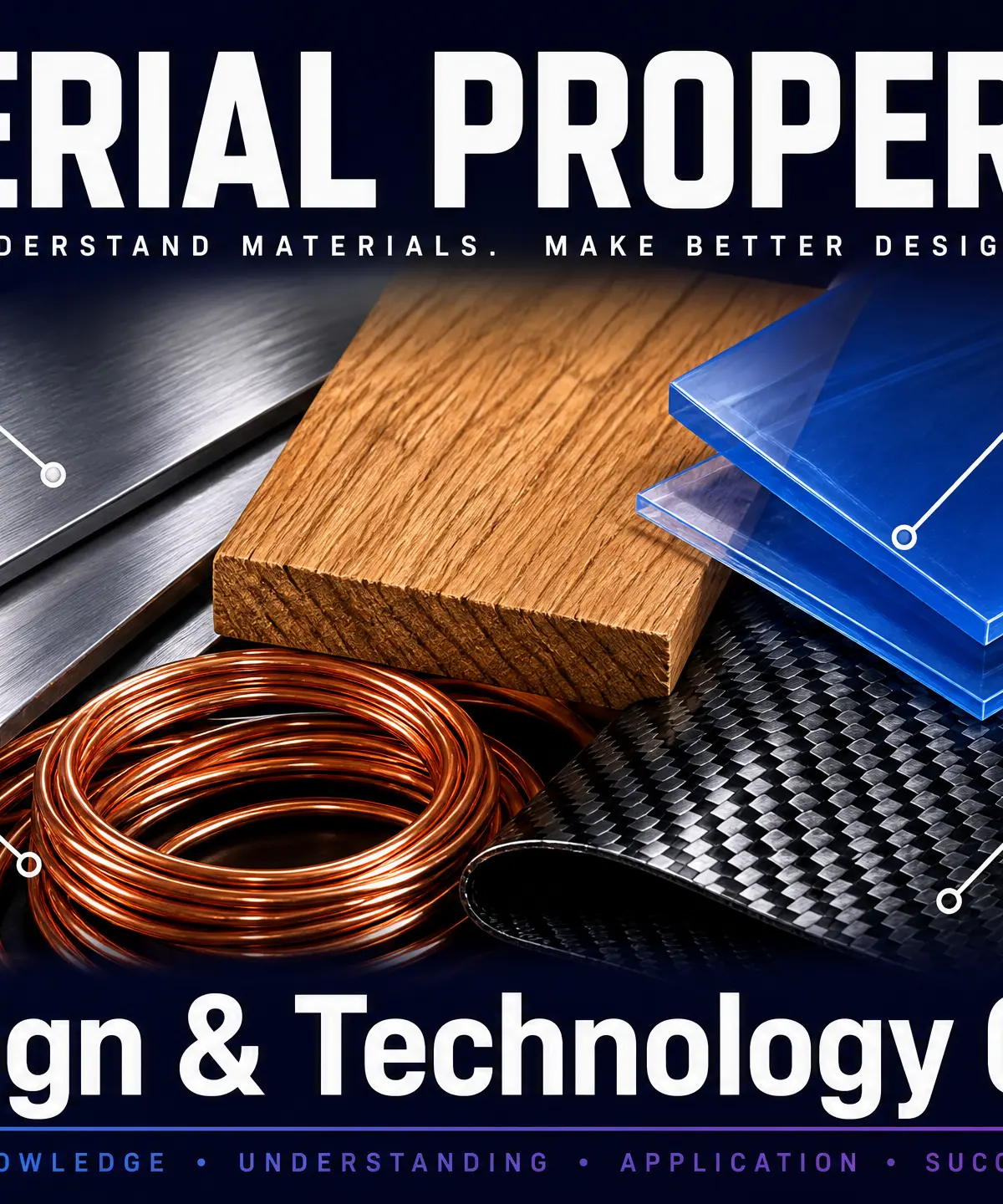
Welcome to Topic 6: Effects of technological developments, with a specific focus on material performance characteristics. In Design and Technology, materials are the foundation of every product. Designers do not select materials by chance; they evaluate the performance characteristics required for a specific application and select a material that meets those demands.
Whether you are designing a sustainable packaging solution or a high-performance sports wheelchair, your ability to discriminate between materials based on their properties is critical. This guide covers the core theoretical knowledge and practical applications you need to master this topic.
Key Knowledge & Theory
Core Concepts: The 10 Key Material Properties
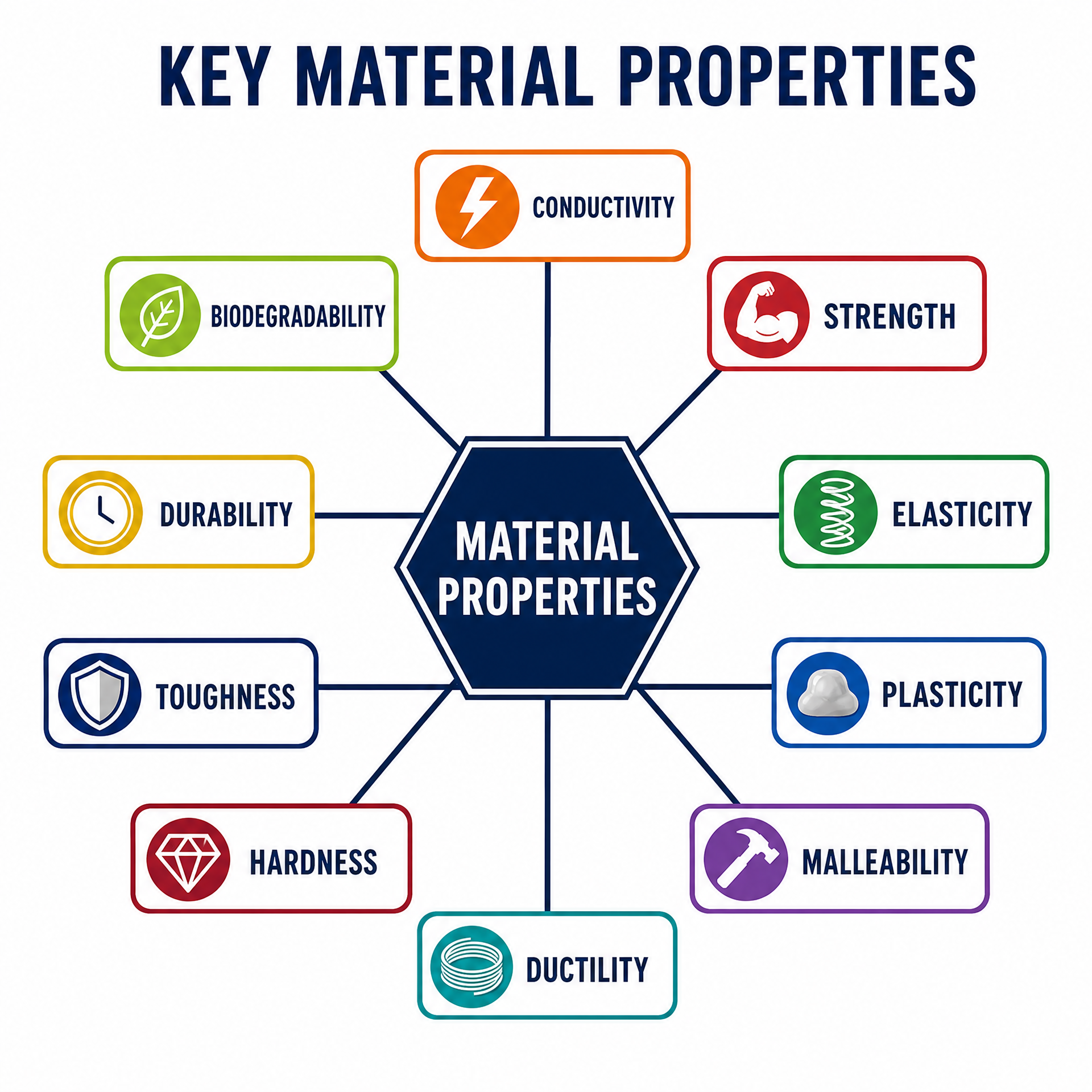
To succeed in this topic, candidates must be able to define, identify, and apply the following ten performance characteristics. Examiners frequently test your ability to discriminate between similar properties (such as hardness and toughness).
- Conductivity: The ability of a material to transfer heat (thermal conductivity) or electricity (electrical conductivity). Metals like copper are excellent conductors, while polymers are typically insulators.
- Strength: The ability of a material to withstand forces without breaking or permanently deforming. This includes tensile strength (resisting pulling), compressive strength (resisting squashing), and shear strength (resisting opposing forces).
- Elasticity: The ability of a material to deform under a force and return to its original shape when that force is removed (e.g., a rubber band or steel spring).
- Plasticity: The ability of a material to be permanently deformed without breaking. This is essential for manufacturing processes like pressing and forming.
- Malleability: A specific type of plasticity; the ability of a material to be hammered, pressed, or rolled into thin sheets without cracking (e.g., aluminium foil).
- Ductility: Another specific type of plasticity; the ability of a material to be drawn out into thin wires without breaking (e.g., copper wire).
- Hardness: The ability of a material to resist scratching, wear, and indentation. High carbon steel is hardened to make cutting tools.
- Toughness: The ability of a material to absorb impact energy and resist fracture. A tough material will dent or deform rather than shatter (e.g., polyethylene in safety helmets).
- Durability: The ability of a material to withstand wear, pressure, and environmental damage over time, such as resisting corrosion or UV degradation.
- Biodegradability: The ability of a material to be broken down naturally by microorganisms in the environment, a crucial factor in sustainable design.
Material Categories
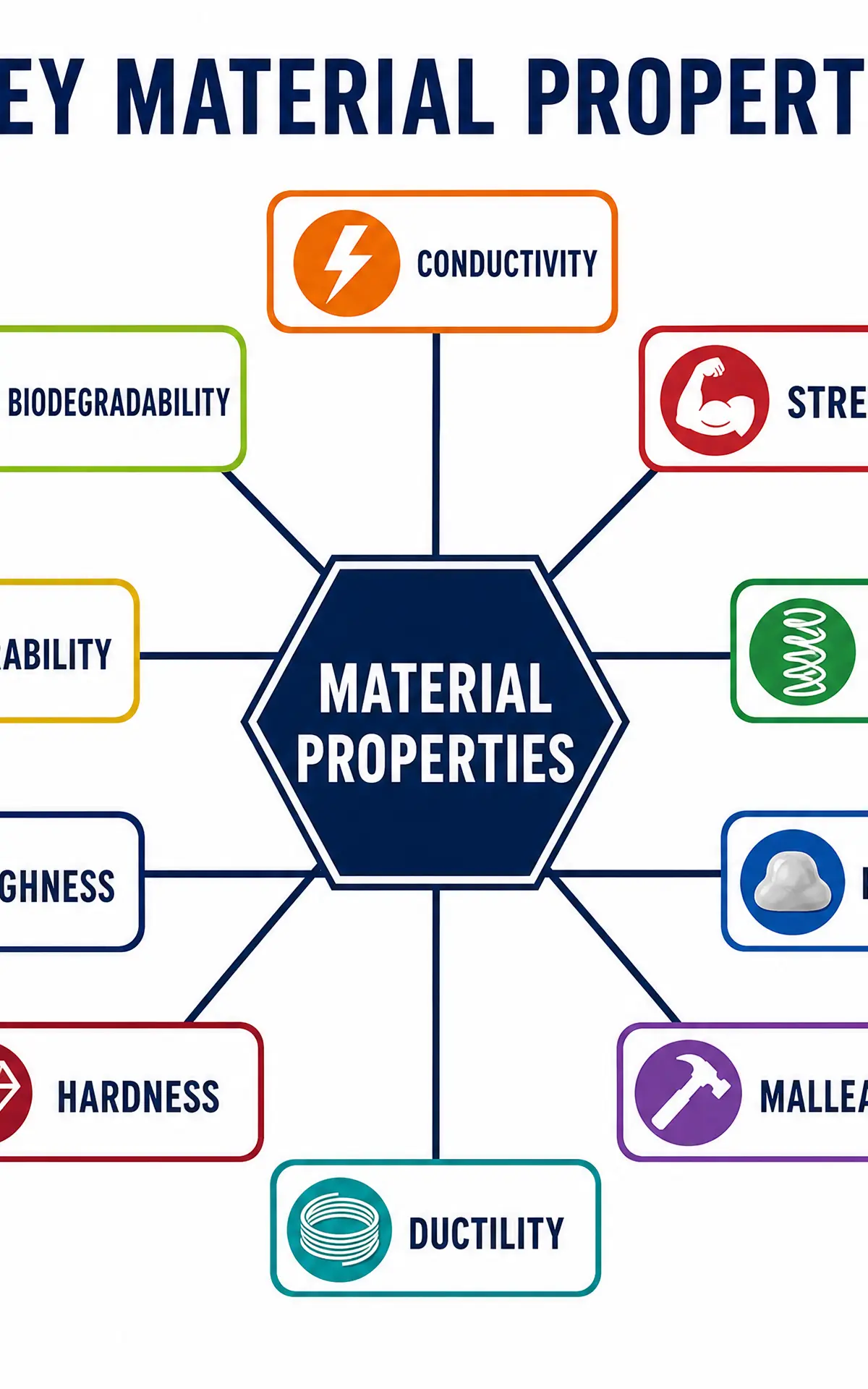
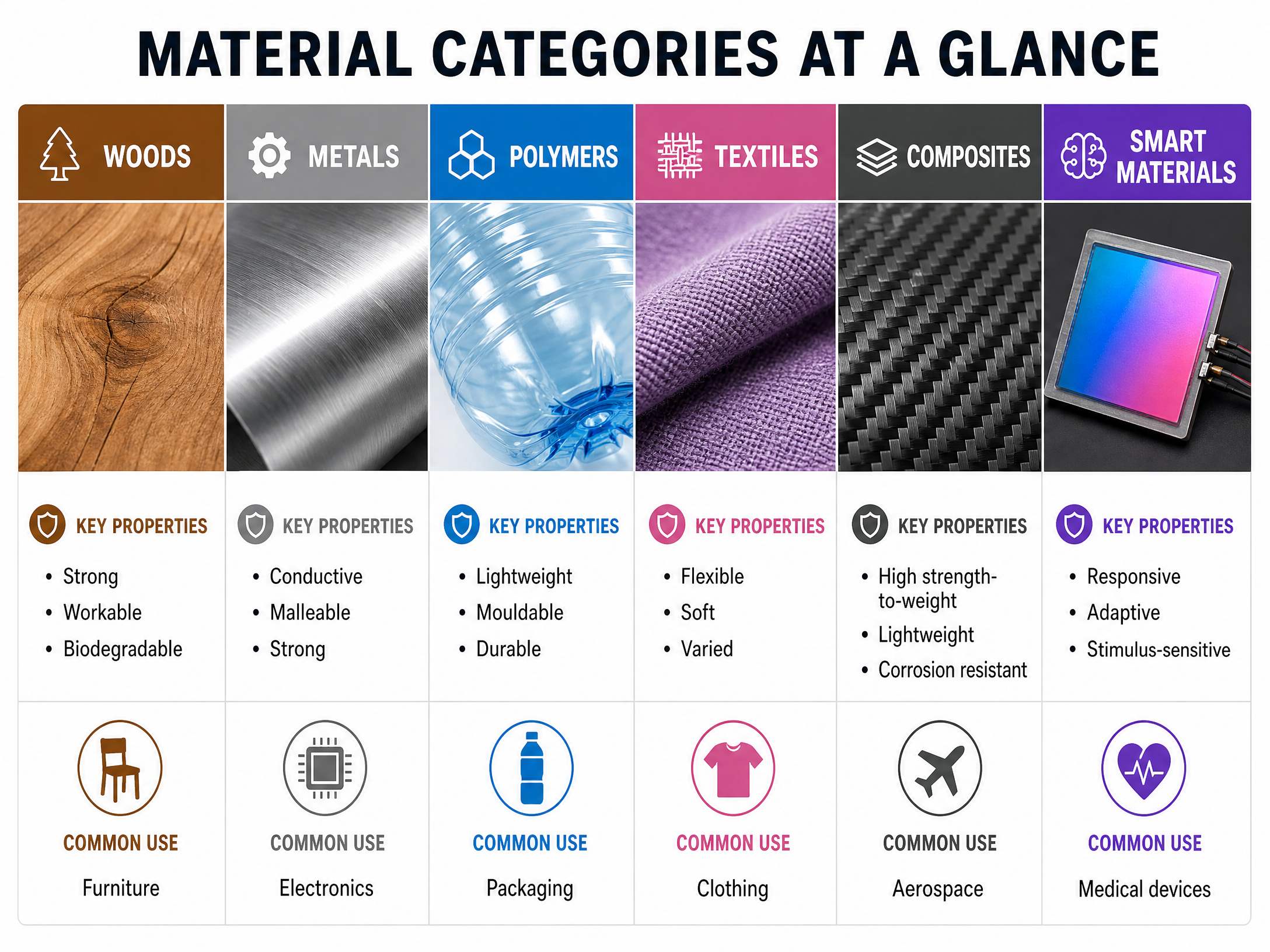
Candidates must understand how these properties apply to the main material categories:
| Category | Key Properties | Common Examples | Typical Applications |
|---|---|---|---|
| Woods | Strong in compression, workable, biodegradable, poor conductors | Oak (Hardwood), Pine (Softwood) | Furniture, construction, tool handles |
| Metals | Strong, conductive, malleable, ductile | Steel (Ferrous), Aluminium (Non-ferrous) | Structural frameworks, wiring, car bodies |
| Polymers | Lightweight, mouldable, durable, insulators | Acrylic (Thermoplastic), Epoxy resin (Thermosetting) | Packaging, casings, adhesives |
| Textiles | Flexible, varied elasticity and strength | Cotton (Natural), Nylon (Synthetic) | Clothing, upholstery, technical fabrics |
| Composites | High strength-to-weight ratio, tailored properties | Carbon Fibre Reinforced Polymer (CFRP) | Aerospace, high-performance sports equipment |
| Smart Materials | Responsive to environmental stimuli | Shape Memory Alloys, Thermochromic pigments | Medical stents, temperature indicators |
Practical Skills
Techniques & Processes
Understanding material properties directly informs the manufacturing processes you can use in the workshop:
- Forming and Bending: Materials must possess high plasticity or malleability to be formed. For example, when line-bending acrylic, heat is applied to temporarily increase its plasticity, allowing it to be bent to a specific angle before cooling and retaining the new shape.
- Cutting and Machining: The tool used must always have a higher hardness than the material being cut. This is why high-speed steel (HSS) or tungsten carbide bits are used to machine milder metals and woods.
- Finishing: Applying a finish (like varnish to wood or galvanising to steel) improves the durability of the material by protecting it from environmental degradation.
Materials & Equipment
When working in the DT workshop, safe and appropriate material selection is paramount. If a product is likely to be dropped, selecting a material with high toughness (like ABS plastic) is better than a hard but brittle material (like acrylic). Always consider the end-use environment when selecting materials for your practical coursework.
Portfolio/Coursework Guidance
Assessment Criteria
In your Non-Examined Assessment (NEA) or coursework portfolio, examiners award marks for 'Making Design Decisions'. You will not gain high marks by simply stating, "I chose aluminium because it is good." You must explicitly link the material's performance characteristics to the product's function.
Example of a high-level portfolio annotation:
"I selected 5000-series aluminium alloy for the outer casing. Its high malleability allows it to be pressed into the complex ergonomic curves of the design. Furthermore, its excellent durability and natural resistance to corrosion mean the product will maintain its aesthetic appeal in an outdoor environment without the need for additional protective coatings, reducing overall manufacturing time."
Building a Strong Portfolio
To evidence your understanding of material properties:
- Conduct Material Testing: Perform simple workshop tests (e.g., scratch tests for hardness, drop tests for toughness) and photograph the results.
- Create Selection Matrices: Use a table to score different materials against the required properties for your product.
- Justify Everything: Every time you mention a material, accompany it with a specific property and an explanation of why that property is needed.
Exam Component
Written Exam Knowledge
The written paper frequently features questions requiring you to justify material choices for specific products, or to explain why a particular material is unsuitable. You must use the exact technical vocabulary.
Audio Revision: Listen to the podcast below for a detailed walkthrough of these properties, exam tips, and a quick-fire recall quiz to test your knowledge.

Exam Preparation Strategy
When preparing for the exam, practice "reverse engineering" everyday products. Look at a bicycle, a smartphone, or a kettle, and identify the materials used. Then, list the performance characteristics that made those materials the right choice. This is exactly the analytical skill the examiners are looking for.
Visual Resources
2 diagrams and illustrations
Interactive Diagrams
1 interactive diagram to visualise key concepts
Conceptual Flow Outline
Material selection decision tree for impact and wear resistance.
Worked Examples
3 worked examples — open one to explore the question and available guidance.
Practice Questions
Test your understanding — click to reveal model answers
State the property that allows a material to be drawn into a wire.
Hint: Think of the memory hook involving a duct.
Explain two reasons why aluminium is a suitable material for a drinks can. (4 marks)
Hint: Think about the manufacturing process (shaping the can) and the end use (holding liquid).
A company is designing a new outdoor park bench. Evaluate the use of Oak compared to Mild Steel for this product. (6 marks)
Hint: Compare them on strength, durability (weather resistance), and maintenance requirements.