Pearson Edexcel · GCSE · Design and Technology
Component 2: Non-examined assessment (NEA) - Design
The Evaluate stage of the GCSE Design and Technology NEA is where candidates demonstrate critical thinking by testing their final prototype against the original product specification. It also requires a thorough Life Cycle Assessment (LCA) to analyse the environmental impact of the prototype from raw material extraction to end-of-life disposal.
- 6 min read
- 3 worked examples
- 4 practice questions
- 6 key terms
Study Notes
Overview
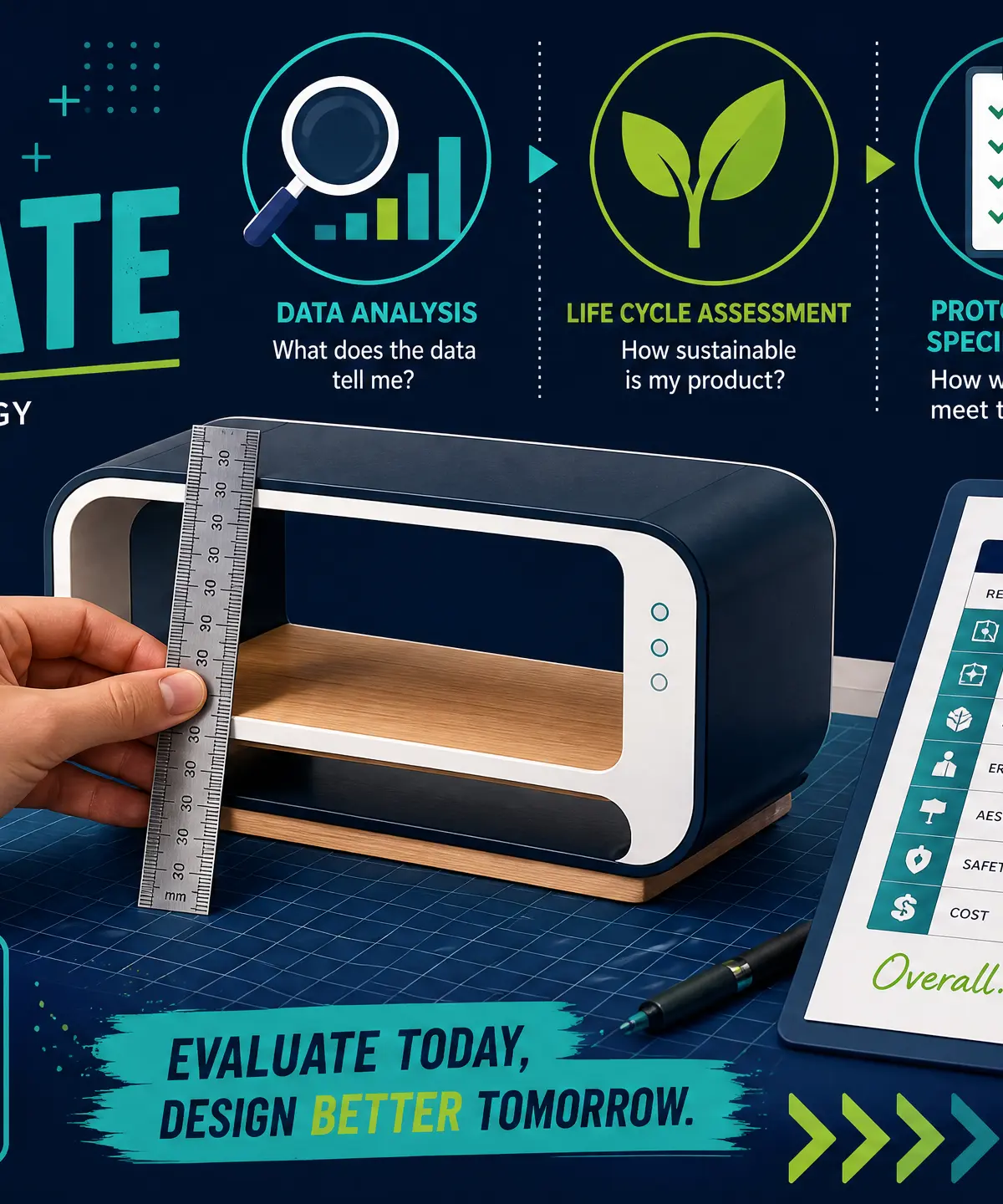
The 'Evaluate' stage of the Component 2 Non-examined assessment (NEA) requires students to test their prototype against the product specification and conduct a life cycle assessment (LCA) to determine its environmental impact and overall fitness for purpose. This is a critical phase where candidates must transition from 'making' to 'analysing'. It is not simply a diary of what was built; rather, it is a rigorous, objective assessment of how well the final product performs against the criteria established at the very beginning of the project.
Audio Revision
Listen to the comprehensive podcast guide covering all aspects of the Evaluate stage, including common pitfalls and exam tips:

Key Knowledge & Theory
Core Concepts
The Evaluate stage rests on three fundamental pillars: Objective Testing, Data Analysis, and Environmental Impact Assessment.
Objective Testing requires candidates to evaluate their prototype using measurable, realistic methods. This means moving beyond subjective statements like 'it looks nice' to empirical data such as 'it supports a load of 5.2kg without deformation'.
Data Analysis involves interpreting the results of these tests. Candidates must not only record the data but explain what it means in the context of the design brief. If a product fails a test, the analysis should explore why it failed and propose specific modifications to rectify the issue in future iterations.
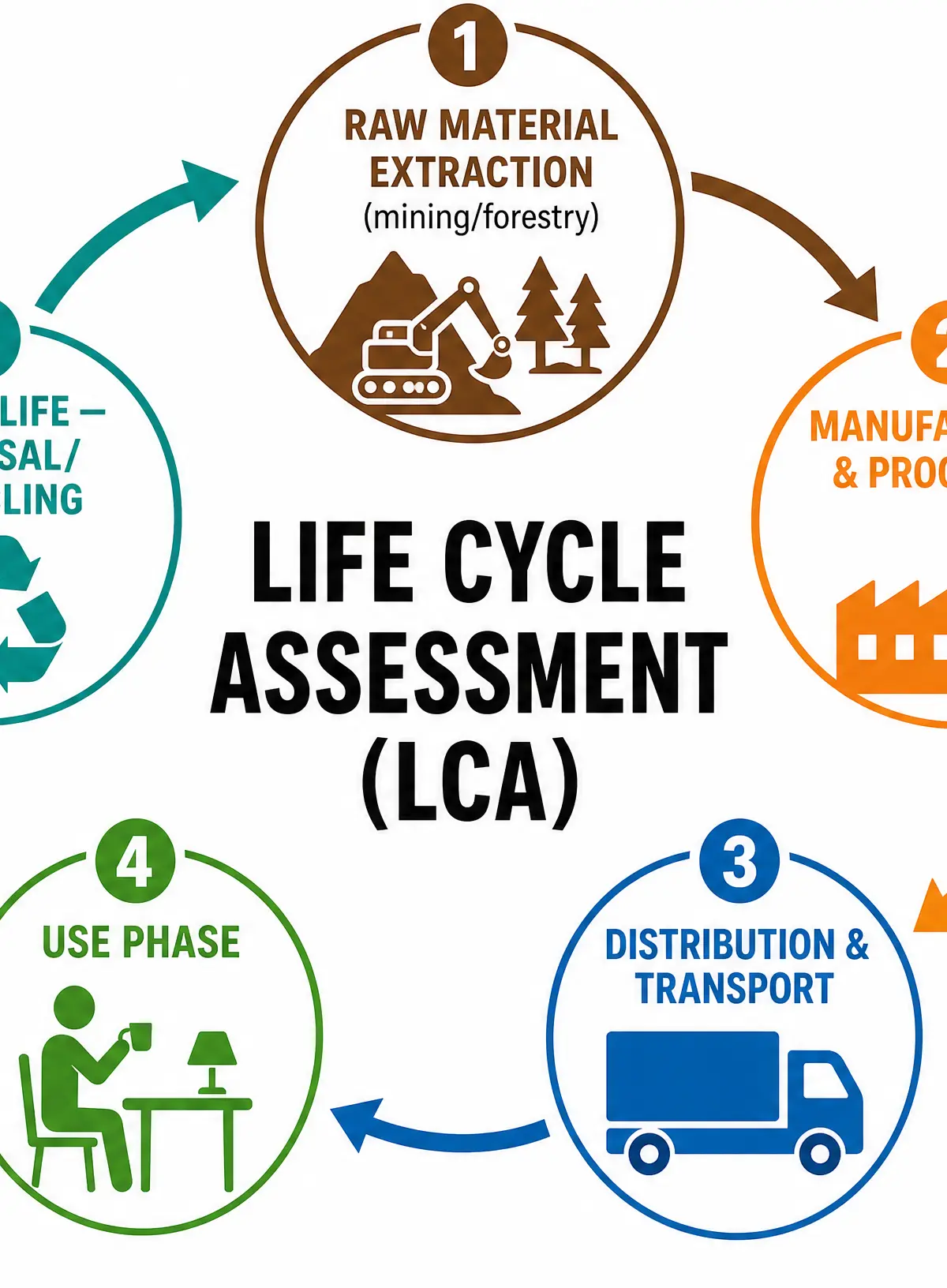
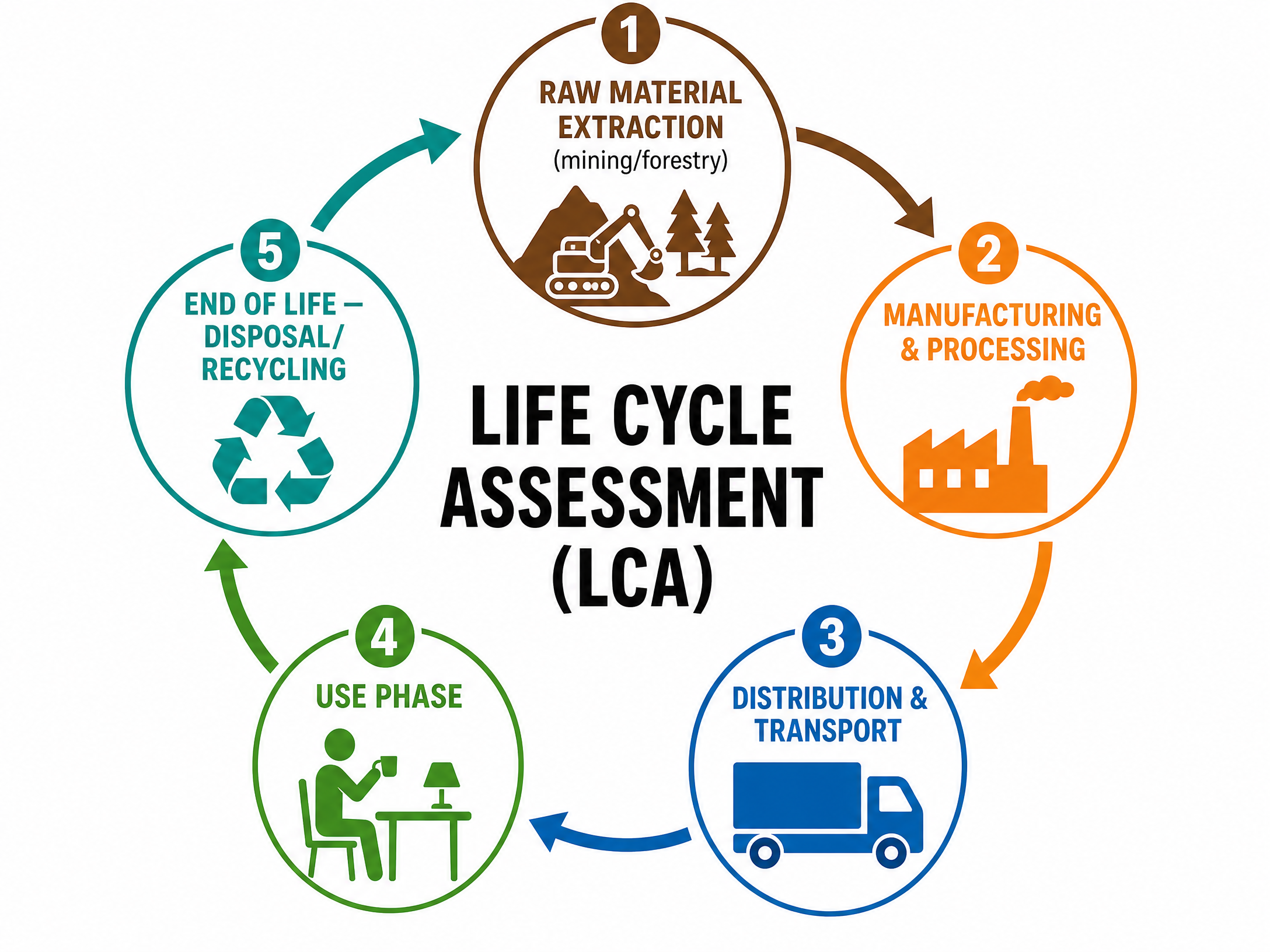
Environmental Impact Assessment is primarily conducted through a Life Cycle Assessment (LCA). This is a systematic evaluation of the environmental consequences of a product across its entire lifespan.
Technical Vocabulary
Candidates must employ specific terminology to access the highest mark bands. Key terms include:
- Prototype: The final, functioning model produced during the NEA.
- Product Specification: The list of criteria the product must meet, established early in the design process.
- Life Cycle Assessment (LCA): A structured framework for evaluating environmental impact across five stages: Raw Material Extraction, Manufacturing, Distribution, Use Phase, and End of Life.
- Quantitative Data: Measurable, numerical data obtained from testing (e.g., dimensions, weight capacity, cost).
- Qualitative Data: Descriptive data obtained from testing (e.g., user feedback on aesthetics or ergonomics).
- Fitness for Purpose: An overall judgement of whether the product successfully solves the problem identified in the design brief.
Practical Skills
Techniques & Processes
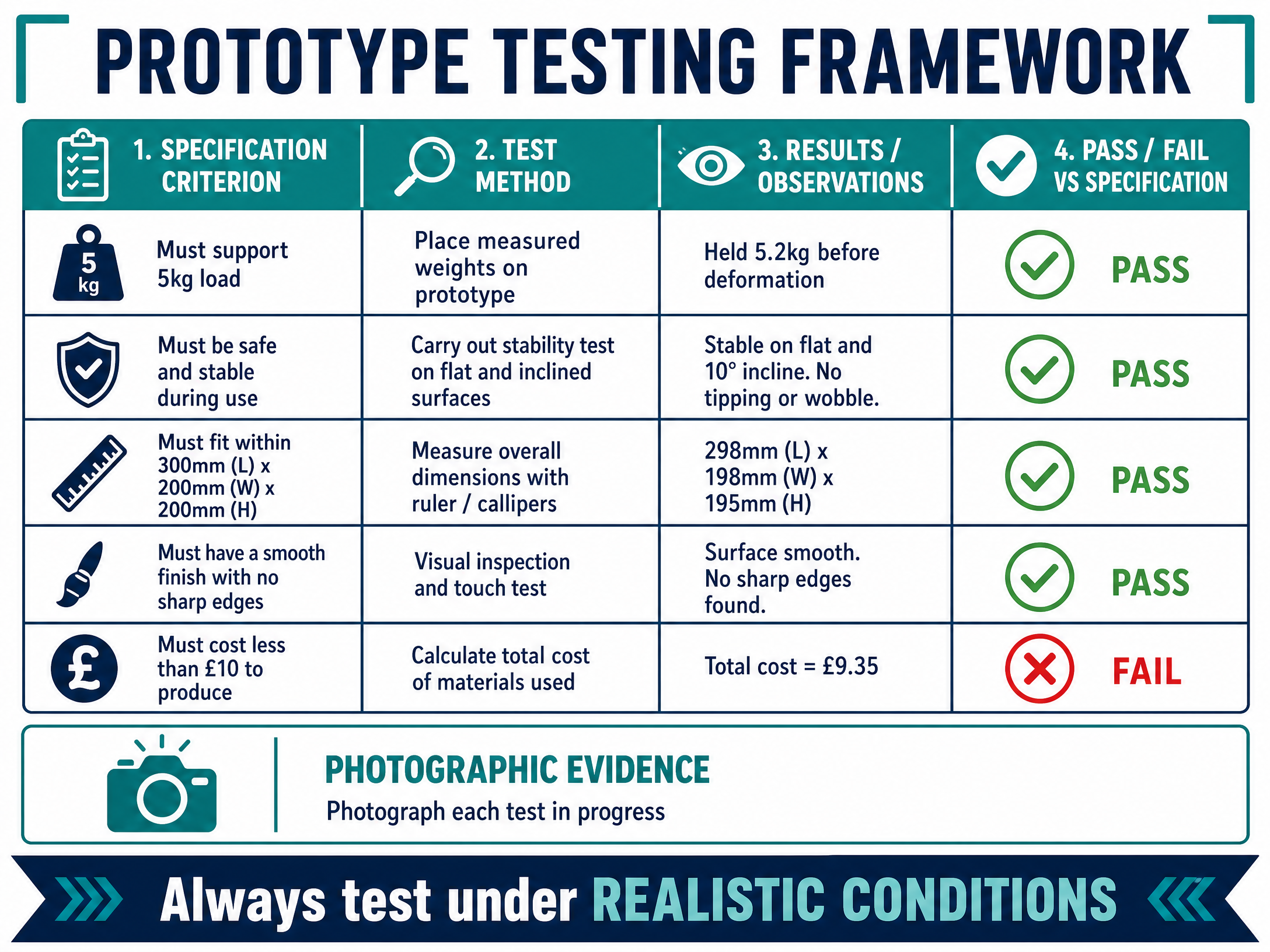
Conducting effective prototype testing requires a structured approach. Candidates should follow a clear framework for every criterion in their product specification.
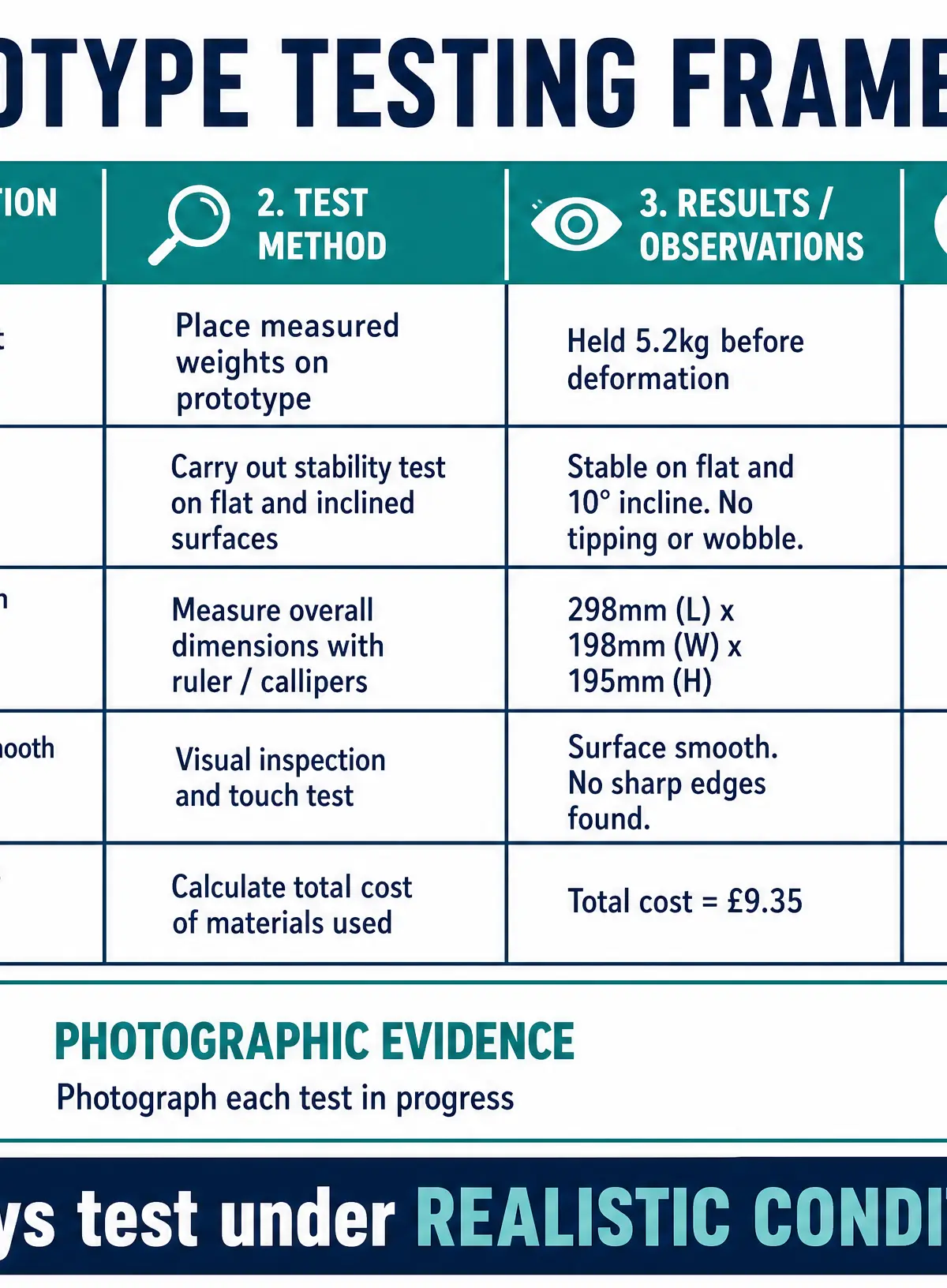
- Identify the Criterion: Select a specific requirement from the product specification.
- Design the Test: Devise a method to test this requirement under realistic conditions. For example, if the product is a child's chair, the test must involve applying weight equivalent to a child.
- Execute and Record: Carry out the test, recording the exact results. Use quantitative measurements wherever possible.
- Capture Photographic Evidence: Take clear, well-lit photographs of the test in progress. Annotate these photographs to highlight key observations.
- Analyse the Result: Compare the result directly to the specification criterion. State clearly whether it passed or failed.
- Propose Improvements: Based on the analysis, suggest specific modifications that would improve the product's performance.
Materials & Equipment
When conducting tests, candidates must use appropriate measuring equipment to ensure accuracy. This may include callipers for precise dimensions, spring balances for load testing, or multimeters for electronic components. The choice of equipment should be justified in the evaluation write-up.
Portfolio/Coursework Guidance
Assessment Criteria
Examiners award marks in the Evaluate section based on the depth of analysis and the explicit links made to the original specification. High-scoring portfolios will demonstrate:
- Comprehensive testing of the prototype under realistic conditions.
- Detailed analysis of the results, clearly identifying strengths and weaknesses.
- A specific, detailed LCA that directly relates to the materials and processes used in the prototype.
- Substantiated conclusions regarding the product's fitness for purpose and potential for commercial viability.
Building a Strong Portfolio
To build a strong portfolio for the Evaluate stage, candidates should present their findings clearly and logically. Using a table format (as shown in the Prototype Testing Framework diagram) is highly recommended. It ensures all necessary information is included and makes it easy for the examiner to award marks.
Photographic evidence is crucial. Do not simply include a picture of the finished product; include pictures of the product being tested. Annotate these images to draw the examiner's attention to specific details, such as a joint holding firm under pressure or a user interacting with the product's interface.
Exam Component
Written Exam Knowledge
The theoretical knowledge applied in the NEA Evaluate stage is frequently tested in the written exam. Candidates should be prepared to answer questions on:
- The purpose and stages of a Life Cycle Assessment.
- Methods for testing products and materials.
- The importance of evaluating against a product specification.
- The environmental impact of specific materials and manufacturing processes.
Practical Exam Preparation
While the Evaluate stage is primarily part of the NEA coursework, the skills developed here — critical analysis, objective testing, and understanding environmental impact — are essential for answering extended response questions in the written paper. Candidates should practice applying these skills to unfamiliar products presented in exam scenarios.
Visual Resources
2 diagrams and illustrations
Interactive Diagrams
1 interactive diagram to visualise key concepts
Conceptual Flow Outline
The Prototype Testing Cycle
Worked Examples
3 worked examples — open one to explore the question and available guidance.
Practice Questions
Test your understanding — click to reveal model answers
State two stages of a Life Cycle Assessment (LCA).
Hint: Think about the very beginning and the very end of a product's life.
Explain the difference between quantitative and qualitative data in the context of prototype testing.
Hint: One involves numbers, the other involves descriptions or opinions.
A student has designed a wooden chair for toddlers. Evaluate the environmental impact of this product focusing on the 'Raw Material Extraction' and 'Distribution and Transport' stages of its LCA.
Hint: Consider where the wood comes from and how a bulky item like a chair is moved around.
Analyse the importance of using photographic evidence during prototype testing.
Hint: Why might an examiner not just take your word for it?