Pearson Edexcel · GCSE · Design and Technology
Component 2: Non-examined assessment (NEA) - Make
The Evaluate stage is the final, critical component of your GCSE Design and Technology NEA. It requires you to rigorously test your prototype against your original specification, analyse the results objectively, and conduct a detailed Life Cycle Assessment to determine its environmental impact.
- 5 min read
- 3 worked examples
- 3 practice questions
- 6 key terms
Study Notes
Overview
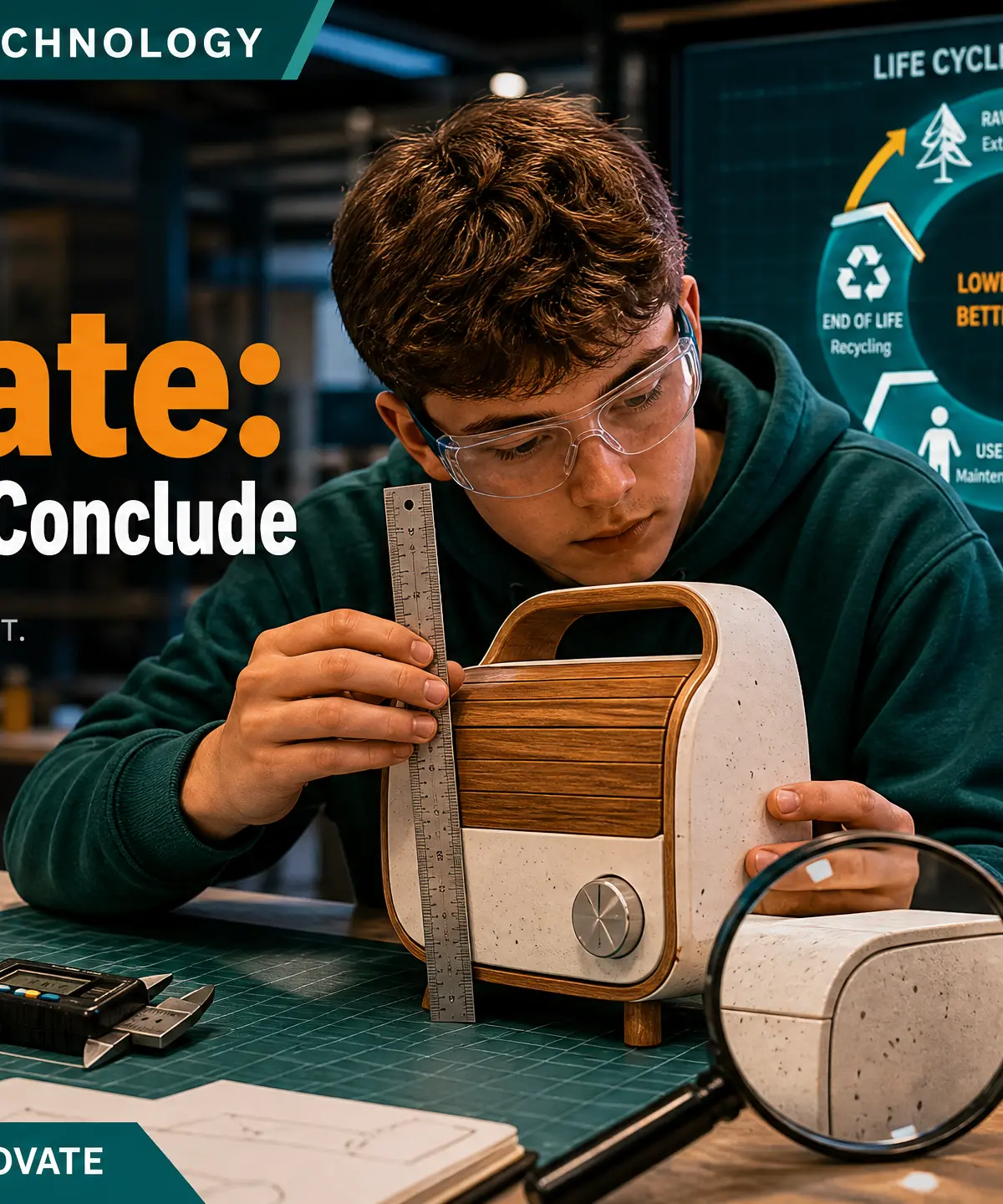
The 'Evaluate' section of Component 2 (Non-examined assessment - Make) is where you demonstrate your critical thinking and objective analytical skills. Examiners are not looking for a perfect prototype; they are looking for a designer who can rigorously test an outcome, identify flaws, and suggest meaningful improvements. This stage requires you to reflect on your entire design journey, proving that your final product meets the needs of your client and the constraints of your specification. Furthermore, you must demonstrate a deep understanding of sustainability through a Life Cycle Assessment (LCA).
🎧 Listen to the Topic Podcast:

Key Knowledge & Theory
Core Concepts
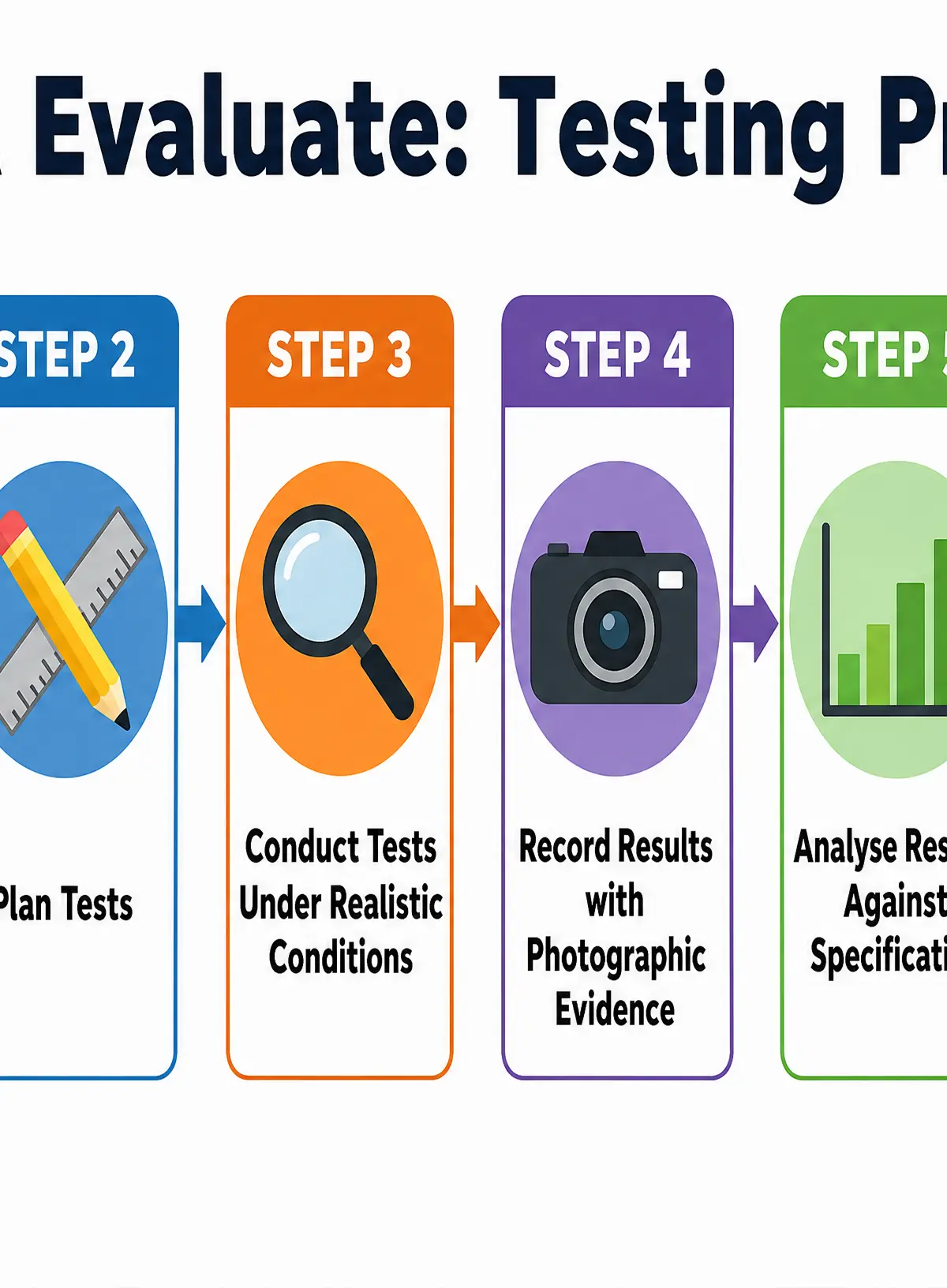
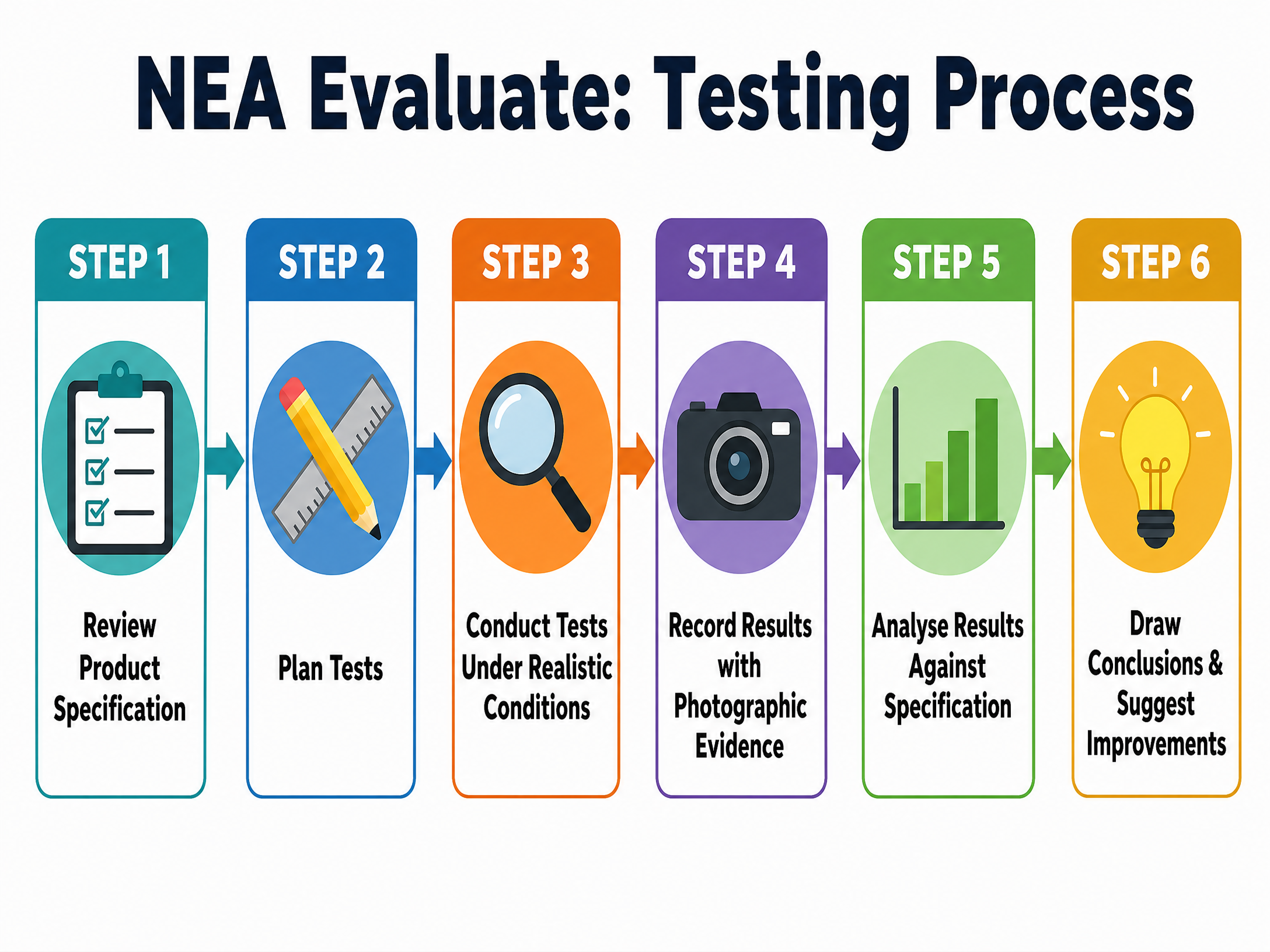
1. Objective Testing Against the SpecificationYour product specification is the benchmark for success. Every test you conduct must link directly to a specific criterion you established earlier in the project (e.g., aesthetics, cost, customer, environment, size, safety, function, materials). Testing must be measurable and objective. Saying "it looks nice" is subjective; saying "the client rated the aesthetic appeal 8/10 in a user trial" is objective data.
2. Realistic Testing ConditionsPrototypes must be tested in the environment they were designed for. If you designed a bird feeder, it must be tested outdoors, subjected to weight (simulating birds), and exposed to moisture. Examiners award marks for tests that genuinely simulate real-world use.
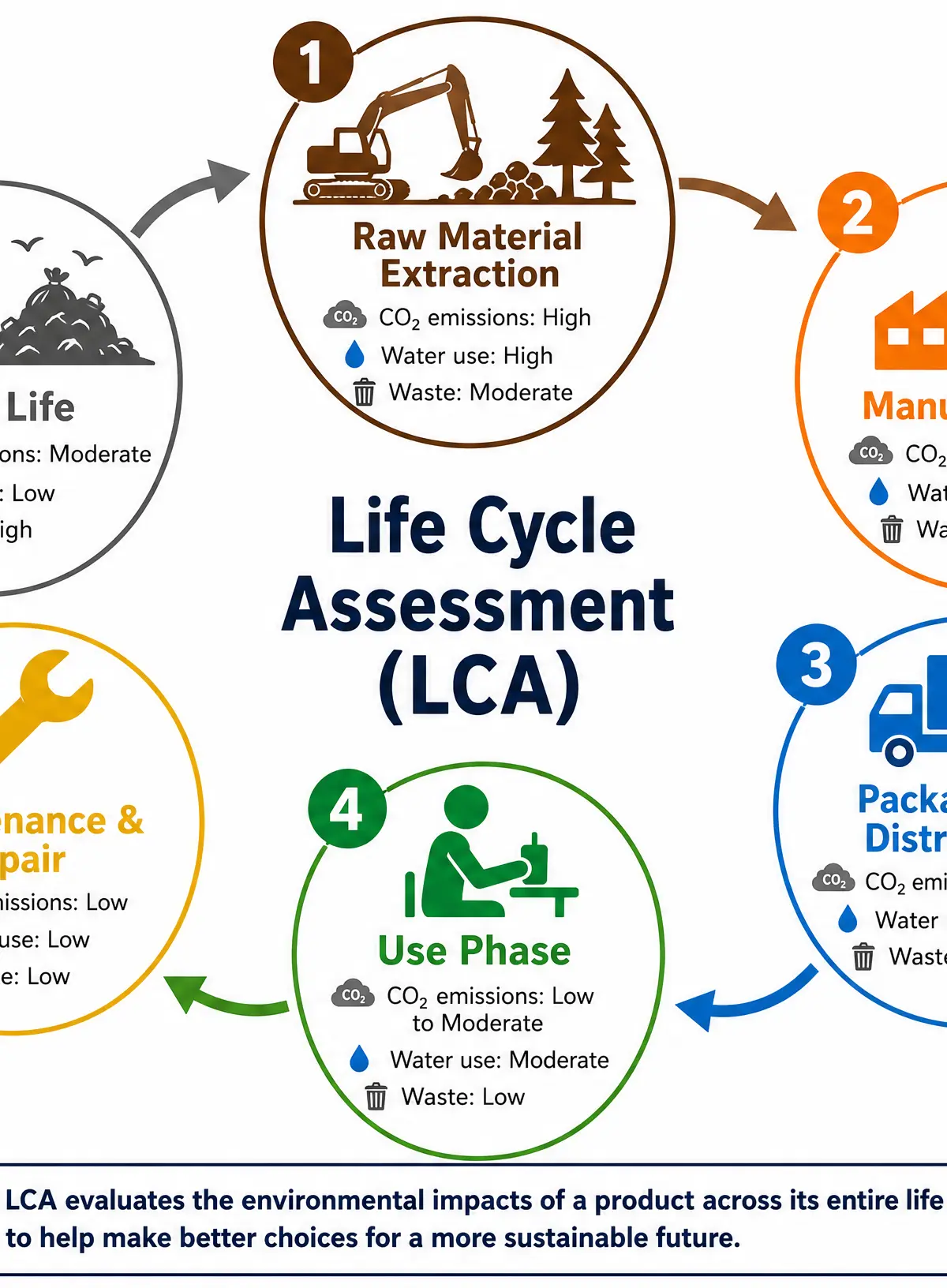
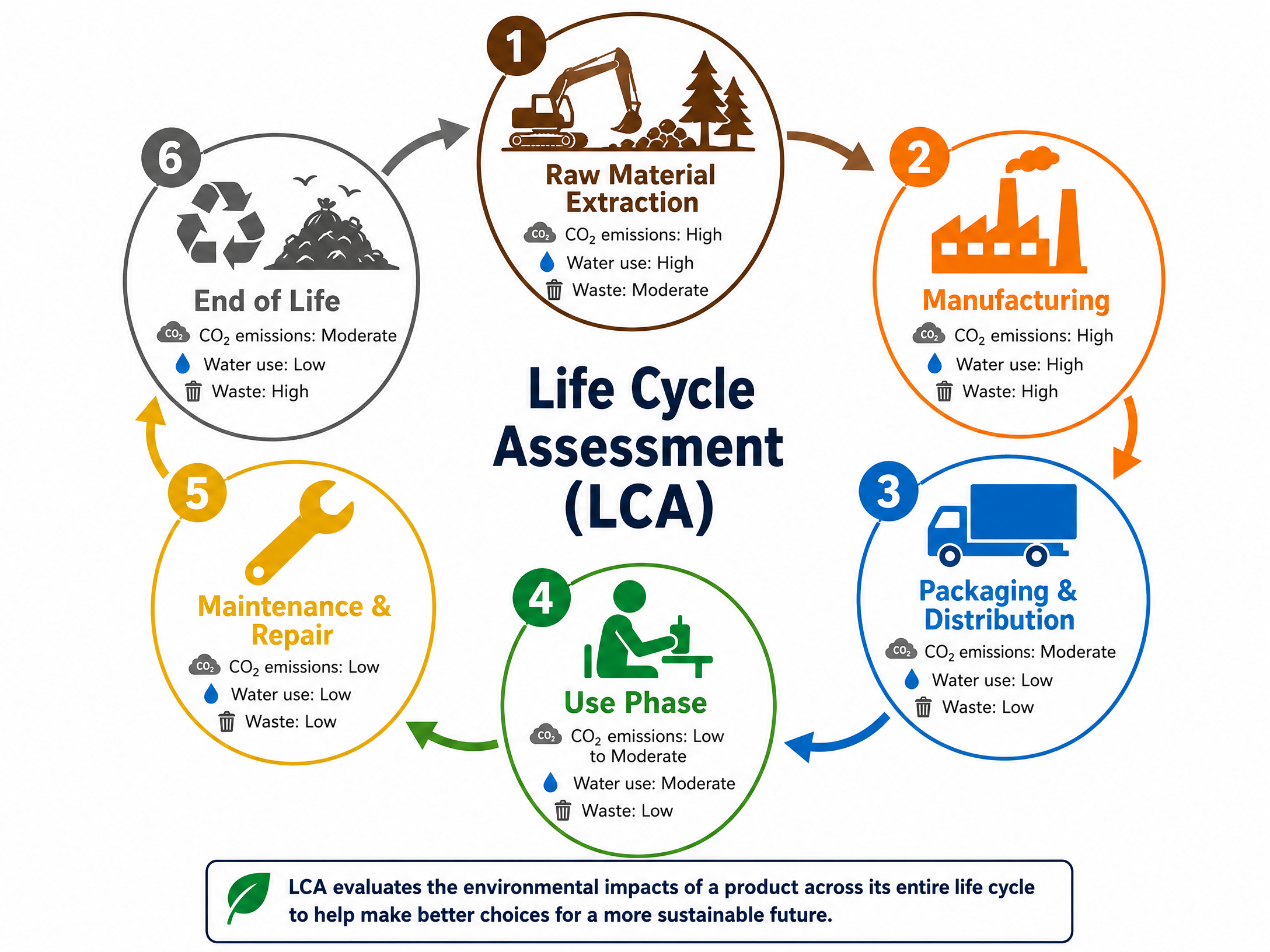
**3. Life Cycle Assessment (LCA)**An LCA evaluates the environmental impact of a product from "cradle to grave". You must analyse the specific materials and processes used in your prototype across six stages: Raw Material Extraction, Manufacturing, Packaging/Distribution, Use, Maintenance, and End of Life.
Technical Vocabulary
- Iterative Design: The process of continually testing, evaluating, and refining a design.
- Quantitative Data: Numerical data gathered from testing (e.g., "the joint held 5kg").
- Qualitative Data: Descriptive data gathered from testing (e.g., "the user found the handle comfortable").
- Tolerance: The acceptable margin of error in a dimension or measurement.
- Sustainability: Designing in a way that meets current needs without compromising the ability of future generations to meet theirs.
- Carbon Footprint: The total greenhouse gas emissions caused directly and indirectly by the product.
Practical Skills
Techniques & Processes: The T-A-C Method
When writing up your evaluation, use the Test-Analyse-Conclude (T-A-C) method for every specification point:
- Test: Describe the physical test carried out under realistic conditions.
- Analyse: Compare the results of the test directly against the measurable criteria in the specification.
- Conclude: State clearly whether the prototype passes or fails this criterion, and justify why. If it fails, suggest a specific modification.
Evidencing Your Testing
Examiners need proof that testing occurred. You must include:
- Photographic Evidence: High-quality images of the product in use, showing specific details (e.g., a close-up of a joint bearing weight).
- User Feedback: Quotes or survey results from your target client interacting with the prototype.
- Third-Party Testing: Having someone else assemble or use the product to test ergonomics and instructions.
Portfolio/Coursework Guidance
Assessment Criteria
Examiners award marks in the Evaluate section for:
- Detailed analysis of the prototype against the specification.
- Use of testing under realistic conditions.
- Critical analysis of testing results.
- Comprehensive Life Cycle Assessment specific to the final outcome.
- Clear, justified suggestions for modifications and improvements.
Building a Strong Portfolio Page
- Use a Tabular Format: A table is the clearest way to present your specification points, the tests conducted, the results, and the conclusions.
- Integrate Photos: Place photos of the testing directly next to the relevant analysis.
- Be Honest: Do not pretend your product is flawless. Examiners reward candidates who can critically identify weaknesses (e.g., "The acrylic scratched easily during testing; a more durable material like polycarbonate should be used in future iterations").
Exam Component
Written Exam Knowledge
While the NEA is practical, the theory behind evaluation appears frequently in the written exam. You may be asked to:
- Evaluate a given commercial product against a set of criteria.
- Compare the Life Cycle Assessments of two different materials (e.g., a plastic vs. a wooden chair).
- Suggest and justify modifications to a flawed design provided in the exam paper.
Exam Preparation
Practice applying the "Evaluate" command word. In the exam, "Evaluate" means you must make a judgement (is it good or bad?) and justify that judgement with specific evidence from the source material provided.
Visual Resources
2 diagrams and illustrations
Interactive Diagrams
1 interactive diagram to visualise key concepts
Conceptual Flow Outline
The Evaluation Workflow
Worked Examples
3 worked examples — open one to explore the question and available guidance.
Practice Questions
Test your understanding — click to reveal model answers
State two stages of a Life Cycle Assessment (LCA).
Hint: Think about the very beginning and the very end of a product's life.
Explain how photographic evidence should be used in the NEA Evaluate section.
Hint: What does a photo prove to the examiner that text alone cannot?
A student has made a prototype child's toy from MDF. Evaluate the sustainability of this material choice.
Hint: Use the LCA stages. Think about the glues used in MDF and its end of life.