Pearson Edexcel · GCSE · Design and Technology
Component 2: Non-examined assessment (NEA) - Investigate
The 'Evaluate' stage of the Component 2 Non-Examined Assessment (NEA) requires students to test their prototype against the product specification and conduct a Life Cycle Assessment (LCA). It is a critical component where candidates demonstrate their analytical skills, reflecting on the prototype's fitness for purpose and its environmental impact.
- 6 min read
- 3 worked examples
- 4 practice questions
- 6 key terms
Study Notes
Overview
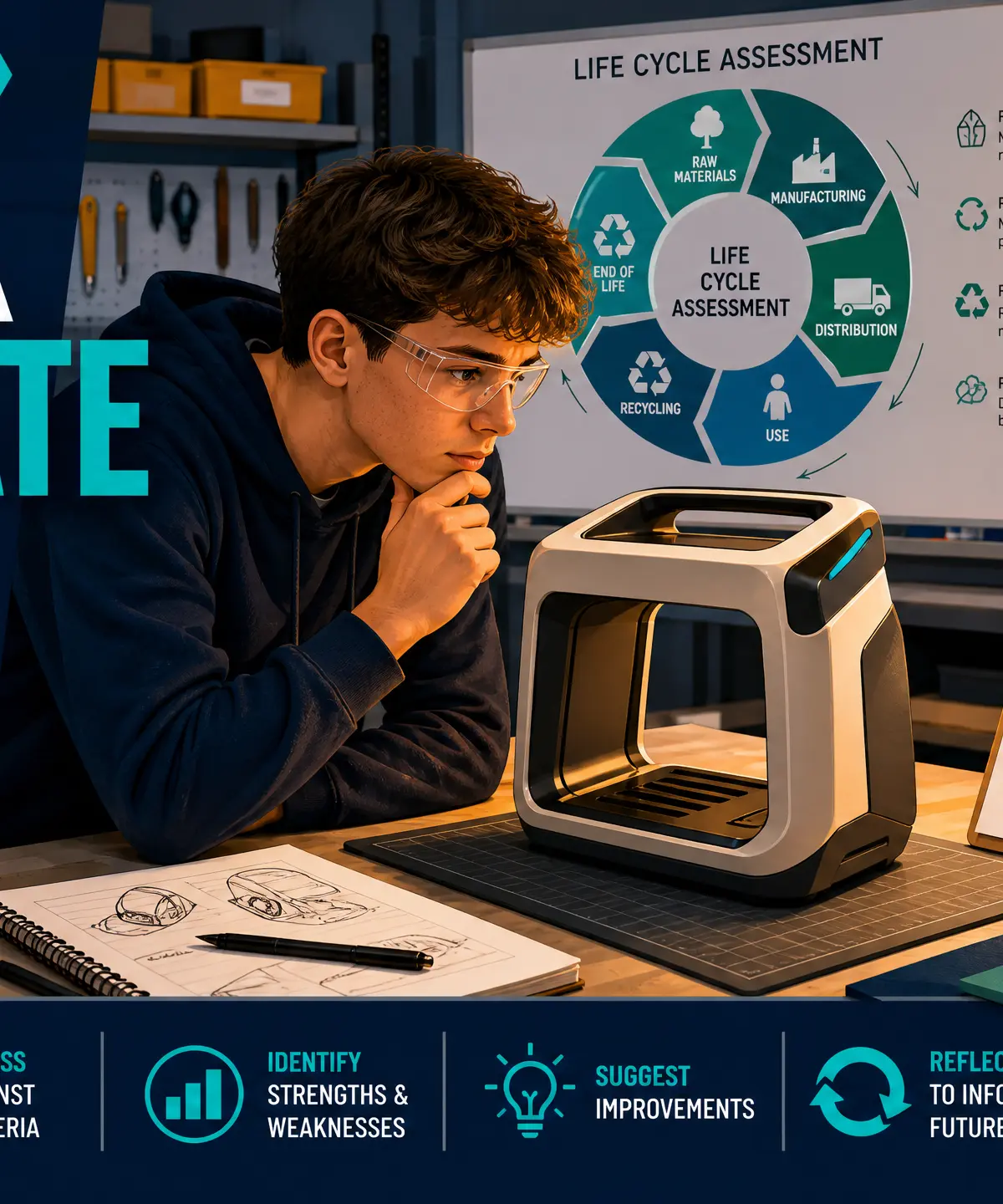
The 'Evaluate' stage of the Component 2 Non-Examined Assessment (NEA) is the culmination of your practical project. Having researched, designed, and manufactured a prototype, you must now objectively assess its success. This section is not merely a description of what you have made; it is a critical analysis of how well the prototype meets the needs of the user and the criteria established in your initial product specification. Furthermore, you must evaluate the sustainability of your final prototype through a Life Cycle Assessment (LCA). Examiners reward candidates who provide measurable, evidence-based conclusions and demonstrate a deep understanding of the wider environmental impact of their design decisions.
Key Knowledge & Theory
Core Concepts
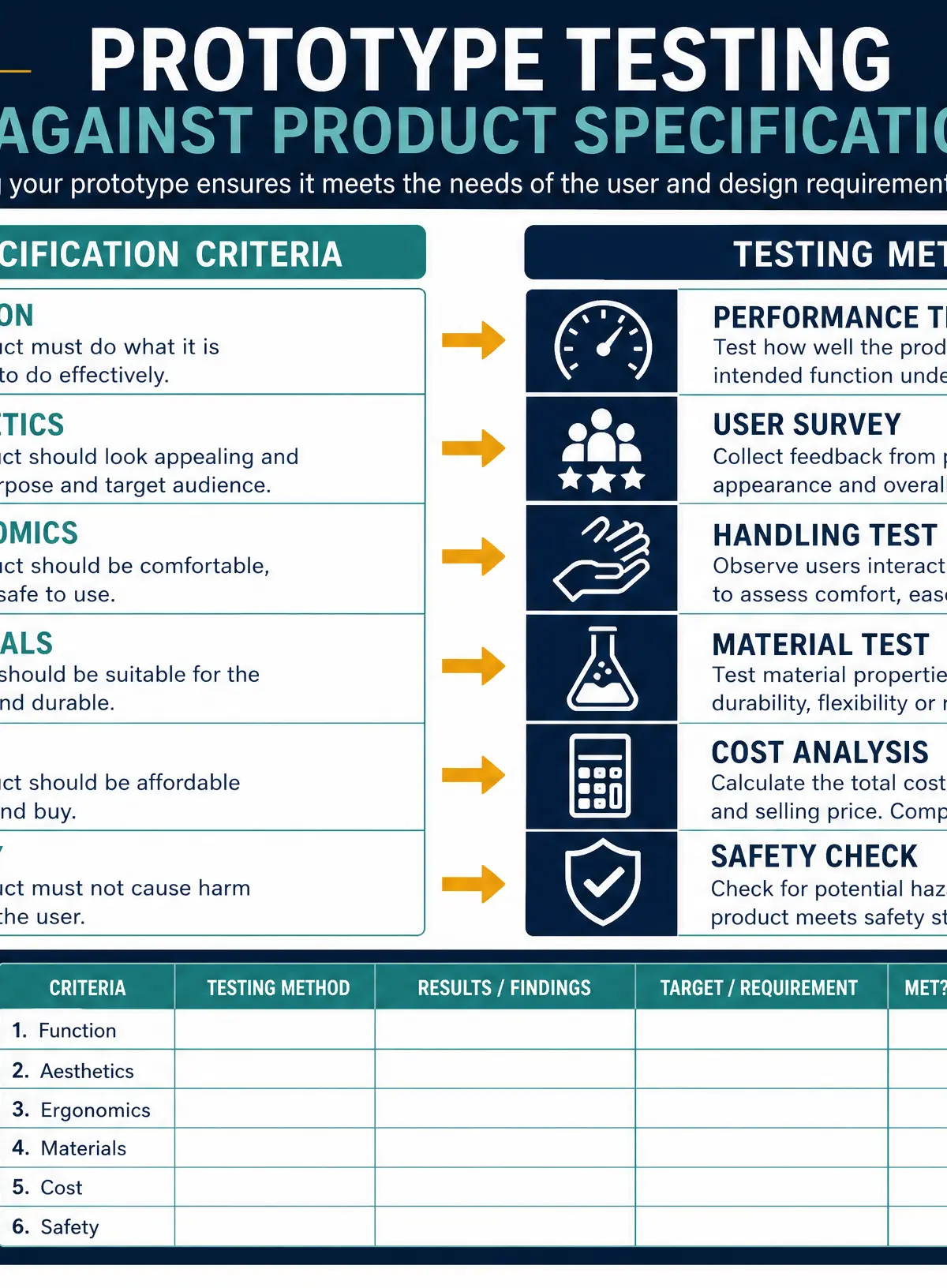
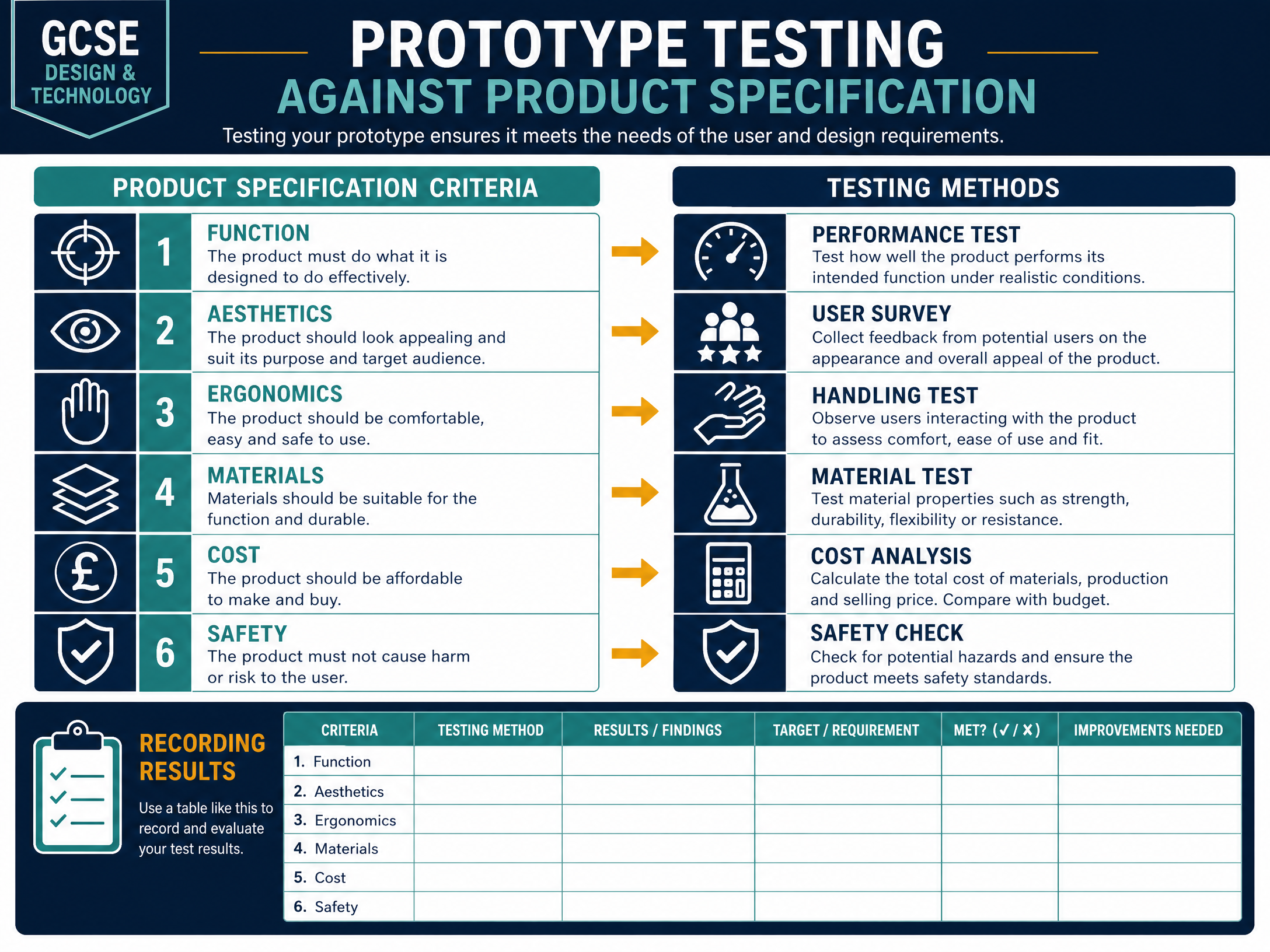
1. Objective Testing Against CriteriaTesting must be rigorous and objective. This involves designing tests that directly address the criteria in your product specification (e.g., function, aesthetics, ergonomics, safety). Tests must be conducted under realistic conditions—simulating the actual environment and user interactions the product was designed for.
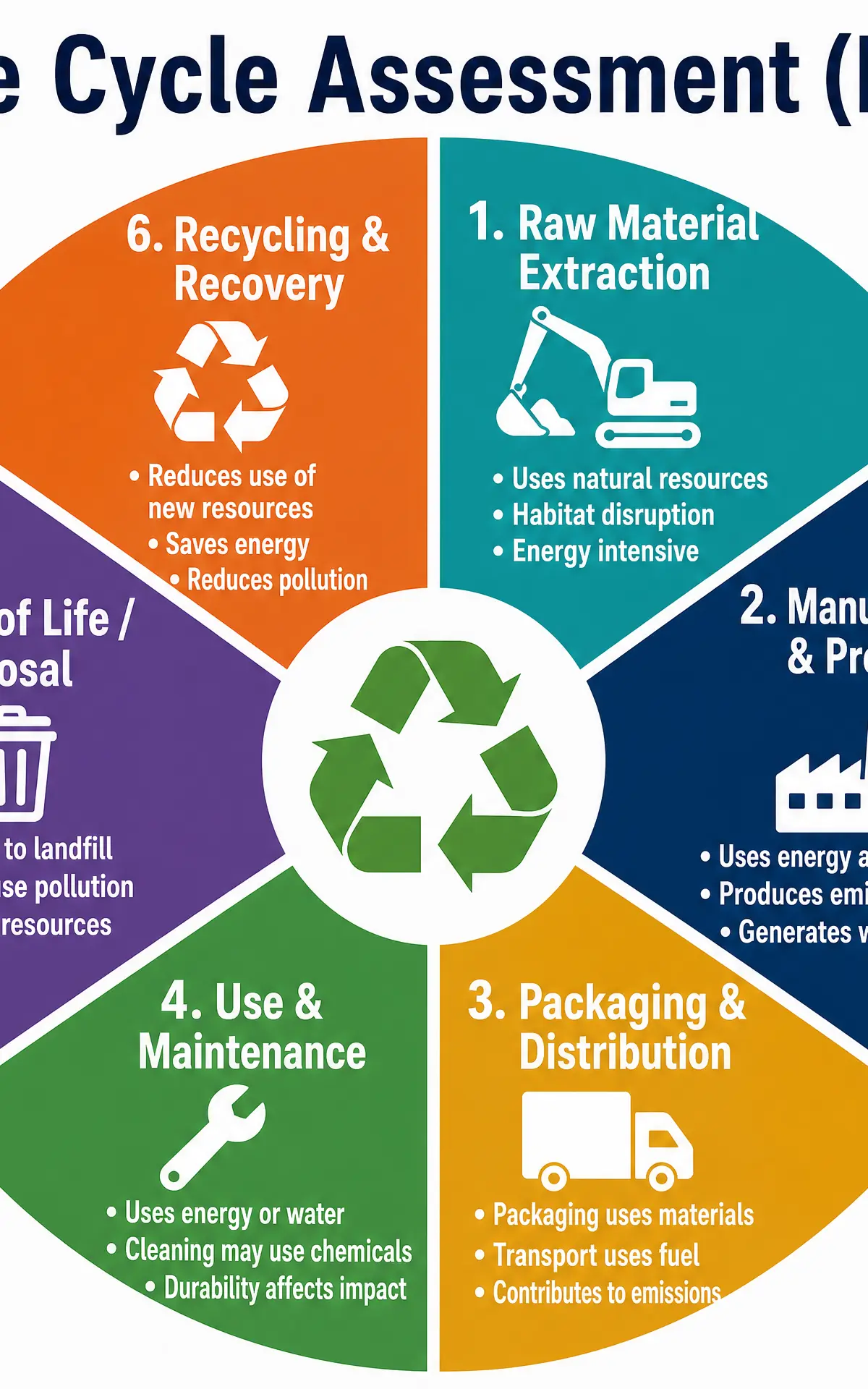
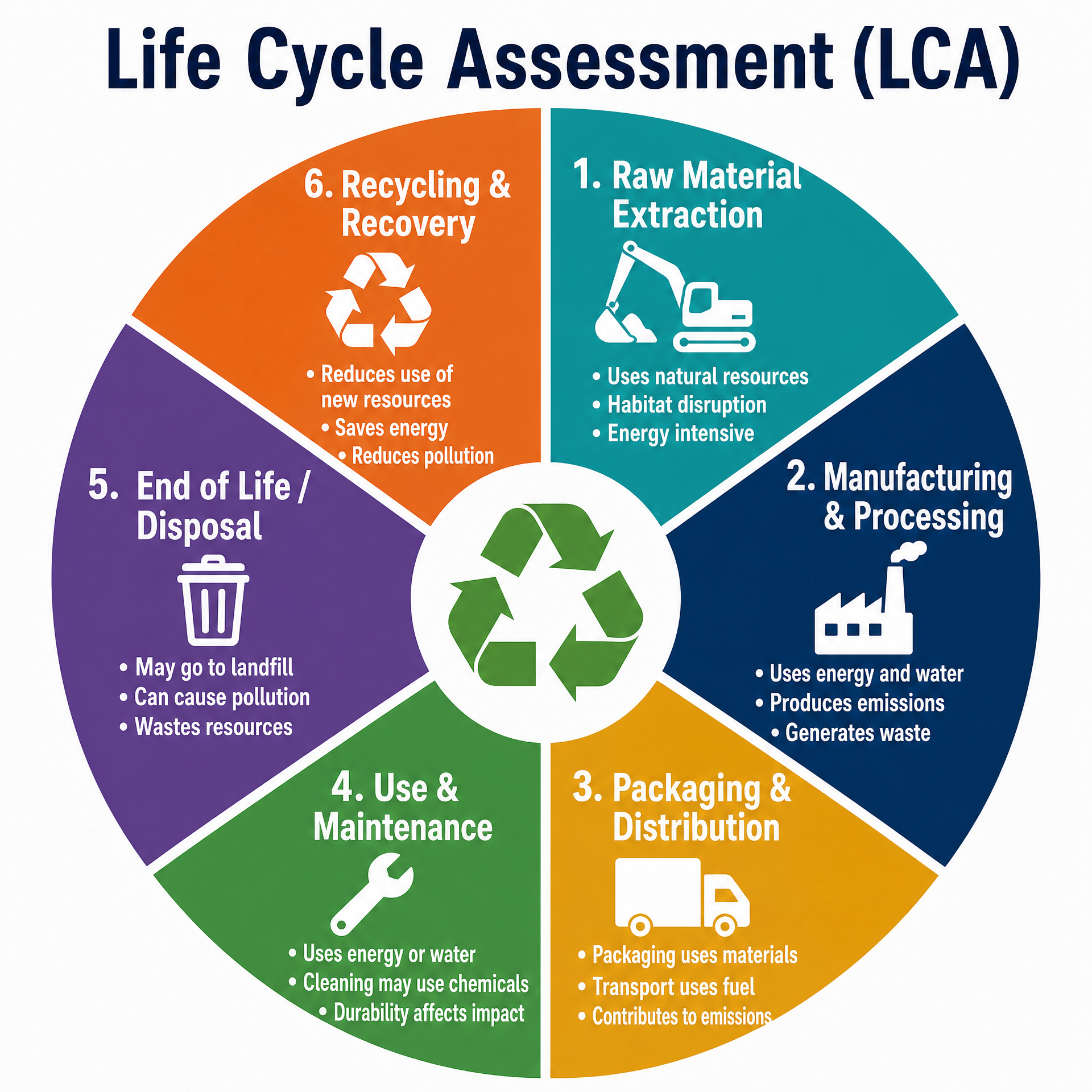
**2. Life Cycle Assessment (LCA)**An LCA is a systematic analysis of the environmental impact of a product throughout its entire life span. For the NEA, candidates must apply this specifically to their final prototype, considering raw material extraction, manufacturing processes, distribution, use, and end-of-life disposal or recycling.
Key Principles of Evaluation
| Principle | Description | Relevance to NEA |
|---|---|---|
| Measurability | Using quantifiable data (e.g., weight bearing, dimensions, user ratings out of 10). | Provides objective evidence rather than subjective opinion. |
| Realistic Conditions | Testing the product in the environment it is intended for, with the target user group. | Validates the prototype's fitness for purpose in the real world. |
| Iterative Reflection | Identifying strengths and weaknesses to suggest concrete improvements. | Demonstrates the ability to learn from the design process and refine ideas. |
Technical Vocabulary
- Tolerance: The acceptable margin of error in a measurement or performance criterion.
- Ergonomics: The study of people's efficiency in their working environment; how the product interacts physically with the user.
- Anthropometrics: The use of body measurements to determine the optimum size for products for comfortable and efficient use.
- Sustainability: Designing to meet present needs without compromising the ability of future generations to meet their own needs.
- Carbon Footprint: The total amount of greenhouse gases produced directly and indirectly by the product's life cycle.
Practical Skills
Techniques & Processes for Evaluation
Conducting Performance TestsDesign tests that push the prototype to its intended limits. If you have designed a storage unit, test its load-bearing capacity using actual weights. Record the results accurately, noting any deflection, stress, or failure points.
Gathering User FeedbackCreate structured questionnaires or observation checklists for your target market to use while interacting with the prototype. Ask specific questions related to the specification (e.g., "Rate the comfort of the handle from 1 to 5") rather than vague questions (e.g., "Do you like it?").
Materials & Equipment for Testing
Use appropriate measuring equipment to gather data: calipers for precise dimensions, scales for weight, force meters for structural integrity, and cameras to record the testing process visually.
Portfolio/Coursework Guidance
Assessment Criteria
Examiners are looking for:
- Analysis of the prototype against the product specification using tests under realistic conditions.
- Analysis of the results obtained from prototype testing.
- Evaluation of whether the prototype meets the product specification, with clear, substantiated conclusions.
- Evaluation of the sustainability of the final prototype through a Life Cycle Assessment (LCA).
Building a Strong Portfolio
To secure high marks, your portfolio must feature photographic evidence of the testing process. Do not just state that a test occurred; show the prototype in use, with annotations highlighting key observations. Present your findings in clear tables that cross-reference the original specification criteria, the test method, the result, and a conclusion on whether the criterion was met, partially met, or not met.
Exam Component
Written Exam Knowledge
While the NEA Evaluate section is coursework, the principles apply directly to the written exam. You may be asked to evaluate a given product design, suggest testing methods, or complete an LCA for a specific material or product. Understanding how to structure an objective evaluation is crucial for extended response questions.
Practical Exam Preparation
Treat your NEA evaluation as practice for the written paper. The more rigorous and specific you are in evaluating your own prototype, the better equipped you will be to critically analyse the products presented in the exam.
Audio Revision
Listen to the podcast below for an in-depth discussion on how to maximize your marks in the Evaluate section, including examiner tips and common pitfalls.

Visual Resources
2 diagrams and illustrations
Interactive Diagrams
1 interactive diagram to visualise key concepts
Conceptual Flow Outline
The Evaluation Process Workflow
Worked Examples
3 worked examples — open one to explore the question and available guidance.
Practice Questions
Test your understanding — click to reveal model answers
State two reasons why it is important to test a prototype under realistic conditions.
Hint: Think about what happens if you test a product in a way it won't actually be used.
Explain how photographic evidence can be used effectively in the Evaluate section of the NEA.
Hint: How does a photo prove that a test actually happened? What should you add to the photo?
A student has designed a wooden children's toy. Evaluate the sustainability of this product using three stages of a Life Cycle Assessment.
Hint: Choose three specific stages (e.g., Raw Materials, Use, End of Life) and discuss the environmental impact of a wooden toy at each stage.
Analyse the importance of linking test results back to the original product specification.
Hint: Why did you write the specification in the first place? How does it help you measure success?