Pearson Edexcel · GCSE · Design and Technology
How the critical evaluation of new and emerging technologies informs design decisions
This topic covers how designers critically evaluate new and emerging technologies to inform their design decisions. It is essential for understanding the ethical and environmental impacts of modern product design, ensuring that future technologies are sustainable, fair, and fit for purpose.
- 5 min read
- 3 worked examples
- 3 practice questions
- 6 key terms
Study Notes
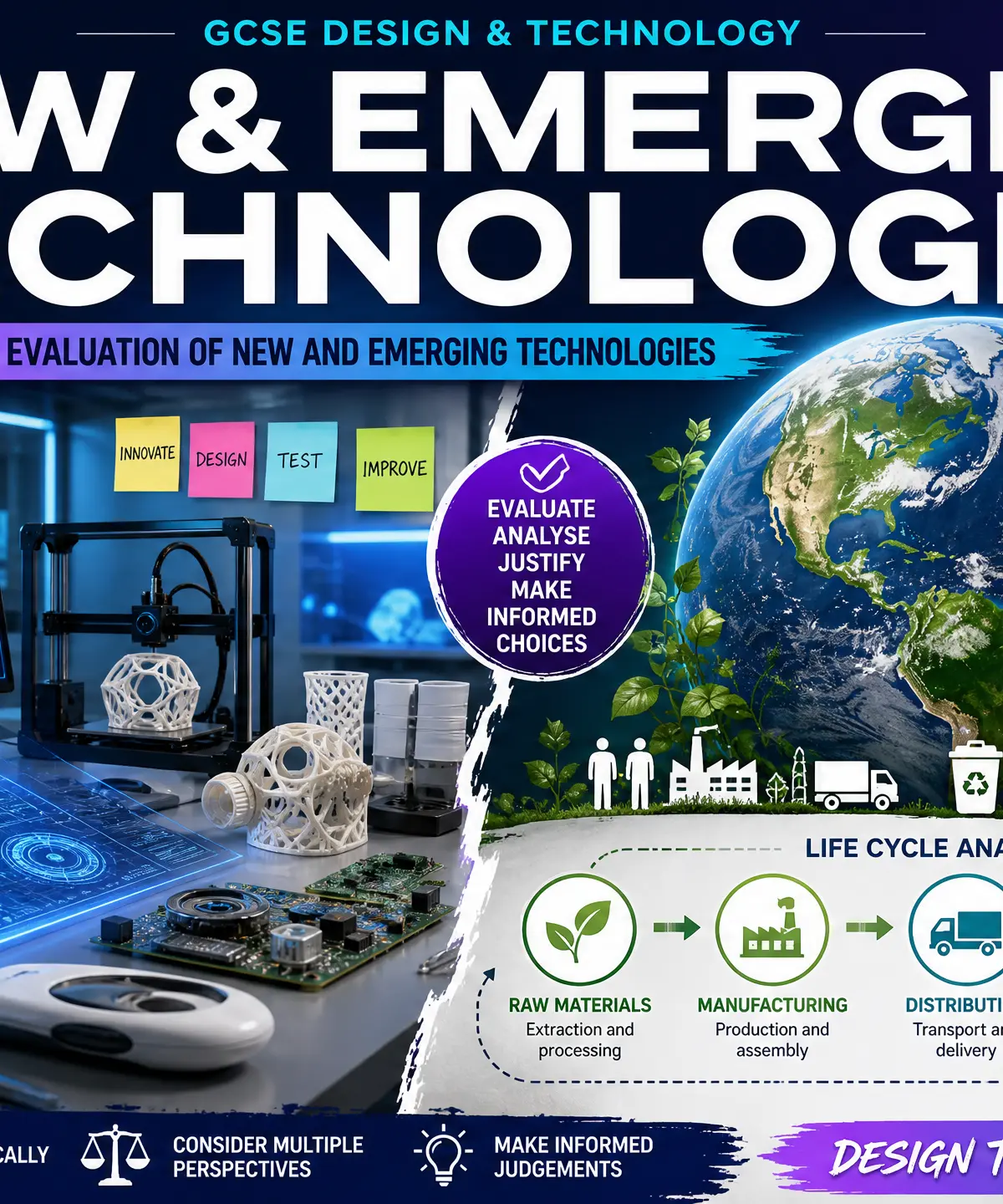
Overview
In GCSE Design and Technology, understanding how to critically evaluate new and emerging technologies is fundamental. Designers cannot simply adopt a new technology because it is novel; they must systematically assess its impact across multiple criteria. This topic explores how budget, timescale, target user, and manufacturing capabilities influence design decisions, and requires you to apply this evaluation to contemporary scenarios such as natural disasters, medical advances, and global warming.
Key Knowledge & Theory
Core Evaluation Criteria
When a new technology emerges (such as 3D printing, AI, or smart materials), it must be evaluated against four primary constraints:
- Budget Constraints: Is the technology affordable? Will the final product be priced appropriately for the target market? For example, while titanium is incredibly strong and lightweight, its high cost often limits its use to aerospace or high-end sporting goods rather than everyday consumer products.
- Timescale: How long does it take to implement? In a natural disaster scenario, technologies must be deployable immediately. A brilliant solution that takes five years to manufacture is useless in an emergency.
- Target User: Who is the product for? An advanced smartphone interface might be intuitive for a teenager but entirely inaccessible for an elderly user with poor eyesight or limited dexterity.
- Materials and Manufacturing Capabilities: Can the technology actually be produced? Does the factory have the necessary machinery, and are the raw materials available at scale?
Ethical and Environmental Perspectives
Examiners consistently look for balanced evaluations that consider both the human (ethical) and planetary (environmental) impacts.
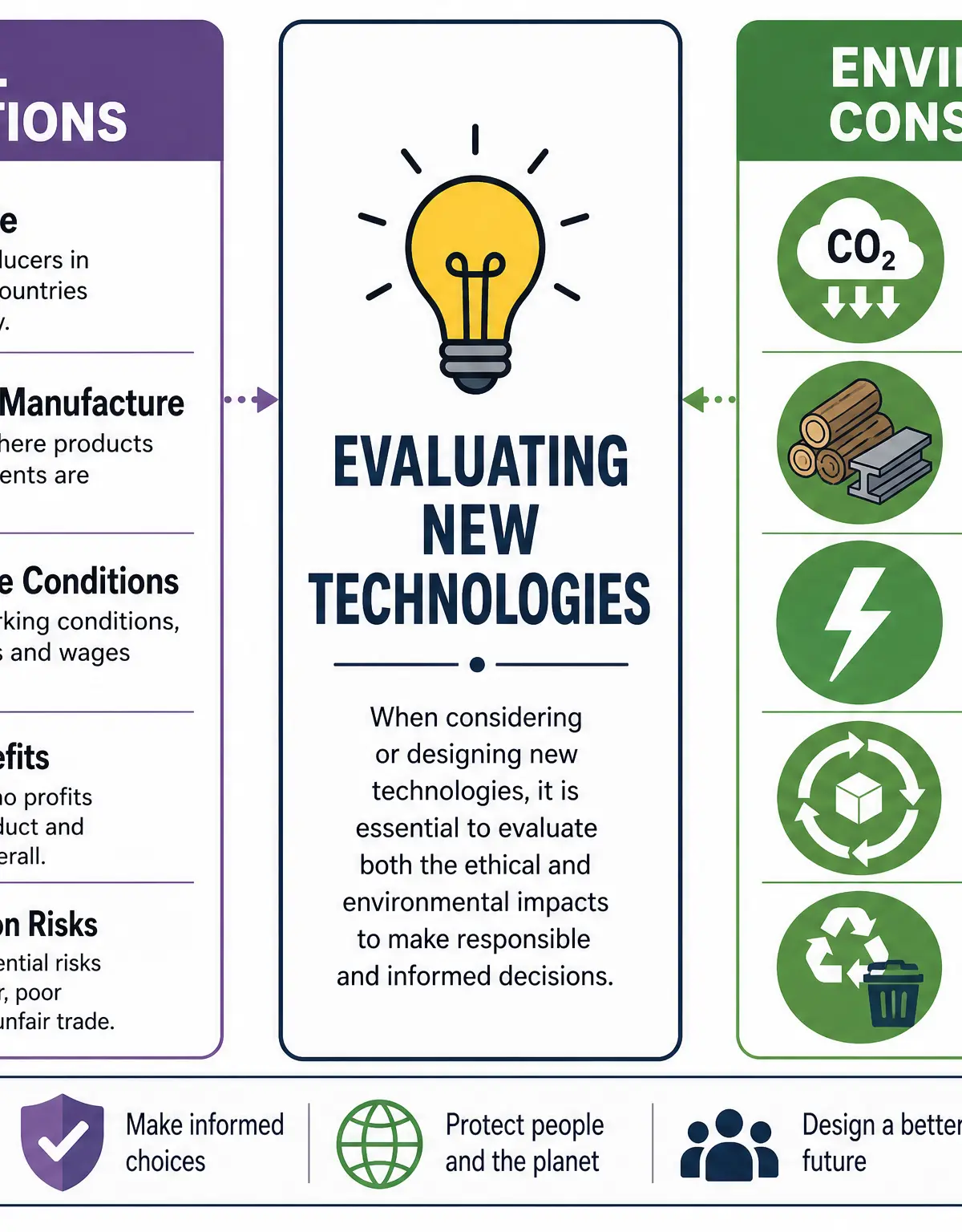
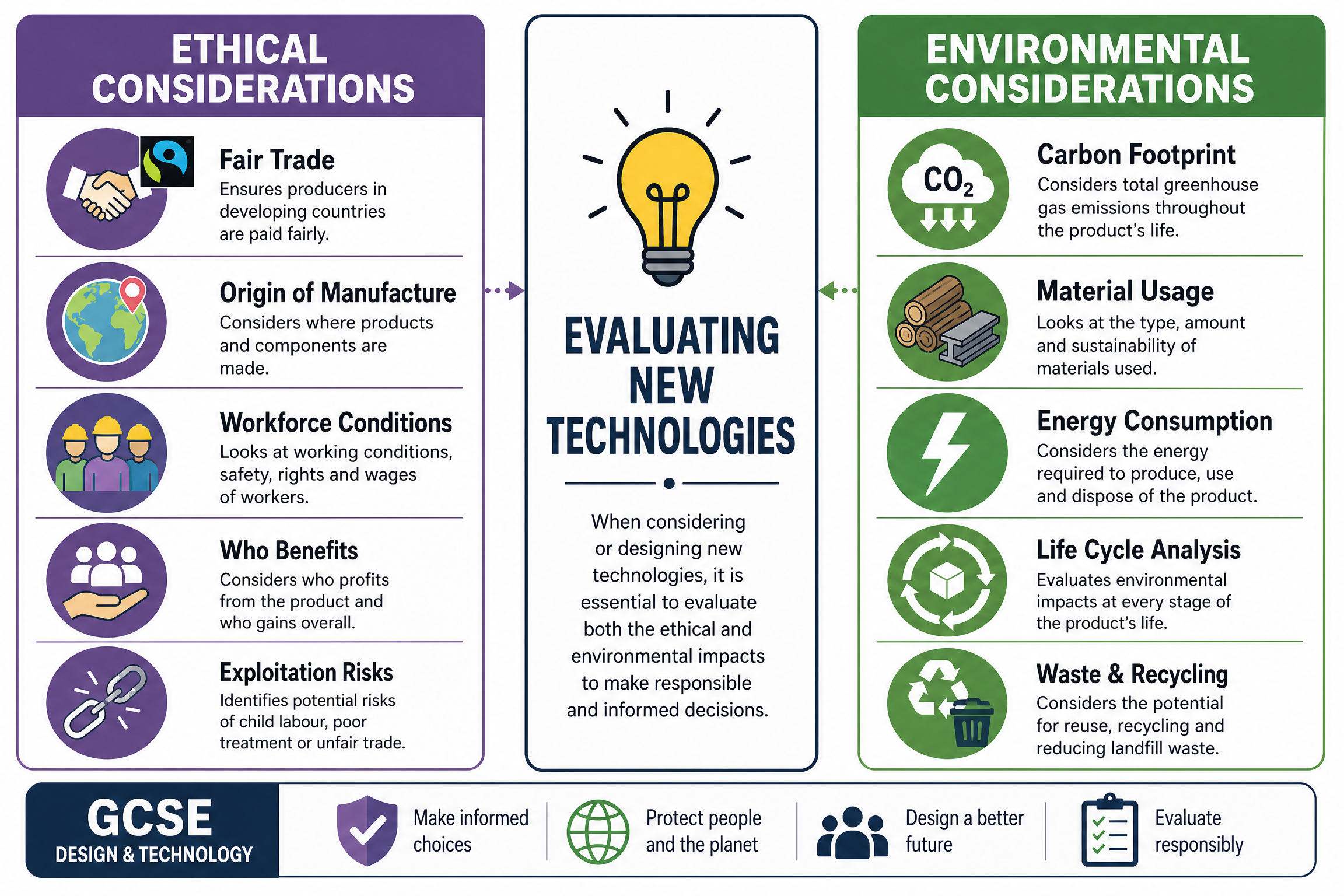
Ethical Considerations focus on the human impact:
- Origin of Manufacture: Where is it made, and under what conditions?
- Workforce: Are workers paid fairly and provided with safe working environments?
- Fair Trade: Does the supply chain ensure producers in developing countries receive a fair price?
- Who Benefits: Does the technology serve humanity, or does it only benefit a wealthy minority?
Environmental Considerations focus on the planet:
- Carbon Footprint: The total greenhouse gas emissions caused directly and indirectly by the product.
- Material Usage: Are the materials finite (like oil-based plastics) or renewable (like bamboo)?
- Energy Consumption: How much energy is required to manufacture, transport, and use the product?
Life Cycle Analysis (LCA)
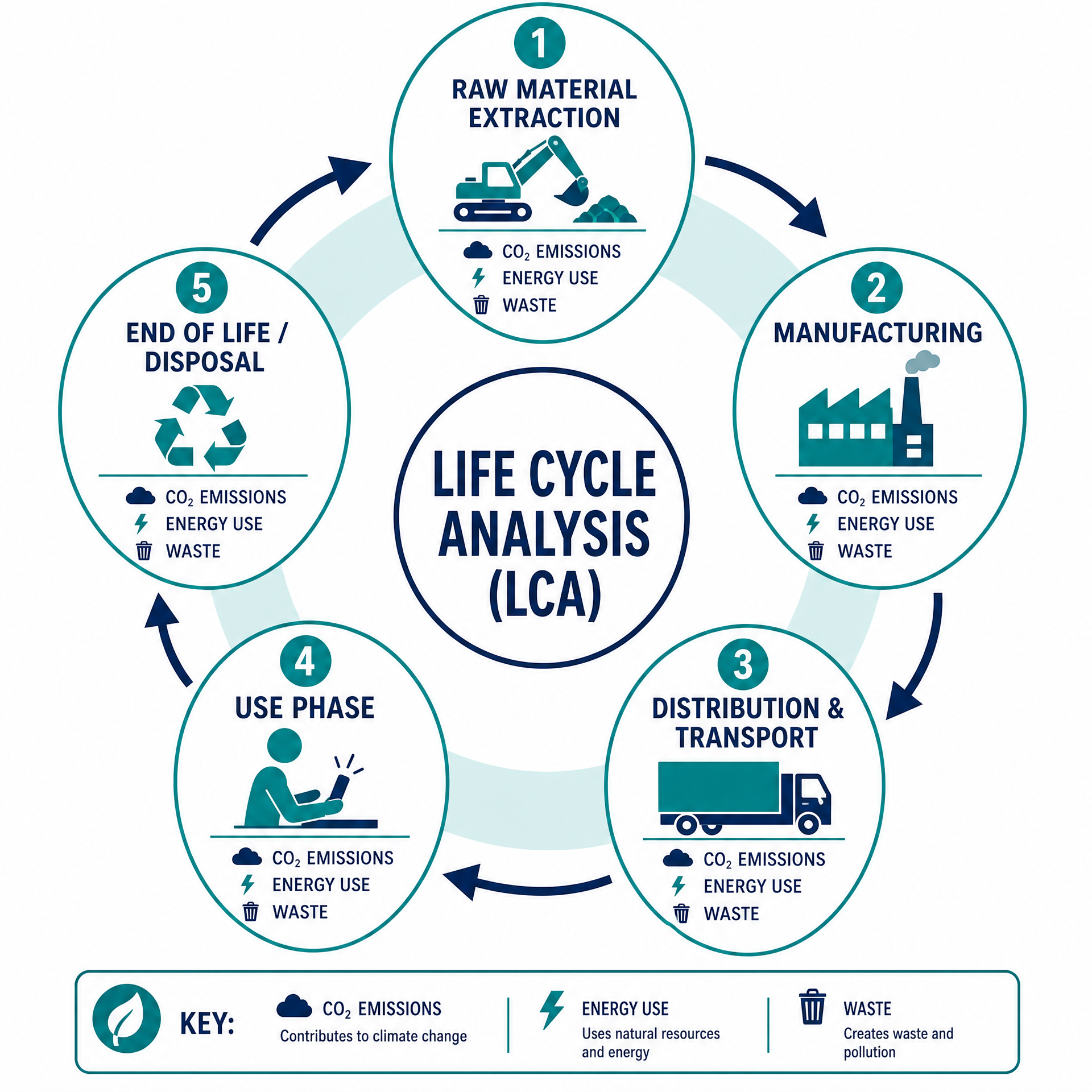
LCA is a critical tool used by designers to assess the environmental impact of a product from 'cradle to grave'. You must understand all five stages:
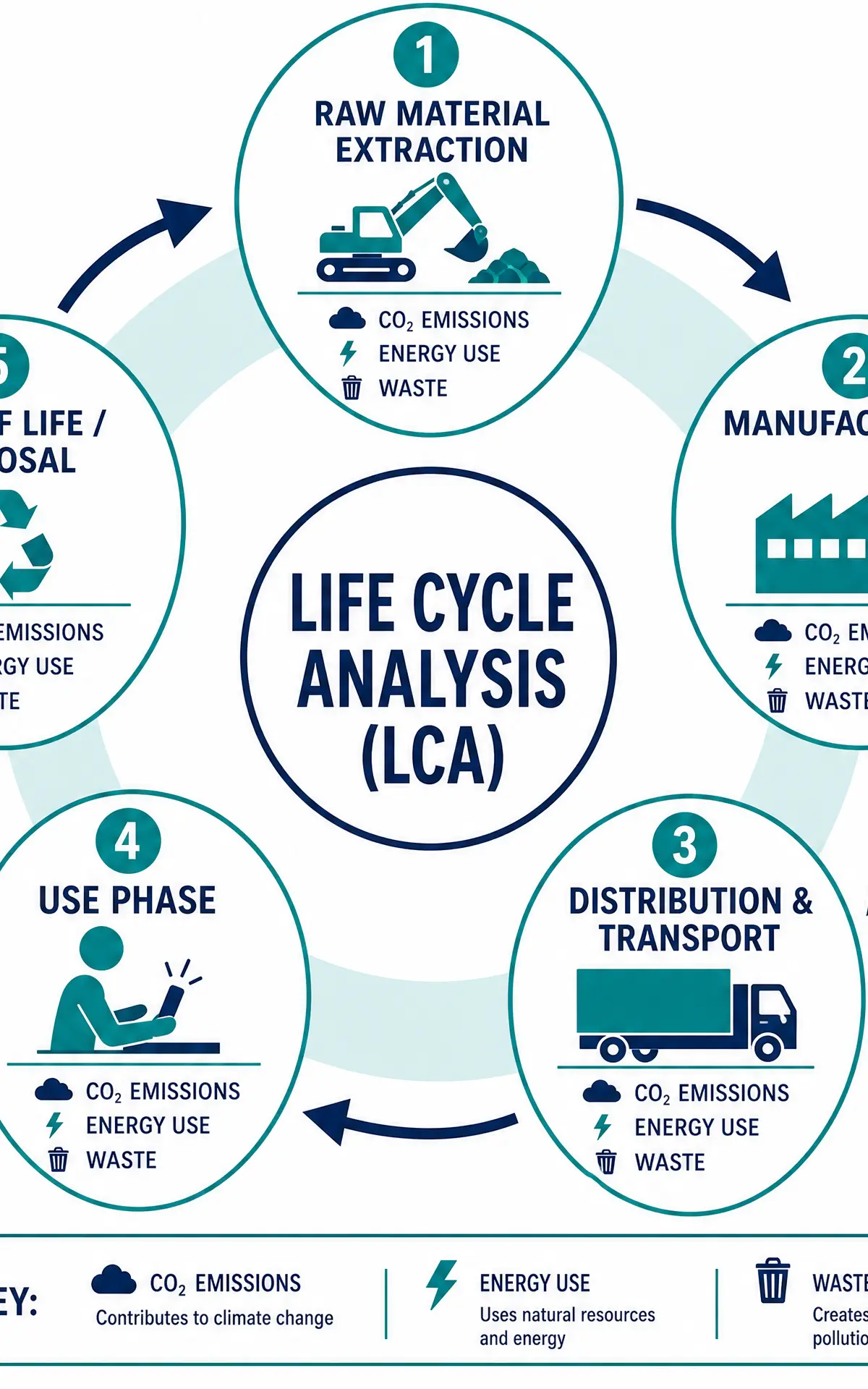
- Raw Material Extraction: The environmental cost of mining, drilling, or harvesting (e.g., deforestation, habitat destruction).
- Manufacturing: The energy used and pollution created during the factory processes.
- Distribution & Transport: The carbon footprint of moving the product from factory to consumer (air freight vs. sea freight).
- Use Phase: The energy the product consumes during its working life (e.g., a washing machine's electricity and water usage).
- End of Life / Disposal: Can the product be recycled, reused, or disassembled? Does it end up in a landfill?
Practical Skills
Applying Evaluation to Contemporary Scenarios
You must be able to apply these theoretical criteria to real-world contexts:
- Natural Disasters: Evaluating the use of drones for delivering medical supplies or 3D printing for rapid, on-site shelter construction. Key considerations: reliability, timescale, and cost.
- Medical Advances: Evaluating AI diagnostics or advanced prosthetics. Key considerations: target user accessibility, cost, and the ethical question of who benefits.
- Travel and Transport: Evaluating electric vehicles. Key considerations: the environmental impact of battery manufacturing (LCA stage 1 and 2) versus the reduction in emissions during the use phase (LCA stage 4).
- Global Warming: Evaluating renewable energy systems like wind turbines. Key considerations: carbon footprint of manufacture versus long-term environmental benefits.
Portfolio/Coursework Guidance
In your Non-Exam Assessment (NEA) portfolio, you must demonstrate critical evaluation:
- Justify Material Choices: Do not just list the materials you used. Explain why you chose them based on their environmental impact and manufacturing capabilities.
- Evidence of LCA: Include a basic Life Cycle Analysis for your final prototype. Consider how you might reduce its carbon footprint or improve its end-of-life disposal.
- Target User Research: Show evidence that you have evaluated your design decisions against the specific needs and limitations of your target user.
Listen to the Podcast
Listen to this 10-minute revision podcast covering the core concepts, ethical considerations, and LCA, complete with a quick-fire quiz!

Visual Resources
2 diagrams and illustrations
Interactive Diagrams
1 interactive diagram to visualise key concepts
Conceptual Flow Outline
Critical Evaluation Decision Process
Worked Examples
3 worked examples — open one to explore the question and available guidance.
Practice Questions
Test your understanding — click to reveal model answers
Identify two ethical considerations a designer must take into account when manufacturing a new smartphone. (2 marks)
Hint: Think about the people who make the phone and where the materials come from.
Explain why timescale is a critical evaluation criterion when designing medical equipment for a sudden pandemic. (3 marks)
Hint: Link the urgency of the scenario to the manufacturing process.
Evaluate the use of 3D printing (rapid prototyping) in the development of new products. Consider both manufacturing capabilities and budget constraints. (6 marks)
Hint: Use the PEEE structure. Weigh the benefits of rapid iteration against the costs of the machines and materials.