Pearson Edexcel · GCSE · Design and Technology
Metals: Appropriate surface treatments and finishes that can be applied to ferrous and non-ferrous metals for functional and aesthetic purposes
This comprehensive guide covers the essential surface treatments and finishes for ferrous and non-ferrous metals. Understanding these processes is crucial for both the written exam and NEA coursework, where you must justify your material finishing choices based on functional protection and aesthetic enhancement.
- 6 min read
- 3 worked examples
- 4 practice questions
- 6 key terms
Study Notes
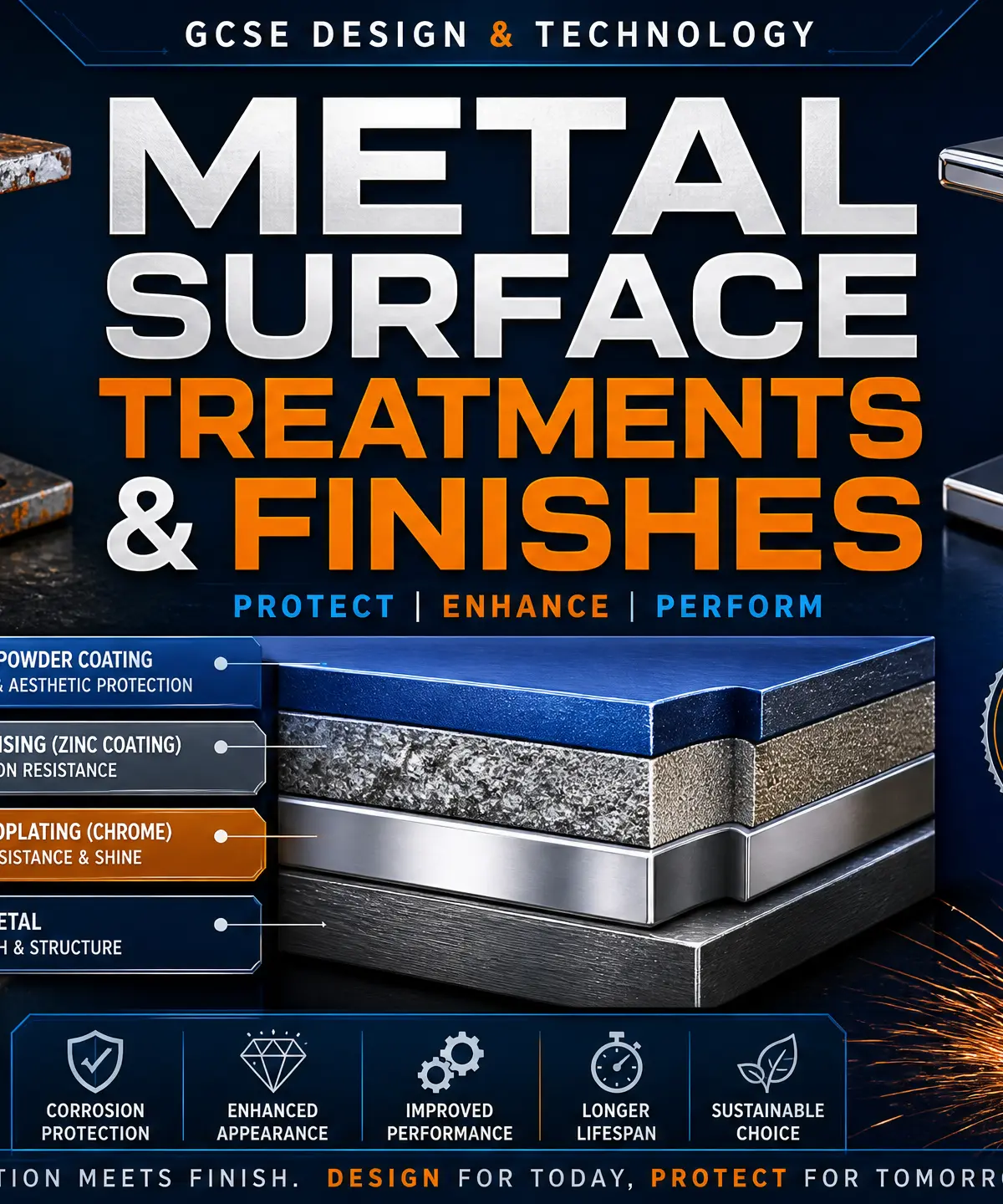
Overview
Surface treatments and finishes are applied to metals to improve their functional properties (such as corrosion resistance and durability) and their aesthetic qualities (such as colour, texture, and shine). In GCSE Design and Technology, examiners expect you to understand the specific finishing processes appropriate for different metals and to justify your choices in both theoretical questions and practical design contexts.

Key Knowledge & Theory
Core Concepts: Ferrous vs Non-Ferrous Metals
The choice of surface treatment depends entirely on the type of metal being used.
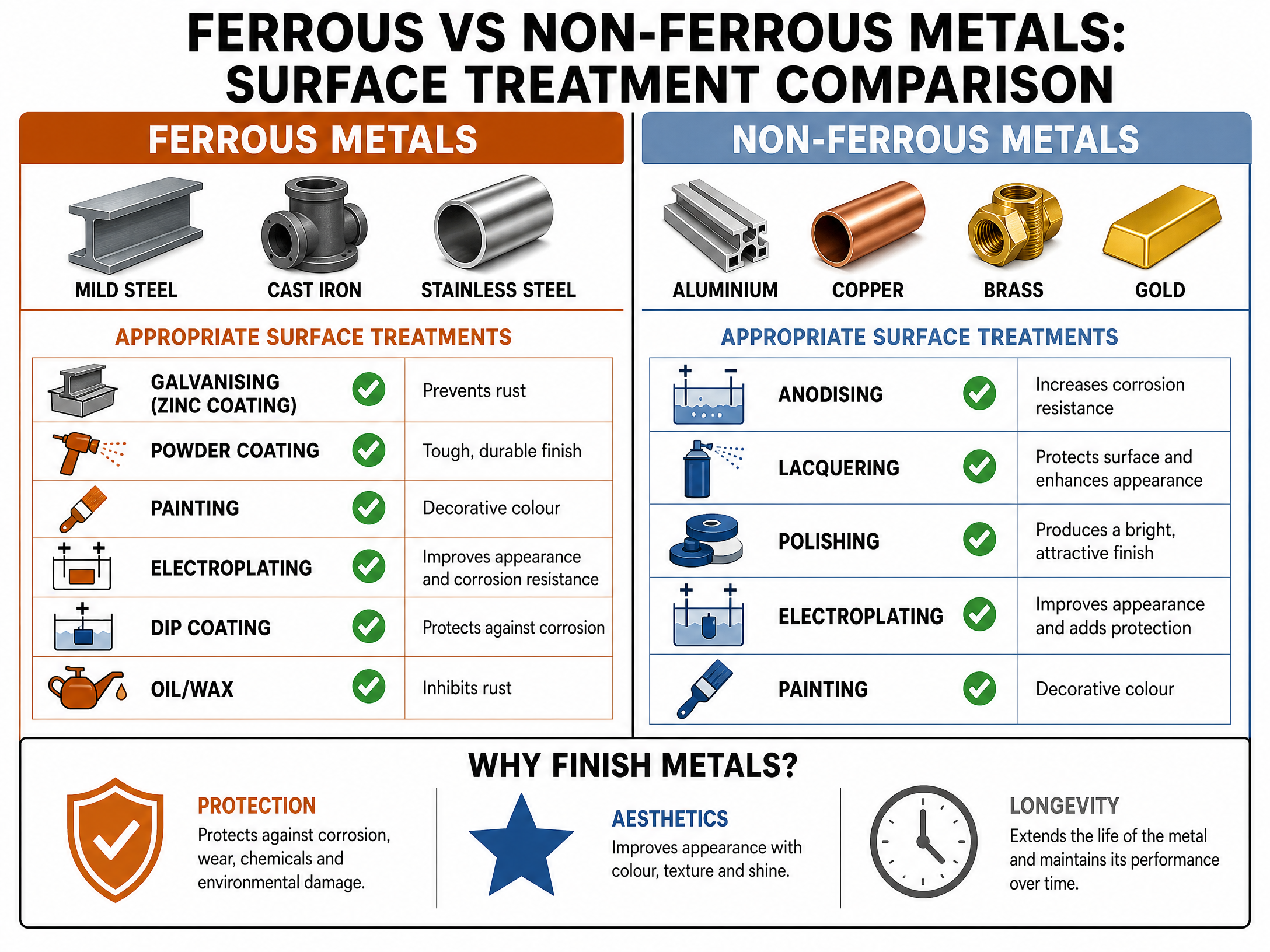
Ferrous Metals (e.g., mild steel, cast iron, high-carbon steel) contain iron. When exposed to oxygen and moisture, iron reacts to form iron oxide, commonly known as rust. Therefore, the primary functional purpose of finishing ferrous metals is corrosion resistance.
Non-Ferrous Metals (e.g., aluminium, copper, brass, gold) do not contain iron and do not rust. Many non-ferrous metals are naturally resistant to corrosion (for example, aluminium forms a protective oxide layer). Surface treatments for non-ferrous metals are often applied primarily for aesthetic purposes, although they can also provide additional protection against tarnishing or wear.
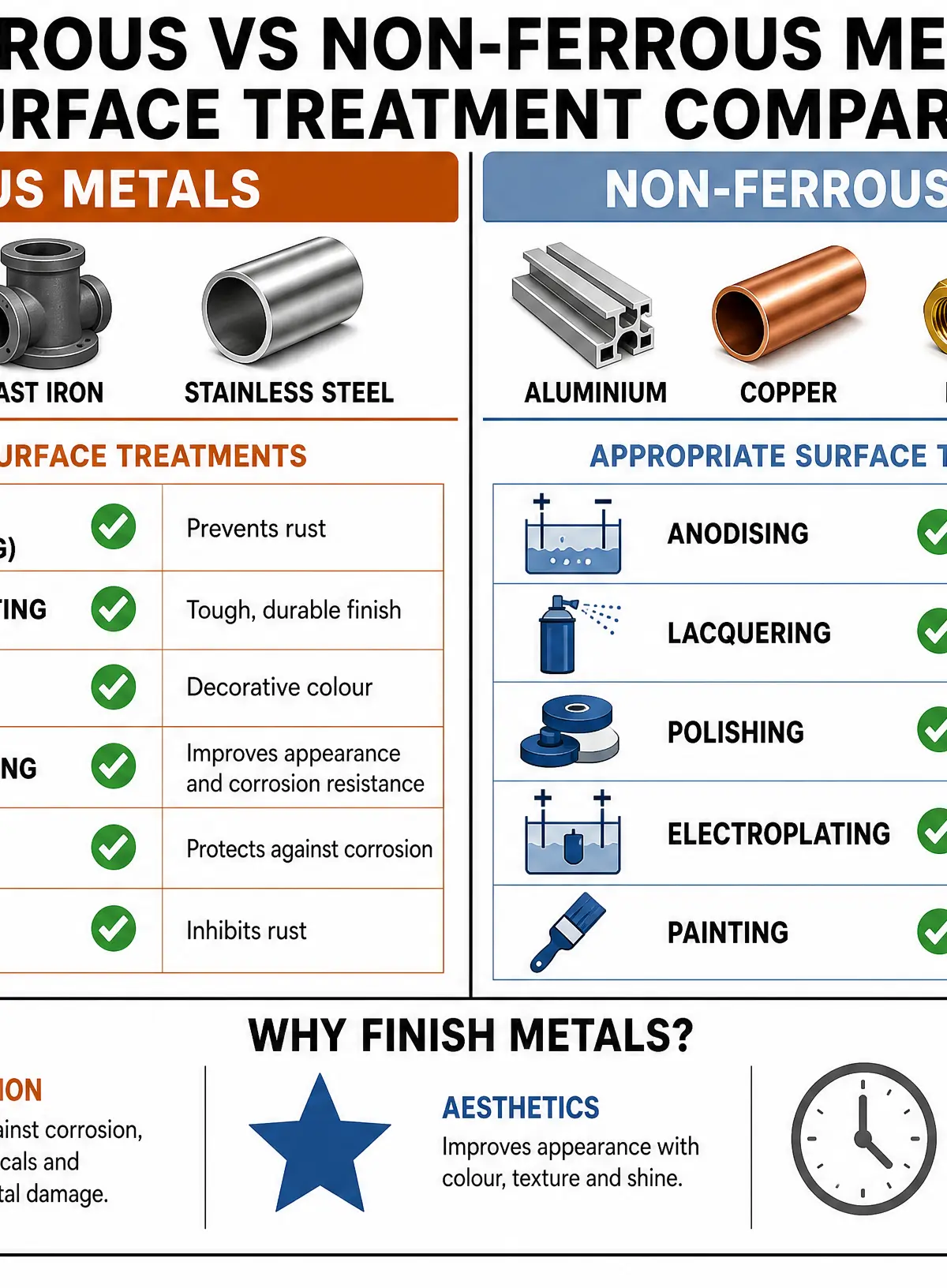
Essential Surface Treatments
| Finish | Process | Suitable Metals | Functional Benefit | Aesthetic Benefit |
|---|---|---|---|---|
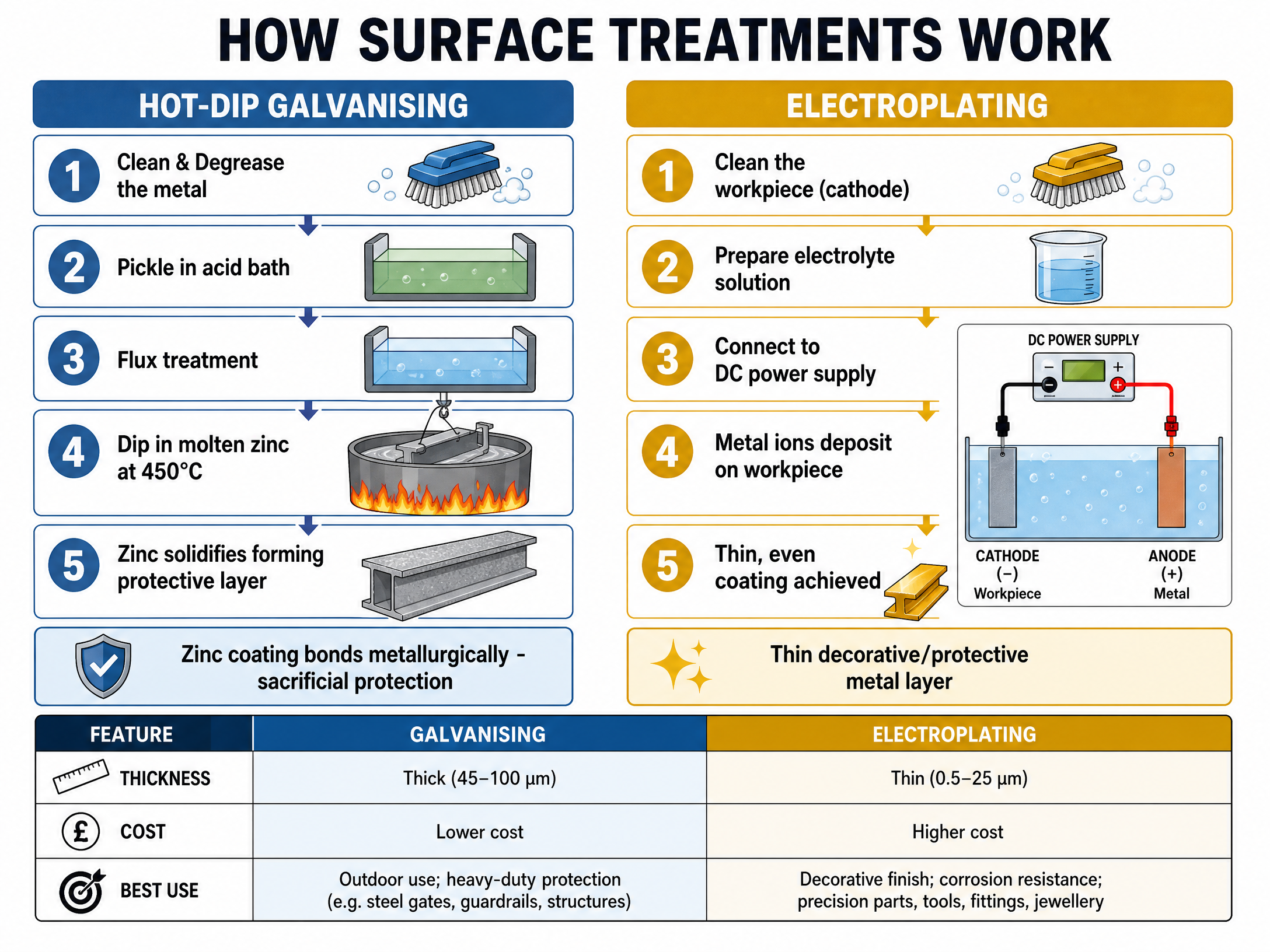
| Galvanising | Hot-dipping metal into molten zinc at ~450°C. The zinc bonds metallurgically. | Ferrous (mostly mild steel) | Provides a physical barrier and sacrificial protection against rust. | Gives a mottled, industrial silver-grey appearance. |
| Powder Coating | Electrostatically charged thermosetting polymer powder is sprayed on, then baked at ~200°C to cure. | Ferrous and Non-Ferrous | Creates a tough, scratch-resistant, and durable protective layer. | Available in a vast range of colours and textures (matt, gloss). |
| Electroplating | Using electrolysis to deposit a thin layer of a decorative/protective metal (e.g., chrome, gold) onto a base metal. | Ferrous and Non-Ferrous | Improves wear resistance and provides some corrosion protection. | Produces a high-quality, bright, reflective, or decorative finish. |
| Anodising | An electrochemical process that thickens the natural oxide layer on the metal surface. | Aluminium only | Significantly increases hardness and corrosion resistance. | The porous oxide layer can absorb dyes for vibrant, metallic colours. |
| Painting | Applying a liquid coating (often over a primer) that dries to form a solid film. | Ferrous and Non-Ferrous | Acts as a physical barrier against moisture and oxygen. | Highly customisable colour and finish; easily reapplied. |
| Lacquering | Applying a clear or tinted protective varnish. | Non-Ferrous (copper, brass) | Prevents tarnishing and oxidation from handling or atmosphere. | Preserves the natural colour and shine of the base metal. |
| Dip Coating | Heating the metal and dipping it into powdered polymer (e.g., PVC), which melts and coats it. | Ferrous and Non-Ferrous | Provides a soft, ergonomic grip and electrical insulation. | Adds colour and a smooth, rubbery texture. |
| Oil/Wax | Wiping oil or wax onto the heated metal surface to penetrate and seal it. | Ferrous (cast iron, steel) | Displaces moisture to inhibit rust formation. | Gives a traditional, blackened, or slightly glossy finish. |
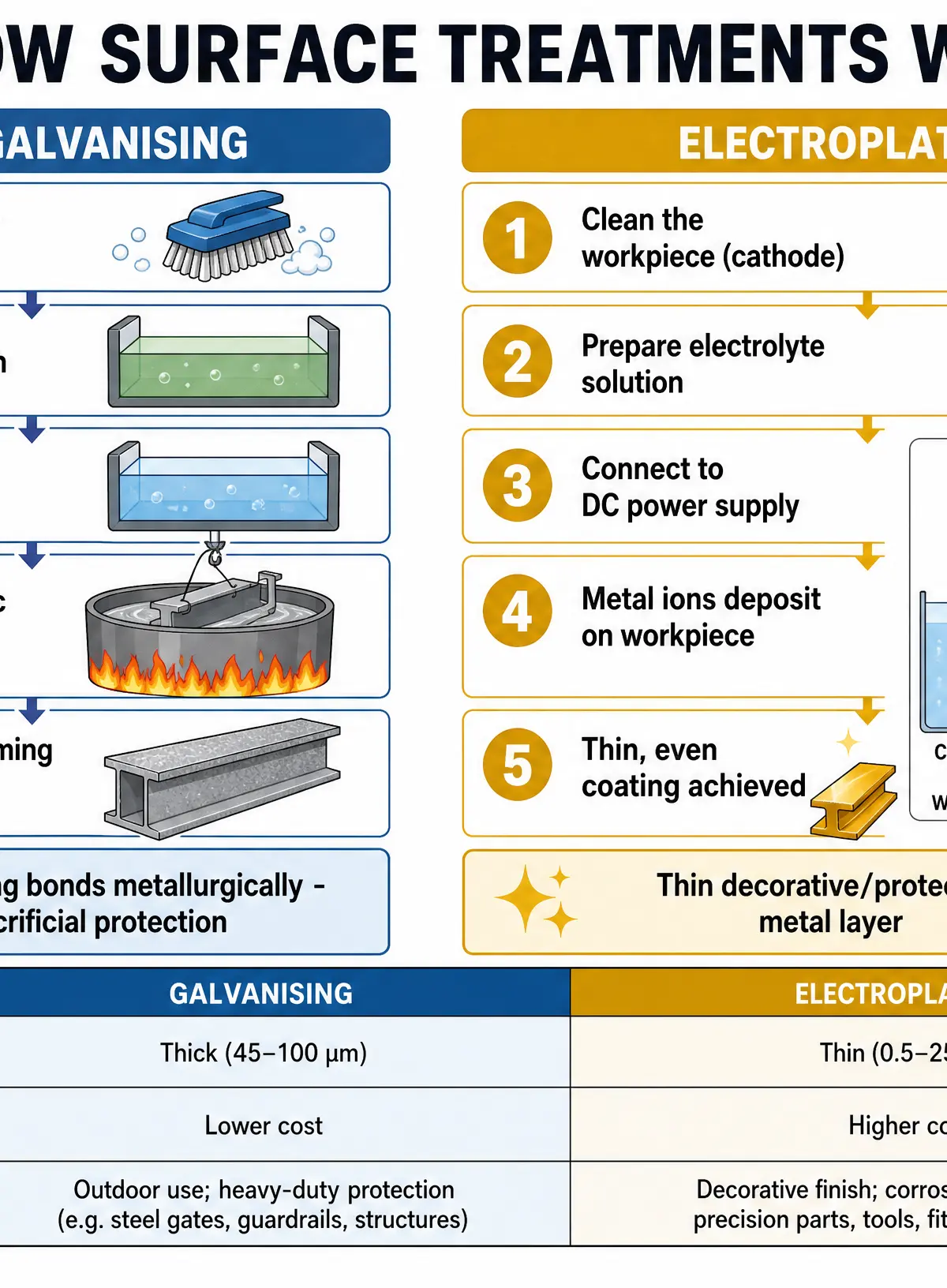
Technical Vocabulary
To access the highest mark bands, you MUST use the correct terminology:
- Sacrificial Protection: A method of corrosion protection where a more reactive metal (like zinc) corrodes preferentially to protect the base metal (iron/steel).
- Electrolyte: A liquid that conducts electricity, used in the electroplating and anodising processes.
- Oxidation: The chemical reaction between a metal and oxygen, leading to corrosion (rusting in iron) or a protective layer (in aluminium).
- Aesthetic: Relating to the appearance, beauty, or visual appeal of a product.
- Functional: Relating to the performance, durability, and practical use of a product.
Practical Skills & Coursework Guidance
Applying Finishes in the Workshop
When undertaking your Non-Exam Assessment (NEA), you will likely need to apply a finish to your final prototype.
- Preparation is Key: No finish will adhere properly to a dirty surface. You must degrease the metal and remove any existing rust, scale, or sharp burrs using emery cloth or a wire brush.
- Priming: If painting a ferrous metal, you must apply a suitable metal primer first (often zinc-rich) to ensure the topcoat adheres and to provide base-level rust protection.
- Safety: Always use appropriate PPE. Painting and lacquering require good ventilation or an extraction booth.
Evidencing Finishes in Your Portfolio
Examiners look for justification. Do not just state, "I painted it red." Instead, write: "I selected a red powder-coated finish for the mild steel frame. Functionally, this provides excellent durability and prevents the steel from rusting in an outdoor environment. Aesthetically, the bright red colour contrasts with the wooden seat and fits my target market's preference for modern, vibrant furniture."
Exam Component Preparation
Written Exam Strategy
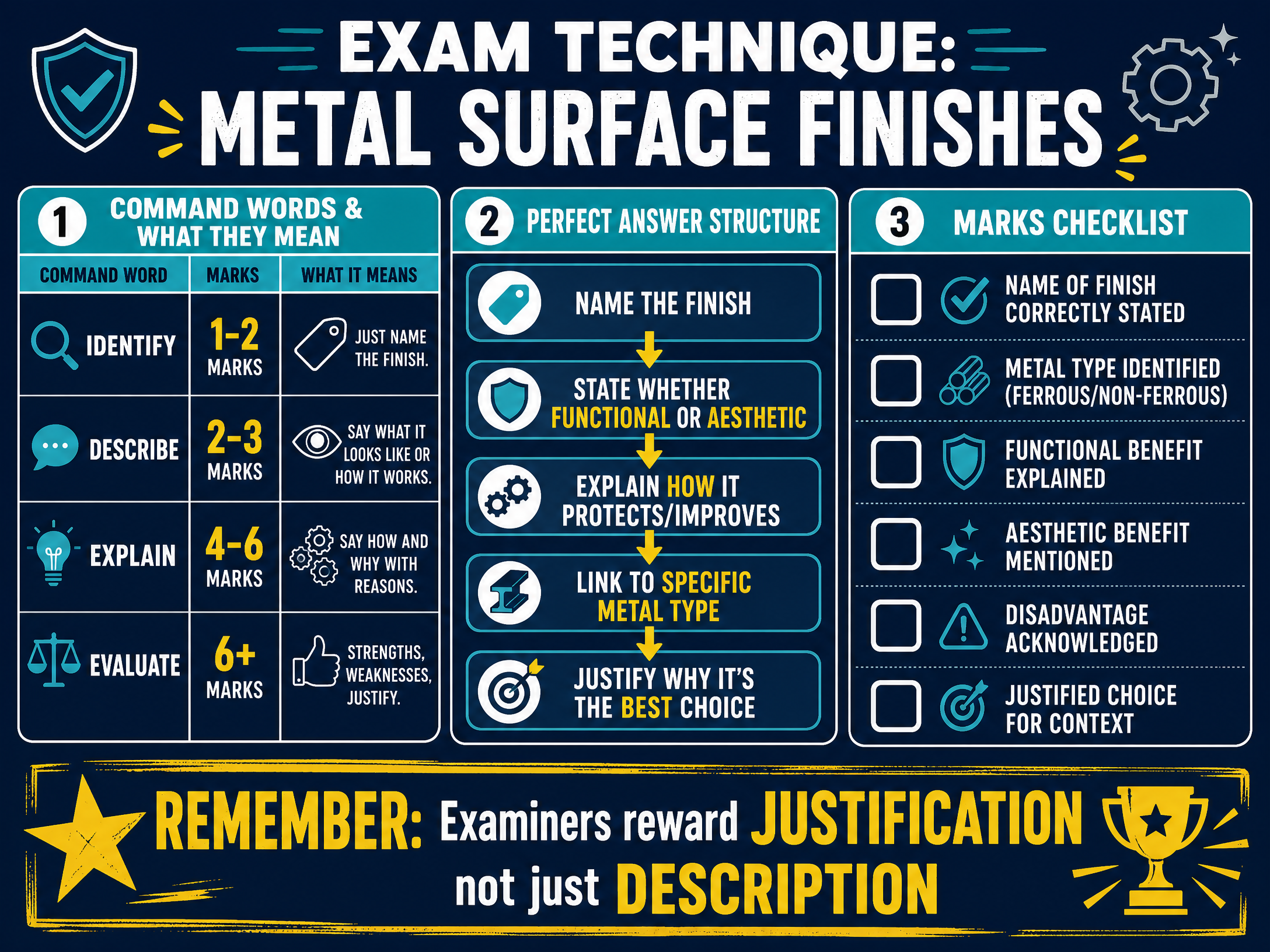
Questions on finishes typically fall into three categories:
- Identification (1-2 marks): E.g., "Name a suitable finish for an aluminium bicycle frame."
- Process Description (3-4 marks): E.g., "Describe the process of hot-dip galvanising."
- Justification/Evaluation (6-8 marks): E.g., "Evaluate the use of powder coating compared to painting for a steel garden gate."
For extended response questions, always structure your answer to cover both functional and aesthetic factors, and explicitly link the finish to the specific properties of the metal mentioned in the question.
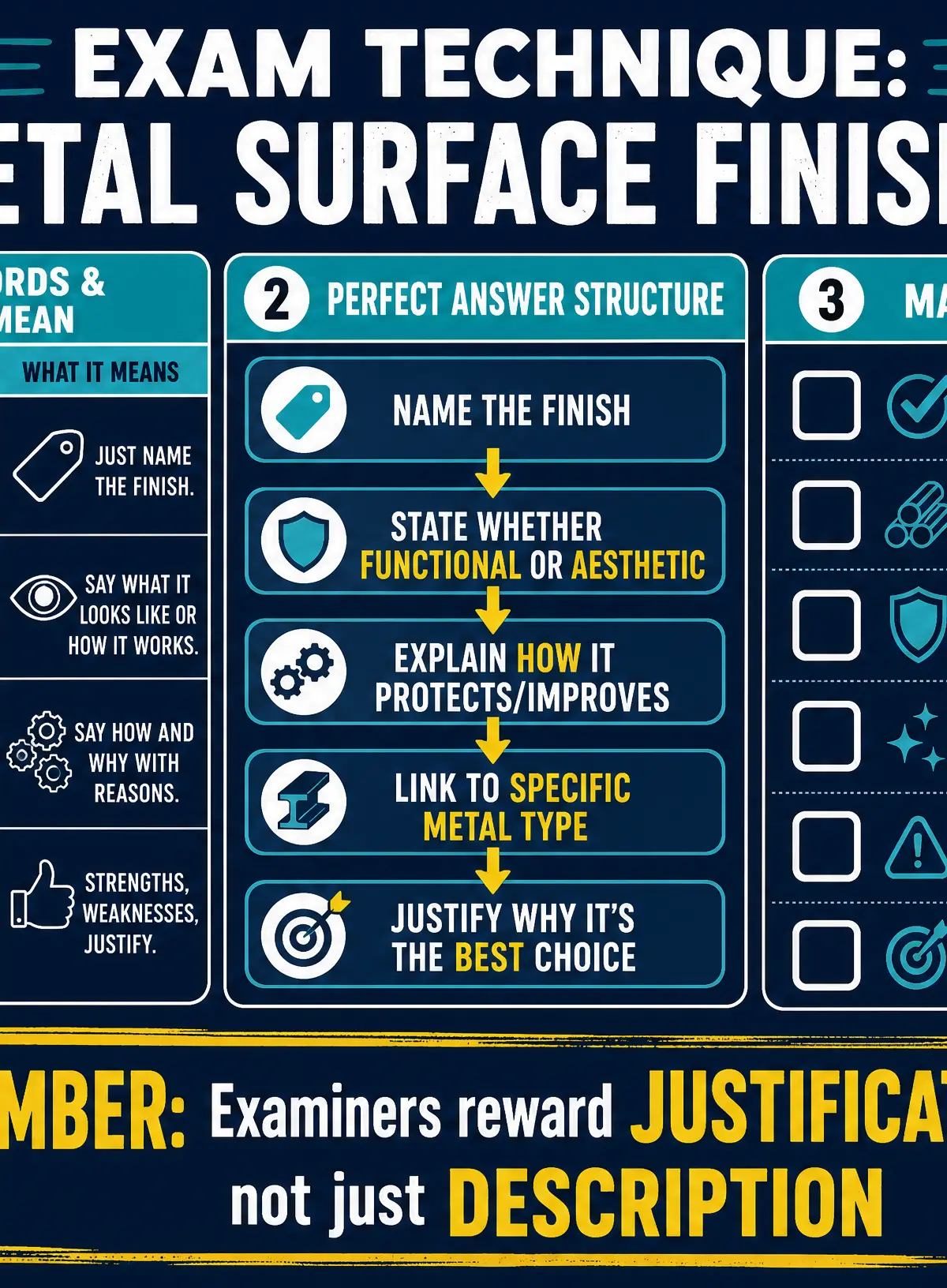
Visual Resources
3 diagrams and illustrations
Interactive Diagrams
1 interactive diagram to visualise key concepts
Conceptual Flow Outline
Decision tree for selecting metal finishes
Worked Examples
3 worked examples — open one to explore the question and available guidance.
Practice Questions
Test your understanding — click to reveal model answers
State one functional reason and one aesthetic reason for applying a surface finish to a metal product. [2 marks]
Hint: Think about protection vs appearance.
A student is designing a jewellery box made from copper. They want to keep the natural colour of the copper but stop it from tarnishing. Name the most appropriate finish to apply. [1 mark]
Hint: You need a clear coating that seals the metal from the air.
Explain how powder coating is applied to a metal product. [3 marks]
Hint: Think about static electricity and heat.
A company is designing a new outdoor climbing frame for a children's playground. The frame will be made from mild steel tubing. Evaluate the suitability of galvanising compared to dip coating for the climbing frame. [6 marks]
Hint: Consider the environment (outdoors, rain) and the users (children, grip, safety).