Pearson Edexcel · GCSE · Design and Technology
Metals: Specialist techniques, tools, equipment and processes to shape, fabricate, construct and assemble a high-quality metal prototype
This topic covers the essential techniques, tools, and processes required to shape, fabricate, and finish high-quality metal prototypes. Understanding these methods—and being able to justify their selection—is critical for both your non-examined assessment (NEA) and written exam.
- 6 min read
- 3 worked examples
- 4 practice questions
- 6 key terms
Study Notes
Overview
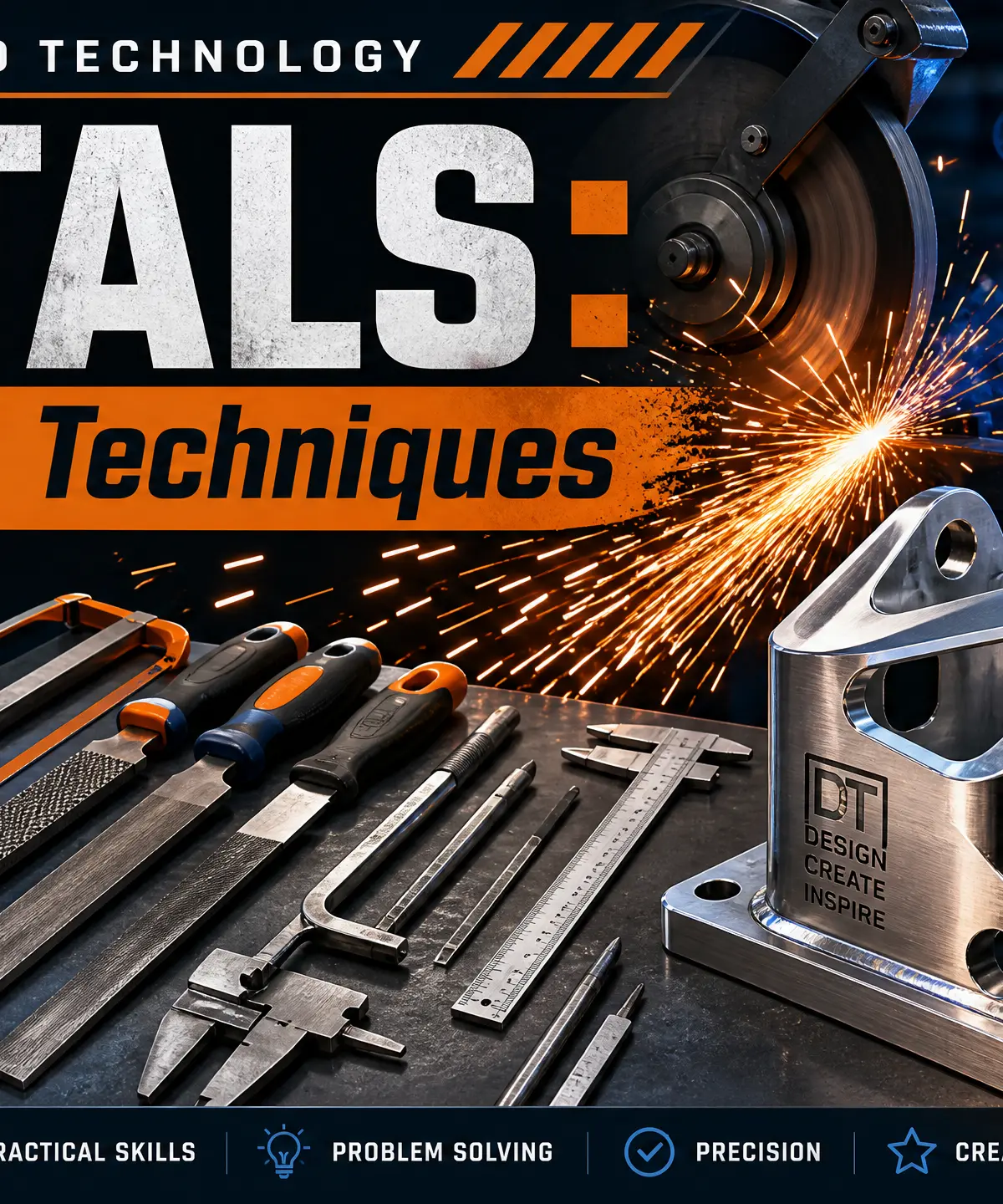
Welcome to Topic 2.7: Metals – Specialist Techniques. To succeed in GCSE Design and Technology, you must not only know how to work with metals in the workshop but also understand the theoretical principles behind each process. Examiners are looking for your ability to discriminate between different tools, equipment, and processes based on their advantages and disadvantages, and to select the most appropriate technique for a specific manufacturing requirement.
Key Knowledge & Theory
Core Concepts: The Three Approaches to Metalworking
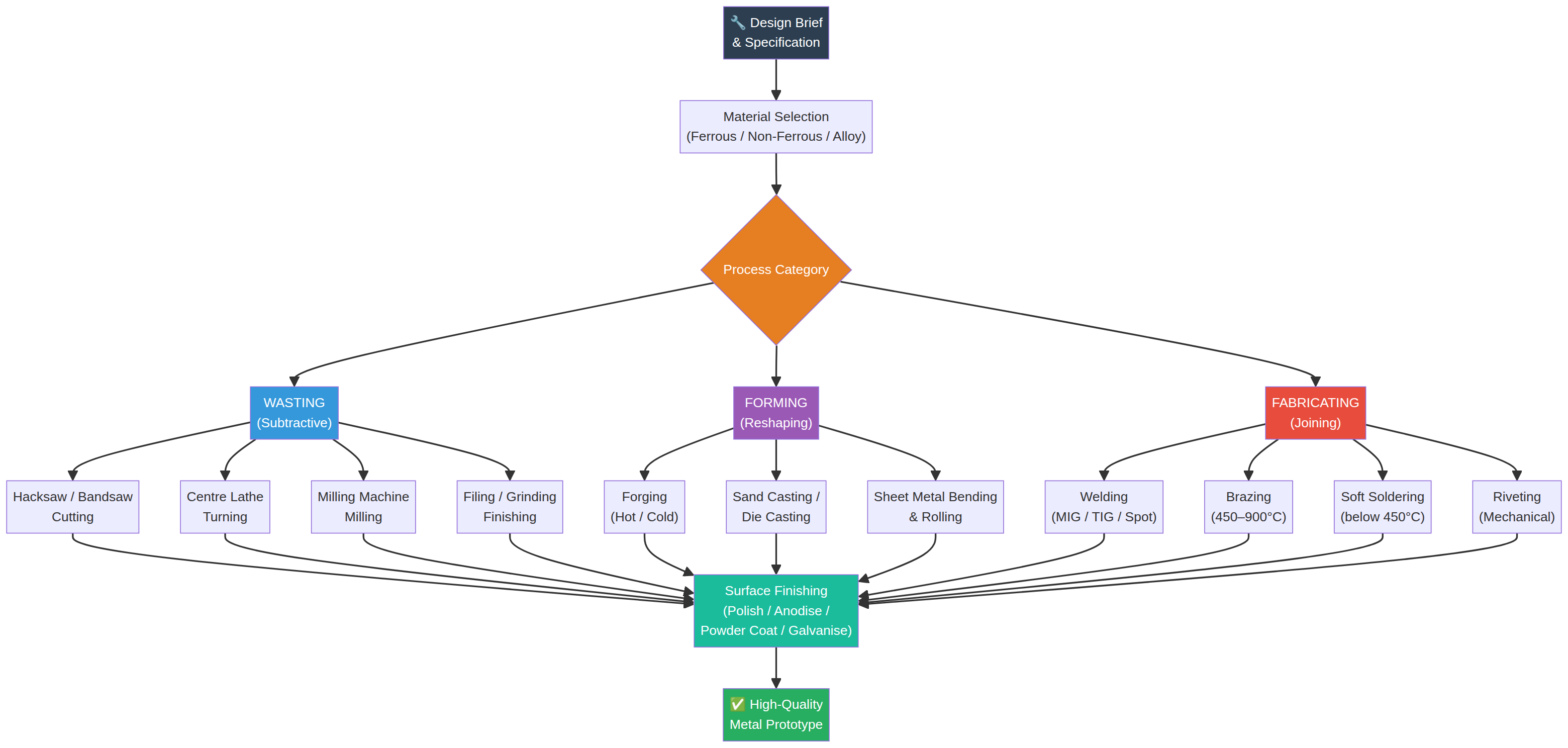
Metalworking processes can be broadly categorised into three main approaches:
- Wasting (Subtractive Manufacturing): Removing material from a larger block or sheet to achieve the desired shape (e.g., sawing, filing, turning, milling).
- Forming (Reshaping): Altering the shape of the metal without removing any material, typically using force and/or heat (e.g., forging, casting, bending, rolling).
- Fabricating (Joining): Assembling separate pieces of metal together to build a larger structure (e.g., welding, brazing, soldering, riveting).
Technical Vocabulary
To access the highest mark bands, candidates must use precise technical terminology. Avoid vague terms like "sticking together" or "cutting out". Instead, use terms like fusion welding, capillary action, subtractive manufacturing, and work hardening.
Practical Skills
Wasting Processes
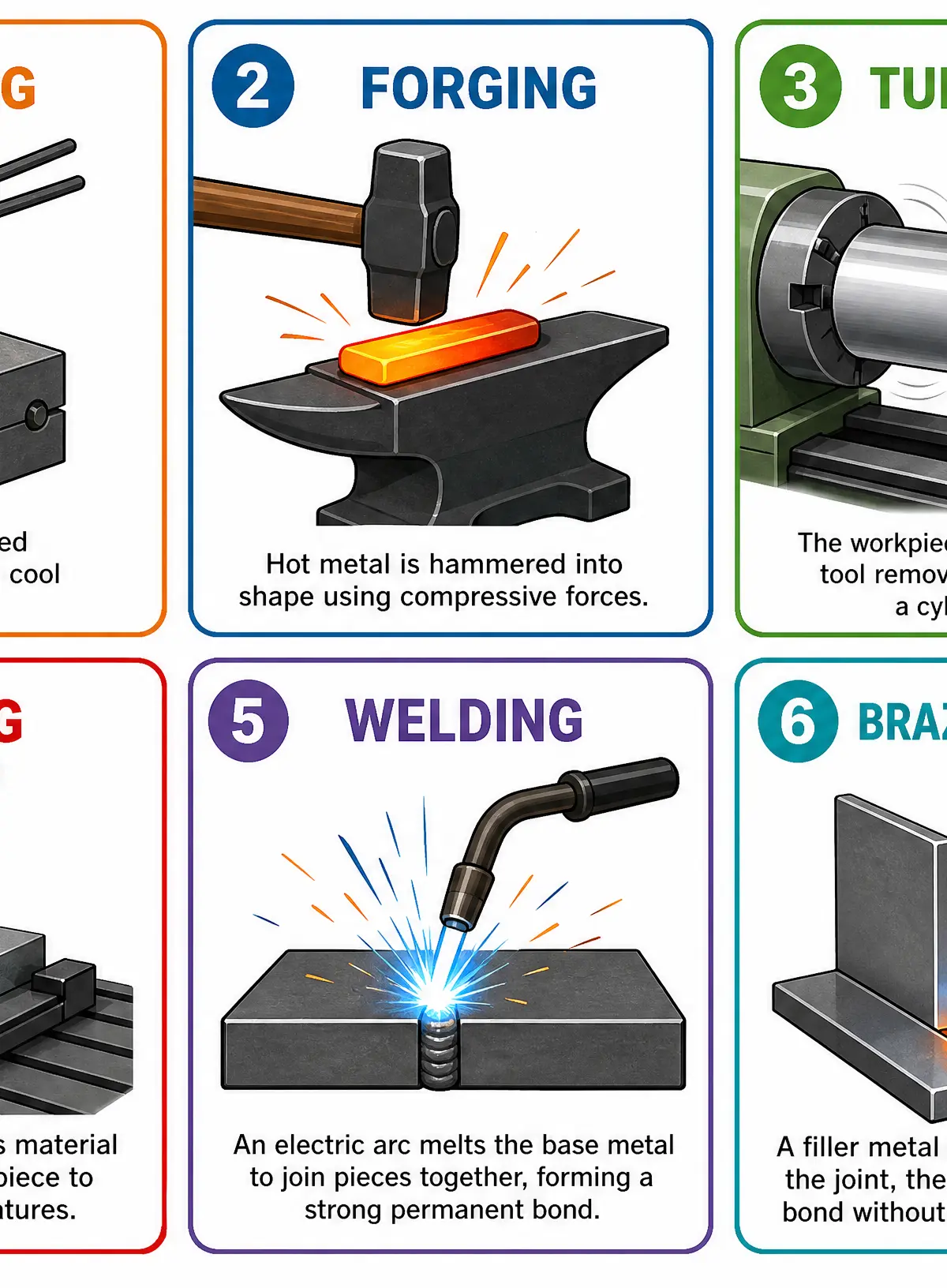
- Hacksaw: Used for cutting metal bar, tube, or sheet to length. The blade must be tensioned correctly, and cutting occurs on the push stroke. Blade selection is based on Teeth Per Inch (TPI)—fewer teeth for thick material, more teeth for thin sheet to prevent snagging.
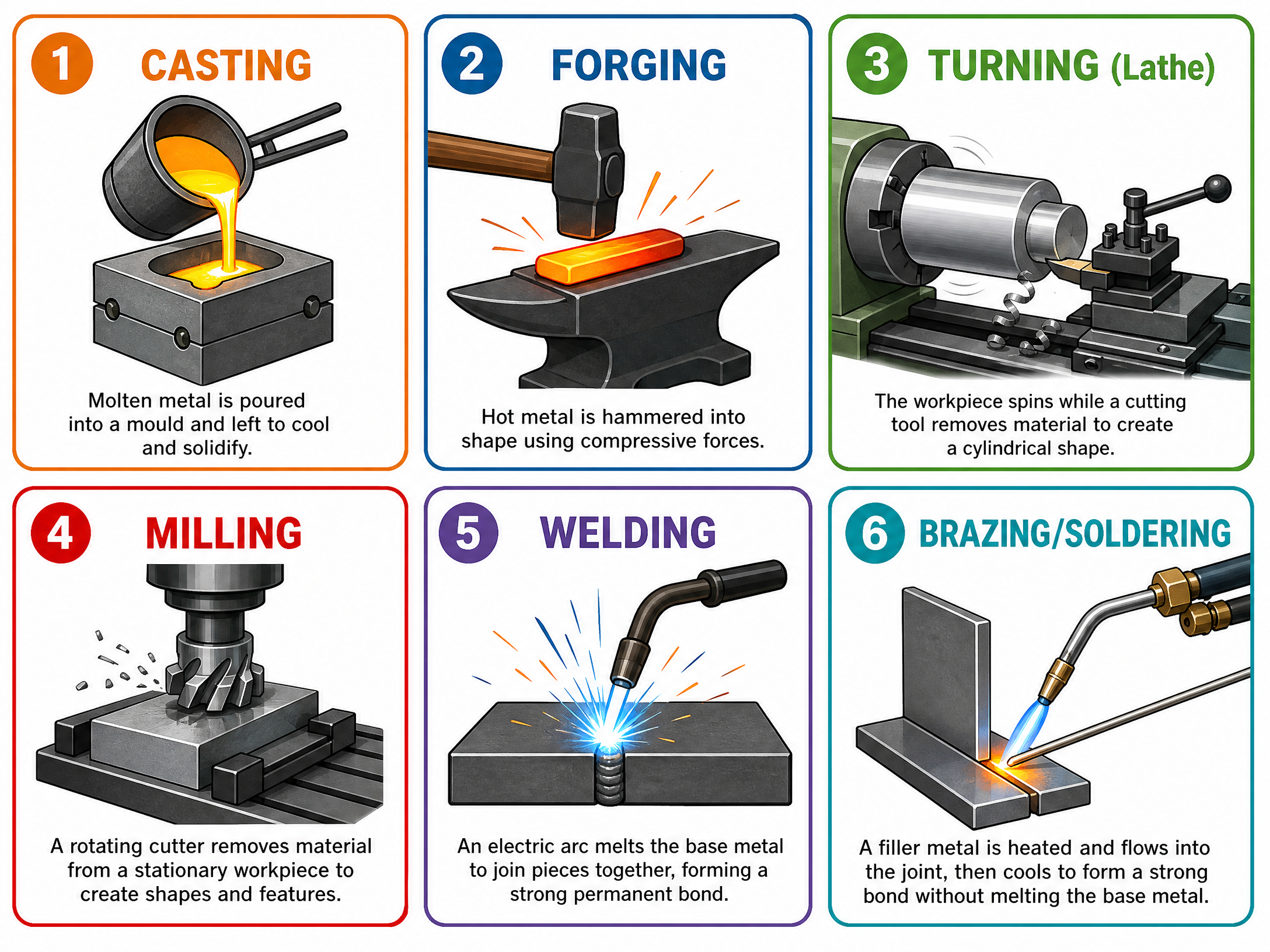
- Centre Lathe (Turning): A machine where the workpiece rotates while a stationary cutting tool removes material to create cylindrical profiles. Key variables are spindle speed, depth of cut, and feed rate.
- Milling Machine: A rotating cutter removes material from a stationary workpiece. Used for creating flat surfaces, slots, and complex profiles. CNC (Computer Numerical Control) milling automates this process for high precision and repeatability.
Forming Processes
- Forging: Heating metal until it is plastic (malleable) and shaping it using compressive forces (hammering or pressing). This refines the grain structure, making the component exceptionally strong.
- Casting: Melting metal completely and pouring it into a mould (e.g., sand casting or die casting). When it solidifies, it takes the shape of the mould cavity.
- Sheet Metal Bending: Using a box and pan folder to apply force exceeding the metal's elastic limit, creating a permanent bend.
Fabrication and Joining
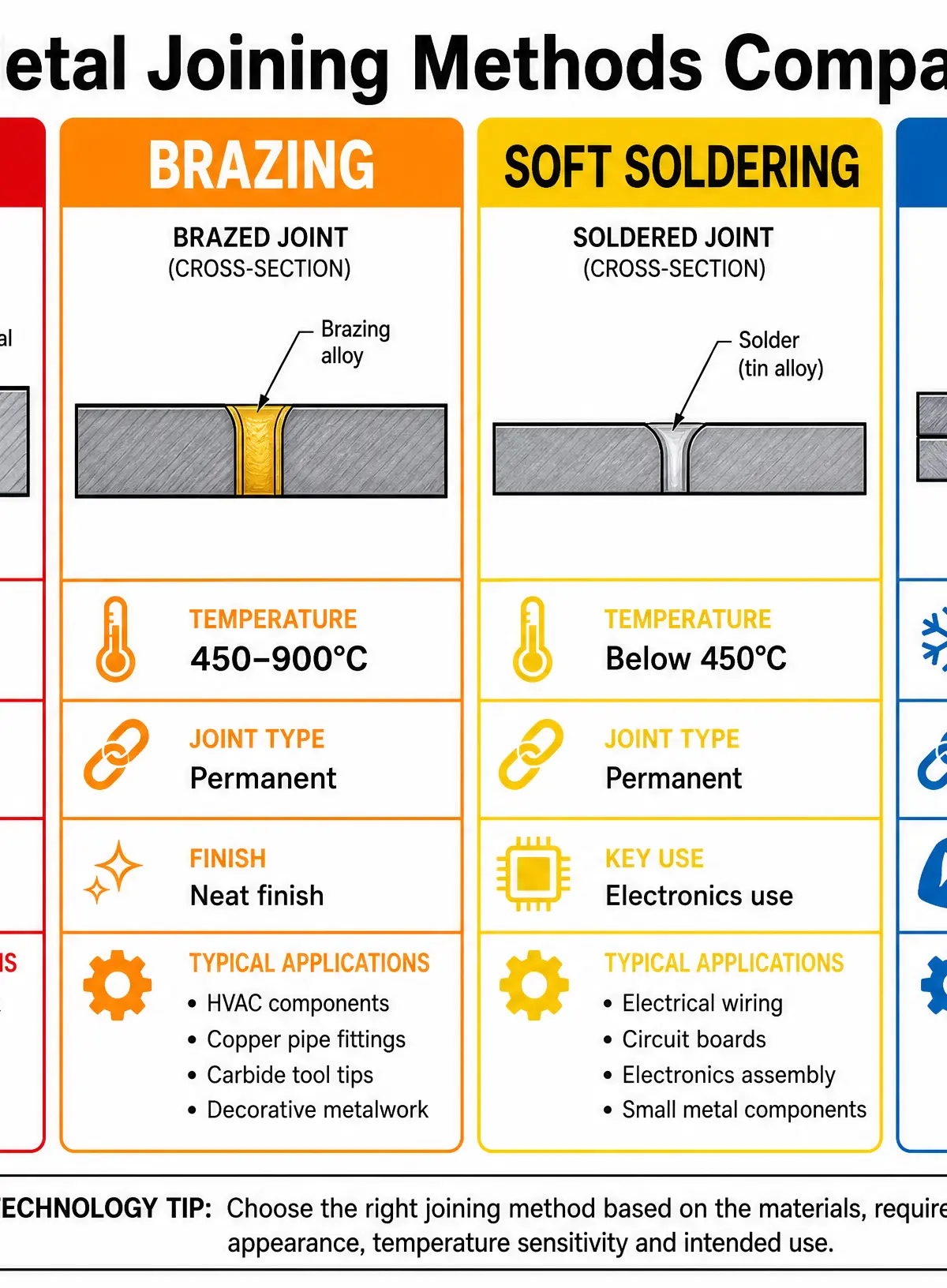
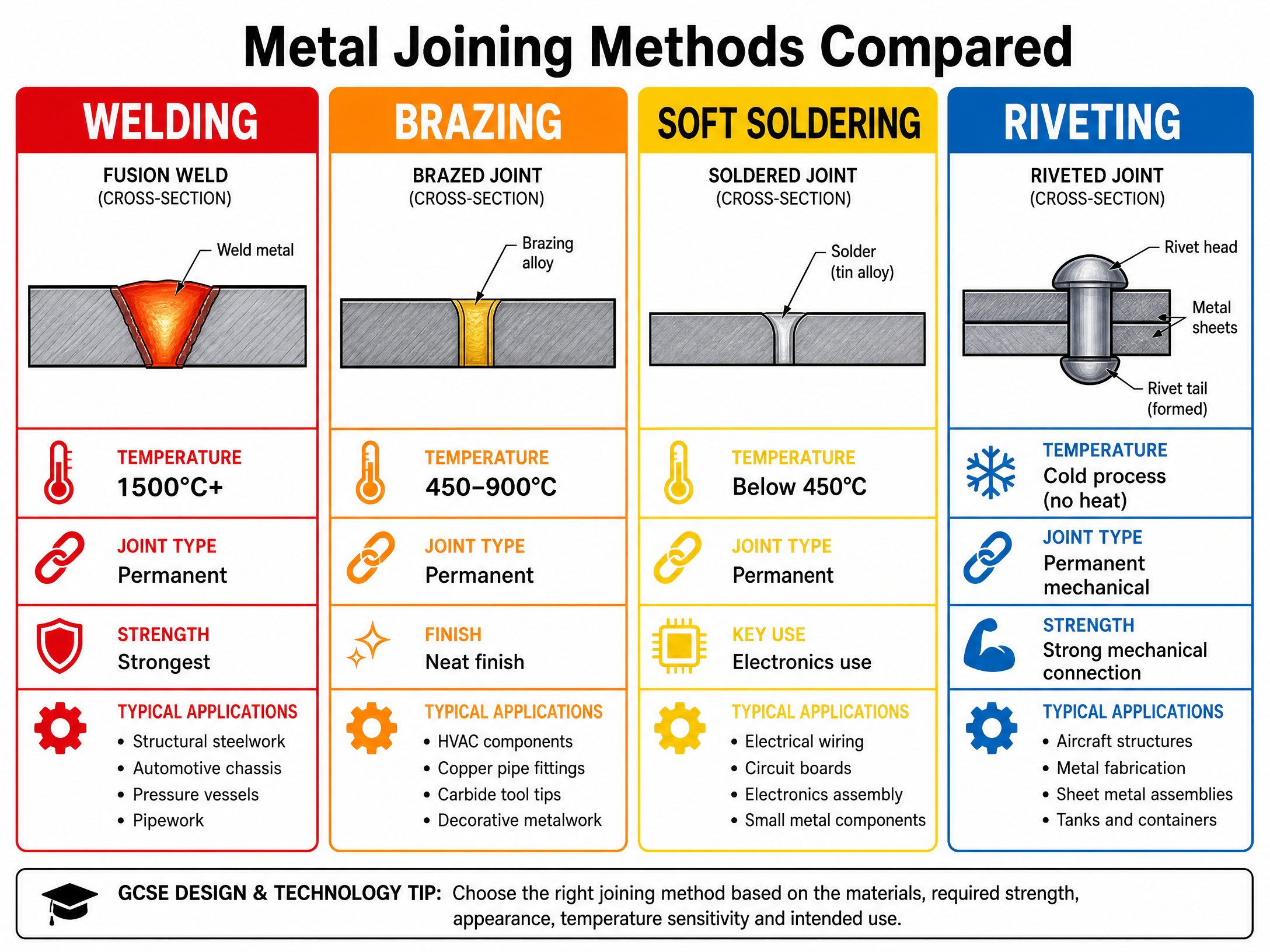
- Welding (MIG/TIG/Spot): Melts the base metals together (fusion), often with a filler rod. Produces the strongest permanent joints, suitable for structural applications. Operates at very high temperatures (1500°C+ for steel).
- Brazing: Joins metals using a filler metal (e.g., brass spelter) with a lower melting point than the base metals. The base metals do not melt. The filler is drawn into the joint by capillary action. Operates between 450°C and 900°C.
- Soft Soldering: Similar to brazing but operates below 450°C using a tin-based alloy. Used primarily for electronics and plumbing, not for structural strength.
- Riveting: A cold, mechanical joining process using a metal pin that is deformed to clamp pieces together. Useful when heat would damage the components.
Finishing Processes
Finishing protects the metal from corrosion and improves aesthetics:
- Anodising: An electrochemical process for aluminium that thickens the natural oxide layer, adding hardness and allowing for colour dyeing.
- Powder Coating: Electrostatically applying dry powder and curing it in an oven to form a tough, durable skin.
- Galvanising: Coating steel or iron with a protective layer of zinc to prevent rusting.
Portfolio/Coursework Guidance (NEA)
Assessment Criteria
Examiners award marks in the NEA for demonstrating a high level of making skill. This means selecting the right tools, using them safely and accurately, and achieving a high-quality finish.
Evidencing Your Skills
- Photographic Evidence: Document every stage of your making process. Show yourself using the lathe, setting up a brazing hearth, or applying a finish.
- Annotation: Don't just describe what you did. Explain why you chose a specific process. For example: "I chose to TIG weld the aluminium frame rather than rivet it because it provides a stronger, more seamless joint that aligns with the modern aesthetic of my design."
Exam Component
Written Exam Preparation
Theory questions will often present you with a product (e.g., a bicycle frame, a jewellery box) and ask you to select and justify an appropriate manufacturing process. You must be able to compare processes (e.g., MIG welding vs. Brazing) and explain the trade-offs regarding strength, cost, speed, and finish.
Listen to the Podcast
For a deep dive into these concepts and how to tackle exam questions, listen to the revision podcast below:

Visual Resources
3 diagrams and illustrations
Interactive Diagrams
1 interactive diagram to visualise key concepts
Conceptual Flow Outline
The Metal Fabrication Decision Process
Worked Examples
3 worked examples — open one to explore the question and available guidance.
Practice Questions
Test your understanding — click to reveal model answers
Identify two safety precautions that must be taken when using a bench grinder. [2 marks]
Hint: Think about protecting your face and how the machine is set up.
Explain how the process of brazing differs from welding. [3 marks]
Hint: Focus on temperatures and what actually melts during the process.
A student is making a prototype of a modern, geometric desk lamp from 1.5mm aluminium sheet. They need to create crisp 90-degree folds. Describe the tool they should use and explain why it is suitable. [3 marks]
Hint: What workshop machine bends sheet metal accurately?
A manufacturer is producing thousands of identical aluminium engine casings. Evaluate the use of die casting compared to sand casting for this product. [6 marks]
Hint: Consider the scale of production (thousands), the required finish, and the initial setup costs.