Pearson Edexcel · GCSE · Design and Technology
Metals: The impact of forces and stresses on ferrous and non-ferrous metals and how they can be reinforced and stiffened
This topic explores how forces and stresses act upon metals and the engineering techniques used to counteract them. Understanding these principles is essential for designing products that are safe, durable, and fit for purpose.
- 5 min read
- 3 worked examples
- 4 practice questions
- 6 key terms
Study Notes
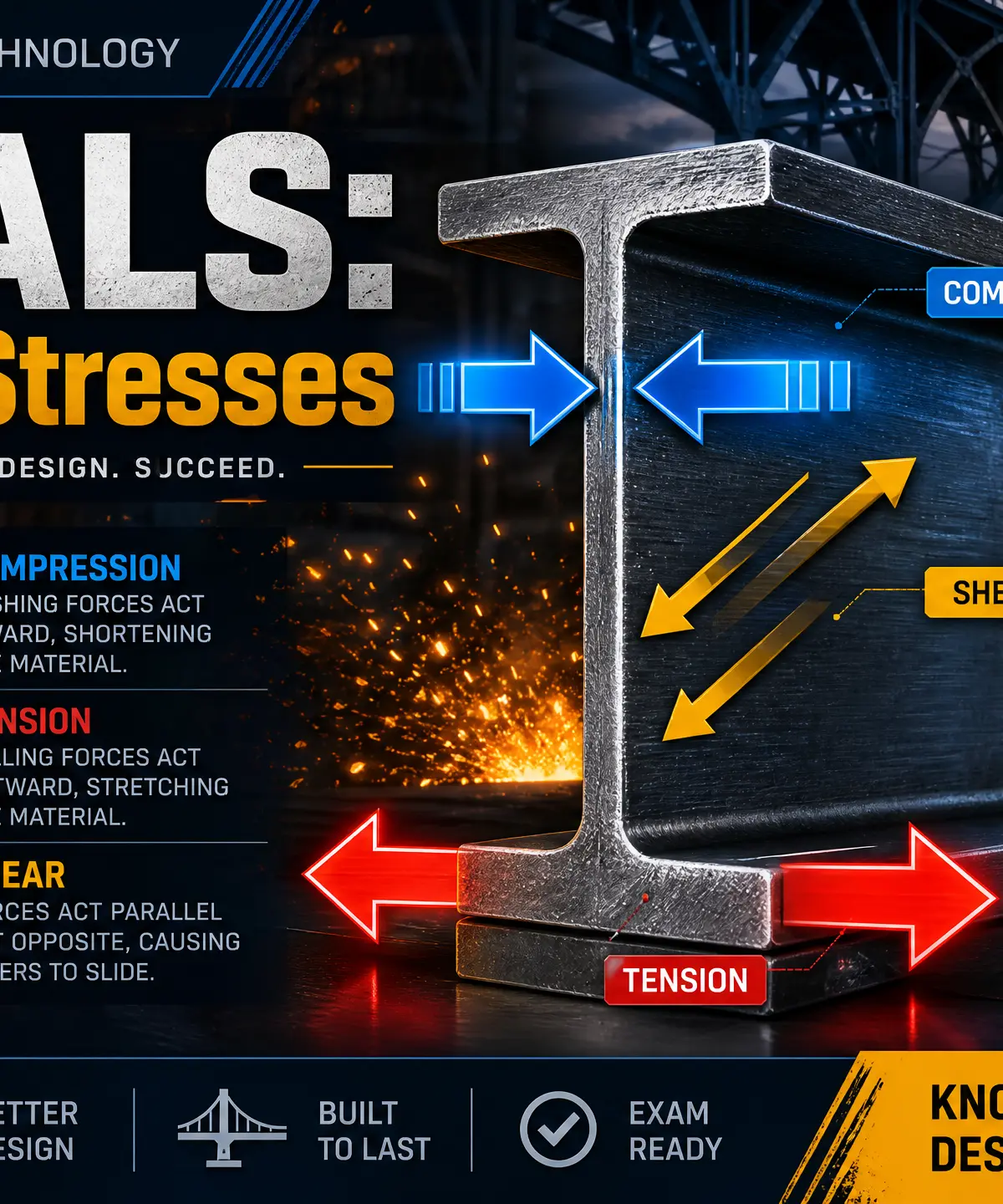
Overview
In Design and Technology, understanding materials is fundamental. Metals are incredibly versatile, but they are constantly subjected to various forces in their working environment. This topic covers the five primary forces—compression, tension, shear, torsion, and bending—and the specific techniques engineers use to reinforce and stiffen metals to resist them. Mastering this will allow you to justify material and structural choices in your design portfolio and exam answers.
Listen to the revision podcast for a full walkthrough of the core concepts:

Key Knowledge & Theory
Core Concepts
When a load is applied to a metal component, it creates internal stress. Understanding how to identify and counteract these stresses is a core engineering principle.
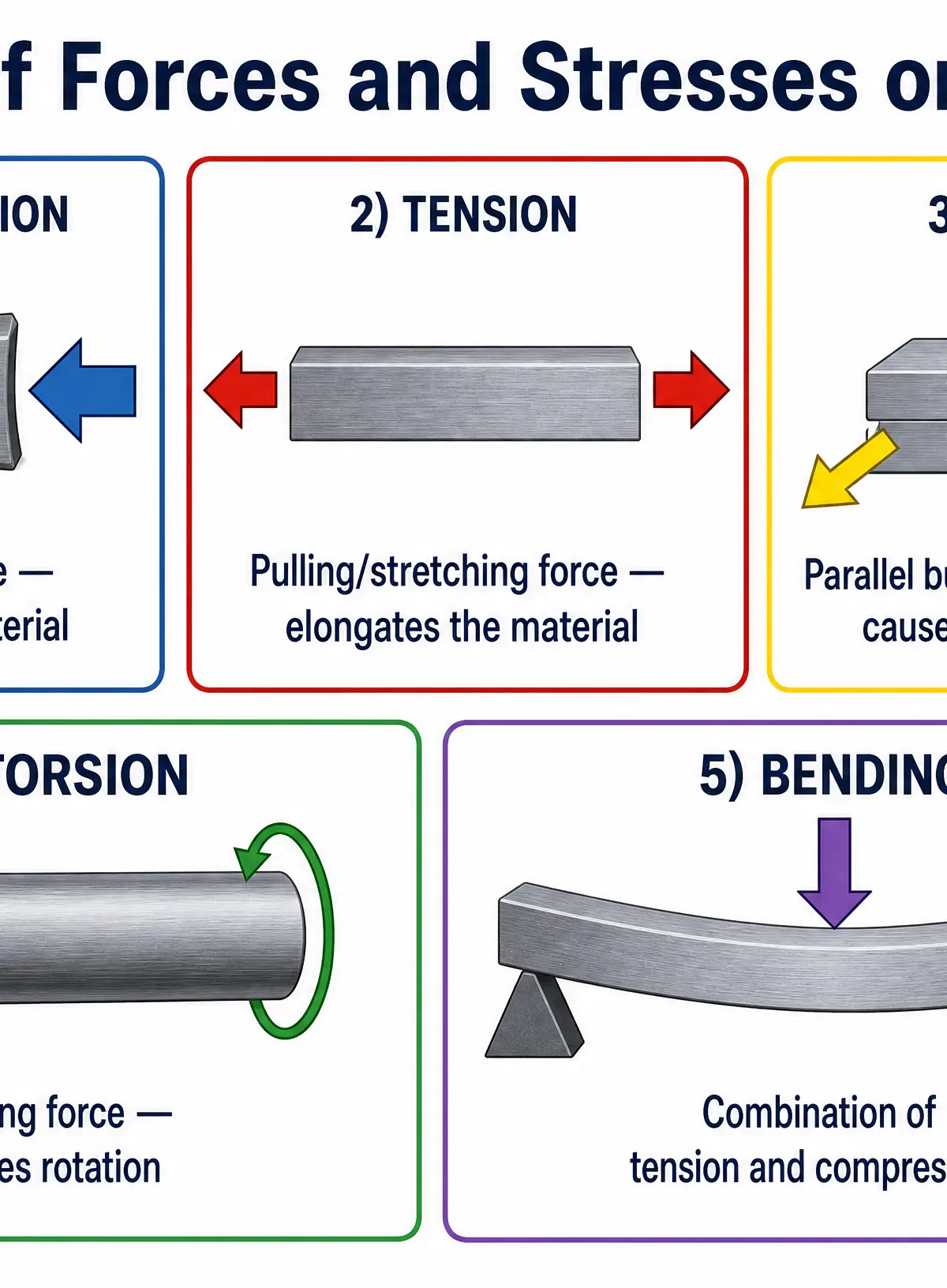
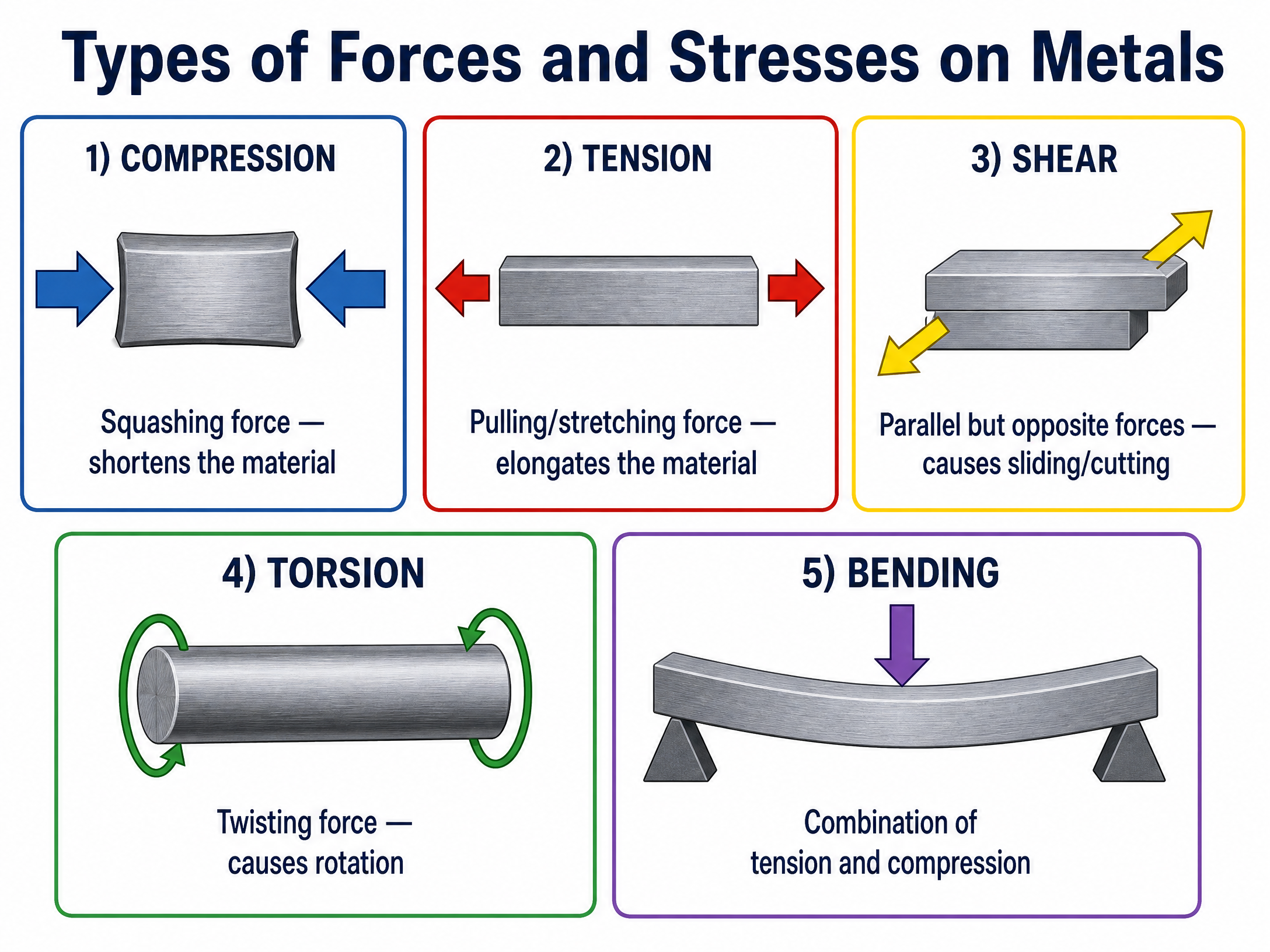
- Compression: A squashing or pushing force that acts inward, shortening the material. Example: Bridge support columns.
- Tension: A pulling or stretching force that acts outward, elongating the material. Example: Suspension bridge cables.
- Shear: Two parallel but opposing forces that cause layers of the material to slide past one another. Example: Scissors cutting sheet metal, or a rivet under load.
- Torsion: A twisting force applied along the axis of a component. Example: A screwdriver or a vehicle drive shaft.
- Bending: A combination force. When a beam bends, the top surface is typically in compression, while the bottom surface is in tension.
Additionally, metals can experience electrical stress (from carrying high voltage/current) and magnetic stress (magnetostriction in ferrous metals when placed in a magnetic field).
Technical Vocabulary
- Ductility: The ability of a metal to be drawn into a wire without snapping (resists tension).
- Malleability: The ability of a metal to be hammered or pressed into shape without cracking (resists compression).
- Hardness: The ability to resist scratching, wear, and indentation.
- Toughness: The ability to absorb impact force without fracturing.
- Ferrous: Metals containing iron (e.g., steel, cast iron). They are magnetic and prone to rust.
- Non-Ferrous: Metals not containing iron (e.g., aluminium, copper). They are non-magnetic and resist corrosion.
Practical Skills
Reinforcement and Stiffening Techniques
Engineers use specific techniques to alter the properties of metals to better resist forces.
1. Heat Treatment of Steel (Ferrous)
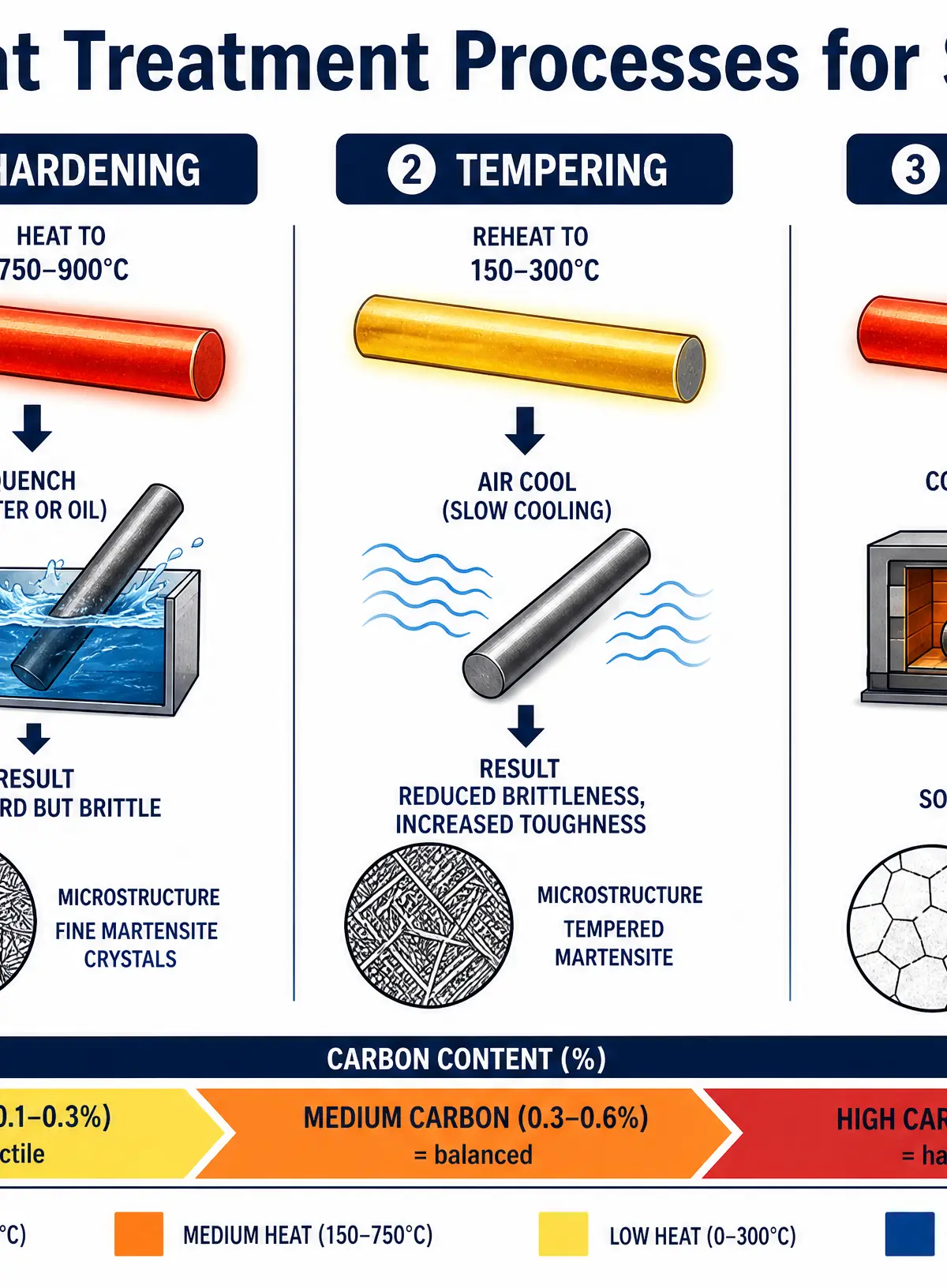
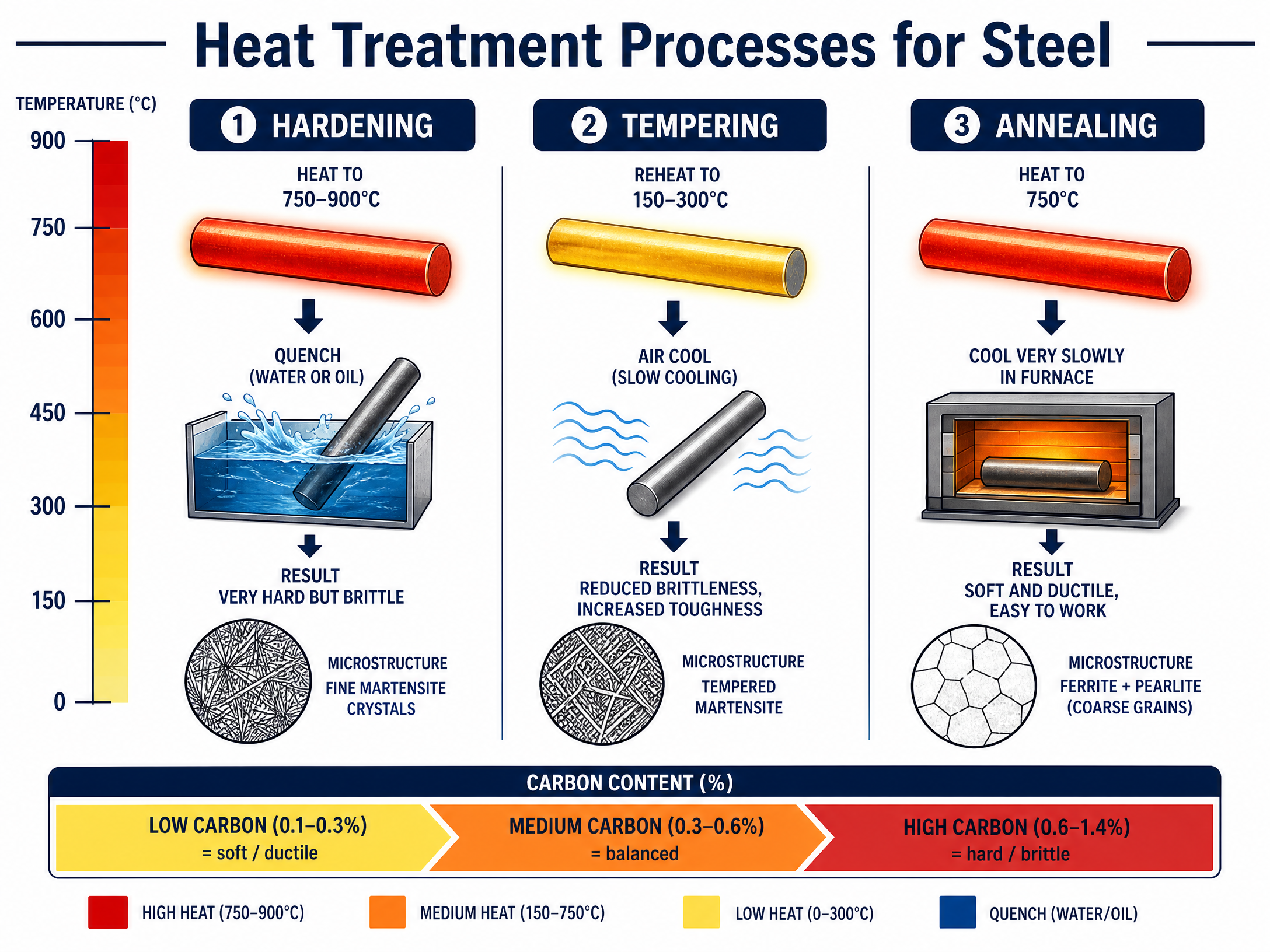
- Hardening: Steel is heated to 750–900°C and then rapidly cooled (quenched) in water or oil. This traps carbon atoms in a tight crystal structure (martensite), making the steel extremely hard but also very brittle.
- Tempering: To reduce the brittleness caused by hardening, the steel is reheated to a lower temperature (150–300°C) and cooled slowly. This increases toughness while retaining most of the hardness.
2. Work Hardening
Repeatedly bending, hammering, or rolling a metal at room temperature (cold working) distorts its internal grain structure. This makes the metal harder and stronger, but eventually brittle. (e.g., bending a paperclip until it snaps).
3. Structural Sections
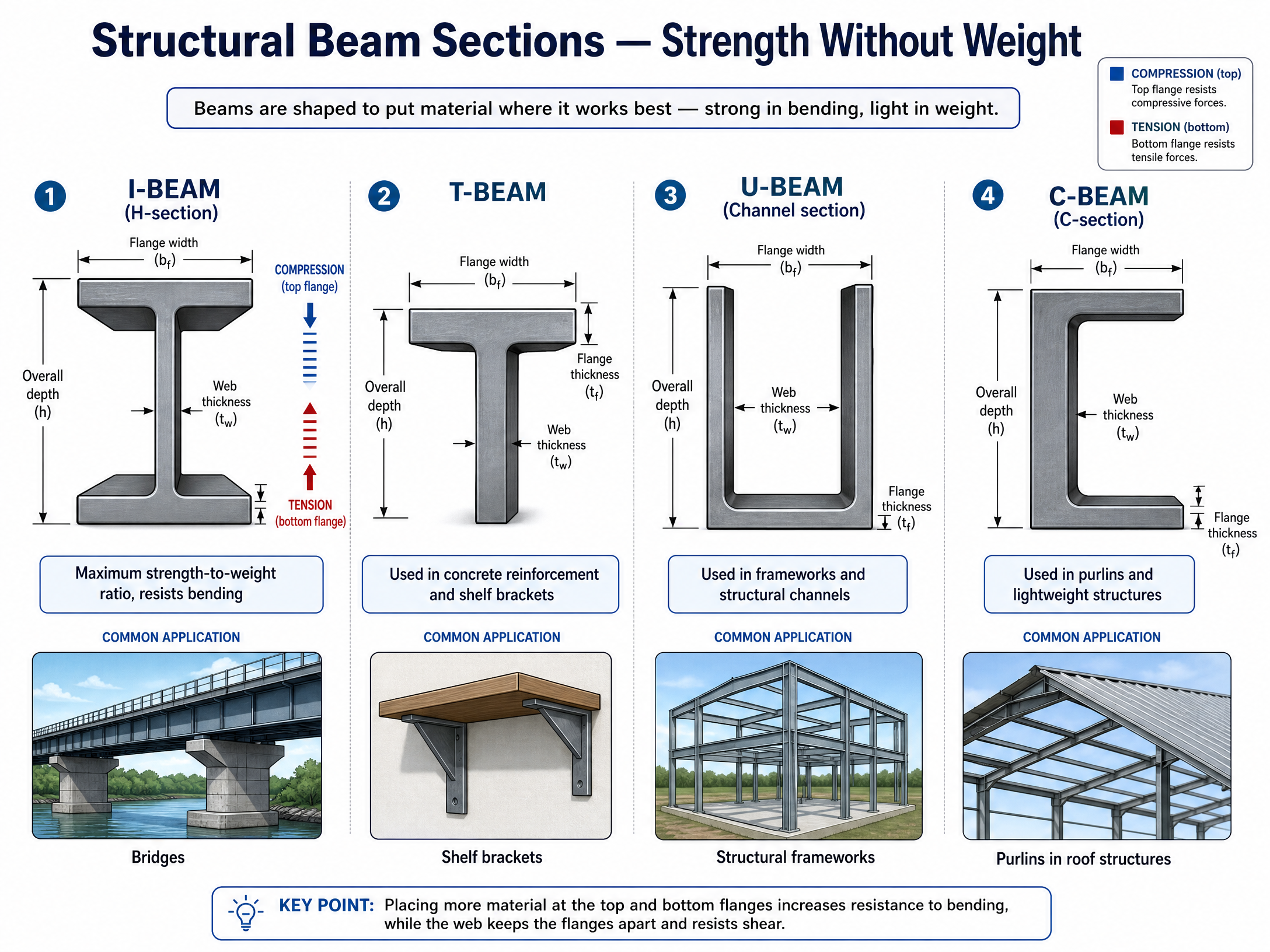
Rather than using solid bars, engineers use specific cross-sectional shapes to maximise strength while minimising weight.
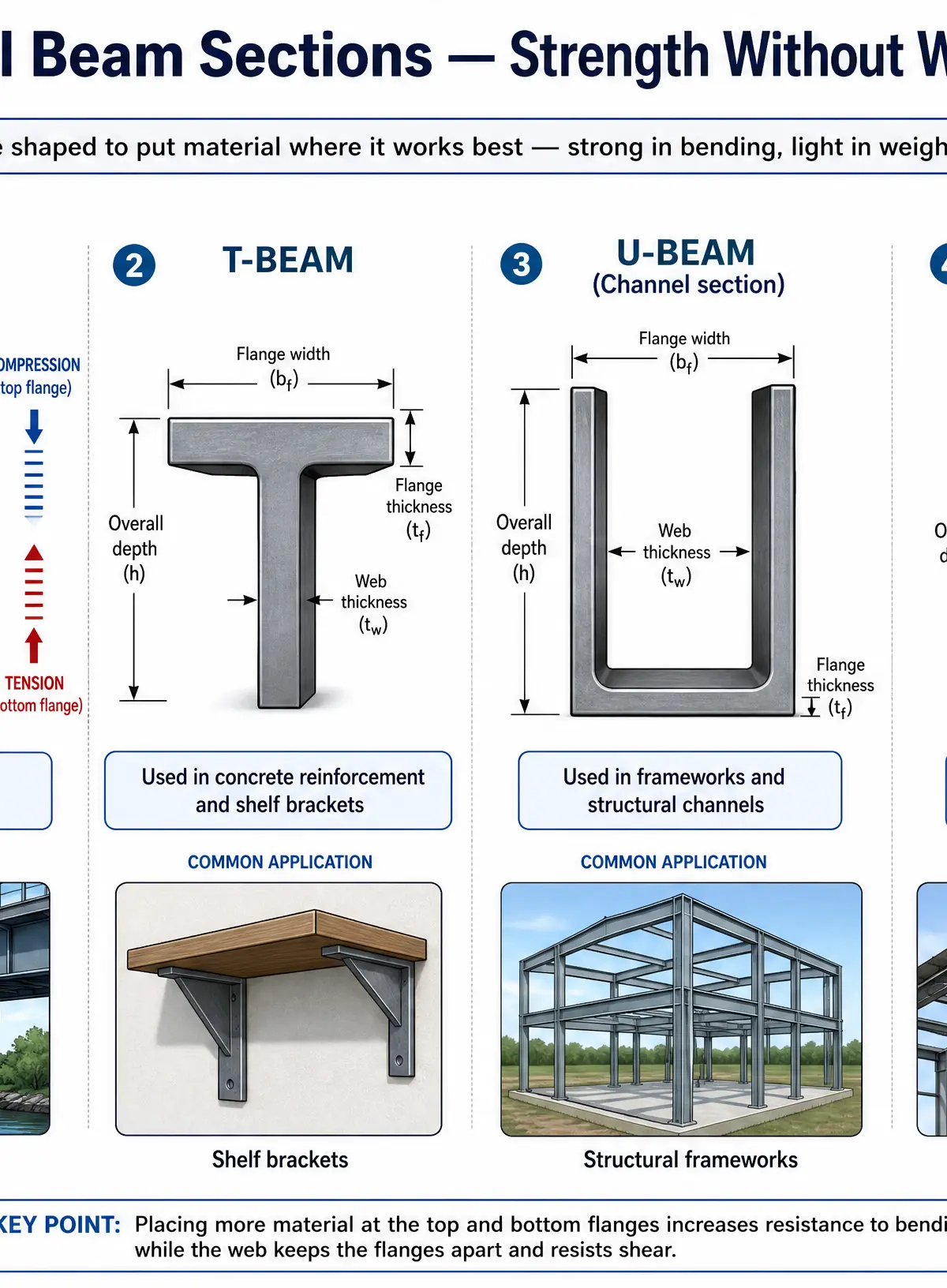
- I-Beam: The most efficient shape for resisting bending. The top and bottom flanges handle the maximum compressive and tensile stresses, while the central web keeps them apart and resists shear.
- T-Beam, U-Beam, C-Beam: These shapes also move material away from the neutral axis to where stress is highest, increasing rigidity.
Portfolio/Coursework Guidance
Assessment Criteria
Examiners look for evidence that you understand why a material or shape was chosen. You must justify your design decisions using technical language.
Building a Strong Portfolio
- Annotation: Don't just label a part "steel frame". Annotate it: "Mild steel square tube frame chosen to resist torsional and bending forces while remaining lightweight."
- Experimentation: If making a prototype, document how bending or folding the sheet metal increased its stiffness (work hardening/structural folding).
Exam Component
Written Exam Knowledge
Expect questions asking you to identify forces on a given product (e.g., a bicycle frame) and explain how the manufacturer has ensured it won't fail. You must link the force to the material property and the structural design.
Exam Strategy
Always link Force \rightarrow Material Property \rightarrow Structural Solution. For example: "The shelf bracket experiences a bending force. It is made from a T-section to increase rigidity and resist bending, while being made of mild steel for toughness."
Visual Resources
3 diagrams and illustrations
Interactive Diagrams
1 interactive diagram to visualise key concepts
Conceptual Flow Outline
Decision flowchart for metal stiffening and reinforcement techniques.
Worked Examples
3 worked examples — open one to explore the question and available guidance.
Practice Questions
Test your understanding — click to reveal model answers
Identify the type of force acting on the drive shaft of a car.
Hint: Think about the rotational movement required to turn the wheels.
Explain the difference between tension and compression.
Hint: Define the direction of the force and its effect on the material's length.
A manufacturer is producing a batch of steel springs. Explain the heat treatment process required to ensure the springs function correctly without snapping.
Hint: The springs need to be hard but also tough enough to absorb energy. Describe the two-stage process.
Evaluate the use of an aluminium C-beam section compared to a solid aluminium square bar for the framework of a lightweight greenhouse.
Hint: Compare strength-to-weight ratio, material cost, and resistance to bending.