Pearson Edexcel · GCSE · Design and Technology
Metals: The sources, origins, physical and working properties of ferrous and non-ferrous metals and their social and ecological footprint
This topic covers the essential knowledge of ferrous and non-ferrous metals, their physical and working properties, geographical origins, and their broader social and ecological footprint. Mastering this enables you to confidently select and justify materials for design applications while considering environmental impact.
- 6 min read
- 3 worked examples
- 3 practice questions
- 6 key terms
Study Notes
Overview
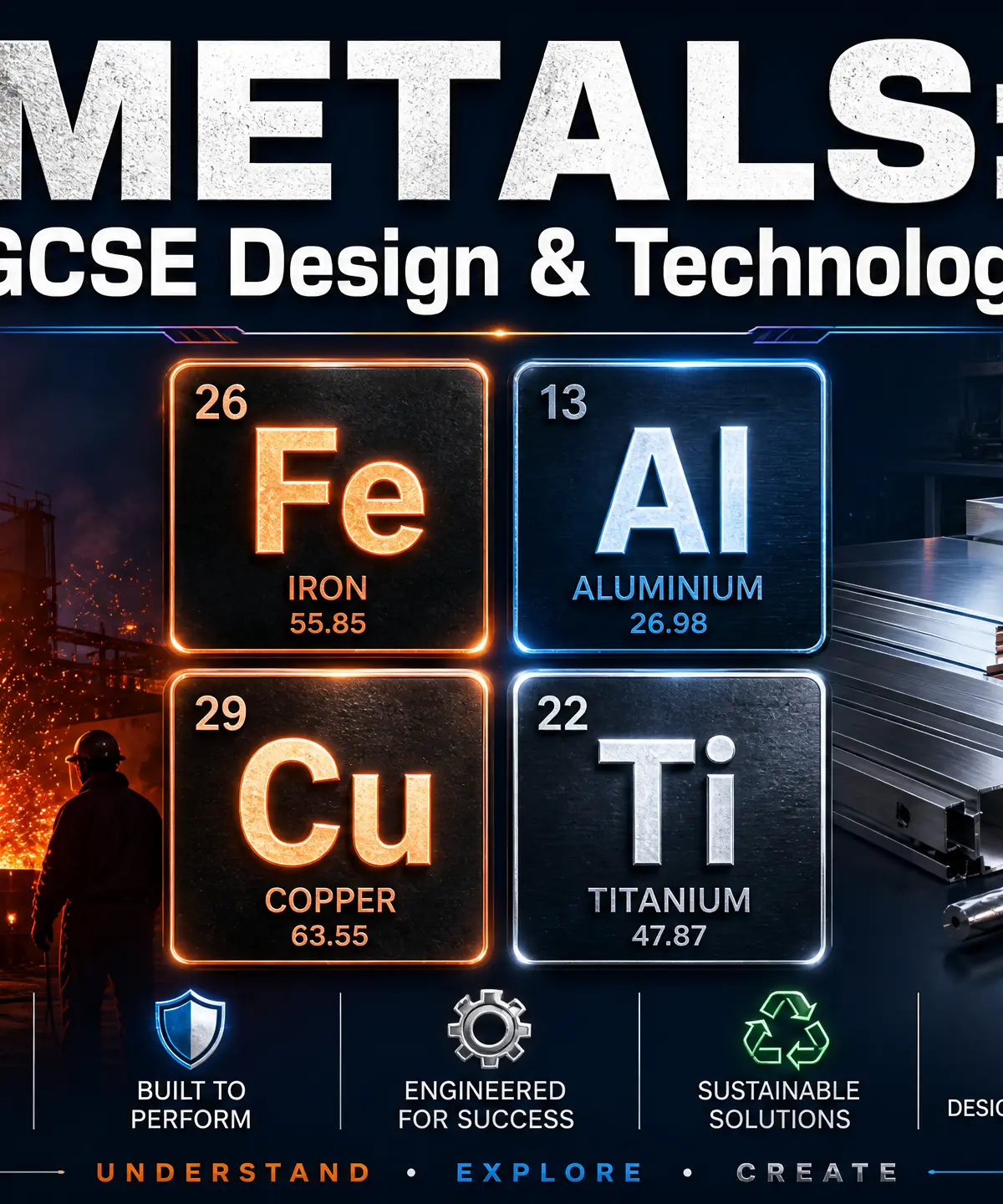
Welcome to Topic 2.2: Metals. As a designer, your ability to select the right material for a product is fundamental. This isn't just about knowing what a metal looks like; it's about understanding its internal structure, how it behaves when worked, where it comes from, and the impact its use has on our planet. Examiners expect you to move beyond basic descriptions and demonstrate a holistic understanding of material selection.
Key Knowledge & Theory
The Big Divide: Ferrous vs. Non-Ferrous
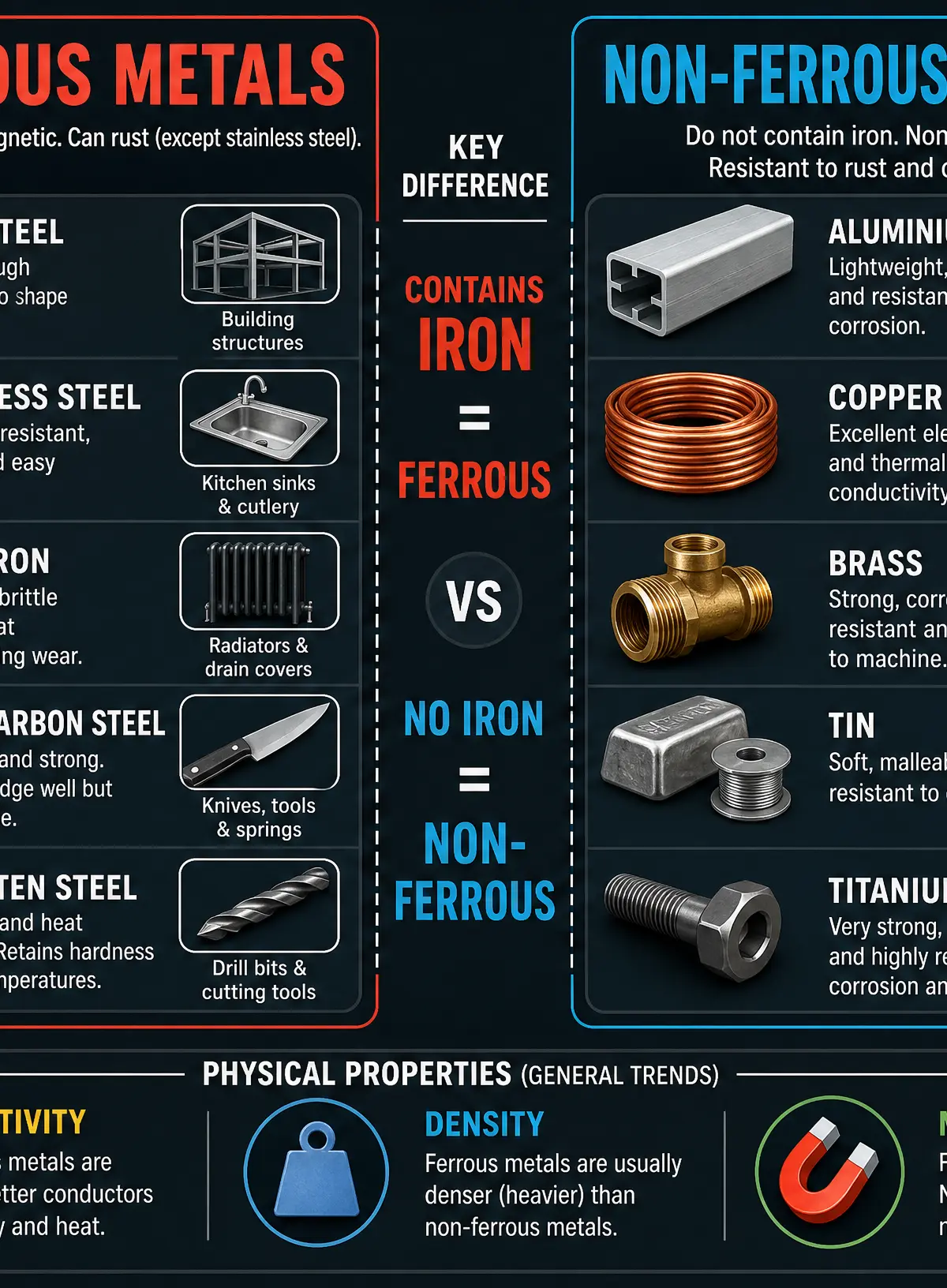
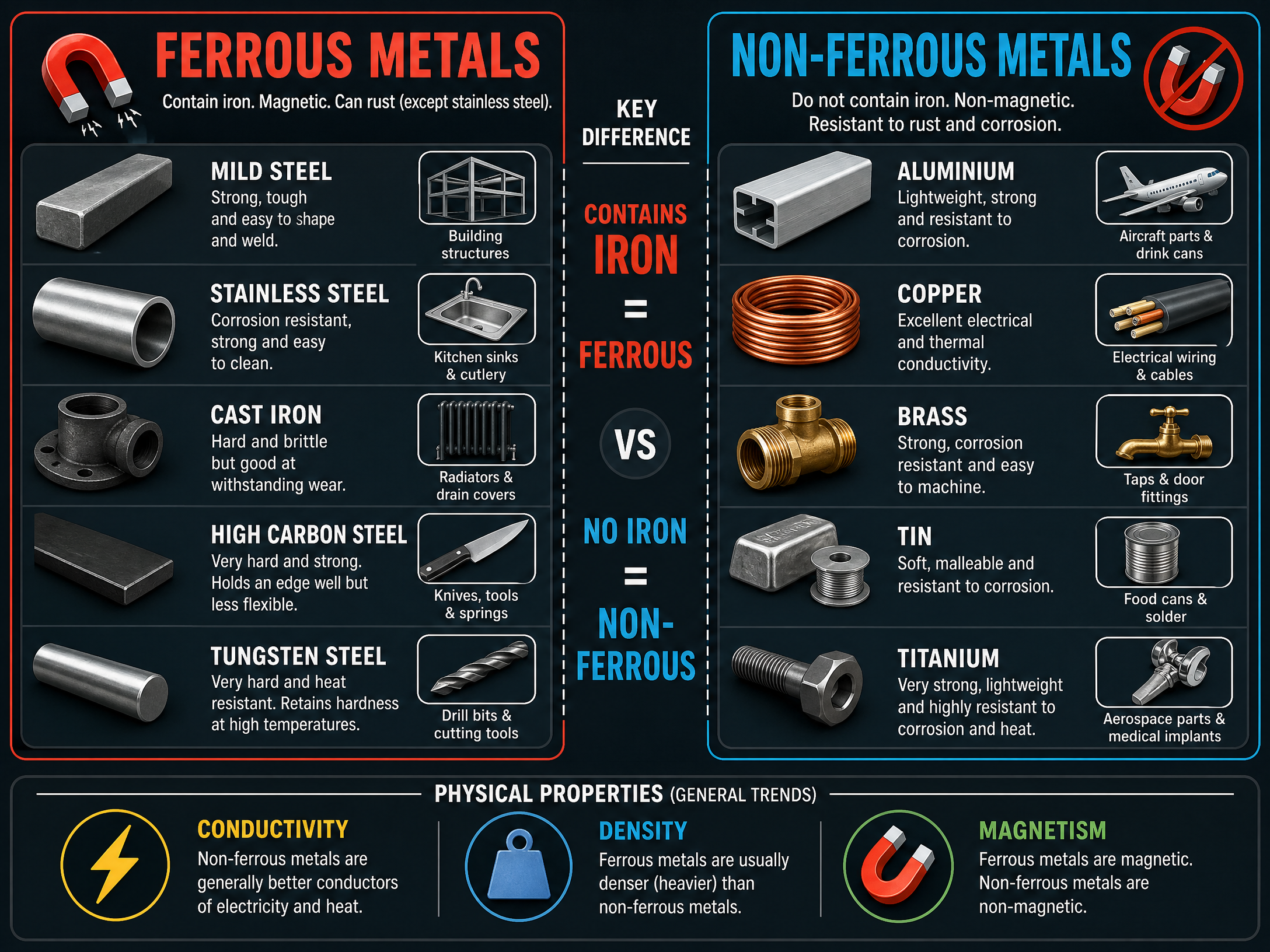
The most critical distinction in metallurgy is whether a metal contains iron.
- Ferrous Metals: Contain iron (
ferrumin Latin). Because they contain iron, they are almost always magnetic and prone to rust (corrosion) when exposed to moisture and oxygen. The notable exception is stainless steel, which is alloyed with chromium to prevent rusting. - Non-Ferrous Metals: Do not contain iron. They are non-magnetic and generally highly resistant to corrosion.
Core Materials You Must Know
Ferrous Metals:
- Mild Steel: Strong, tough, cheap, easy to weld. Uses: Car bodies, structural beams. (Rusts easily).
- Stainless Steel: Alloy of iron, carbon, and chromium. Highly corrosion-resistant, durable, hard. Uses: Cutlery, kitchen sinks, medical instruments.
- Cast Iron: High carbon content (2-4%). Hard, excellent compressive strength, but brittle. Uses: Engine blocks, drain covers.
- High Carbon Steel: Very hard, holds a sharp edge well, but less flexible. Uses: Cutting tools, springs.
- Tungsten Steel: Alloyed with tungsten. Exceptionally hard, retains hardness at high temperatures. Uses: Drill bits, high-speed cutting tools.
Non-Ferrous Metals:
- Aluminium: Lightweight, strong for its weight, highly corrosion-resistant, good conductor. Uses: Aircraft, drink cans, foil.
- Copper: Excellent electrical and thermal conductor, highly ductile and malleable. Uses: Electrical wiring, plumbing.
- Brass: Alloy of copper and zinc. Golden colour, corrosion-resistant, easy to machine. Uses: Musical instruments, decorative fittings.
- Tin: Soft, silvery, highly corrosion-resistant. Rarely used alone. Uses: Coating for steel cans, solder.
- Titanium: Premium metal. Excellent strength-to-weight ratio, exceptional corrosion resistance, withstands high temperatures. Uses: Aerospace, medical implants. (Very expensive).
- 7000 Series Aluminium: High-strength alloy (mainly with zinc). Uses: Aerospace, high-end bicycle frames.
Geographical Origins
Examiners often test your knowledge of where these raw materials are extracted:
- Iron Ore: USA, Russia, Sweden, Australia, Brazil.
- Bauxite (Aluminium Ore): Australia, Guinea, Brazil, Jamaica.
- Copper Ore: Chile (produces ~25% of global supply), Peru, USA.
Technical Vocabulary
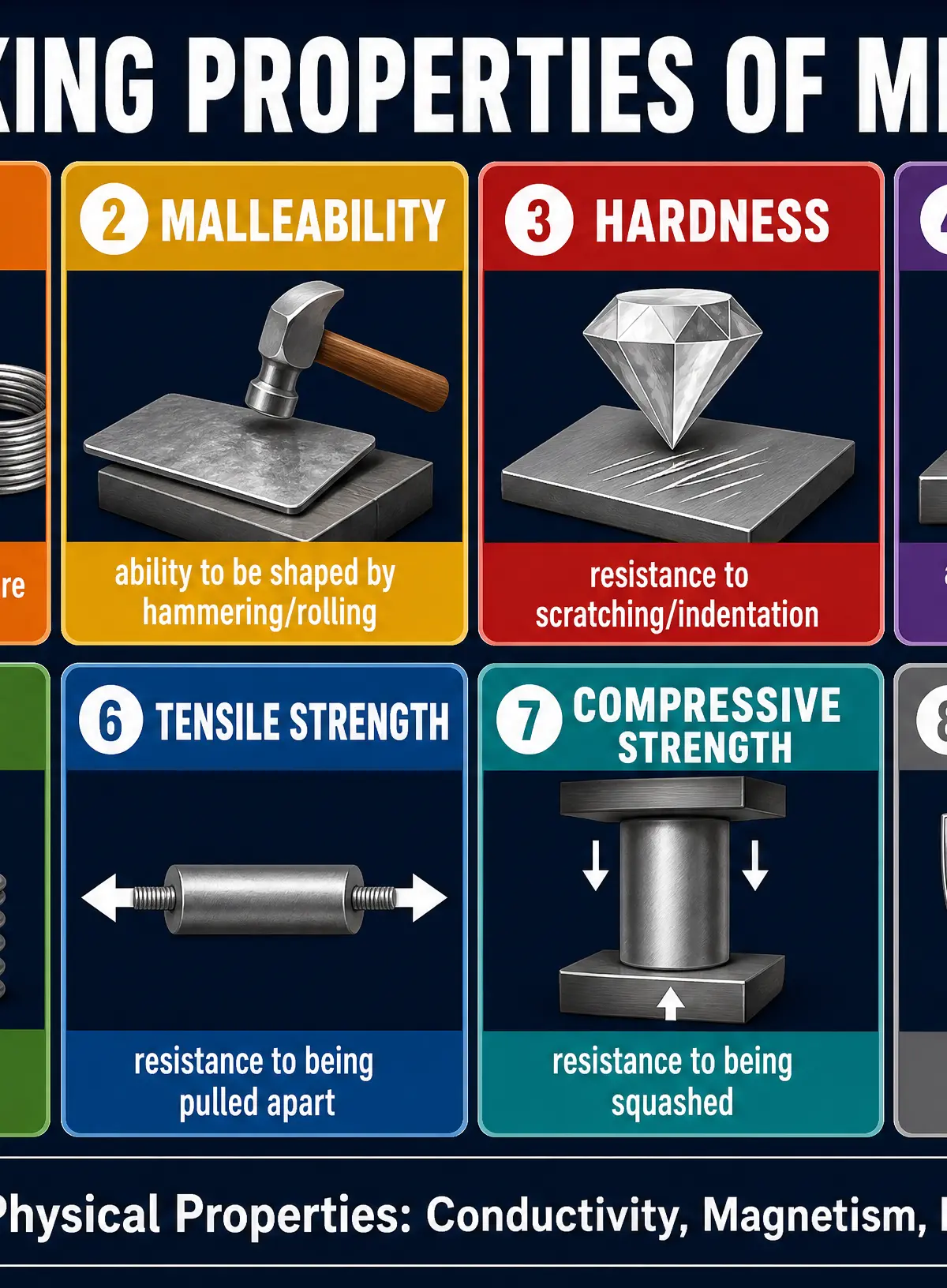
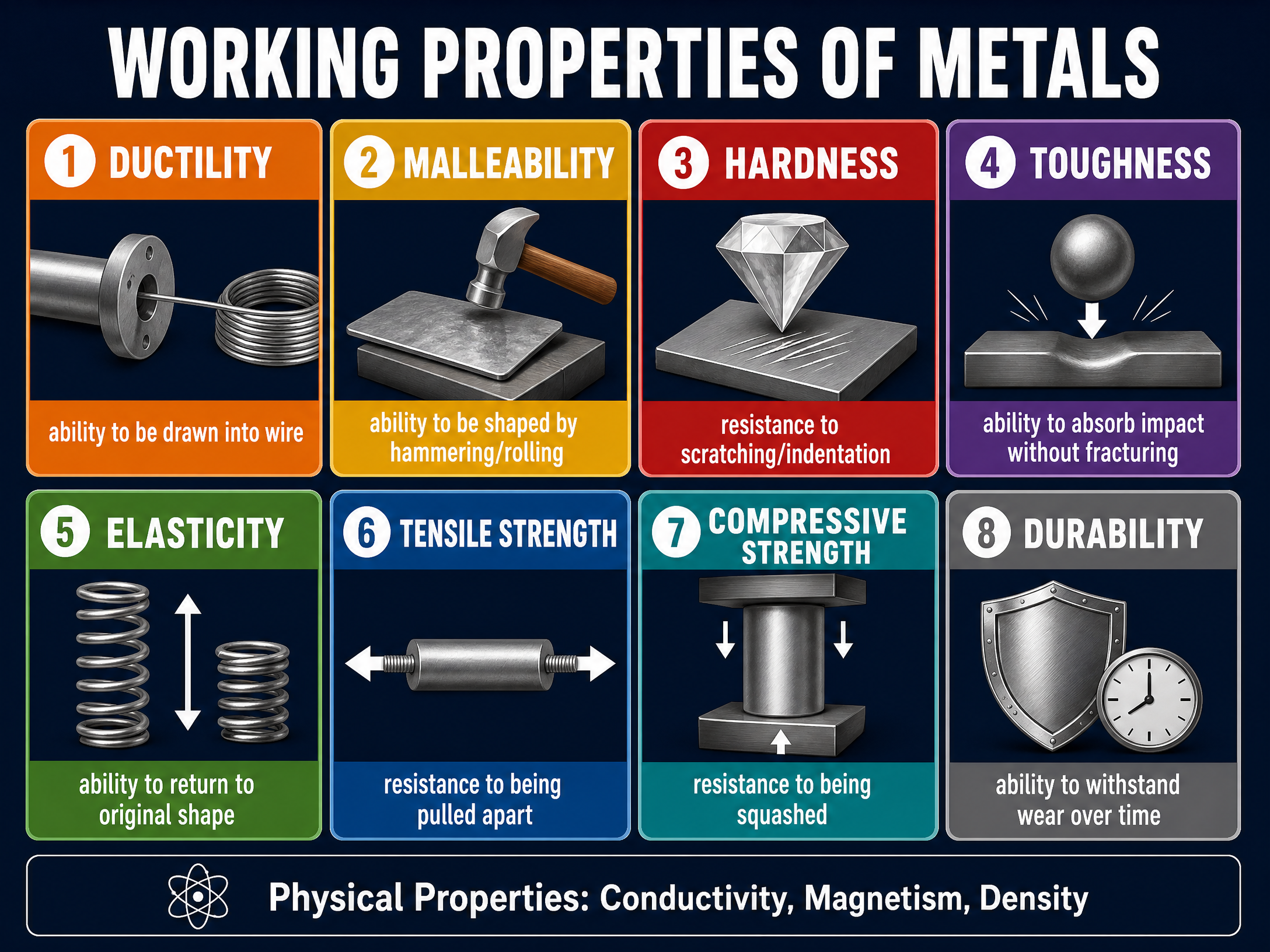
You must distinguish between Physical Properties (inherent traits you can measure, e.g., density, conductivity, magnetism) and Working Properties (how a material behaves when worked or under stress).
- Ductility: Ability to be drawn into a wire.
- Malleability: Ability to be shaped by hammering or rolling.
- Hardness: Resistance to scratching or indentation.
- Toughness: Ability to absorb impact without fracturing.
- Elasticity: Ability to return to original shape after deformation.
- Tensile Strength: Resistance to being pulled apart.
- Compressive Strength: Resistance to being squashed.
Practical Skills & Portfolio Guidance
Material Selection Process
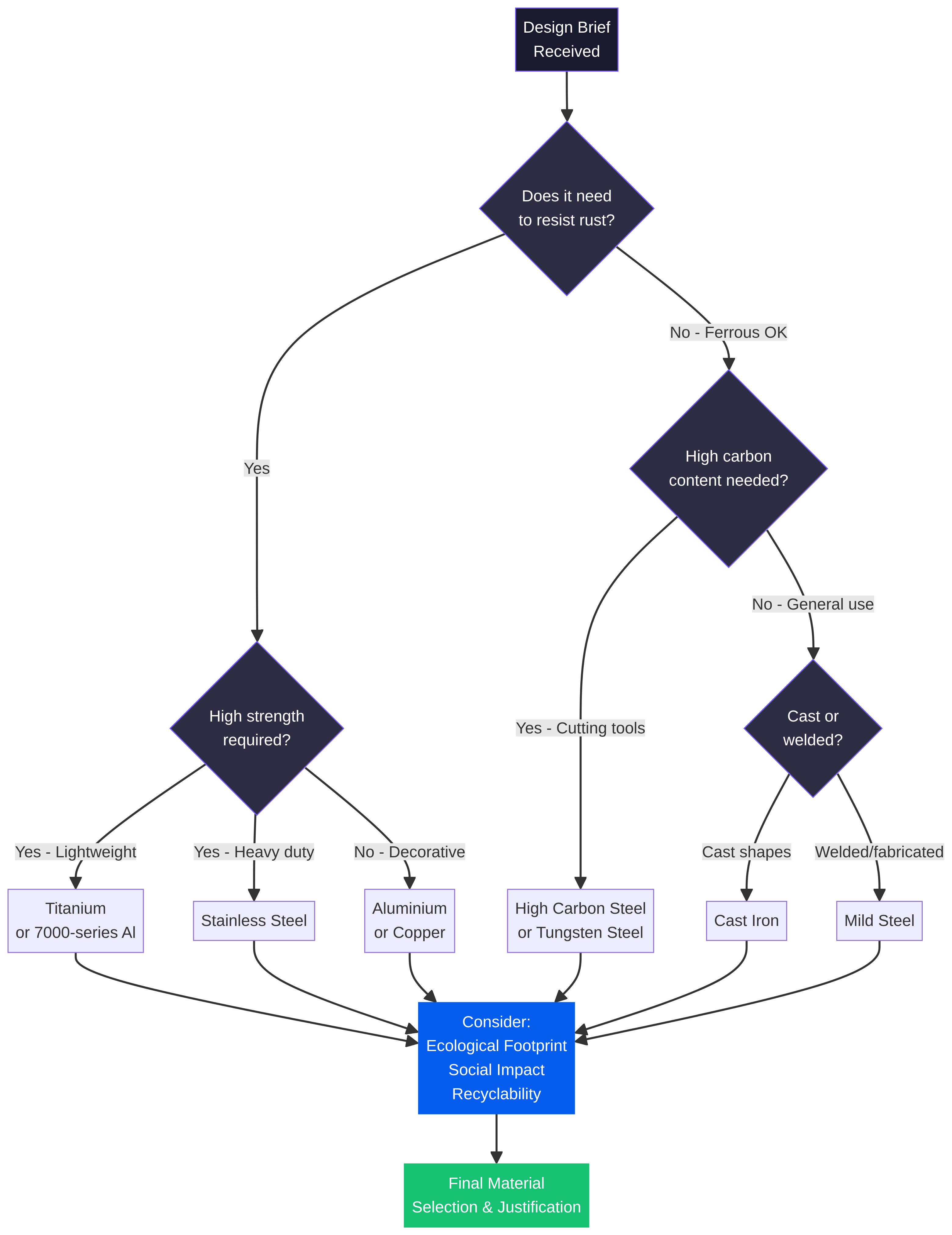
When designing your coursework portfolio, you must justify your material choices. Use this decision matrix:
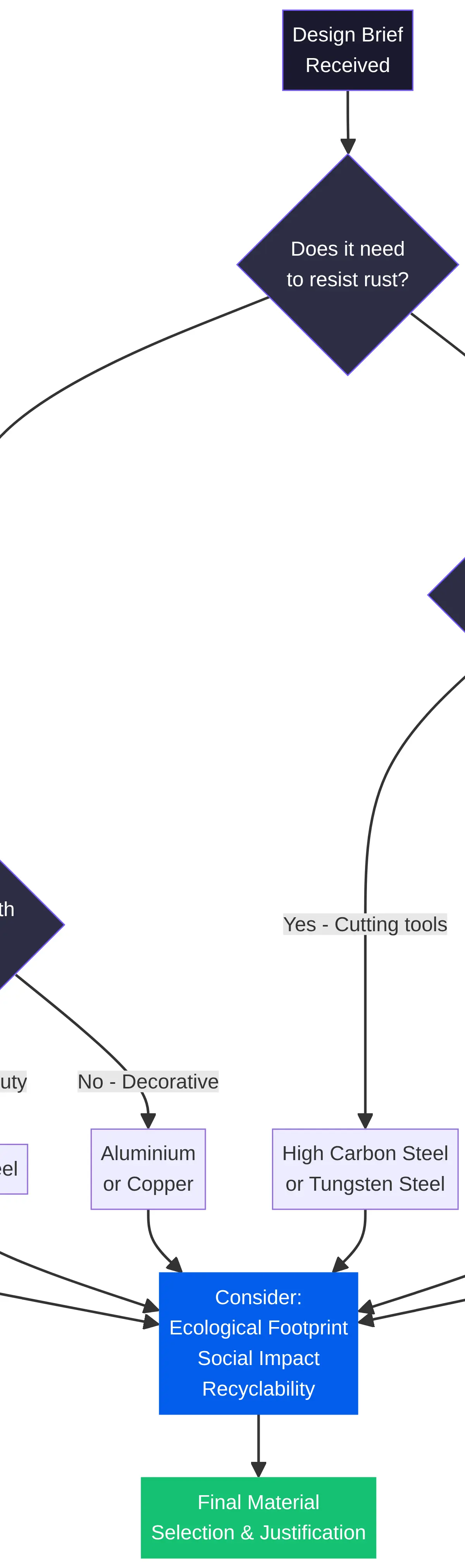
Building a Strong Portfolio
- Annotation Quality: Don't just label a part "Made of mild steel." Annotate with justification: "Constructed from mild steel tube because its high tensile strength will support the user's weight, and it is easily welded for the frame joints. It will be powder-coated to prevent rusting."
- Evidencing Experimentation: Show photos of you testing different metals. If you bent aluminium and it snapped, document that! It shows you are learning about working properties firsthand.
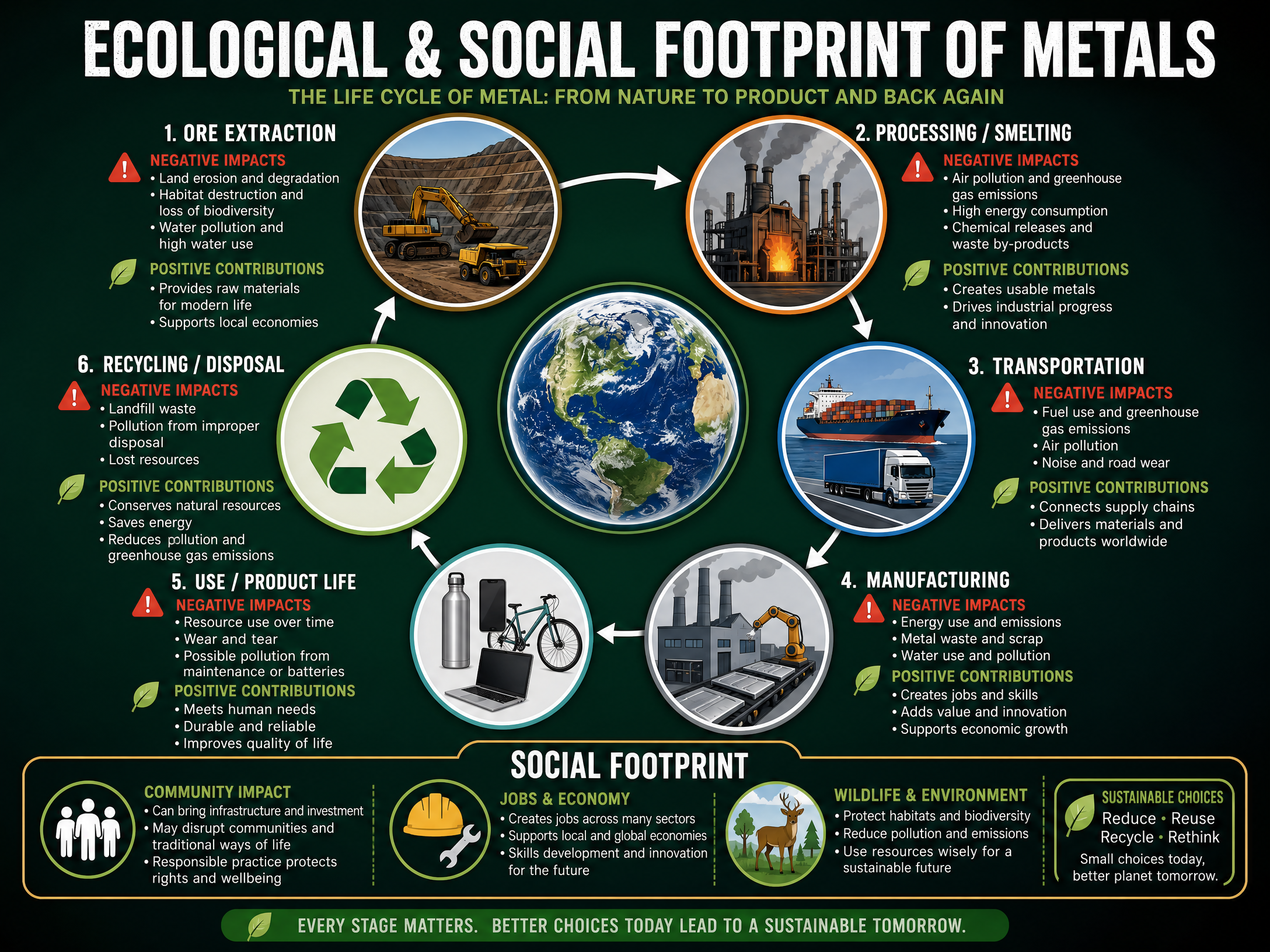
Social and Ecological Footprint
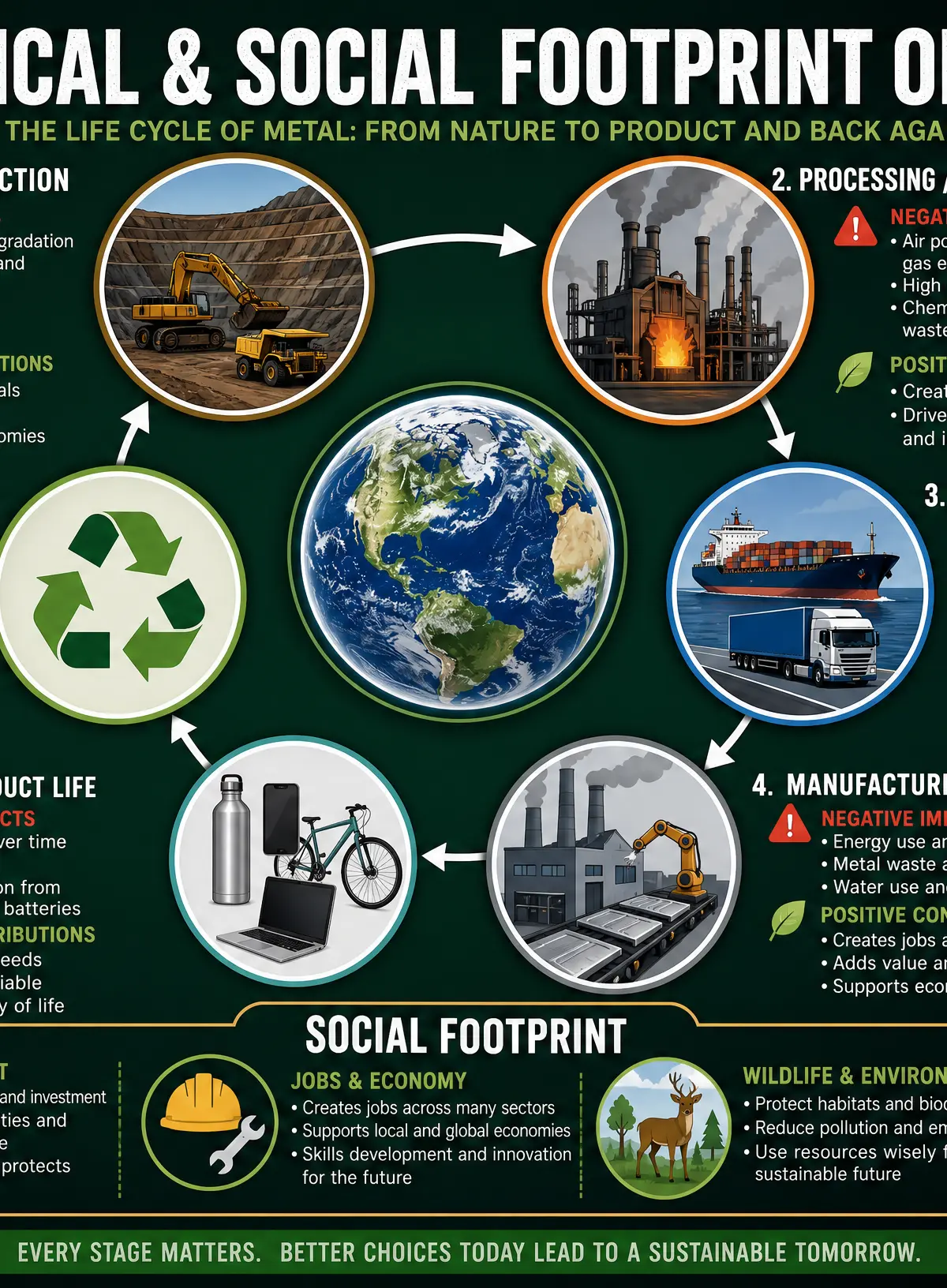
This is a major area for extended-response (6+ mark) questions.
- Ecological Impact: Extraction (mining) causes habitat destruction and land erosion. Processing (especially smelting bauxite for aluminium) is incredibly energy-intensive, releasing massive greenhouse gas emissions. However, metals are highly recyclable. Recycling aluminium saves 95% of the energy compared to raw production.
- Social Impact: Mining provides jobs and infrastructure but can displace local communities, disrupt traditional ways of life, and involve poor working conditions in some regions. Designers must consider ethical sourcing.
Podcast Revision
Listen to this 5-minute revision podcast covering the core concepts and exam tips for this topic:

Visual Resources
4 diagrams and illustrations
Interactive Diagrams
1 interactive diagram to visualise key concepts
Conceptual Flow Outline
Material Selection Decision Matrix
Worked Examples
3 worked examples — open one to explore the question and available guidance.
Practice Questions
Test your understanding — click to reveal model answers
Identify one ferrous metal and one non-ferrous metal. (2 marks)
Hint: Think about which ones contain iron and which ones don't.
Explain why aluminium is a suitable material for manufacturing a drinks can. (3 marks)
Hint: Consider its weight, its reaction to liquids, and how it is shaped.
A manufacturer is deciding between cast iron and high carbon steel for the head of a hammer. Evaluate both materials and recommend the most suitable choice. (6 marks)
Hint: Think about the specific forces a hammer experiences (impact) and the difference between hardness and toughness.