Pearson Edexcel · GCSE · Design and Technology
Metals: The way in which the selection of ferrous and non-ferrous metals is influenced
This topic covers the critical decision-making process designers use when selecting metals for products. It explores how aesthetic, environmental, availability, cost, social, and cultural/ethical factors influence whether a ferrous or non-ferrous metal is chosen.
- 5 min read
- 3 worked examples
- 3 practice questions
- 6 key terms
Study Notes
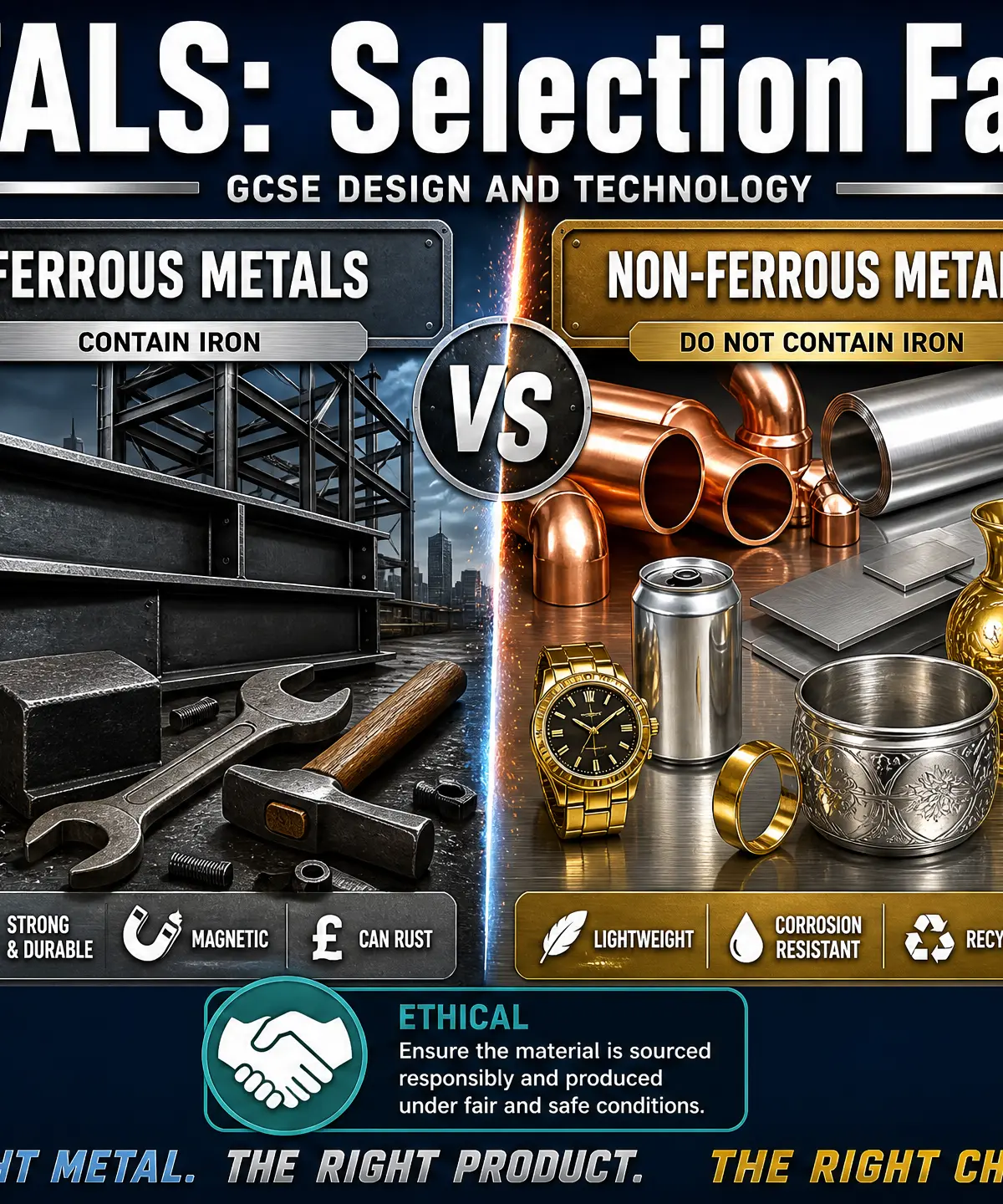
Overview
In Design and Technology, material selection is never random. The choice between a ferrous metal (like mild steel) and a non-ferrous metal (like aluminium) is a complex balancing act. Designers must weigh up competing priorities to ensure the final product is functional, desirable, cost-effective, and ethical. This topic explores the six major categories of selection factors that influence these decisions.

Key Knowledge & Theory
Core Concepts: The Six Selection Factors (AEACSC)
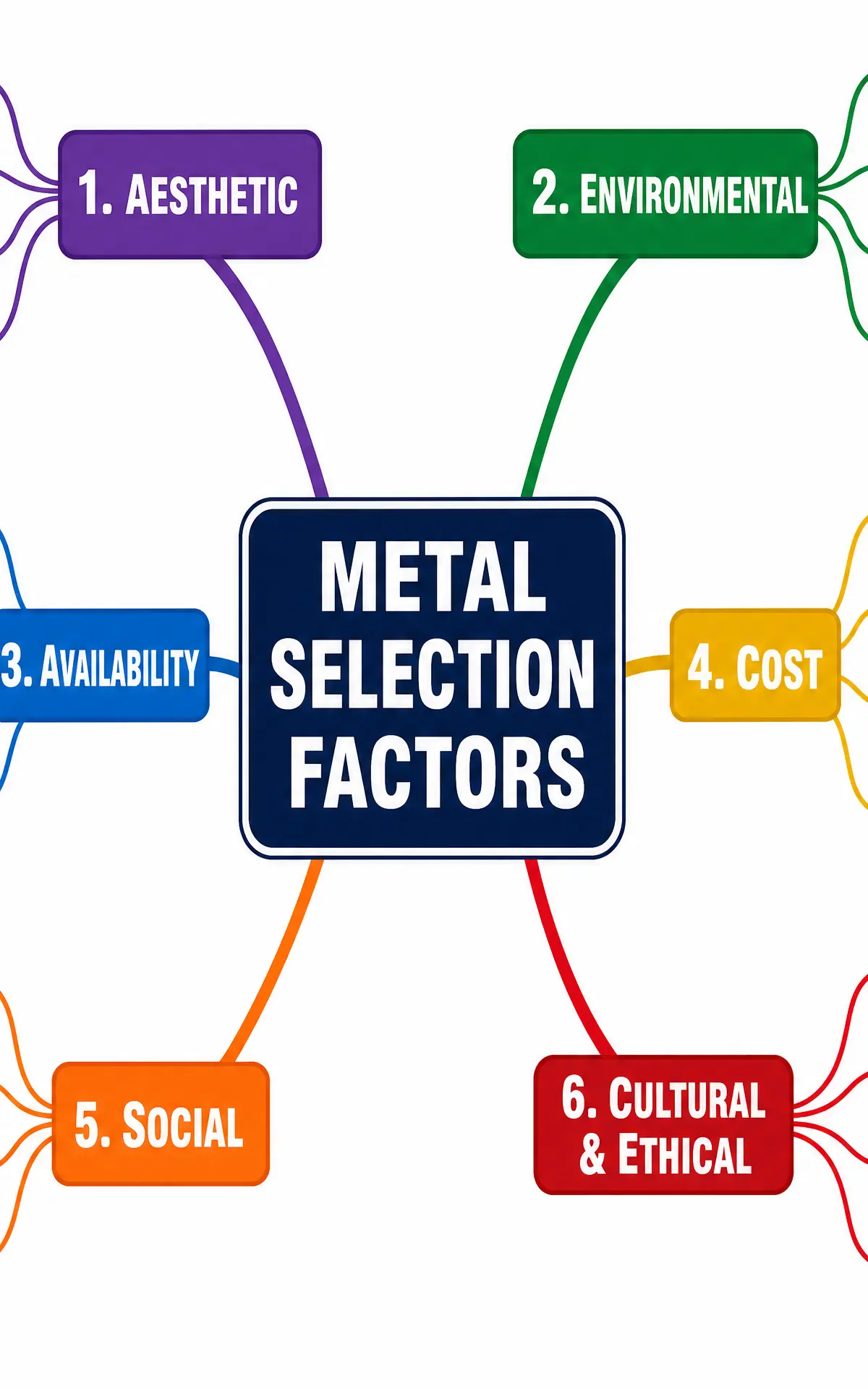
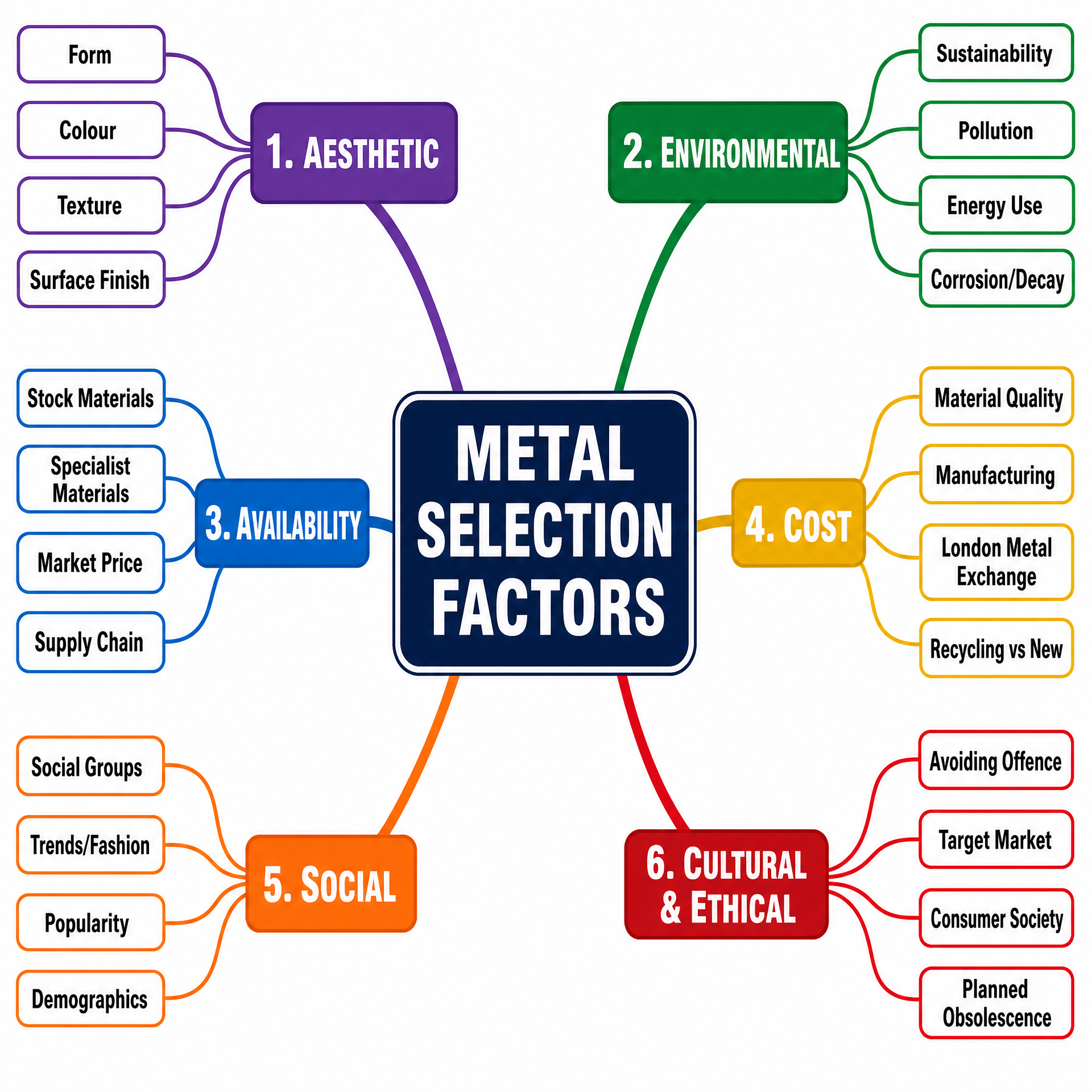
When selecting a metal, designers evaluate the following six factors:
- Aesthetic Factors: How the metal looks and feels. This includes its form (can it be shaped?), colour (e.g., the warm hue of copper vs. the clinical silver of stainless steel), and texture (e.g., brushed, polished, or matte finishes).
- Environmental Factors: The ecological impact across the product's life cycle. This covers sustainability, pollution from extraction, energy consumption during production (e.g., steel blast furnaces require massive energy), and issues of corrosion and decay.
- Availability Factors: How easily the material can be sourced. This involves the use of standard stock materials versus specialist materials, supply chain reliability, and how market demand impacts world consumption.
- Cost Factors: The financial implications of the choice. This includes material quality, manufacturing costs, the fluctuating commodity price on the London Metal Exchange, and the economic benefits of recycling versus producing new metal.
- Social Factors: How the product fits into society. This considers the target demographic, current trends and fashion (e.g., the popularity of rose gold), and cultural popularity.
- Cultural and Ethical Factors: The moral implications of the design. This includes avoiding cultural offence, ensuring suitability for the intended market, the impact of the consumer society, the ethics of mass production, and the problem of built-in product obsolescence.
Technical Vocabulary
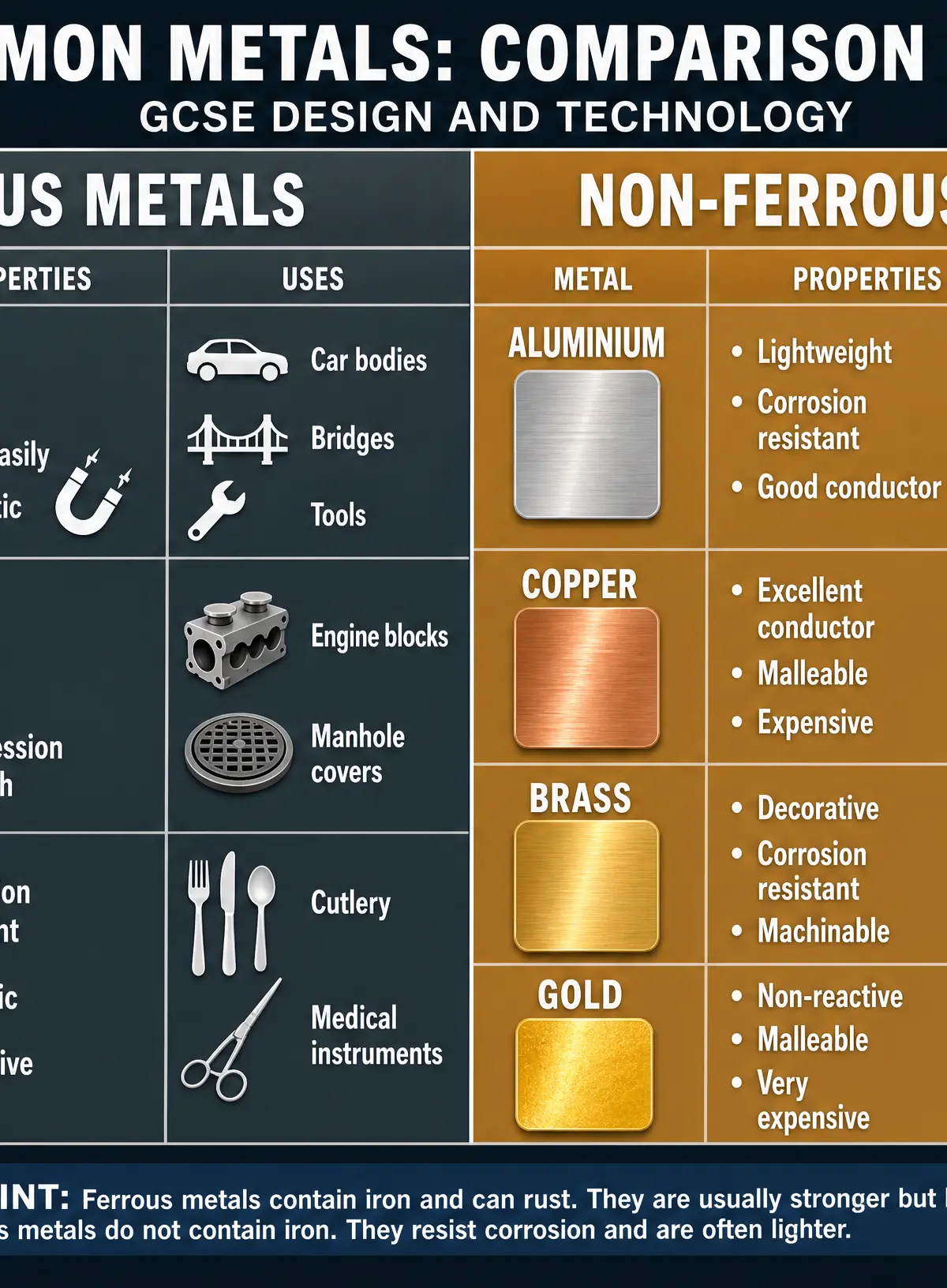
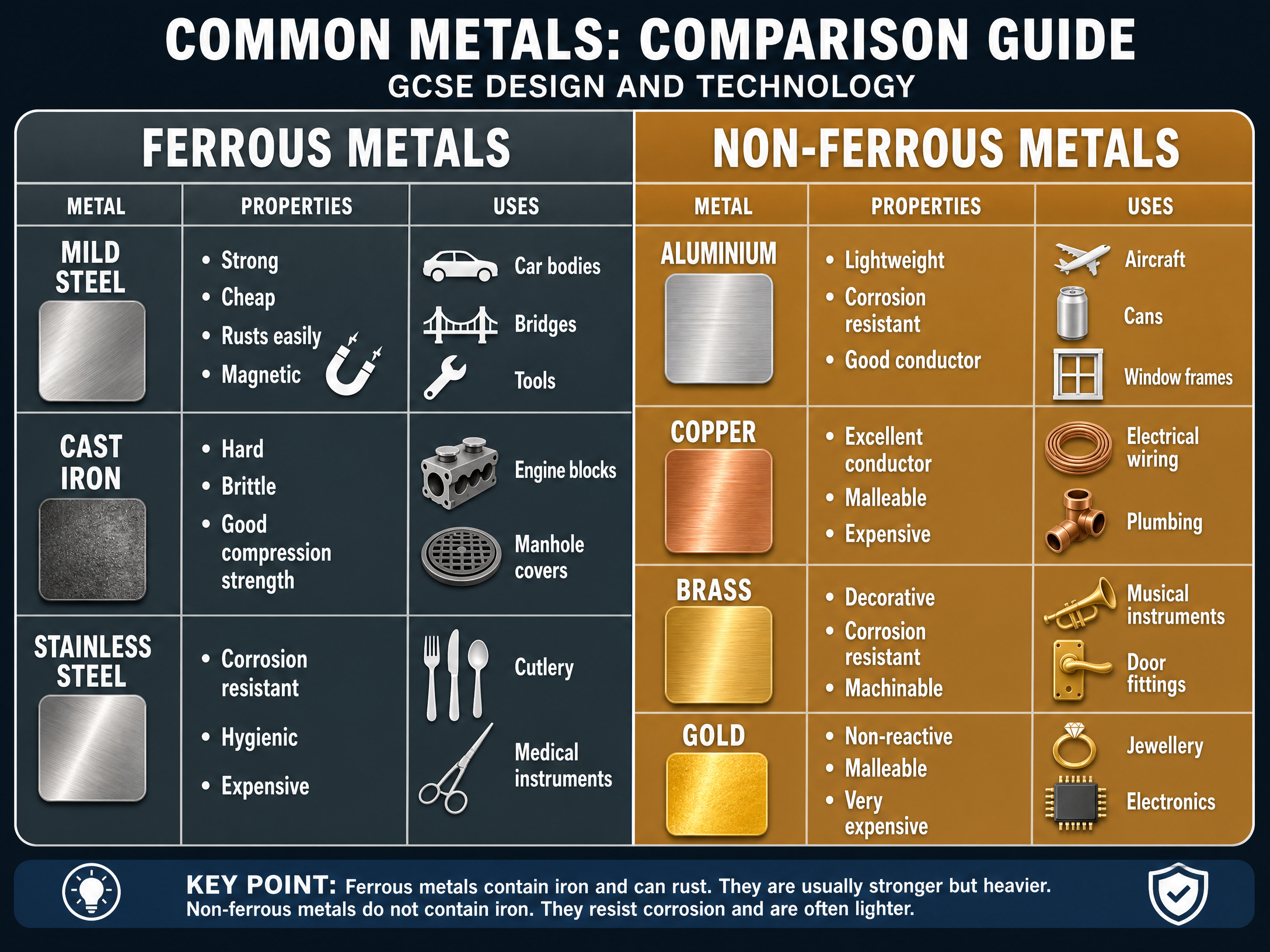
- Ferrous: Metals containing iron (e.g., mild steel, cast iron). Prone to rusting and usually magnetic.
- Non-Ferrous: Metals that do not contain iron (e.g., aluminium, copper). Highly corrosion-resistant.
- Malleability: The ability of a metal to be deformed under compression (e.g., hammered into sheets) without cracking.
- Built-in Obsolescence: Designing a product with an artificially limited useful life, forcing the consumer to replace it.
- London Metal Exchange (LME): The global centre for industrial metals trading, where commodity prices are set.
- Corrosion: The gradual destruction of materials (usually metals) by chemical reaction with their environment (e.g., rusting).
Practical Skills
Techniques & Processes: Evaluating Material Properties
When working in the workshop or evaluating a design context, you must practically assess metals against the six factors:
- Testing Aesthetics: Experimenting with surface finishes (e.g., polishing aluminium vs. painting mild steel to prevent rust).
- Assessing Cost & Availability: Checking supplier catalogues for stock sizes rather than designing custom extrusions.
- Environmental Auditing: Calculating the energy required to machine a tough metal like titanium versus a softer metal like brass.
Portfolio/Coursework Guidance
Assessment Criteria
Examiners are looking for justified decision-making. In your NEA (Non-Exam Assessment) portfolio, you cannot simply state "I used aluminium because it is light." You must demonstrate synoptic understanding by writing: "I selected aluminium over mild steel because, despite the higher raw material cost on the LME, its natural corrosion resistance eliminates the need for a secondary protective finish, lowering overall manufacturing costs and improving the product's environmental footprint."
Building a Strong Portfolio
- Evidence the Trade-offs: Show that you considered multiple metals. Create a decision matrix comparing three metals against the AEACSC factors.
- Link to the Target Market: Explicitly state how the aesthetic and social factors of your chosen metal appeal to your specific user group.
- Consider the End of Life: Include a section in your evaluation on how easily your metal components can be recycled.
Exam Component
Written Exam Knowledge
In the written paper, this topic frequently appears in extended response questions (6-8 marks). You will often be given a product (e.g., a park bench or a high-end watch) and asked to evaluate the suitability of specific metals for that context. You must discuss multiple factors (not just physical properties) to access the top mark bands.
Command Word Strategies
- Explain: Provide a reason. "Copper is used for plumbing because it is highly malleable and corrosion-resistant."
- Evaluate: Make a judgement weighing up pros and cons. "While stainless steel has excellent aesthetic and hygienic properties, its high cost makes it unsuitable for mass-market disposable items."
Visual Resources
2 diagrams and illustrations
Interactive Diagrams
1 interactive diagram to visualise key concepts
Conceptual Flow Outline
Material Selection Decision Process
Worked Examples
3 worked examples — open one to explore the question and available guidance.
Practice Questions
Test your understanding — click to reveal model answers
Identify two ferrous metals and two non-ferrous metals. (4 marks)
Hint: Remember that ferrous metals contain iron.
Explain why aluminium is frequently chosen over mild steel for the manufacture of drinks cans. (4 marks)
Hint: Think about the environmental factor of corrosion and the aesthetic/manufacturing factor of form.
Analyse the environmental and ethical implications of using newly mined copper for electronics wiring versus using recycled copper. (6 marks)
Hint: Consider pollution, energy consumption, and the global impact of mass production.