Pearson Edexcel · GCSE · Design and Technology
Papers and Boards: Appropriate surface treatments and finishes that can be applied to papers and boards for functional and aesthetic purposes
This topic explores the various surface treatments and finishes applied to papers and boards to enhance their functional performance and aesthetic appeal. Understanding these processes is crucial for selecting appropriate materials in packaging, graphic design, and commercial printing contexts.
- 7 min read
- 3 worked examples
- 4 practice questions
- 6 key terms
Study Notes
Overview
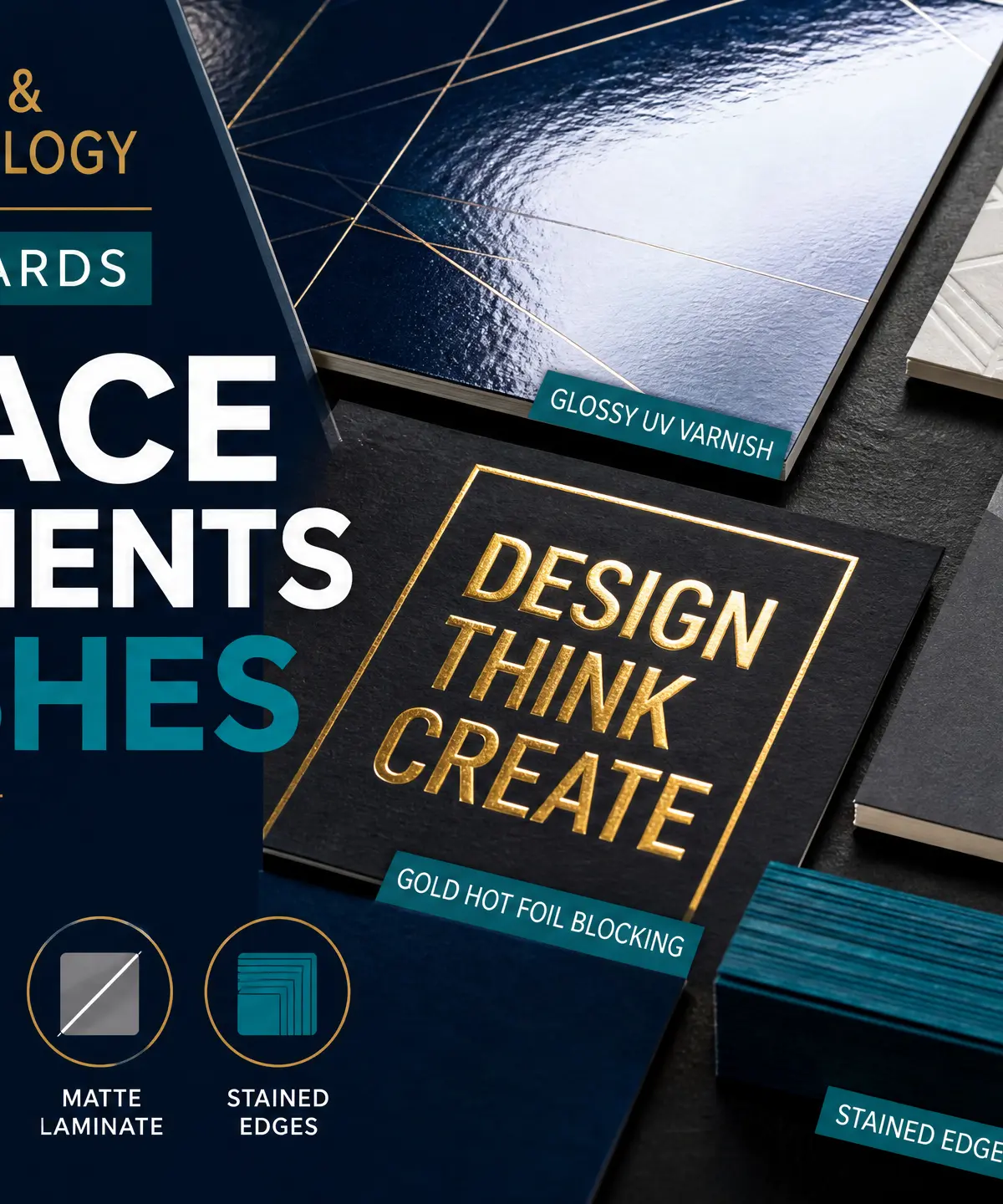
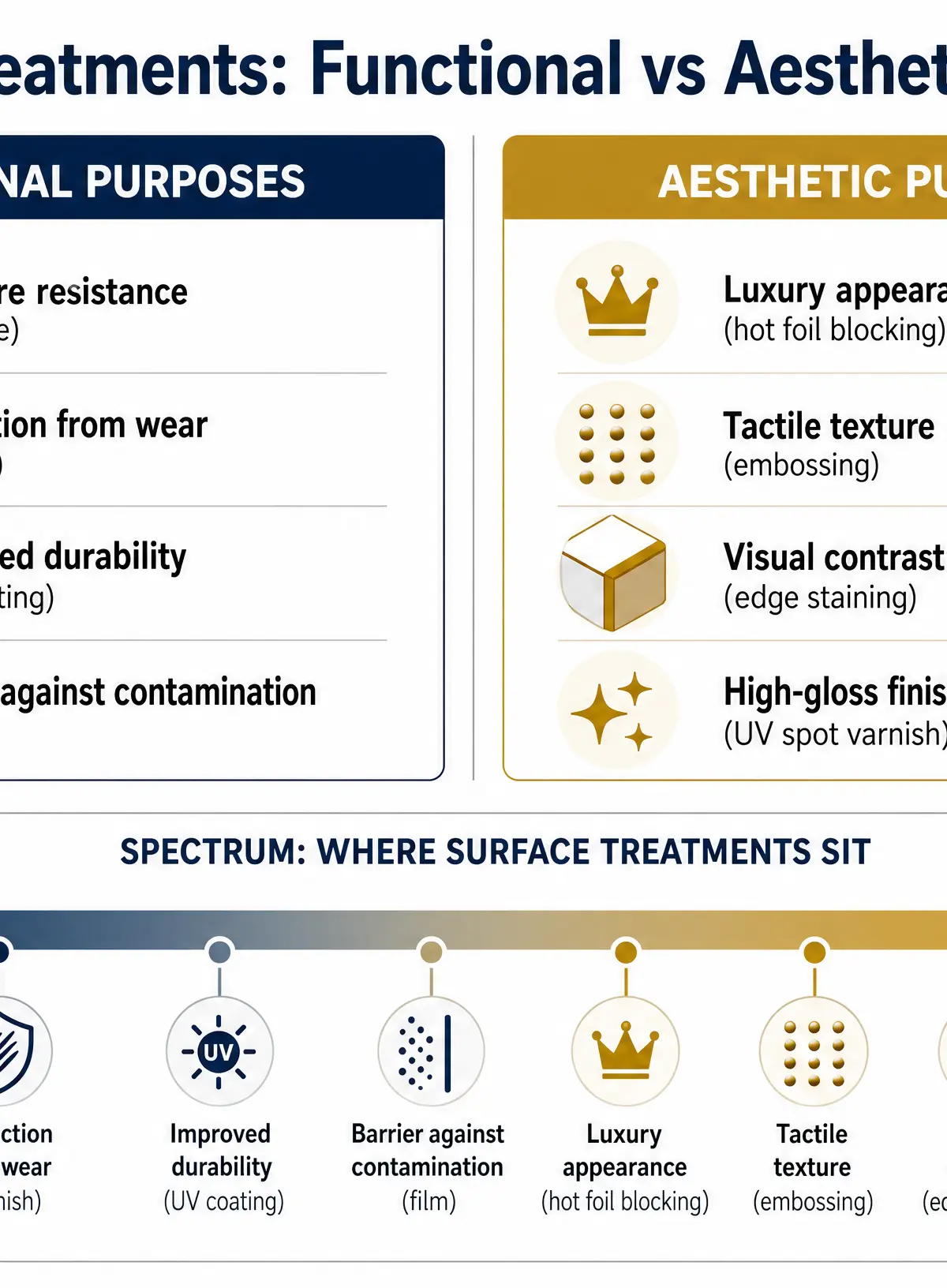
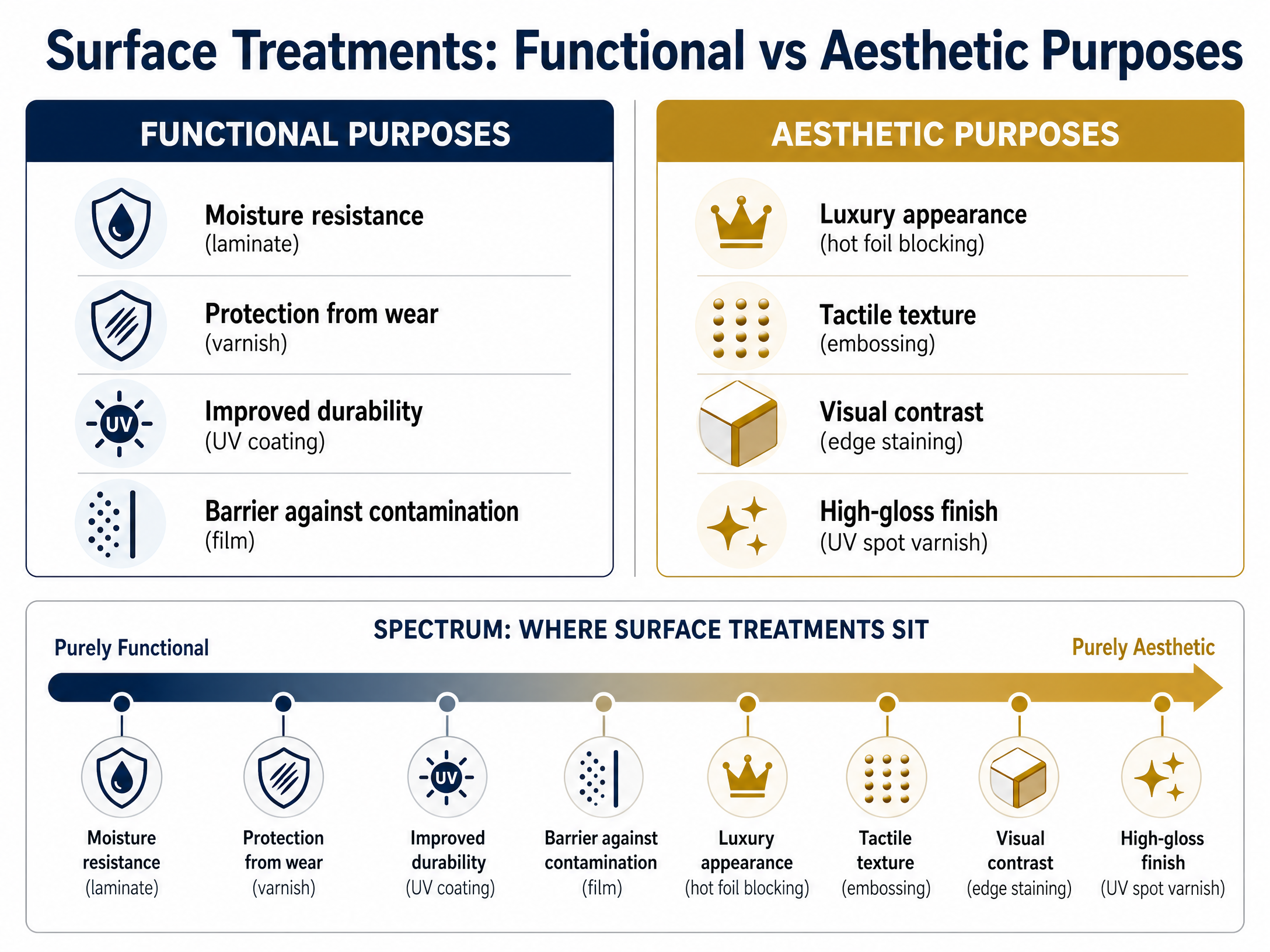
In the commercial printing and packaging industries, the raw paper or board is rarely the finished product. To improve durability, provide protection, or create a premium visual impact, designers specify various surface treatments and finishes. For your GCSE Design and Technology exam, you must be able to identify these treatments, explain how they are applied, and evaluate their functional and aesthetic purposes. Examiners consistently reward candidates who can distinguish between a treatment that protects a product (functional) and one that simply makes it look better (aesthetic).
Listen to the revision podcast below for a comprehensive overview of this topic:

Key Knowledge & Theory
Core Concepts: The Six Key Treatments
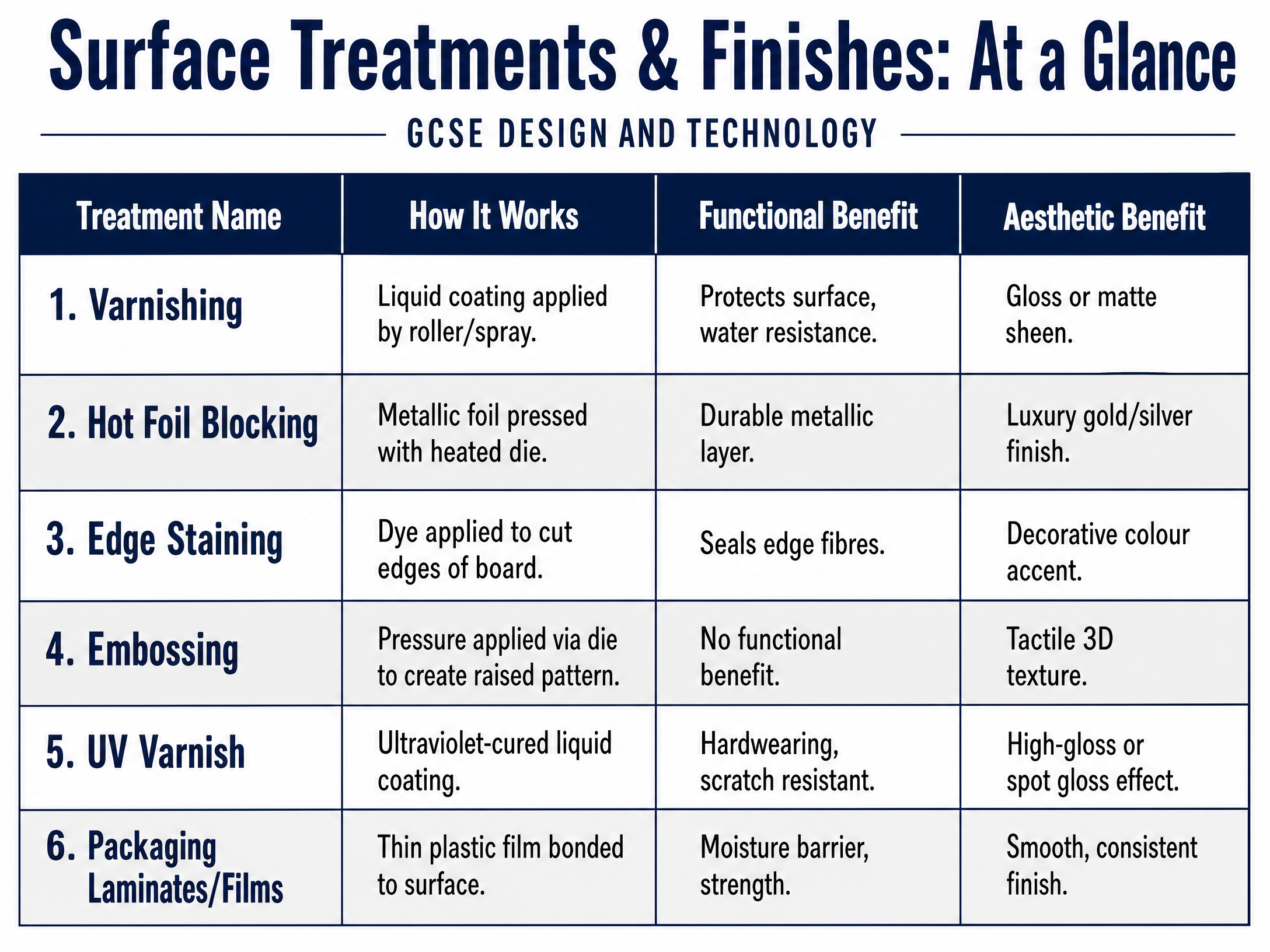
There are six primary surface treatments you need to know for this specification. Understanding the difference between applying a liquid coating, bonding a film, or using mechanical pressure is essential.
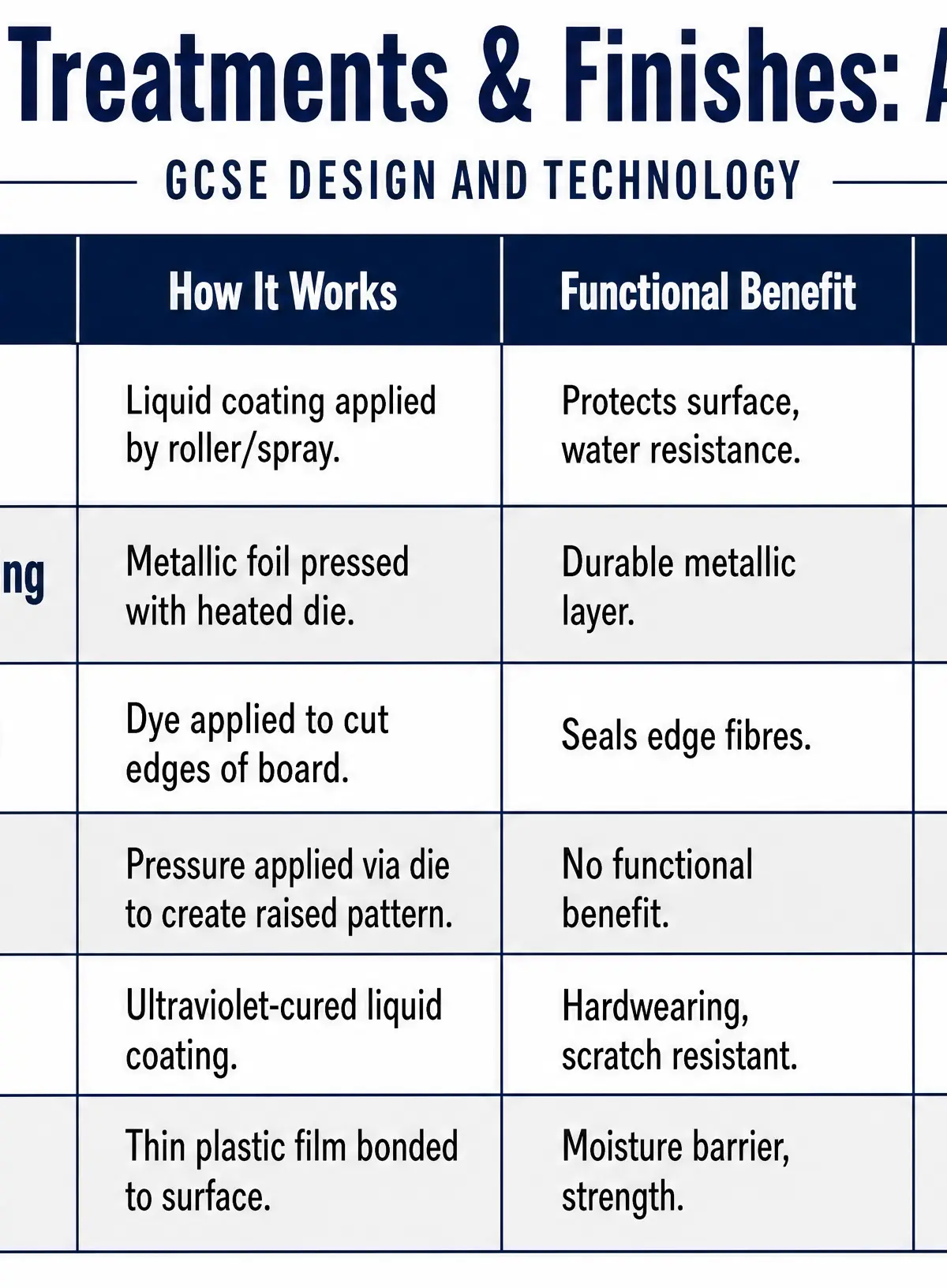
1. VarnishingVarnishing involves applying a clear liquid coating to the printed surface, usually via rollers or spray in a commercial press. It is available in gloss, satin, or matte finishes.
- Functional Purpose: Provides a protective layer against moisture, fingerprints, and general wear and tear during handling.
- Aesthetic Purpose: Enhances the visual appeal. Gloss varnish increases colour saturation and vibrancy, while matte varnish provides a sophisticated, non-reflective finish.
2. UV VarnishingThis is a premium liquid coating that is cured (hardened) instantly using ultraviolet (UV) light.
- Functional Purpose: Creates an extremely hardwearing, scratch-resistant surface, superior to standard varnish.
- Aesthetic Purpose: Delivers a striking, high-gloss finish. Spot UV varnish is particularly popular—this is where the varnish is applied only to specific areas (like a logo) to create a stark contrast against a matte background.
3. Hot Foil BlockingThis process transfers a metallic foil (typically gold, silver, or copper) onto the board using a heated metal die and pressure. Note: this is not metallic ink.
- Functional Purpose: The foil layer is durable and resistant to fading, though its primary use is not functional protection.
- Aesthetic Purpose: Instantly communicates luxury and high quality. Used extensively on premium chocolate boxes, perfume packaging, and high-end book covers.
4. Embossing and DebossingA mechanical process where the paper or board is pressed between a male and female die to create a three-dimensional pattern. Embossing creates a raised surface; debossing creates a recessed surface.
- Functional Purpose: None. This process does not protect or strengthen the material.
- Aesthetic Purpose: Adds a tactile, premium quality to the product. It catches the light and adds visual interest without using ink (known as 'blind embossing').
5. Edge StainingThe application of dye or ink to the cut edges of a thick board or a block of pages (like a notebook).
- Functional Purpose: Can help seal the raw fibres of the cut edge, slightly reducing fraying or moisture absorption.
- Aesthetic Purpose: Adds a decorative pop of colour that contrasts with the cover, often used to signify a premium or bespoke product.
6. Packaging Laminates and FilmsThe process of bonding a thin layer of plastic film (such as polypropylene) to the surface of the paper or board using heat and adhesive.
- Functional Purpose: Highly effective at providing a moisture barrier, increasing the structural rigidity of the board, and offering excellent resistance to tearing and scuffing.
- Aesthetic Purpose: Provides a perfectly smooth, consistent finish (available in gloss, matte, or soft-touch) that enhances printed colours.
Technical Vocabulary
- Curing: The process of hardening a liquid coating (like UV varnish) using light or heat.
- Die: A shaped block of metal used to press a design into a material (used in embossing and foil blocking).
- Tactile: Relating to the sense of touch; a surface that has a distinct physical texture.
- Spot application: Applying a finish (like UV varnish) to a specific, localized area rather than the whole surface.
- Substrate: The base material (e.g., the specific type of paper or board) onto which printing or finishes are applied.
Practical Skills & Portfolio Guidance
Applying Theory to Coursework
In your Non-Examined Assessment (NEA) portfolio, examiners look for evidence that you have considered appropriate materials and finishes for your prototype or packaging designs.
- Justify your choices: If you design packaging for a luxury watch, explicitly state in your portfolio: "I have specified a matte laminate with gold hot foil blocking for the logo to communicate a premium aesthetic that appeals to the target market."
- Consider sustainability: When evaluating your designs, you must discuss the environmental impact of surface treatments. For example, laminating a cardboard box makes it much harder to recycle because the plastic film must be separated from the paper fibres. A water-based varnish is a more sustainable alternative.
- Prototyping: While you may not have a UV curing machine in the school workshop, you can simulate these finishes in your prototypes. Use clear nail polish or PVA glue to simulate spot UV varnish, or use a craft embossing tool to demonstrate tactile textures.
Exam Component Preparation
Written Exam Knowledge
Questions on this topic typically appear in the core technical principles section of the exam. You will often be given a specific product (e.g., a frozen food carton, a luxury greeting card) and asked to recommend and justify a suitable finish.
- Low tariff questions (1-2 marks): State the name of a finish, or identify one functional benefit.
- Medium tariff questions (3-4 marks): Explain how a process works, or compare two different finishes.
- High tariff questions (6-8 marks): Evaluate the suitability of a finish for a specific product, discussing functional, aesthetic, and environmental factors.
Always structure extended answers logically: state the finish, explain the functional benefit, explain the aesthetic benefit, and link it back to the specific product and its target market.
Visual Resources
2 diagrams and illustrations
Interactive Diagrams
1 interactive diagram to visualise key concepts
Conceptual Flow Outline
Decision matrix for selecting appropriate surface treatments
Worked Examples
3 worked examples — open one to explore the question and available guidance.
Practice Questions
Test your understanding — click to reveal model answers
Identify one surface finish that provides a tactile texture to a printed board. (1 mark)
Hint: Think about a process that physically changes the shape of the board without adding ink.
Describe the process of hot foil blocking. (2 marks)
Hint: Mention the tool used and what is transferred to the board.
Explain why a manufacturer might choose to use spot UV varnish rather than standard gloss varnish on a book cover. (3 marks)
Hint: Focus on the word 'spot' and the specific visual effect it creates compared to coating the whole cover.
A company is designing a reusable carrier bag for a high-end clothing boutique. Evaluate the use of lamination for this product, considering functional, aesthetic, and environmental factors. (6 marks)
Hint: Structure your answer: Functional pros, Aesthetic pros, Environmental cons. Reach a conclusion.