Pearson Edexcel · GCSE · Design and Technology
Polymers: Stock forms, types and sizes in order to calculate and determine the quantity of thermoforming and thermosetting polymers required
This topic covers the essential knowledge of polymer families, their standard stock forms, and commercial sizes. Mastering this enables you to select appropriate materials for specific manufacturing processes and accurately calculate the required quantities while accounting for waste.
- 8 min read
- 3 worked examples
- 3 practice questions
- 6 key terms
Study Notes
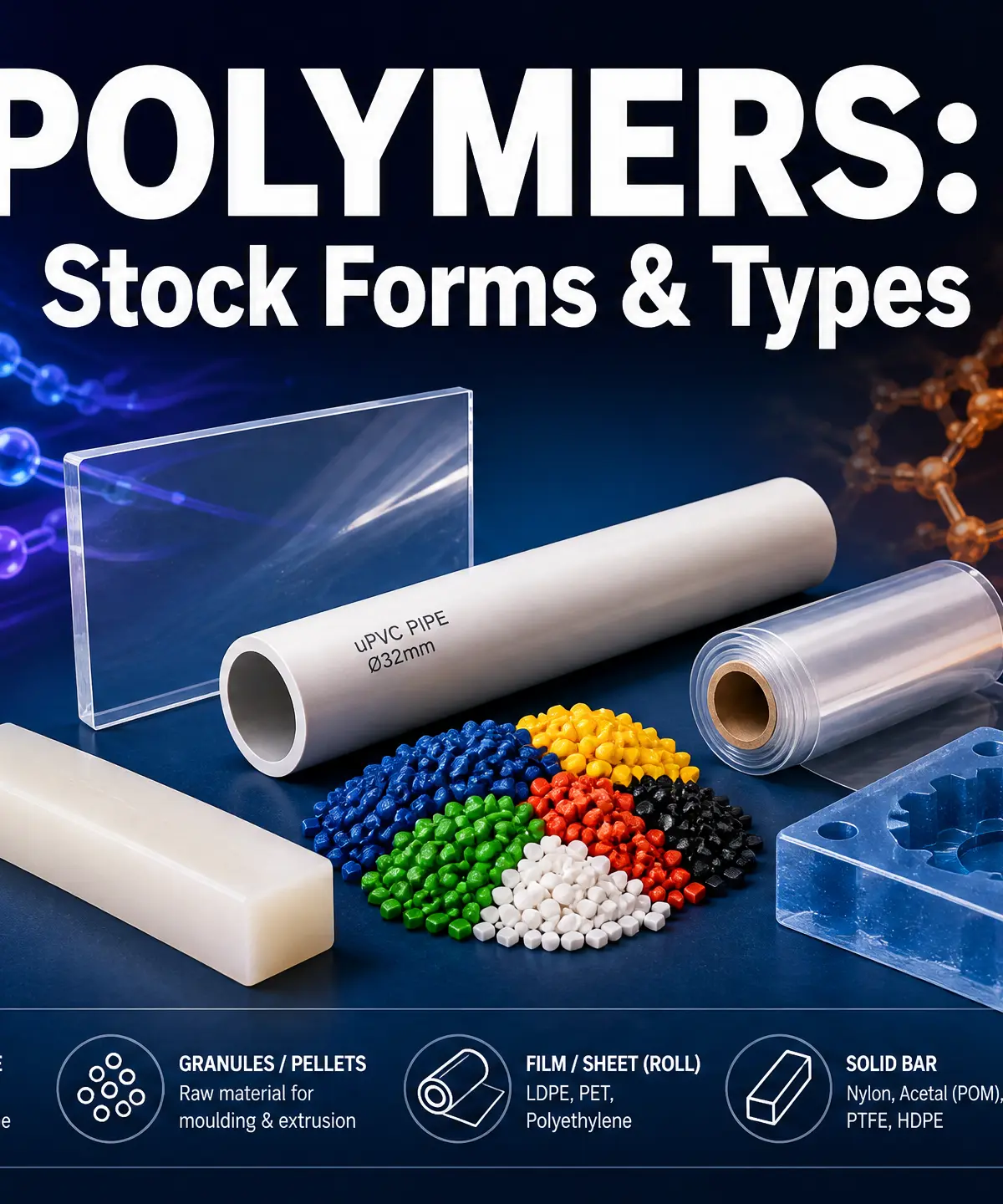
Overview
Understanding polymers is fundamental to GCSE Design and Technology. This topic bridges the gap between theoretical material science and practical commercial manufacturing. You need to confidently distinguish between thermoforming and thermosetting polymers, identify the standard stock forms they are supplied in, and calculate the exact quantities required for a given product or batch. Examiners consistently test your ability to link a specific stock form to a chosen manufacturing process, and your mathematical accuracy when calculating material requirements.
Key Knowledge & Theory
Core Concepts
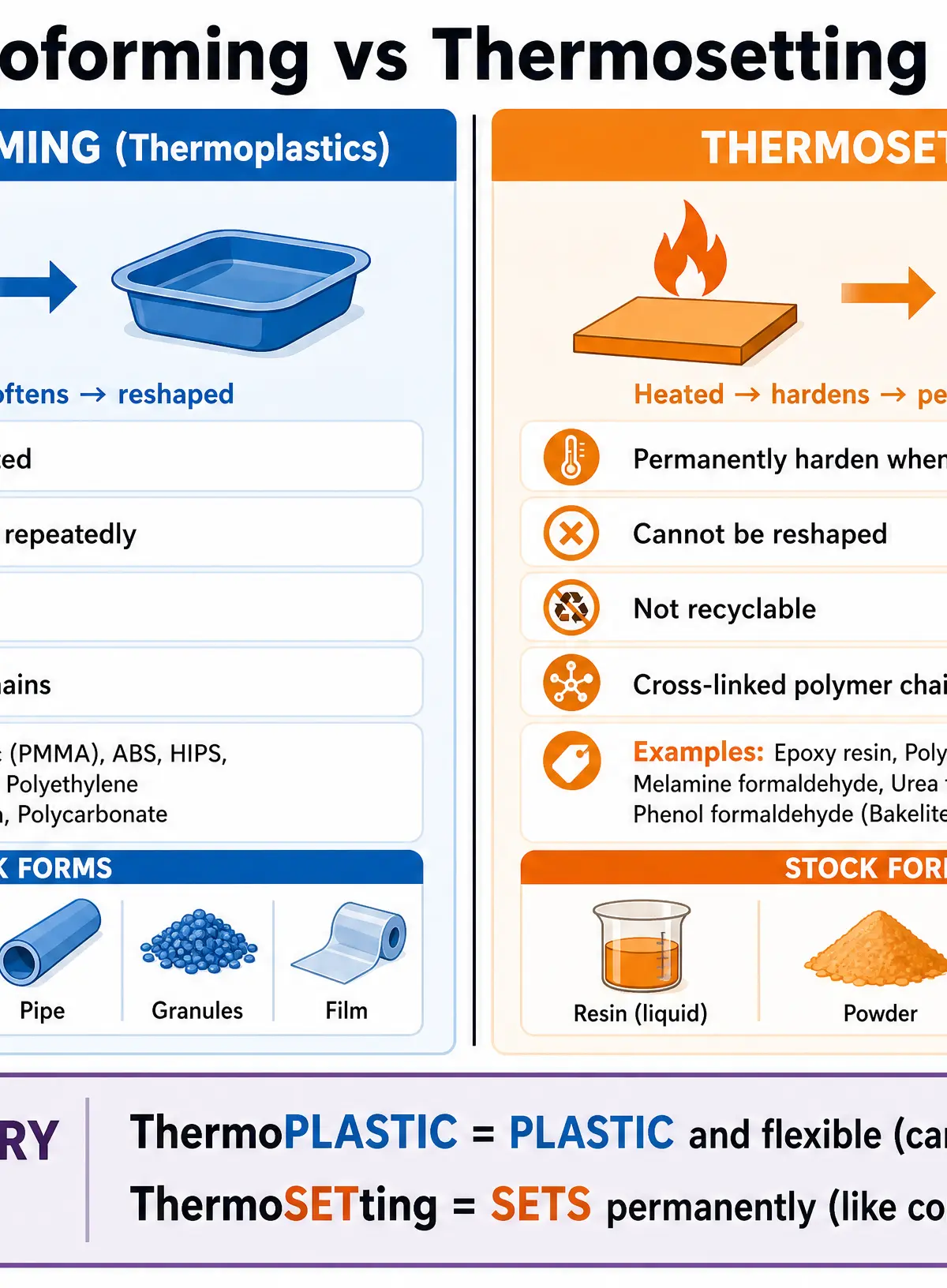
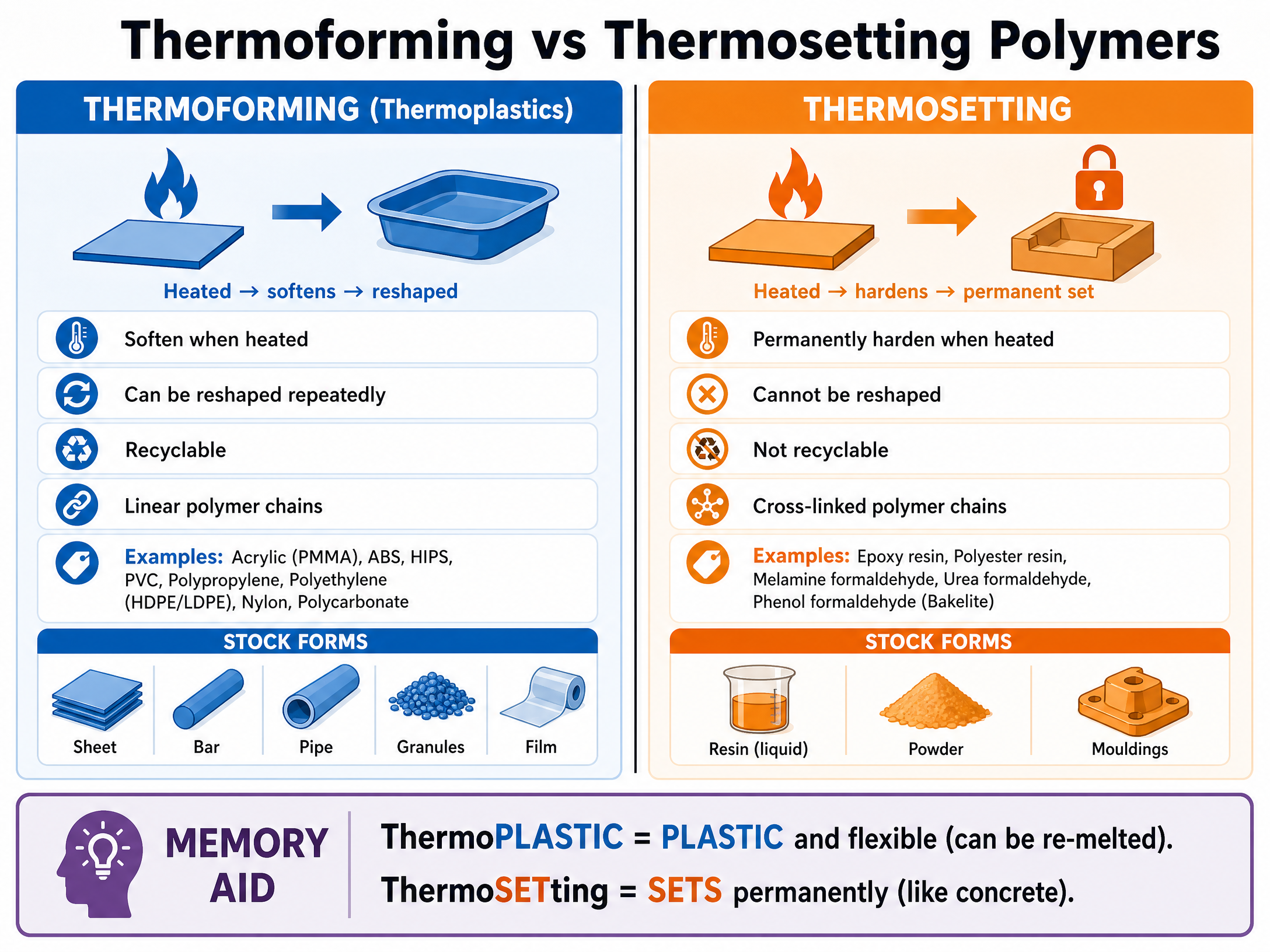
The Polymer FamiliesPolymers are long-chain molecules (macromolecules) formed by joining thousands of smaller units called monomers. In Design and Technology, we classify polymers into two distinct families based on their response to heat:
- Thermoforming Polymers (Thermoplastics): These have long, linear polymer chains with weak secondary bonds between them. When heated, these bonds break, allowing the chains to slide past each other. This means the polymer softens and can be reshaped. Upon cooling, it hardens into the new shape. Crucially, this process is repeatable, making thermoforming polymers recyclable. Examples include Acrylic (PMMA), High Impact Polystyrene (HIPS), and Polypropylene (PP).
- Thermosetting Polymers (Thermosets): These polymers undergo a chemical change (curing) when heated or when a catalyst is added. Strong, rigid cross-links form between the polymer chains, creating a three-dimensional network. Once set, they cannot be softened or reshaped by heat. This gives them excellent heat resistance and rigidity but means they cannot be traditionally recycled. Examples include Epoxy resin, Melamine formaldehyde, and Urea formaldehyde.
Polymer Categories and Properties
| Polymer Name | Type | Key Properties | Typical Applications |
|---|---|---|---|
| Acrylic (PMMA) | Thermoforming | Hard, stiff, excellent optical clarity, brittle, easily scratched. | Display signs, baths, school project work. |
| High Impact Polystyrene (HIPS) | Thermoforming | Tough, high impact strength, rigid, easily vacuum formed. | Yoghurt pots, food packaging, toys. |
| Polypropylene (PP) | Thermoforming | Tough, flexible, excellent fatigue resistance (living hinges). | Food containers, medical equipment, folding chairs. |
| Epoxy Resin | Thermosetting | Excellent adhesive properties, high strength, good chemical resistance. | Adhesives (Araldite), composite matrices (carbon fibre), casting. |
| Melamine Formaldehyde (MF) | Thermosetting | Hard, opaque, tough, scratch resistant, heat resistant. | Kitchen worktops, tableware, decorative laminates. |
| Urea Formaldehyde (UF) | Thermosetting | Hard, stiff, excellent electrical insulator, brittle. | Electrical fittings, plug sockets, switches. |
Technical Vocabulary
- Monomer: A small molecule that can join together with other small molecules to form a polymer.
- Polymerisation: The chemical process of joining monomers together to form a polymer chain.
- Cross-linking: The strong chemical bonds formed between adjacent polymer chains in thermosetting polymers during curing.
- Curing: The chemical reaction that causes a thermosetting polymer to permanently harden.
- Kerf: The width of the cut made by a saw blade; material that is turned into dust/waste during cutting.
- Tolerance: The acceptable margin of error in a manufactured dimension.
- Standard Stock Form: The standard, commercially available shapes and sizes that raw materials are supplied in.
Practical Skills
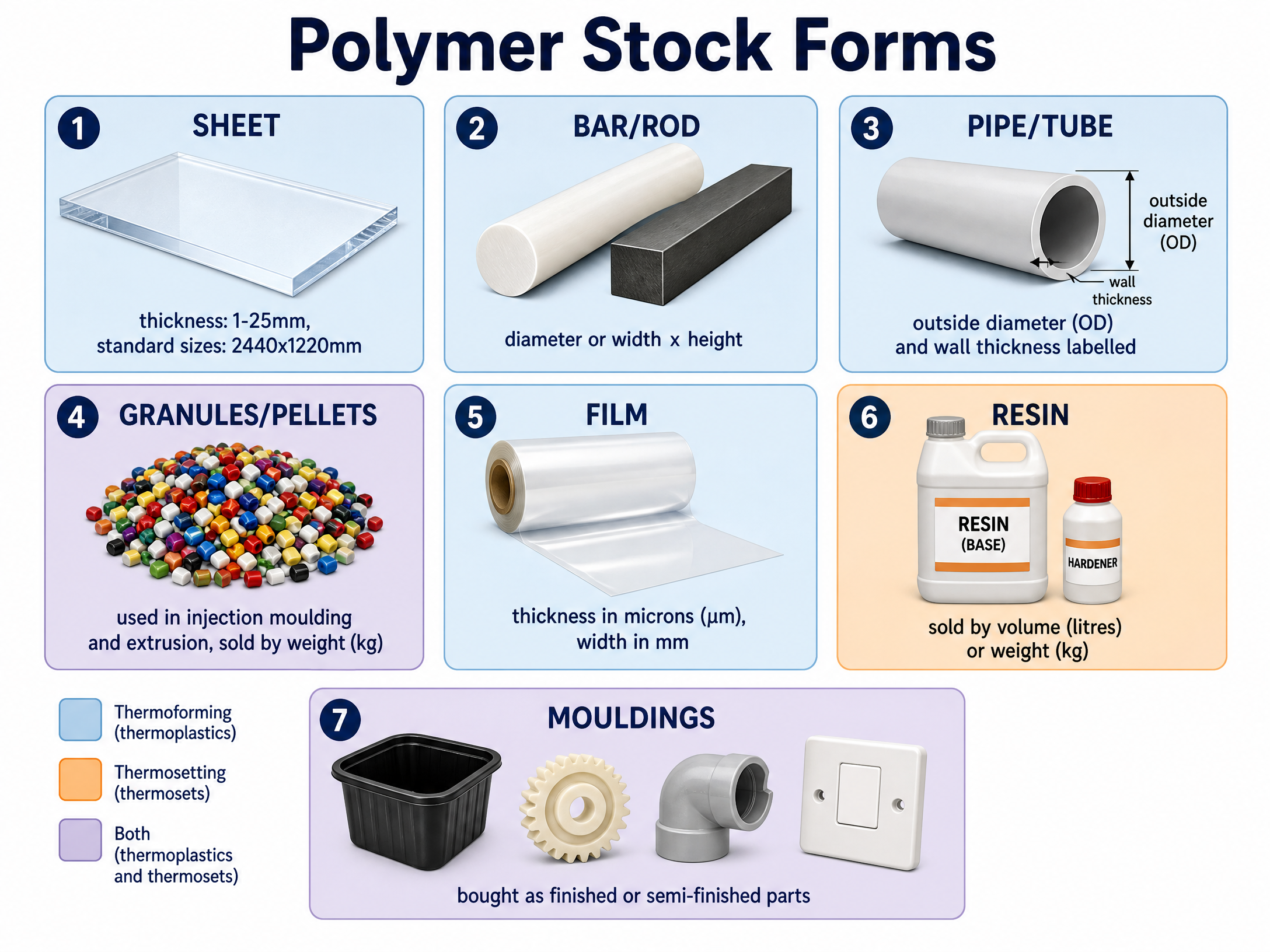
Understanding Stock Forms
Raw polymers are processed into standard stock forms to make them easier to transport, store, and use in manufacturing. Selecting the correct stock form is essential for efficiency and cost-effectiveness.
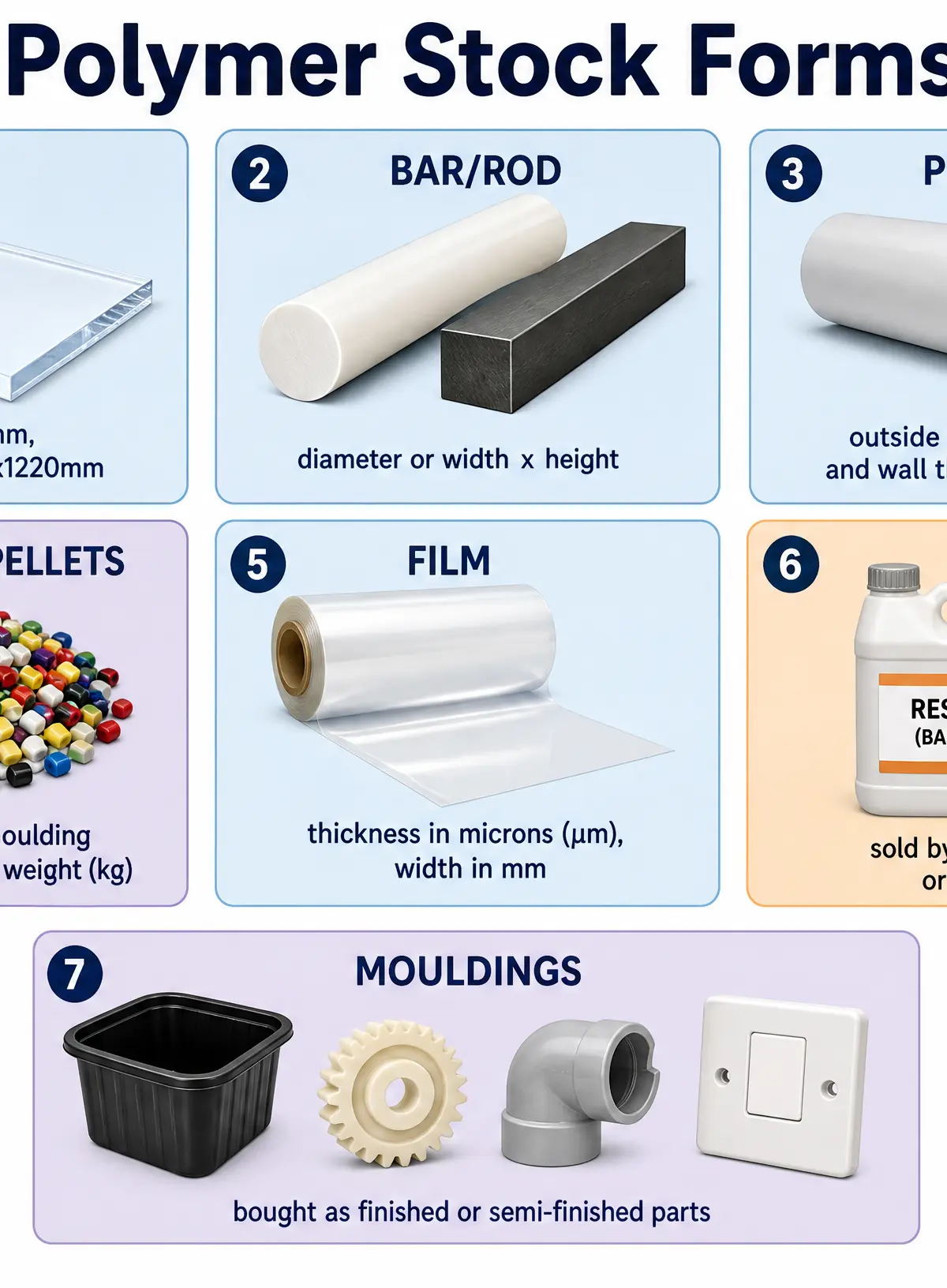
- Sheet: Flat panels of polymer.
- Specified by: Thickness (e.g., 3mm, 5mm) and overall dimensions (e.g., 2440mm x 1220mm).
- Common uses: Vacuum forming, laser cutting, line bending.
- Bar and Rod: Solid lengths of polymer. Rods have a circular cross-section; bars are square, rectangular, or hexagonal.
- Specified by: Diameter (for rod) or width x height (for bar), and length.
- Common uses: Machining on a centre lathe or milling machine (e.g., Nylon gears).
- Pipe and Tube: Hollow cylindrical forms.
- Specified by: Outside Diameter (OD) and wall thickness.
- Common uses: Plumbing (PVC), structural frameworks.
- Granules and Pellets: Small beads of raw polymer.
- Specified by: Weight (kg).
- Common uses: Fed into the hopper for injection moulding or extrusion processes.
- Film: Extremely thin, flexible sheets.
- Specified by: Thickness in microns (μm) and width of the roll.
- Common uses: Packaging, wrapping, lamination.
- Resin: Liquid form of thermosetting polymers, usually supplied in two parts (base resin and hardener/catalyst).
- Specified by: Volume (litres) or weight (kg).
- Common uses: Casting, lay-up for composite materials (fibreglass).
- Mouldings: Pre-manufactured standard components.
- Common uses: Bought-in parts like pipe fittings, electrical enclosures, or structural joints.
Calculating Material Quantities
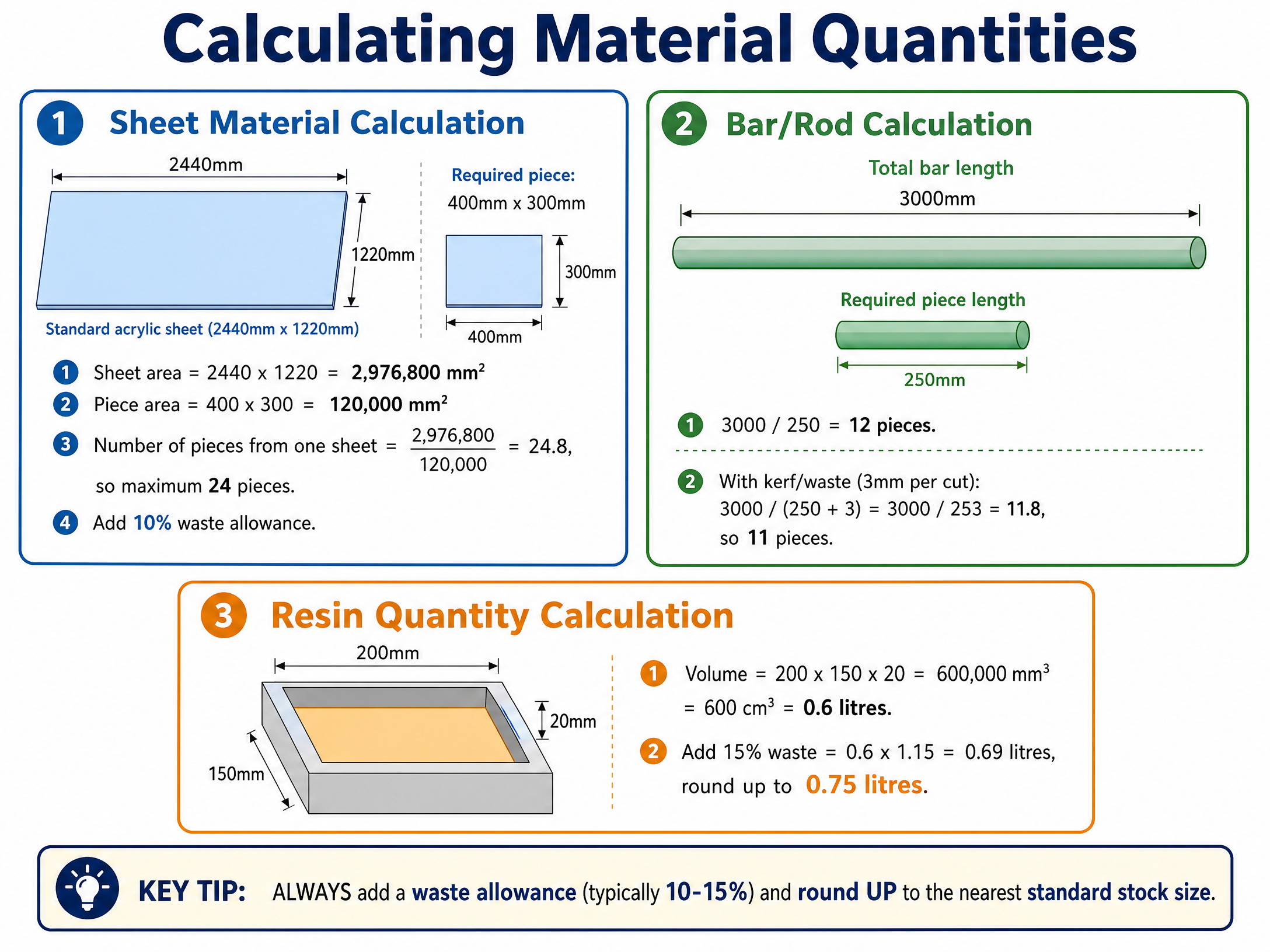
Calculating the required amount of material is a critical skill. You must always account for the specific dimensions of the stock form and include a realistic allowance for waste (typically 10-15%).
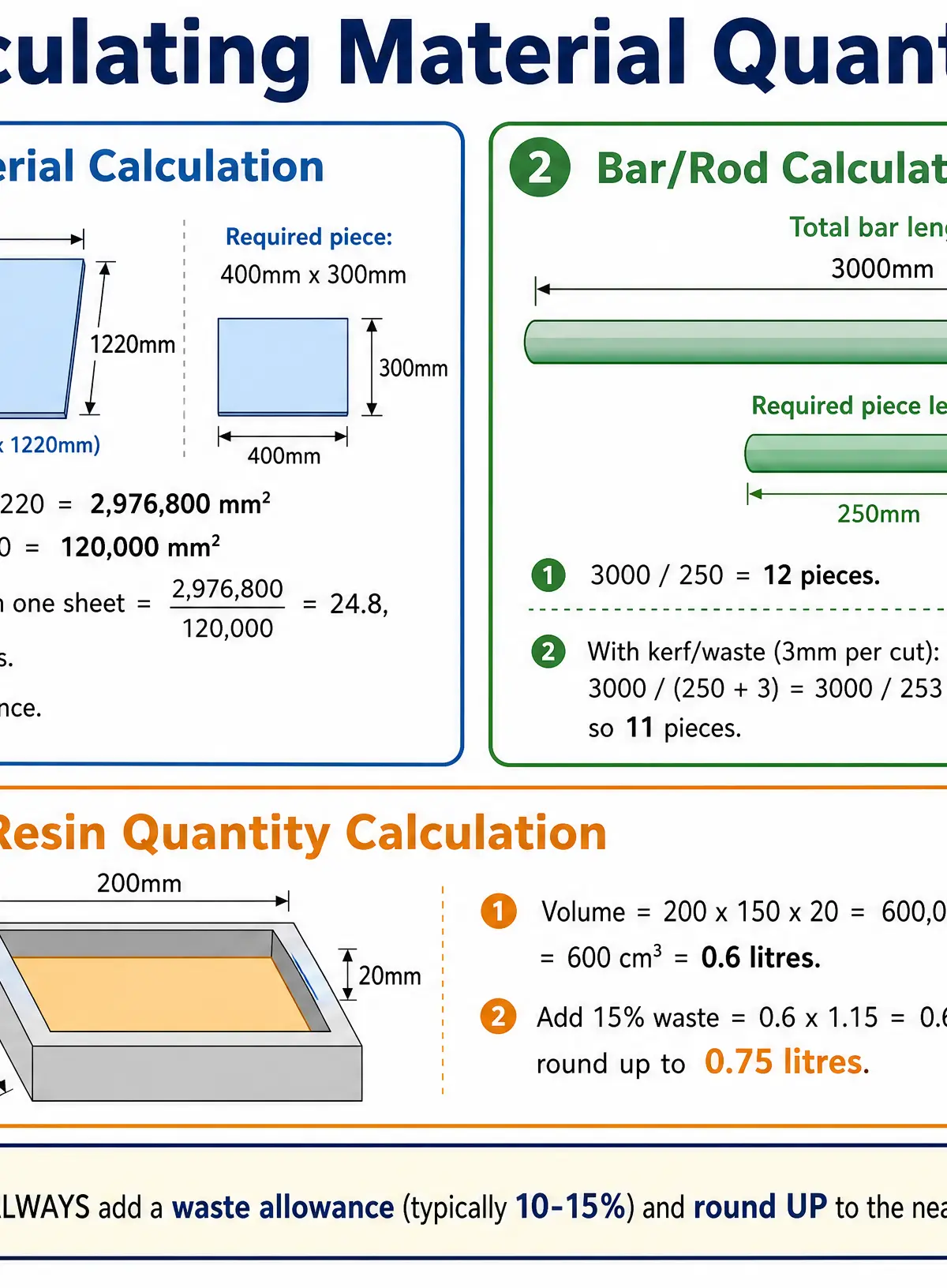
Process for Sheet Material:
- Determine the area of the standard stock sheet.
- Determine the area of the required part.
- Calculate how many parts fit into the sheet (accounting for orientation if grain/pattern matters, though less relevant for plain polymers).
- Add a waste allowance (e.g., +10%).
- Round up to the nearest whole sheet, as you cannot purchase a fraction of a sheet from a supplier.
Process for Resin:
- Calculate the volume of the mould cavity (Length x Width x Depth).
- Convert cubic millimetres (mm³) or cubic centimetres (cm³) to litres if required (1000 cm³ = 1 litre).
- Add a waste allowance for spillage and mixing residue (e.g., +15%).
Portfolio/Coursework Guidance
Assessment Criteria
In your Non-Exam Assessment (NEA), examiners look for evidence that you have considered material efficiency. When detailing your manufacturing specification, you must explicitly state the stock forms you are using and provide a cutting list.
Building a Strong Portfolio
- Cutting Lists: Always include a comprehensive cutting list in your portfolio. This should detail the part name, quantity, material, thickness, length, and width.
- Nesting Diagrams: Show how you plan to cut your parts from the standard stock sheet to minimise waste. A simple diagram showing the layout of parts on a 2440x1220mm sheet demonstrates high-level planning.
- Costing: Use your quantity calculations to produce an accurate cost estimate for your prototype. Reference actual supplier prices for standard stock forms.
Exam Component
Written Exam Knowledge
The written exam frequently tests your ability to match a polymer to a product, justify the choice based on properties, and calculate the required material. You may be given a product (e.g., a plastic chair) and asked to state the manufacturing process, the suitable polymer, and the stock form it would start as.
Listen to our comprehensive revision podcast for a detailed walkthrough of exam strategies and common pitfalls:

Visual Resources
3 diagrams and illustrations
Interactive Diagrams
1 interactive diagram to visualise key concepts
Conceptual Flow Outline
Decision process for selecting polymer types and stock forms based on product requirements and manufacturing methods.
Worked Examples
3 worked examples — open one to explore the question and available guidance.
Practice Questions
Test your understanding — click to reveal model answers
State the standard stock form of polymer required for the injection moulding process. (1 mark)
Hint: Think about how the raw material is fed into the machine's hopper.
Explain one reason why standard stock forms are used in commercial manufacturing. (2 marks)
Hint: Consider the impact on cost, storage, or machinery setup.
A student needs to cut 15 lengths of Acetal rod, each 120mm long, to make spacers. The kerf of the saw blade is 3mm. Calculate the minimum total length of Acetal rod required, ignoring any waste at the very ends of the main rod. (3 marks)
Hint: Remember to add the kerf to each cut piece before multiplying by the total number of pieces.