Pearson Edexcel · GCSE · Design and Technology
Polymers: The way in which the selection of thermoforming and thermosetting polymers is influenced
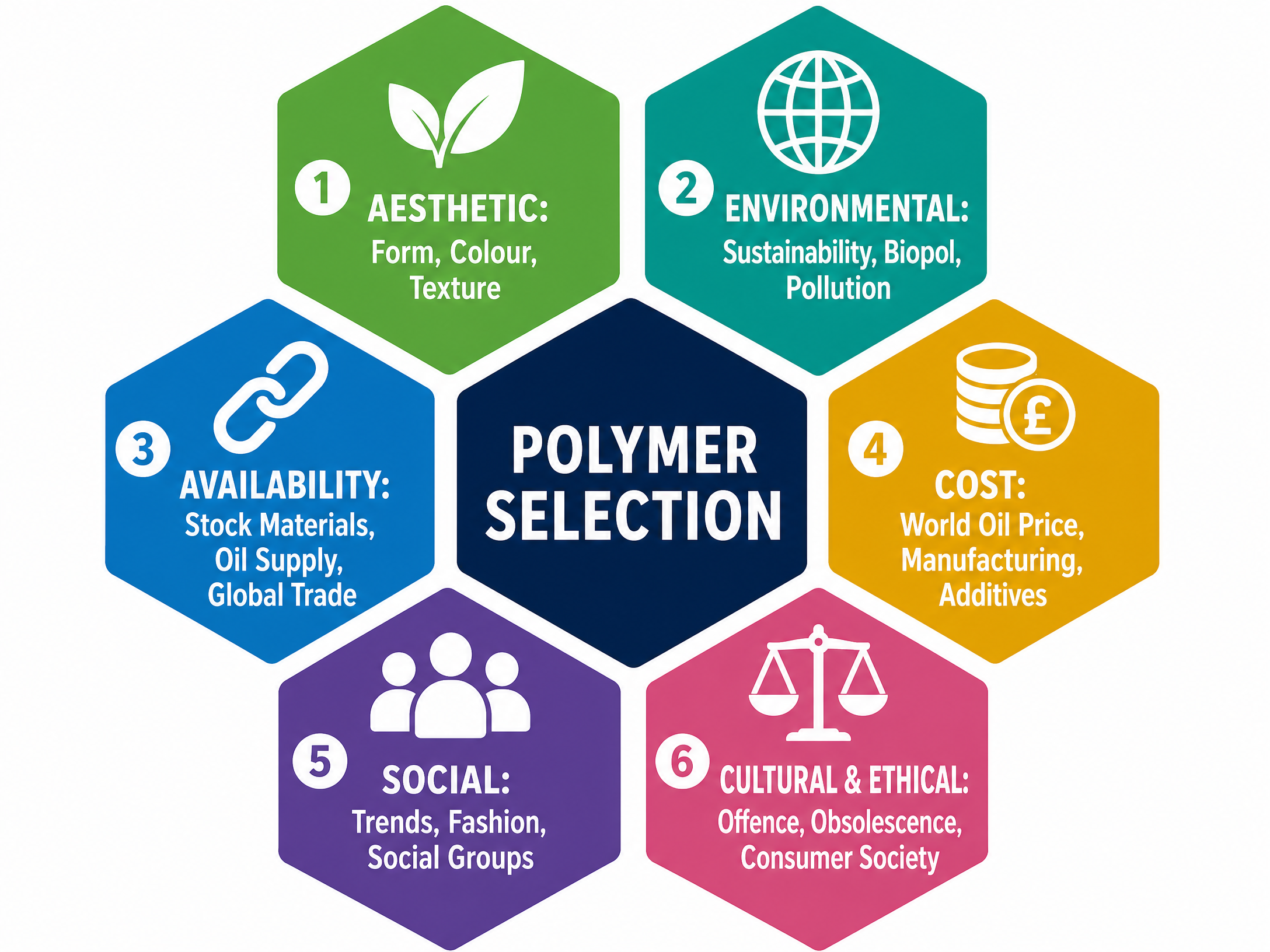
This topic covers the essential factors influencing the choice between thermoforming and thermosetting polymers. Understanding these six selection factors (Aesthetic, Environmental, Availability, Cost, Social, and Cultural/Ethical) is crucial for both the written exam and justifying material choices in your practical NEA portfolio.
- 5 min read
- 3 worked examples
- 3 practice questions
- 6 key terms
Study Notes
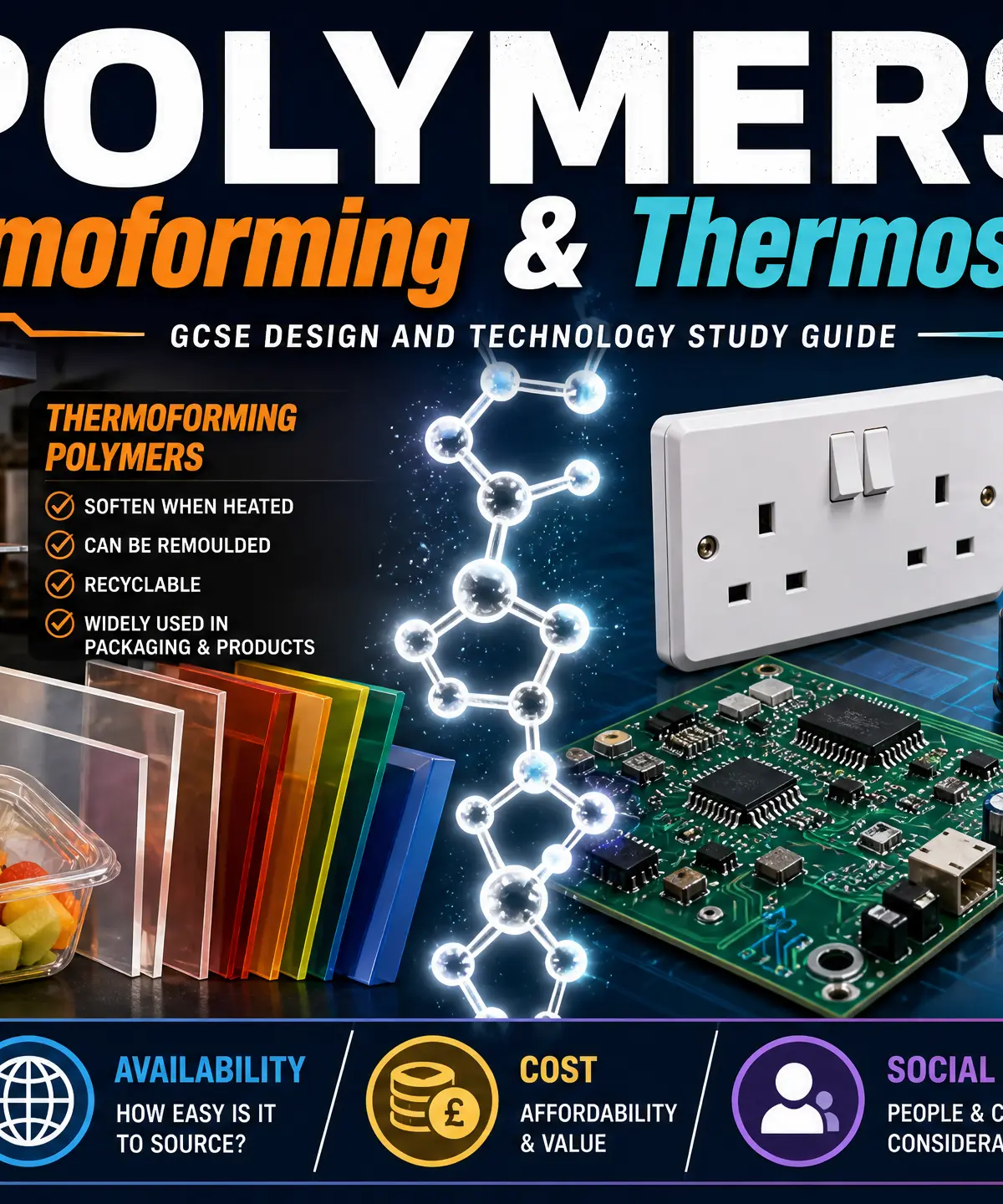
Overview
In GCSE Design and Technology, understanding why a specific polymer is chosen for a product is just as important as knowing the polymer's properties. Topic 4.3 focuses on the selection of thermoforming and thermosetting polymers. Examiners expect you to evaluate material choices based on six key factors: Aesthetic, Environmental, Availability, Cost, Social, and Cultural/Ethical considerations.
Listen to the companion podcast for an in-depth review of this topic:

Key Knowledge & Theory
Core Concepts: Polymer Families
Before evaluating selection factors, you must be confident in the fundamental differences between the two main polymer families.
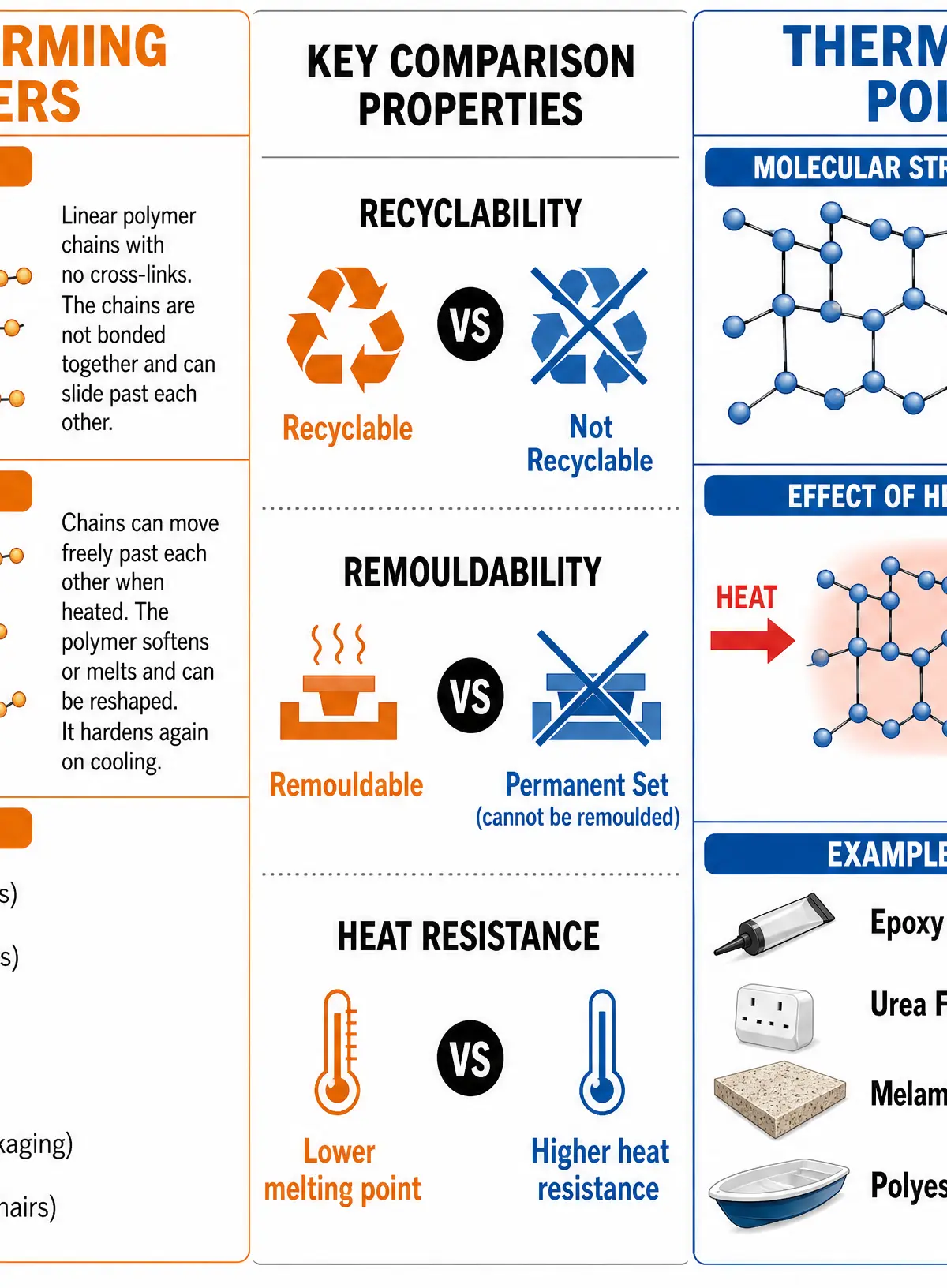
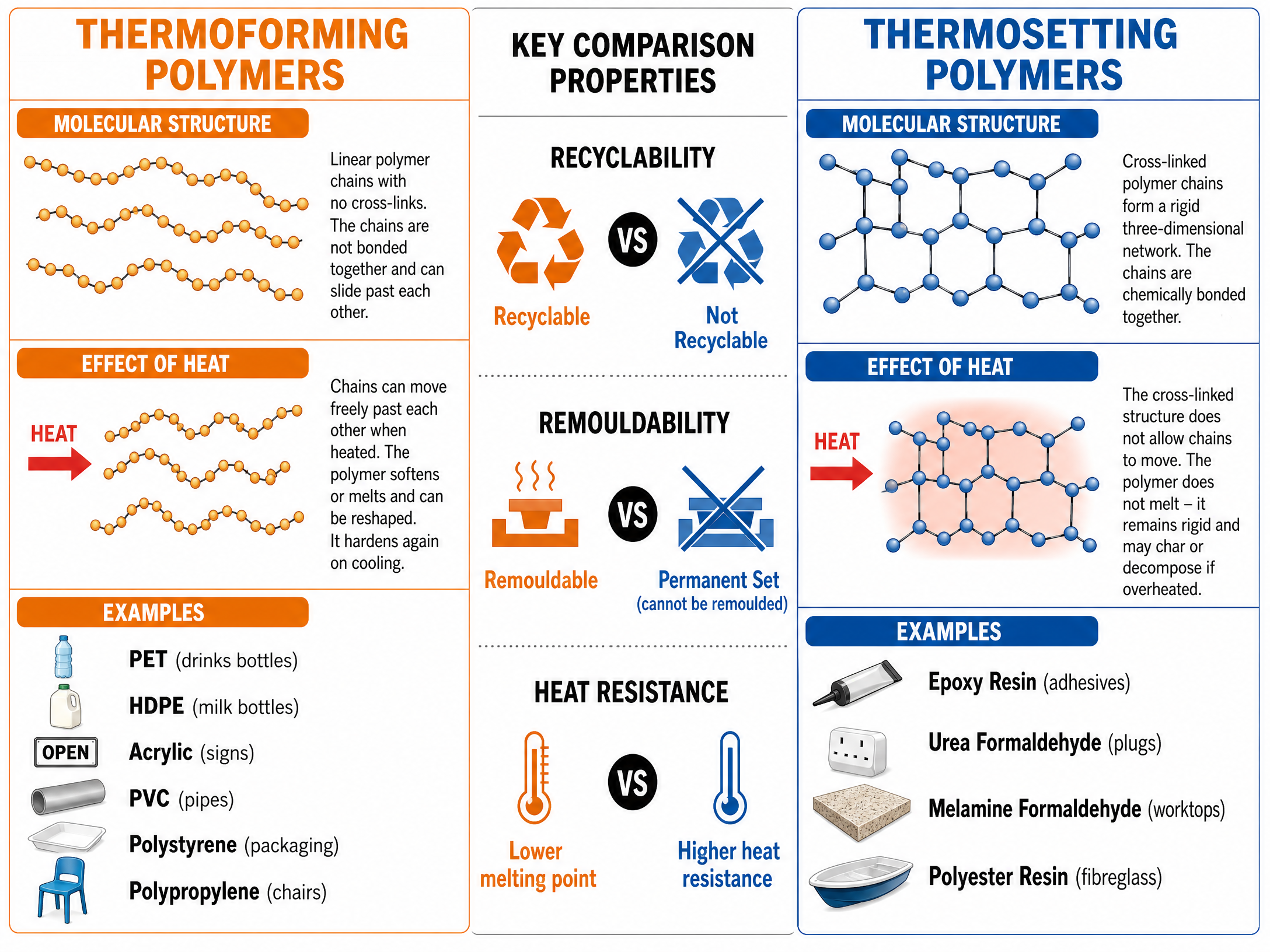
**Thermoforming Polymers (Thermoplastics)**These polymers soften when heated and can be remoulded repeatedly. This is because their molecular chains are long and linear; they sit next to each other but are not chemically bonded. When heated, the chains slide past each other. This property makes them highly recyclable.
**Thermosetting Polymers (Thermosets)**These polymers are set permanently during manufacture. Their molecular chains are cross-linked in a rigid three-dimensional network. Because of these strong chemical bonds, they cannot be remoulded; applying heat will cause them to char or decompose. This makes them excellent electrical insulators and highly heat-resistant, but they cannot be conventionally recycled.
The Six Selection Factors
When designers select a polymer, they evaluate it against these six criteria:
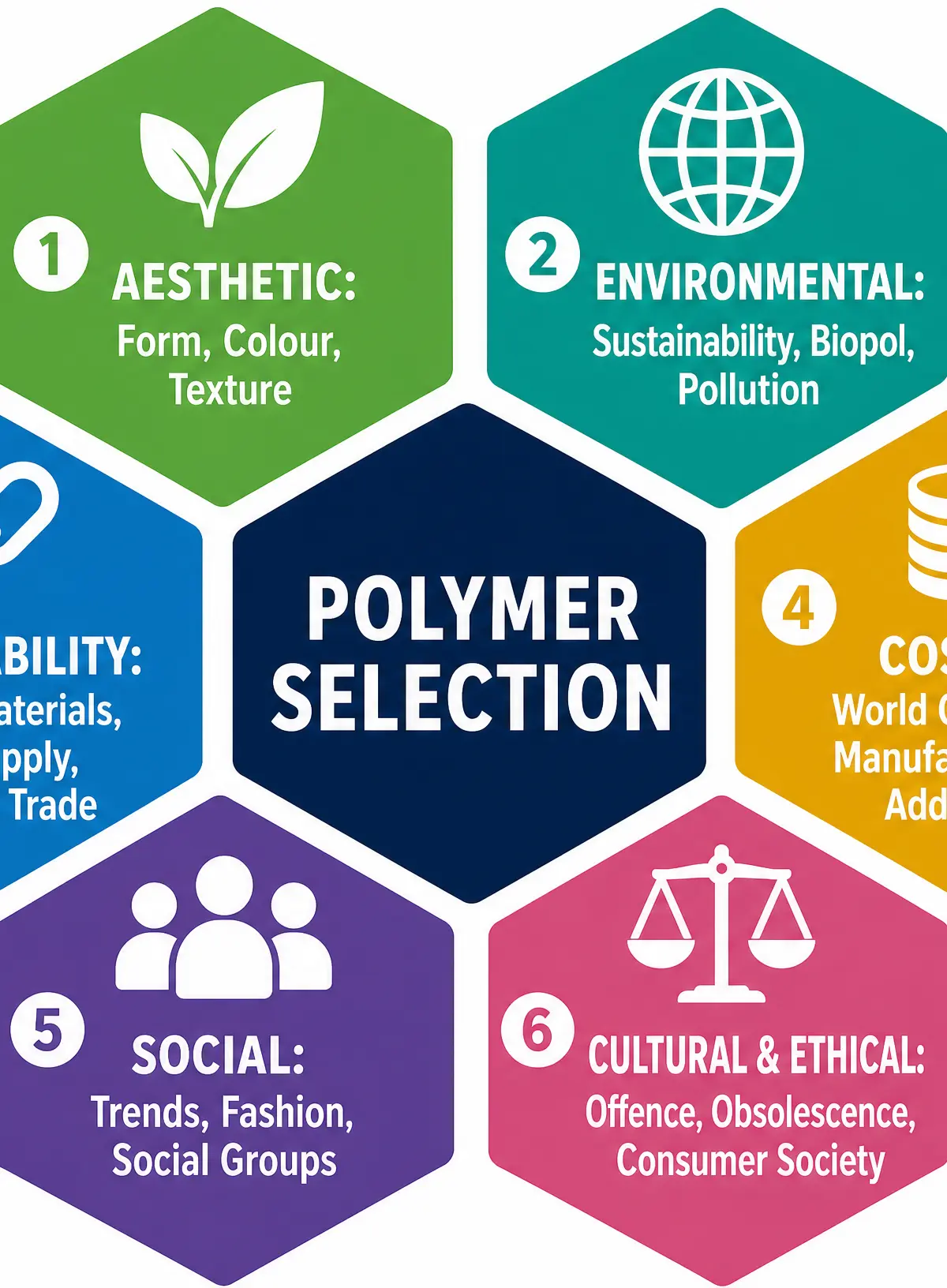
| Factor | Key Considerations | Example Application |
|---|---|---|
| Aesthetic | Form, colour, and texture. How the product appeals visually to the target market. | Selecting clear Acrylic for a display stand because of its high-gloss, transparent finish. |
| Environmental | Sustainability, pollution, and biodegradability (e.g., Biopol). | Choosing Biopol for single-use food packaging so it breaks down naturally, reducing landfill waste. |
| Availability | Use of standard stock forms (sheets, rods) and the impact of the global oil supply. | Using standard HDPE tubing for plumbing rather than commissioning custom extrusion runs. |
| Cost | Raw material price (linked to world oil price), manufacturing processes (e.g., injection moulding tooling), and additives. | Selecting PVC for mass-produced window frames to balance durability with affordable unit cost. |
| Social | Trends, fashion, popularity, and the specific needs of different social or demographic groups. | Choosing a high-contrast, textured polymer finish for a product aimed at elderly users to improve grip. |
| Cultural & Ethical | Avoiding cultural offence (colour meanings), translation suitability, consumer society impact, and built-in obsolescence. | Avoiding white polymers for products marketed in cultures where white is associated with mourning. |
Technical Vocabulary
- Cross-linking: The strong chemical bonds between polymer chains in thermosetting plastics.
- Built-in obsolescence: Deliberately designing a product with a limited lifespan to encourage repeat purchases.
- Biopol: A commercially available biodegradable polymer derived from natural plant materials.
- Stock forms: Standardised shapes and sizes of materials (e.g., granules, sheets) that reduce manufacturing time and cost.
Practical Skills & NEA Portfolio
Material Selection Justification
In your Non-Exam Assessment (NEA), you must justify your material choices. It is not enough to say "I chose acrylic because it looks nice." You must apply the selection factors.
Weak Justification: "I used acrylic for my lamp casing because it is strong and comes in red."
Strong Justification: "I selected 3mm cast acrylic (a thermoforming polymer) for the lamp casing primarily for its aesthetic qualities; it can be polished to a high-gloss finish and the translucent red aligns with my target market's preference for modern, vibrant interiors. Environmentally, offcuts from my laser cutting process can be recycled, which improves the sustainability of my prototype."
Manufacturing Processes
When selecting a polymer for your practical work, consider the processes available in your school workshop:
- Line Bending: Ideal for thermoforming polymers like acrylic or HIPS.
- Vacuum Forming: Excellent for creating 3D shells from HIPS.
- Casting/Resin: Using thermosetting polyester or epoxy resin requires moulds and appropriate PPE (ventilation, gloves).
Exam Component
Written Exam Knowledge
The written paper frequently tests this topic through extended response questions (6-8 marks). You will often be given a product context (e.g., a child's toy or an electrical fitting) and asked to evaluate the suitability of different polymers.
Examiners are looking for application of knowledge. Do not just list polymer properties; link those properties directly to the selection factors and the specific product's function.
Visual Resources
2 diagrams and illustrations
Interactive Diagrams
1 interactive diagram to visualise key concepts
Conceptual Flow Outline
Polymer selection decision process for NEA portfolios
Worked Examples
3 worked examples — open one to explore the question and available guidance.
Practice Questions
Test your understanding — click to reveal model answers
Identify two standard stock forms of thermoforming polymers. (2 marks)
Hint: Think about how acrylic or polystyrene arrives at your school workshop before you use it.
Explain why a designer might choose Biopol instead of PVC for single-use food packaging. (3 marks)
Hint: Focus on the environmental selection factor and what happens at the end of the product's life.
Evaluate the social and ethical factors a company must consider when mass-producing cheap, trend-based polymer phone cases. (6 marks)
Hint: Discuss consumer society, fashion trends, built-in obsolescence, and the throwaway culture.