Pearson Edexcel · GCSE · Design and Technology
Systems: Appropriate surface treatments and finishes that can be applied to components and systems for functional and aesthetic purposes
This topic explores how surface treatments and finishes are applied to electronic systems for both functional performance and aesthetic appeal. Understanding the difference between these purposes—and when a finish achieves both—is essential for maximizing your marks in the GCSE Design and Technology exam.
- 7 min read
- 3 worked examples
- 3 practice questions
- 6 key terms
Study Notes
Overview
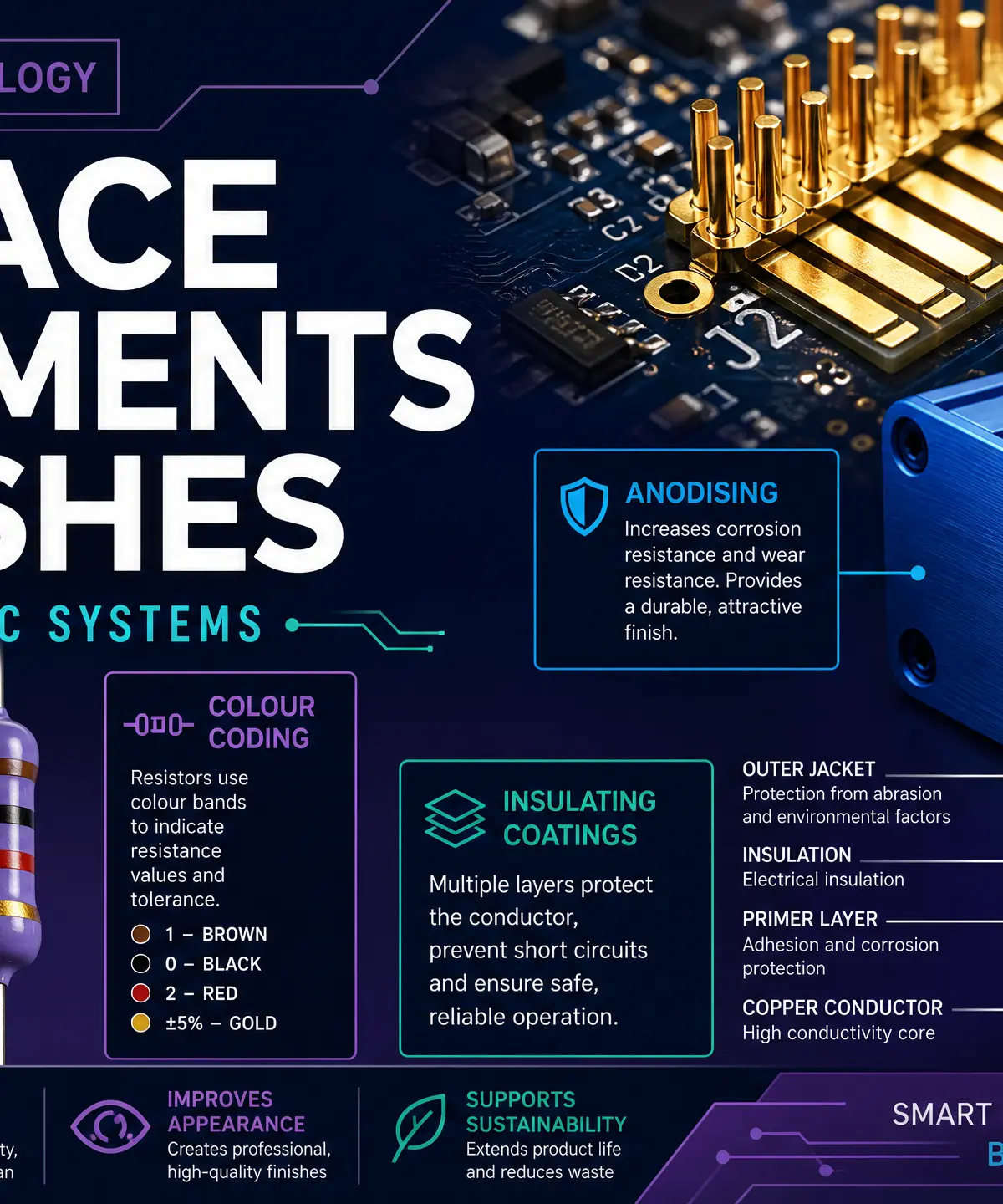
In Design and Technology: Systems, components rarely exist in their raw state. They are treated or finished to improve how they work, how long they last, and how they look. This topic (5.8) focuses on the application of appropriate surface treatments and finishes to components and systems, specifically distinguishing between functional and aesthetic purposes. Examiners consistently test your ability to explain why a specific finish has been chosen for a given context.
🎧 Listen to the Revision Podcast:

Key Knowledge & Theory
Functional vs. Aesthetic Finishes
The most important distinction to grasp is the difference between functional and aesthetic finishes:
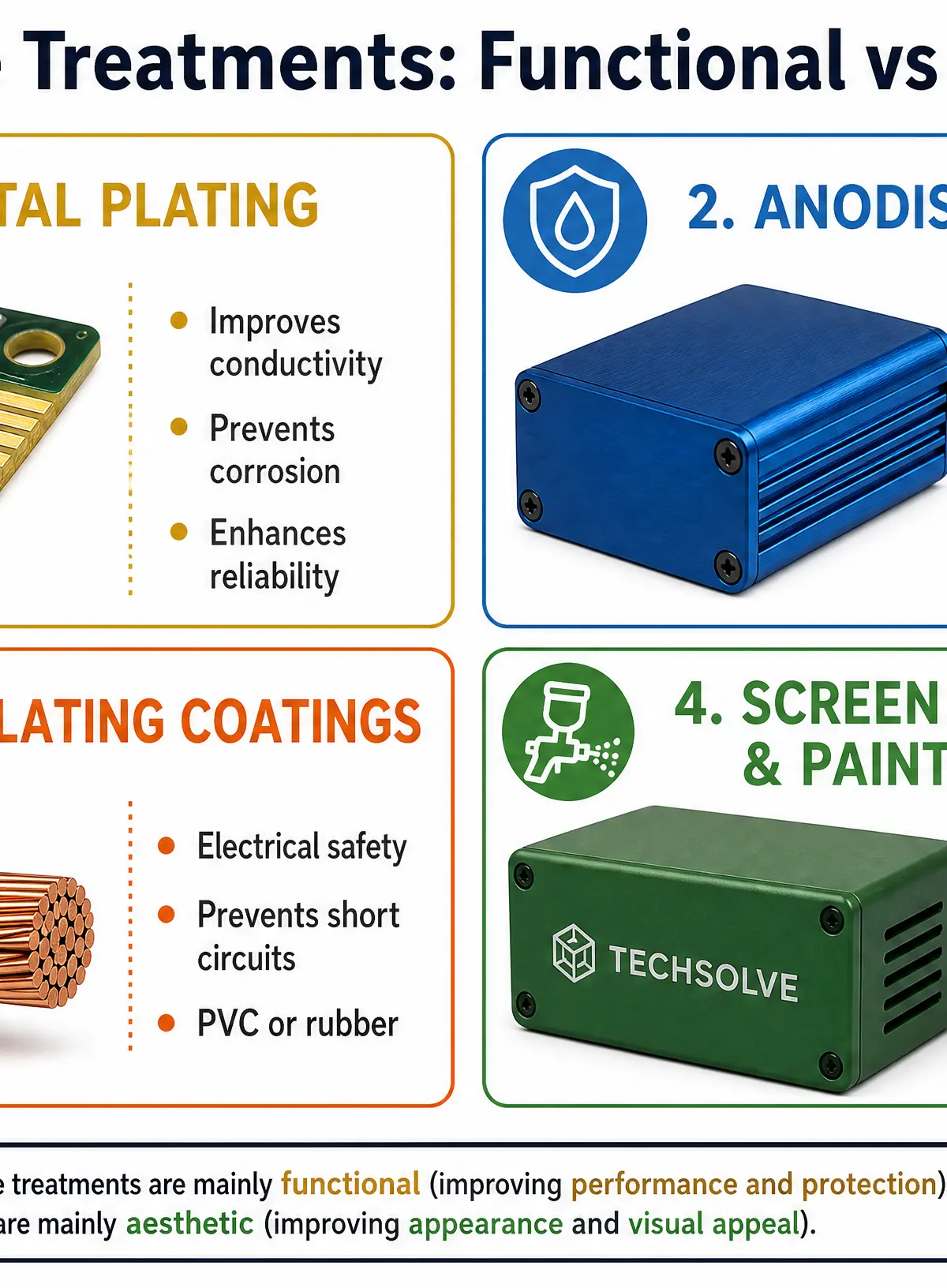
- Functional finishes do a job. They improve the performance, safety, durability, or reliability of the product (e.g., preventing corrosion, providing electrical insulation).
- Aesthetic finishes improve the appearance. They add colour, texture, branding, or a professional look (e.g., a brightly coloured outer casing).
- Dual-purpose finishes achieve both simultaneously (e.g., anodising an aluminium case makes it harder and allows it to be dyed a vibrant colour).
Core Surface Treatments
1. Metal Plating (Functional)
Metal plating involves depositing a thin layer of metal (such as gold, silver, or tin) onto the surface of a conductive component, most commonly printed circuit board (PCB) edge connectors, contact pins, and switch terminals.
- Why Gold? Gold is an excellent electrical conductor and, crucially, it is highly resistant to oxidation and corrosion. This ensures that the electrical connection remains clean, low-resistance, and highly reliable over the product's lifespan, even in harsh environments.
2. Insulating Coatings and Coverings (Functional & Safety)
Electronic systems must be safe for the user and reliable in operation. Insulating materials (typically polymers like PVC, rubber, or specialized conformal coatings) are applied over conductive elements.
- Wire Insulation: The PVC coating on wires prevents the user from touching the live conductor (preventing electric shock) and stops adjacent wires from touching each other (preventing short circuits).
- Conformal Coating: A thin polymeric film applied to entire PCBs to protect the delicate tracks and surface-mount components from moisture, dust, chemicals, and temperature extremes.
3. Resistor Colour Code Bands (Functional - Informational)
While not a 'finish' in the traditional protective sense, the coloured bands painted onto through-hole resistors are a critical surface treatment applied for functional identification.
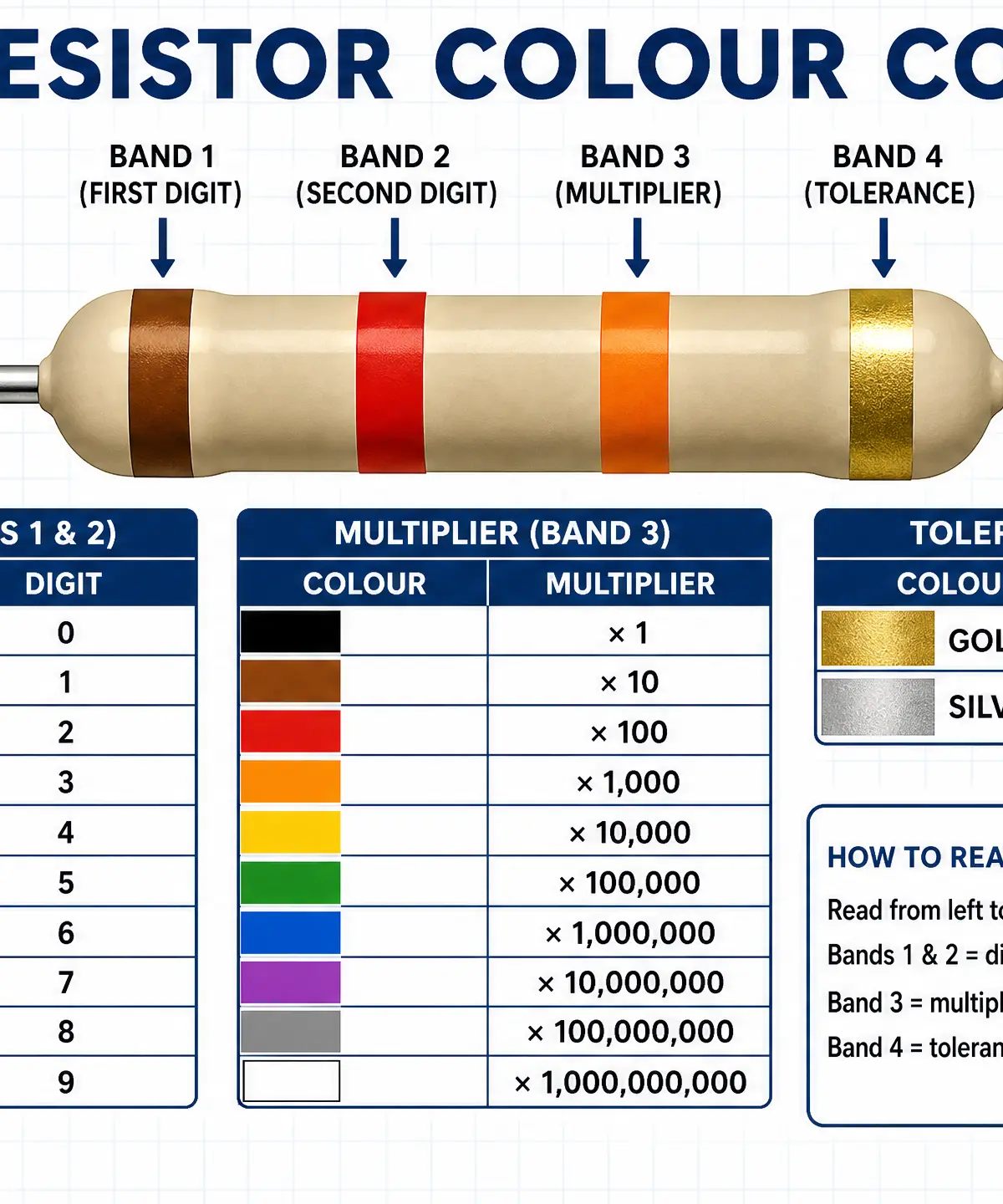
They allow engineers to quickly identify the resistance value (in Ohms, Ω) and the manufacturing tolerance without needing a multimeter.
4. Finishes Applied to Cases and Enclosures (Functional & Aesthetic)
The outer casing of an electronic product requires finishing to protect the internal components and present an attractive product to the consumer.
- Anodising (Aluminium): An electrochemical process that thickens the natural oxide layer on aluminium. It significantly increases surface hardness and corrosion resistance (functional) while allowing the metal to be dyed in vibrant, metallic colours (aesthetic).
- Painting and Powder Coating: Applied to metal or plastic cases to provide a barrier against the environment (functional) and to achieve specific brand colours or textures (aesthetic).
- Screen Printing: Ink is forced through a fine mesh stencil onto the enclosure or PCB. This is used to apply branding, logos, and regulatory marks (aesthetic), as well as to label ports, buttons, and component placements (functional/informational).
Technical Vocabulary
- Oxidation/Corrosion: The degradation of a metal surface due to reaction with oxygen or moisture, leading to poor electrical connections.
- Conductivity: The ability of a material to allow the flow of electrical current.
- Insulation: A material that resists the flow of electrical current, used for safety and preventing short circuits.
- Tolerance: The acceptable margin of error in a component's manufactured value (e.g., ±5% for a gold band on a resistor).
- Anodising: An electrolytic passivation process used to increase the thickness of the natural oxide layer on the surface of metal parts.
Practical Skills & Coursework
Techniques & Processes
When building electronic systems for your coursework, you must demonstrate the application of appropriate finishes:
- Applying Conformal Coating: If your project will be used outdoors (e.g., a weather station), you should apply a conformal coating spray to the soldered PCB to protect it from moisture.
- Enclosure Finishing: If you manufacture a casing using vacuum forming or 3D printing, consider how it will be finished. Will you use wet and dry paper to smooth the edges? Will you apply an acrylic spray paint for a professional aesthetic?
- Component Identification: You must be able to accurately read resistor colour codes when populating your PCB, ensuring the correct values are placed in the correct locations.
Portfolio/Coursework Guidance
Assessment Criteria
Examiners look for clear justification of your design choices. When you select a material for your enclosure or a specific type of wire, you must document why you chose it in your portfolio.
Building a Strong Portfolio
- Annotation: Don't just label a wire as "red wire." Annotate it as: "Red PVC insulated stranded copper wire. The PVC provides electrical insulation to prevent short circuits, while the red colour functionally identifies it as the positive power line."
- Testing: If you apply a finish (like paint or varnish) to your enclosure, document the process with photographs and evaluate its success. Did it improve the aesthetic appeal? Did it provide a durable surface?
Exam Component
Written Exam Knowledge
The written paper will test your ability to recall facts (AO1), apply your knowledge to given contexts (AO2), and analyse/evaluate different finishing options (AO3). You will frequently be asked to justify the choice of a finish for a specific product.
Exam Preparation
Practice writing extended responses that link the properties of the finish to the function of the product. Use the "Point, Evidence, Explain" structure. State the finish, provide evidence of its properties, and explain how those properties benefit the specific electronic system in question.
Visual Resources
2 diagrams and illustrations
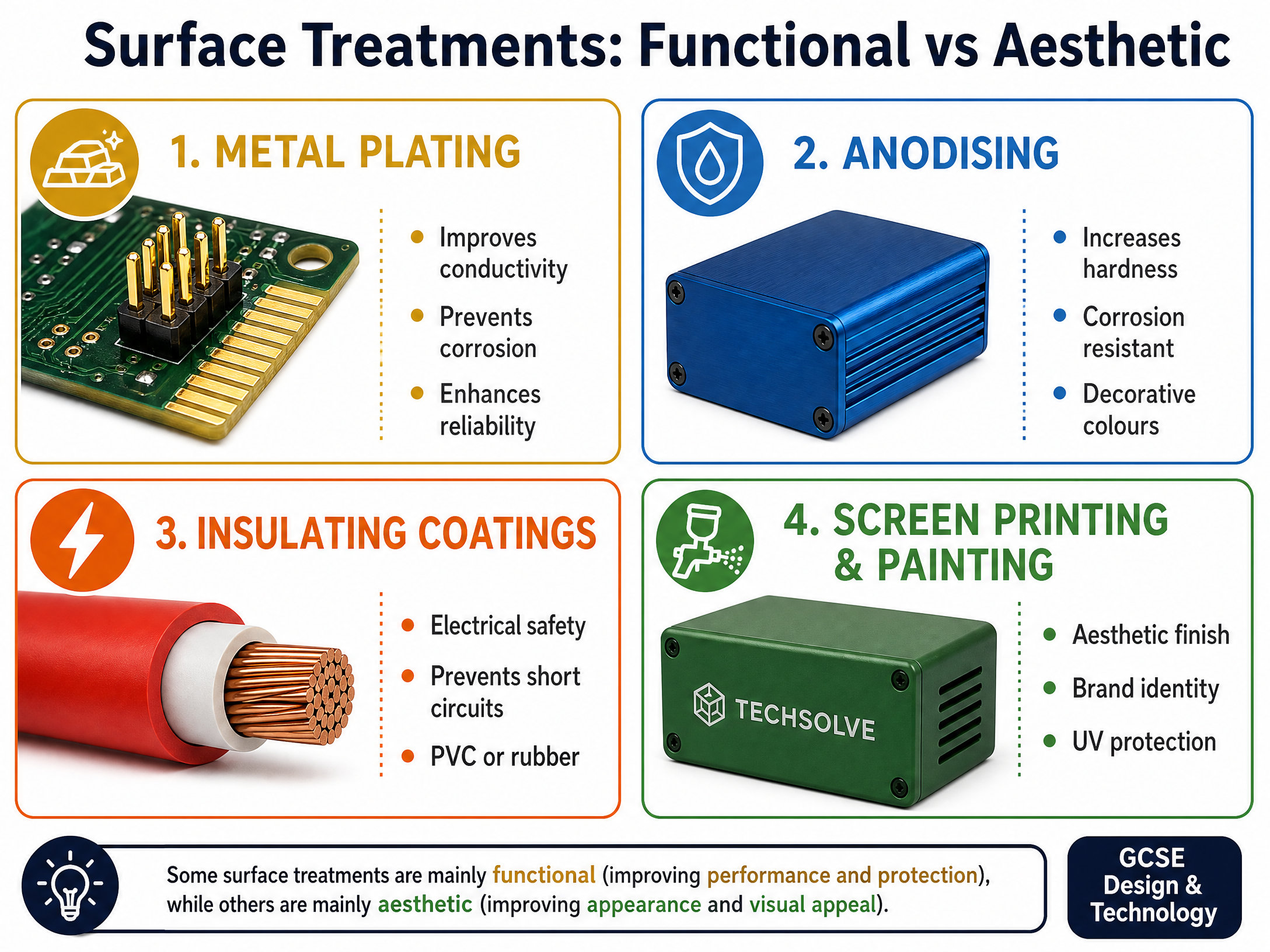
Interactive Diagrams
1 interactive diagram to visualise key concepts
Conceptual Flow Outline
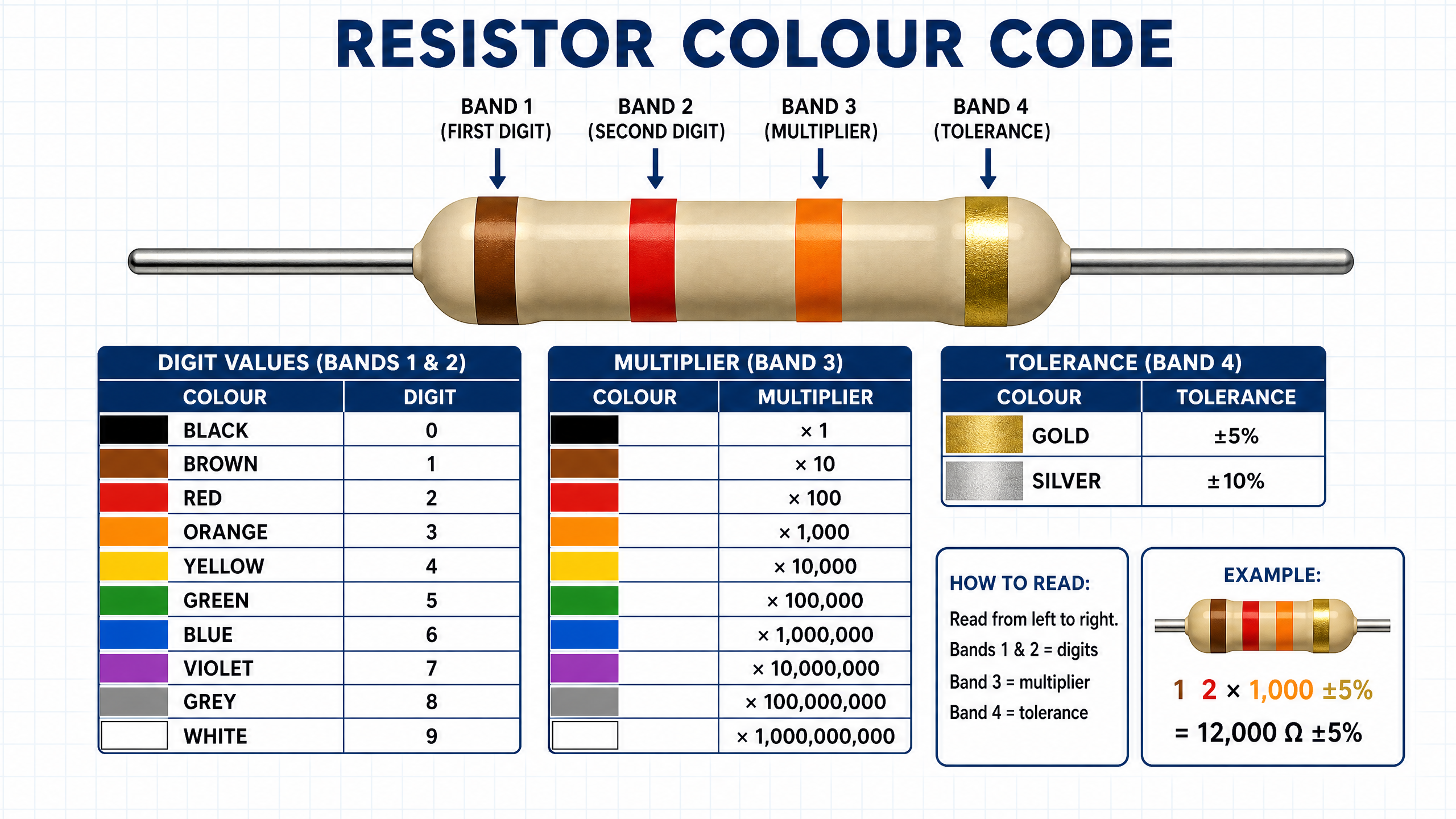
Categorisation of Surface Treatments: Functional vs. Aesthetic
Worked Examples
3 worked examples — open one to explore the question and available guidance.
Practice Questions
Test your understanding — click to reveal model answers
State the colour of the multiplier band (Band 3) for a resistor with a value of 4,700 Ohms (4.7kΩ).
Hint: First two digits are 4 and 7. What do you need to multiply 47 by to get 4,700?
Describe two functional reasons why the mains power cable for a desktop computer is covered in a thick layer of PVC.
Hint: Think about electrical safety and physical durability.
A manufacturer is designing a new high-end audio amplifier. The front panel will be made of aluminium. Compare the use of painting versus anodising for finishing the front panel. (6 marks)
Hint: You must discuss both processes and use comparative language (e.g., 'whereas', 'more than'). Consider aesthetics, durability, and the 'high-end' context.