Pearson Edexcel · GCSE · Design and Technology
Systems: Specialist techniques, tools, equipment and processes to shape, fabricate, construct and assemble a high-quality systems prototype
This topic covers the specialist techniques, tools, and processes required to shape, fabricate, and assemble high-quality systems prototypes. It is essential for demonstrating practical making skills, safe working practices, and iterative refinement in your Non-Exam Assessment (NEA).
- 7 min read
- 3 worked examples
- 4 practice questions
- 6 key terms
Study Notes
Overview
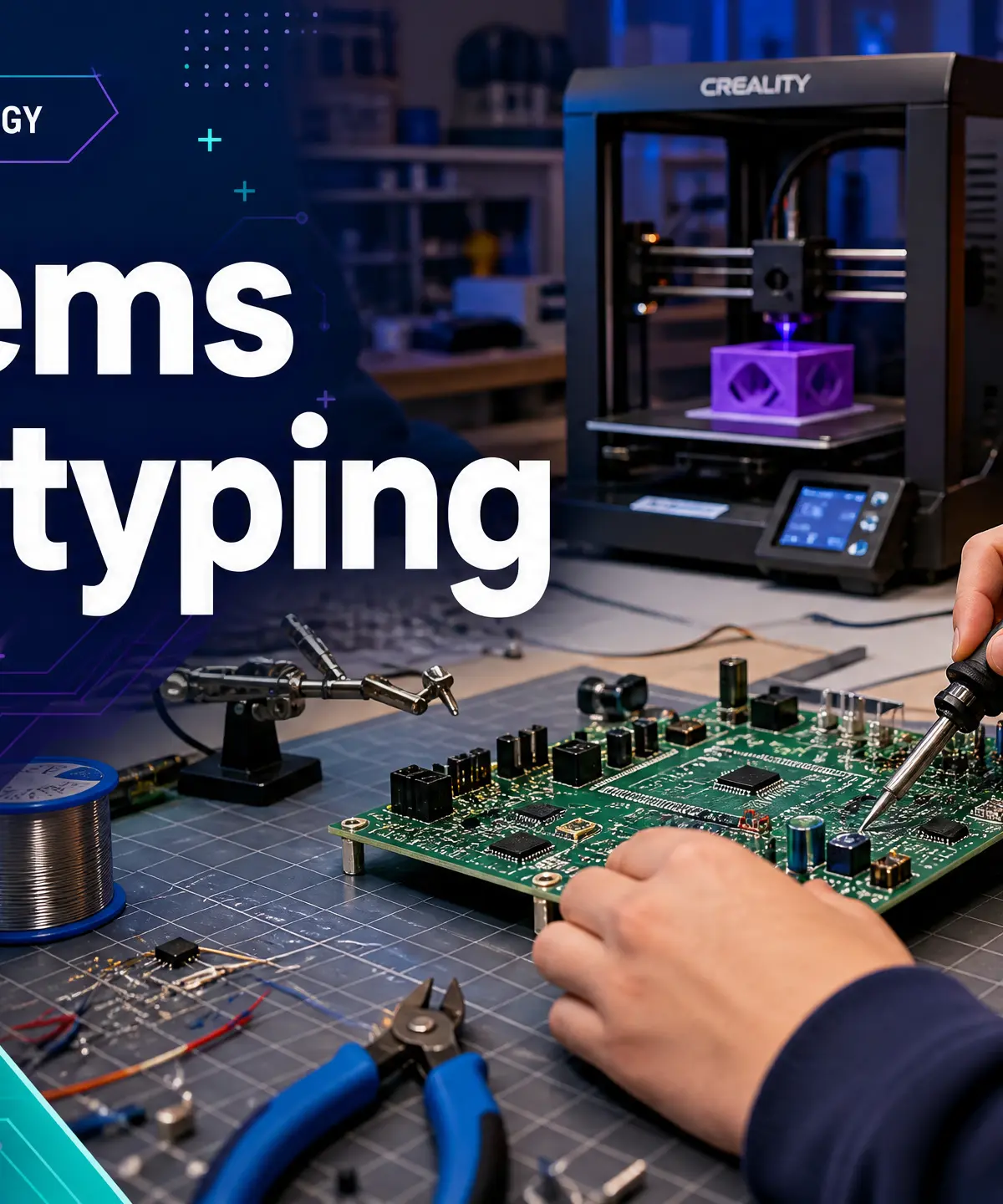
Topic 5.7 focuses on the transition from digital design to physical reality. A systems prototype is a functioning model of your design outcome, built to test ideas, prove concepts, and demonstrate your manufacturing capabilities. In the GCSE Design and Technology course, examiners assess your ability to select appropriate tools, apply specialist techniques safely, and document an iterative process of refinement.
Audio Guide
Listen to the companion podcast for a comprehensive overview of this topic, including exam tips and a quick-fire recall quiz.

Key Knowledge & Theory
Core Manufacturing Categories
To construct a high-quality prototype, you must understand four primary categories of making. Examiners expect you to justify why you chose specific processes within these categories.
- Shaping Processes: Changing the form of a material. This includes both additive and subtractive methods, as well as thermoforming.
- Fabricating Processes: Creating specific components, such as Printed Circuit Boards (PCBs), that form the electronic heart of your system.
- Constructing Processes: Building the physical structure or enclosure that houses the system.
- Assembling Processes: Bringing all the parts together, including mounting components and managing cables safely and neatly.
Technical Vocabulary
To secure marks in the top band for your NEA portfolio and written exam, you MUST use accurate technical terminology. Avoid generic terms like "making" or "putting together"; instead, use specific process names like "subtractive manufacturing", "through-hole soldering", and "iterative refinement".
Practical Skills
Shaping Techniques & Processes
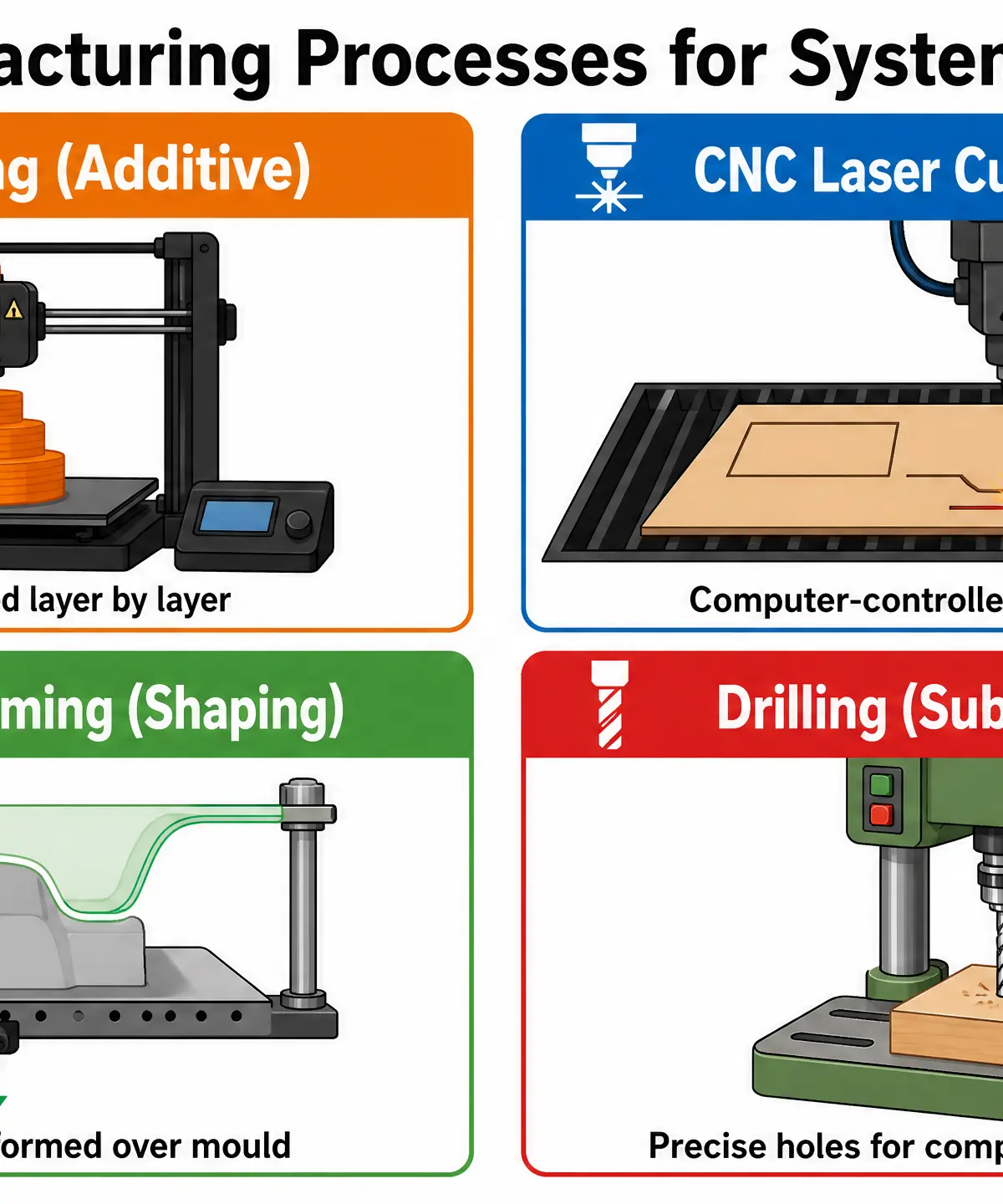
Examiners look for evidence that you can select and execute appropriate shaping processes. You must understand whether a process involves wastage (subtractive) or addition (additive).
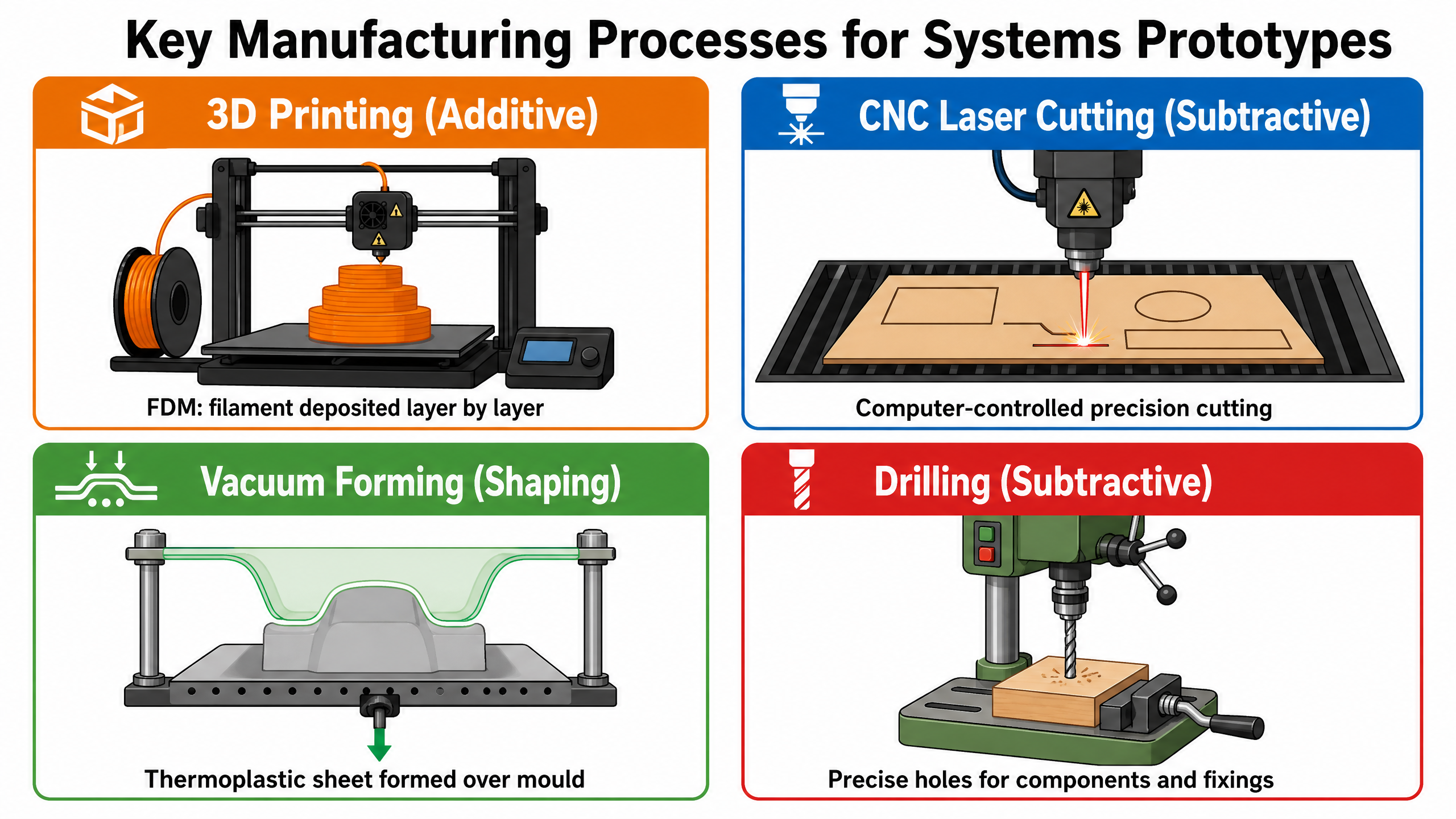
- Vacuum Forming (Wastage/Shaping): A process where a thermoplastic sheet (e.g., HIPS or Acrylic) is heated until pliable, then drawn over a mould using a vacuum. It is ideal for creating custom, lightweight enclosures for electronic circuits. The process involves wastage because the formed shape must be trimmed from the excess sheet.
- CNC Laser Cutting (Wastage/Subtractive): Computer Numerical Control (CNC) laser cutting uses a high-powered laser to cut or engrave flat sheet materials based on a digital CAD file. It offers immense precision and repeatability, making it perfect for cutting acrylic panels, mounting plates, or intricate structural components.
- 3D Printing (Addition/Additive): Most commonly using Fused Deposition Modelling (FDM), this process builds parts layer by layer from melted thermoplastic filament (like PLA or ABS). It is highly advantageous for creating complex, bespoke brackets or enclosures that would be nearly impossible to fabricate using traditional hand tools.
- Drilling (Wastage/Subtractive): Using a pillar drill to create precise holes for mounting components, routing cables, or assembling panels. Accuracy here is critical for the overall quality of the prototype.
PCB Fabrication Methods
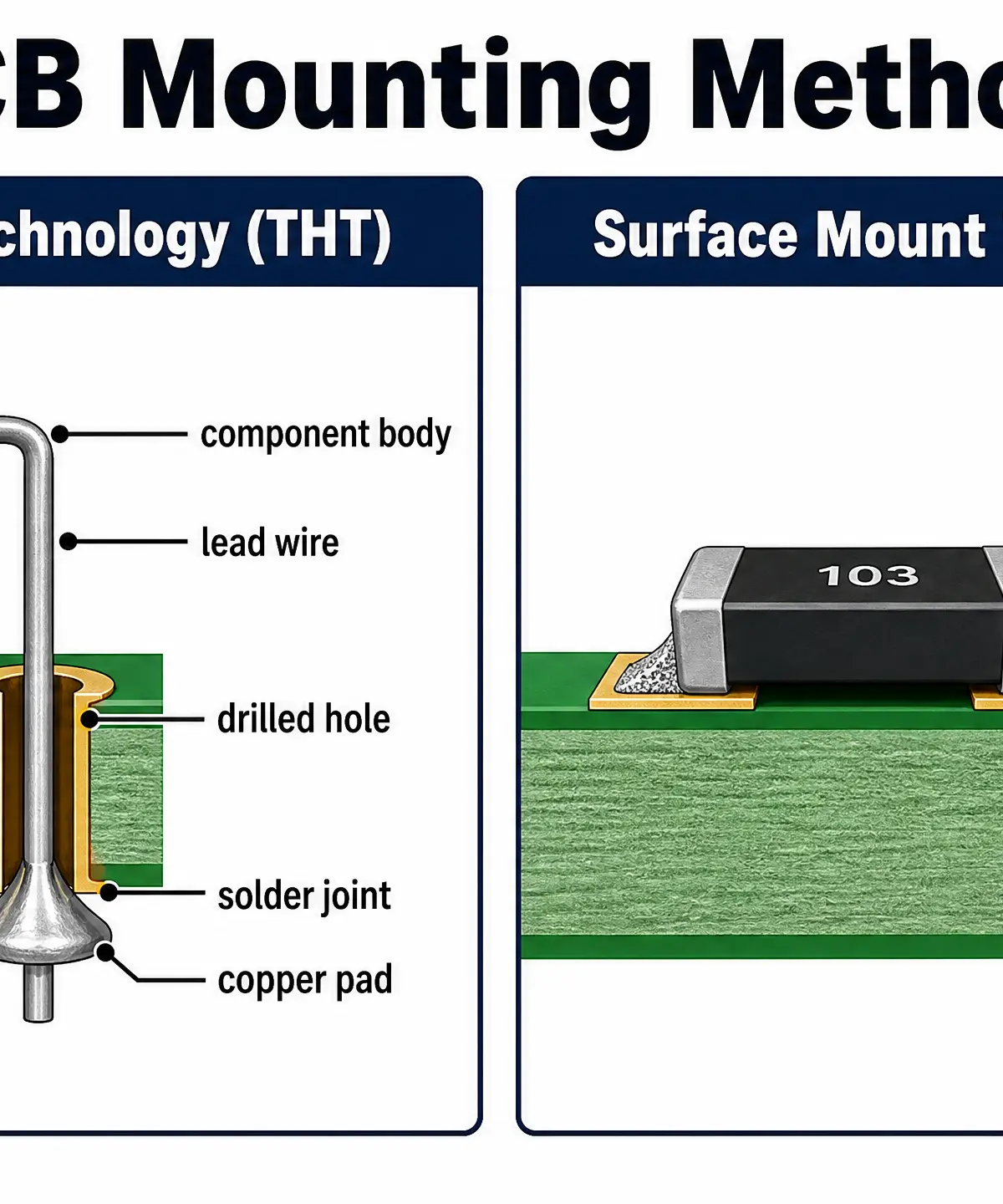
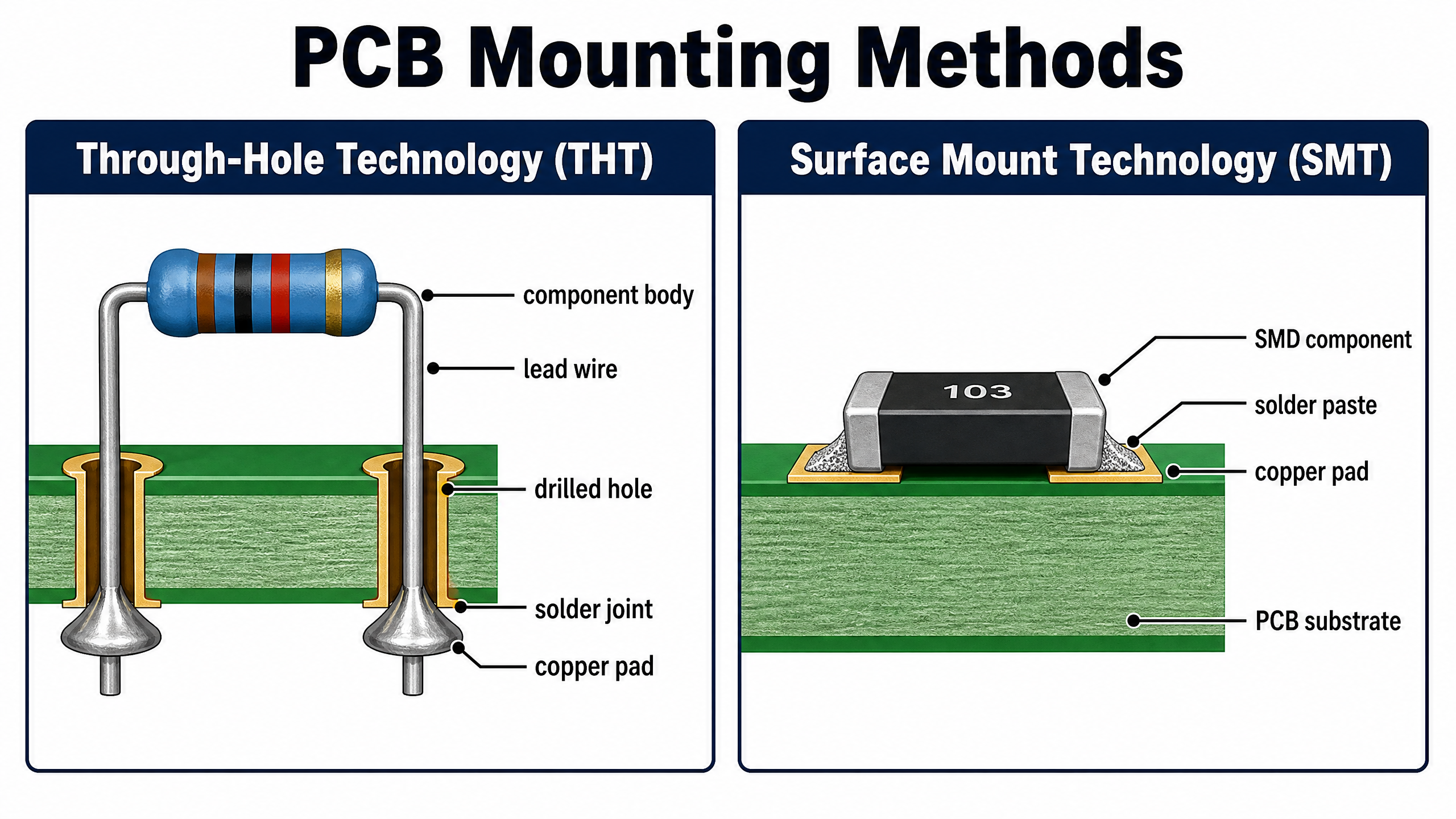
The electronic core of your system will likely be housed on a Printed Circuit Board. You must understand the two primary methods for mounting components to these boards.
- Through-Hole Technology (THT): Component leads are inserted into holes drilled through the PCB and soldered to pads on the opposite side. This creates a strong mechanical bond. It is the standard method for school-level prototyping because it is easier to solder by hand and allows for components to be swapped during the testing phase.
- Surface Mount Technology (SMT): Components are soldered directly onto the surface of the PCB without any holes. The components are much smaller, allowing for highly compact commercial products. However, SMT requires specialist equipment (like solder paste and reflow ovens) and is significantly harder to assemble by hand.
Assembly and Cable Management
A common area where candidates drop marks is in the final assembly. A messy prototype indicates a lack of care and planning. Effective cable management is essential for both aesthetics and safety.
- Cable Looms: Bundling multiple wires together neatly, often routing them along the edges of an enclosure.
- Cable Sleeving: Using expandable braided tubing or heat-shrink tubing to protect and group wires.
- Cable Ties: Using small plastic fasteners to secure wires to the chassis, preventing them from snagging on moving parts or interfering with components.
Safe Working Practices
Demonstrating safe working practices is a mandatory assessment objective. You must provide photographic evidence in your portfolio of:
- Wearing appropriate Personal Protective Equipment (PPE), such as safety goggles when using the pillar drill or laser cutter.
- Using machine guards and clamps to secure workpieces.
- Following correct start-up, operation, and shut-down procedures for all equipment.
- Maintaining a tidy workspace to prevent accidents.
Portfolio/Coursework Guidance
Assessment Criteria
Examiners assess your prototype based on:
- Selection of Tools and Equipment: Did you choose the right tool for the job, and can you justify that choice?
- Quality of Making: Is the prototype accurate, precise, and well-finished? Are the joints tight, the cuts clean, and the soldering neat?
- Safe Working Practices: Is there clear evidence that you worked safely throughout the process?
- Iterative Refinement: Did you test the prototype, identify flaws, and make improvements?
Building a Strong Portfolio
The most critical advice for your NEA is to document everything. An examiner cannot award marks for a brilliant soldering job if they cannot see it.
- Take clear, well-lit photographs before, during, and after every manufacturing process.
- Annotate these photographs using the technical vocabulary discussed above.
- Explicitly state why you chose a particular method (e.g., "I selected CNC laser cutting for the top panel because it provides the precision necessary for the LCD screen to fit perfectly, which could not be achieved with a hand saw.")
Exam Component
Written Exam Knowledge
In the written paper, questions on this topic typically focus on comparing processes, justifying material or manufacturing choices, and understanding the environmental or economic impacts of different production methods.
- Comparison Questions: You may be asked to compare 3D printing with vacuum forming for producing a batch of 50 enclosures. You must discuss setup costs, speed, material wastage, and finish quality.
- Justification Questions: You might be given a product scenario and asked to recommend a PCB mounting method, justifying your choice based on the product's intended use and manufacturing scale.
Visual Resources
3 diagrams and illustrations
Interactive Diagrams
1 interactive diagram to visualise key concepts
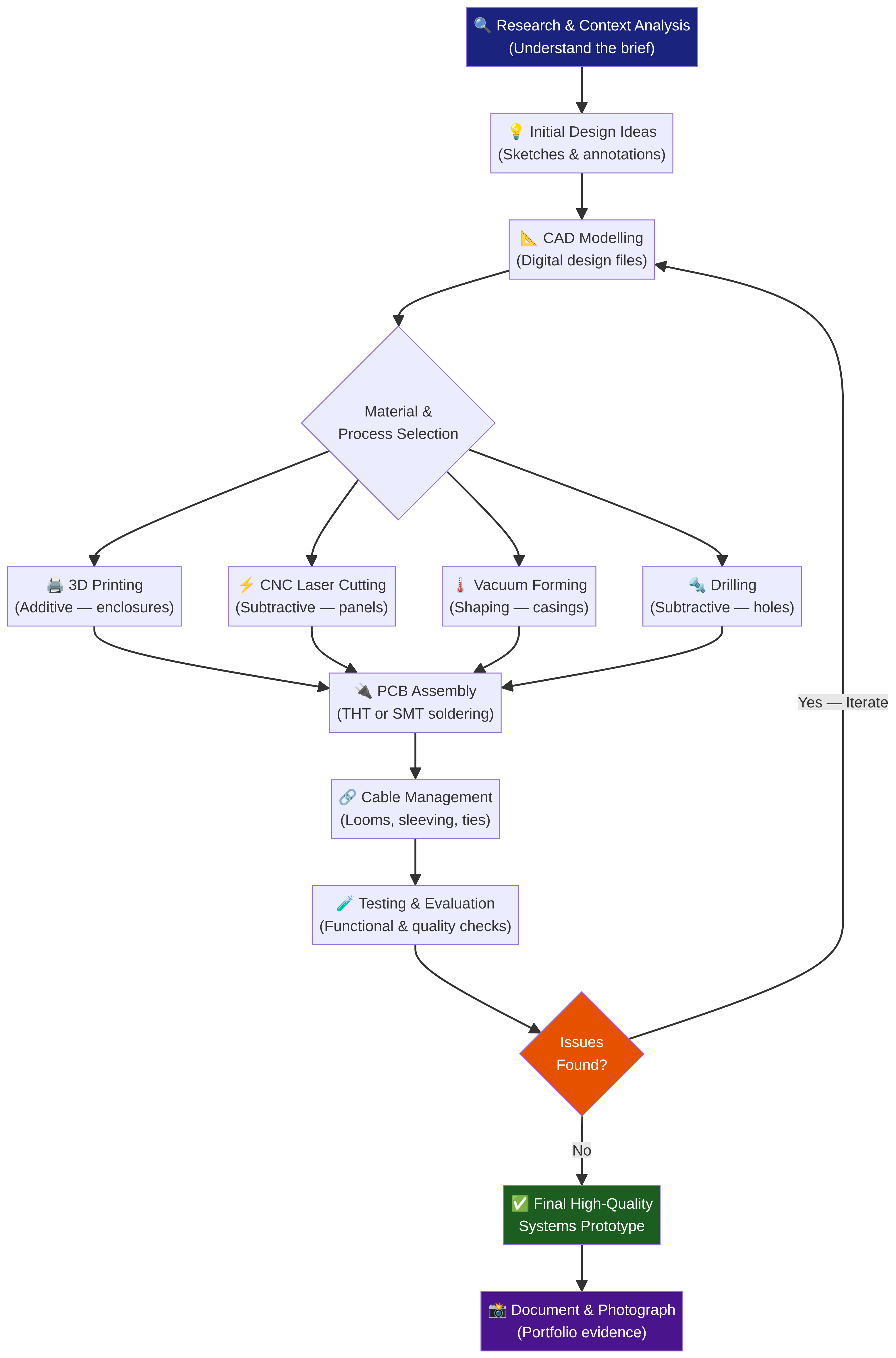
Conceptual Flow Outline
The Iterative Systems Prototyping Process
Worked Examples
3 worked examples — open one to explore the question and available guidance.
Practice Questions
Test your understanding — click to reveal model answers
Identify one subtractive manufacturing process used in systems prototyping.
Hint: Think about processes that remove material to create a shape.
Describe the difference between additive and subtractive manufacturing, giving one example of each used in systems prototyping.
Hint: Define both terms clearly, then provide a specific machine or process for each.
Explain why a student might choose to use Through-Hole Technology (THT) rather than Surface Mount Technology (SMT) when building a one-off prototype circuit in a school workshop.
Hint: Consider the equipment available in a school and the need to test or change components.
A company is designing a new smart thermostat. The initial prototypes were made using 3D printing and THT PCBs. Evaluate the changes in manufacturing processes required to scale up production to 100,000 units.
Hint: Compare prototyping methods with mass production methods. Think about speed, cost per unit, and automation.