Pearson Edexcel · GCSE · Design and Technology
Systems: The way in which the selection of components and systems is influenced
This topic covers the crucial factors designers must evaluate when selecting components and systems. Understanding aesthetic, environmental, cost, availability, social, and cultural influences is essential for making informed design decisions and scoring highly in the written exam.
- 5 min read
- 3 worked examples
- 4 practice questions
- 6 key terms
Study Notes
Overview

When a designer or engineer is choosing which components or materials to use in a product, they do not simply pick whatever is available. They must weigh up a comprehensive range of factors to ensure the product is functional, appealing, cost-effective, and responsible. In your GCSE Design and Technology exam, you must be able to identify these factors, explain their impact, and critically apply them to specific design contexts.
Listen to the revision podcast below for an examiner's perspective on this topic:

Key Knowledge & Theory
The Six Core Selection Factors
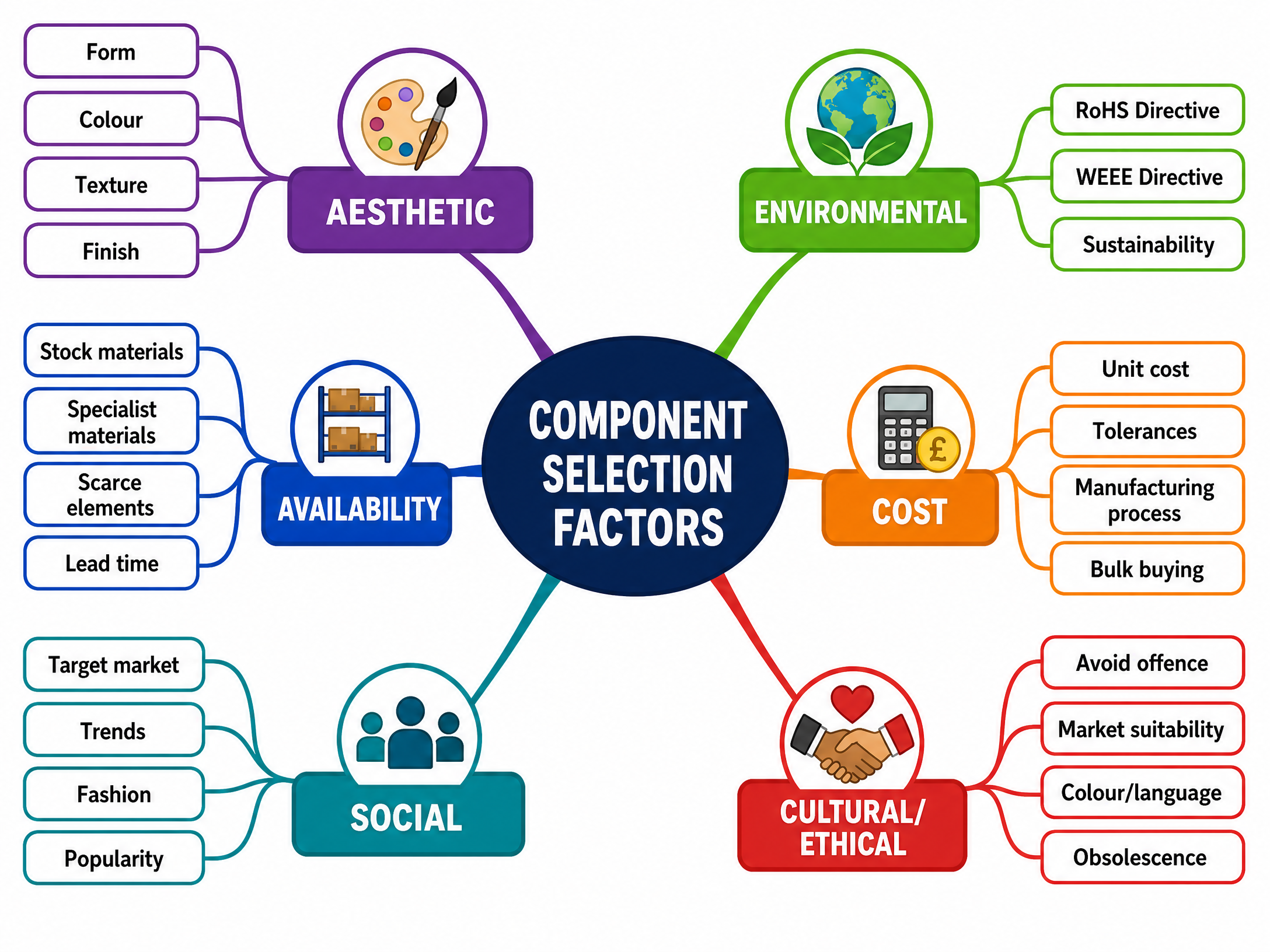
Designers evaluate components across six primary dimensions. A successful product balances these often competing demands.
1. Aesthetic Factors
Aesthetics relates to the sensory appeal of a component. While functionality is critical, the visual and tactile qualities often drive consumer choice.
- Form: The three-dimensional shape and structure of the component. Does it fit the overall design language?
- Colour: Can the component be manufactured in the desired colour, or will it require secondary finishing?
- Texture and Finish: Is the surface smooth, matte, textured, or glossy? This affects both the look and the feel (ergonomics) of the product.
2. Environmental Factors
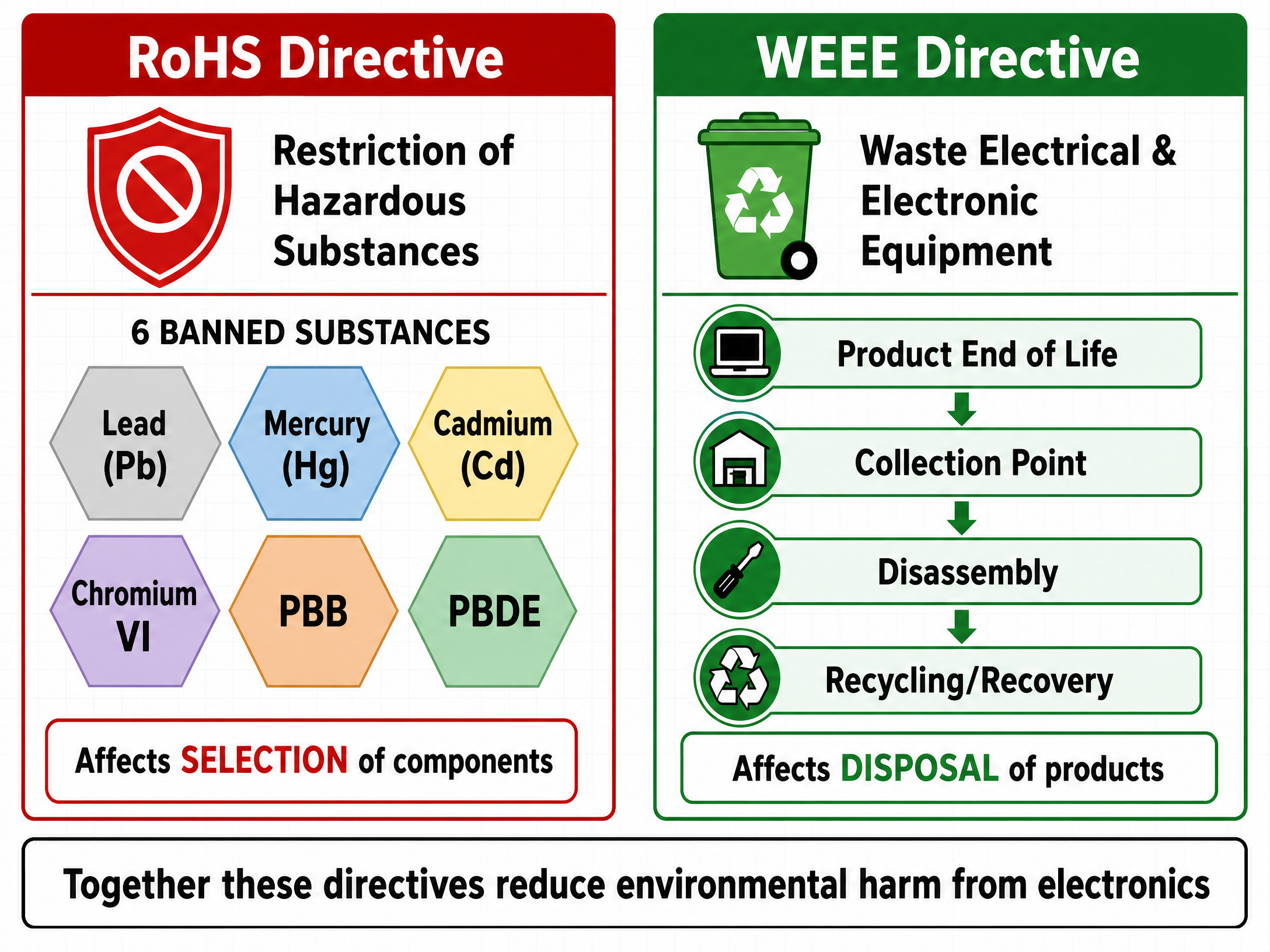
Examiners frequently test your understanding of environmental legislation. You must know the difference between selection and disposal.
- RoHS Directive (Restriction of Hazardous Substances): This directly affects selection. It restricts the use of six hazardous materials (Lead, Mercury, Cadmium, Hexavalent Chromium, PBB, PBDE) in electrical and electronic equipment manufactured or sold in the EU/UK.
- WEEE Directive (Waste Electrical and Electronic Equipment): This affects disposal and end-of-life management. Products must be designed for disassembly and recycling.
3. Availability Factors
Can the required materials be sourced reliably when needed?
- Stock Materials: Standard, off-the-shelf components (e.g., standard resistor values, standard timber sizes). These reduce costs and lead times.
- Specialist Materials: Custom or non-standard items that require special ordering, increasing both cost and lead time.
- Scarce Elements: Materials that are geographically concentrated or rare (e.g., Cobalt in batteries, Neodymium in speakers). Relying on scarce elements introduces significant supply chain risk.
4. Cost Factors
Cost analysis goes beyond the basic unit price.
- Quality and Tolerances: High-precision components with tight tolerances cost more to manufacture.
- Manufacturing Processes: Some components have high initial tooling costs but very low unit costs at scale (e.g., injection moulding). Designers must consider production volume.
- Bulk Buying: Purchasing in larger quantities reduces unit cost but requires capital and storage space.
5. Social Factors
Understanding the target demographic and societal context.
- Social Groups: Age, lifestyle, and values of the intended users.
- Trends and Fashion: Selecting components that align with current aesthetic or technological trends to ensure market relevance.
- Popularity: Leveraging popular form factors or interfaces that users already understand and desire.
6. Cultural and Ethical Factors
Nuanced considerations that demonstrate higher-order thinking.
- Avoiding Offence: Ensuring colours, symbols, and forms do not carry negative connotations in different cultures.
- Market Suitability: Adapting products for different regional requirements.
- Consumer Society and Obsolescence: The ethical debate surrounding 'built-in obsolescence' (designing products to fail or become outdated quickly).
- Mass Production Effects: The broader ethical impact of large-scale manufacturing on communities and the environment.
Practical Skills & Portfolio Guidance
Applying Factors in Coursework
When developing your Non-Exam Assessment (NEA) portfolio, you must explicitly document your component selection process. Examiners award marks for justified decision-making.
- Annotation Quality: Do not just label a component (e.g., "I used a 10k resistor"). Explain why (e.g., "I selected a standard 10k stock resistor to minimise cost and ensure immediate availability, rather than specifying a custom value").
- Evidencing Experimentation: Show that you considered alternatives. Create a comparison table evaluating three different components against the six factors before making your final choice.
Exam Component Preparation
Tackling Contextual Questions
In the written paper, you will rarely be asked simply to list the factors. Instead, you will be given a specific product (e.g., a children's electronic toy, a premium audio amplifier, or a disposable medical device) and asked to evaluate component selection for that context.
The Golden Rule: Always link the theoretical factor directly back to the specific needs of the product and its user.
Visual Resources
2 diagrams and illustrations
Interactive Diagrams
1 interactive diagram to visualise key concepts
Conceptual Flow Outline
The Component Selection Evaluation Process
Worked Examples
3 worked examples — open one to explore the question and available guidance.
Practice Questions
Test your understanding — click to reveal model answers
Identify two aesthetic factors a designer must consider when selecting a casing component for a handheld games console. [2 marks]
Hint: Think about what the user sees and feels when holding the device.
Explain the difference between stock materials and specialist materials in relation to component availability and cost. [4 marks]
Hint: Contrast the two types of materials based on how easy they are to get and how that impacts their price.
A company is designing a new smart-watch. Evaluate how social and cultural factors might influence the selection of the strap and display components. [6 marks]
Hint: Think about trends, target demographics, and avoiding cultural offence.
Discuss the impact of the RoHS Directive on the selection of electronic components. [3 marks]
Hint: What does RoHS stand for, what does it restrict, and at what stage of the product lifecycle does it apply?