Pearson Edexcel · GCSE · Design and Technology
Textiles: Appropriate surface treatments and finishes that can be applied to textiles for functional and aesthetic purposes
This comprehensive guide covers the essential GCSE Design and Technology topic of textile surface treatments and finishes. It explores chemical, mechanical, biological, and smart finishes, explaining how they enhance both the functional performance and aesthetic appeal of fabrics for specific end-uses.
- 7 min read
- 3 worked examples
- 3 practice questions
- 6 key terms
Study Notes
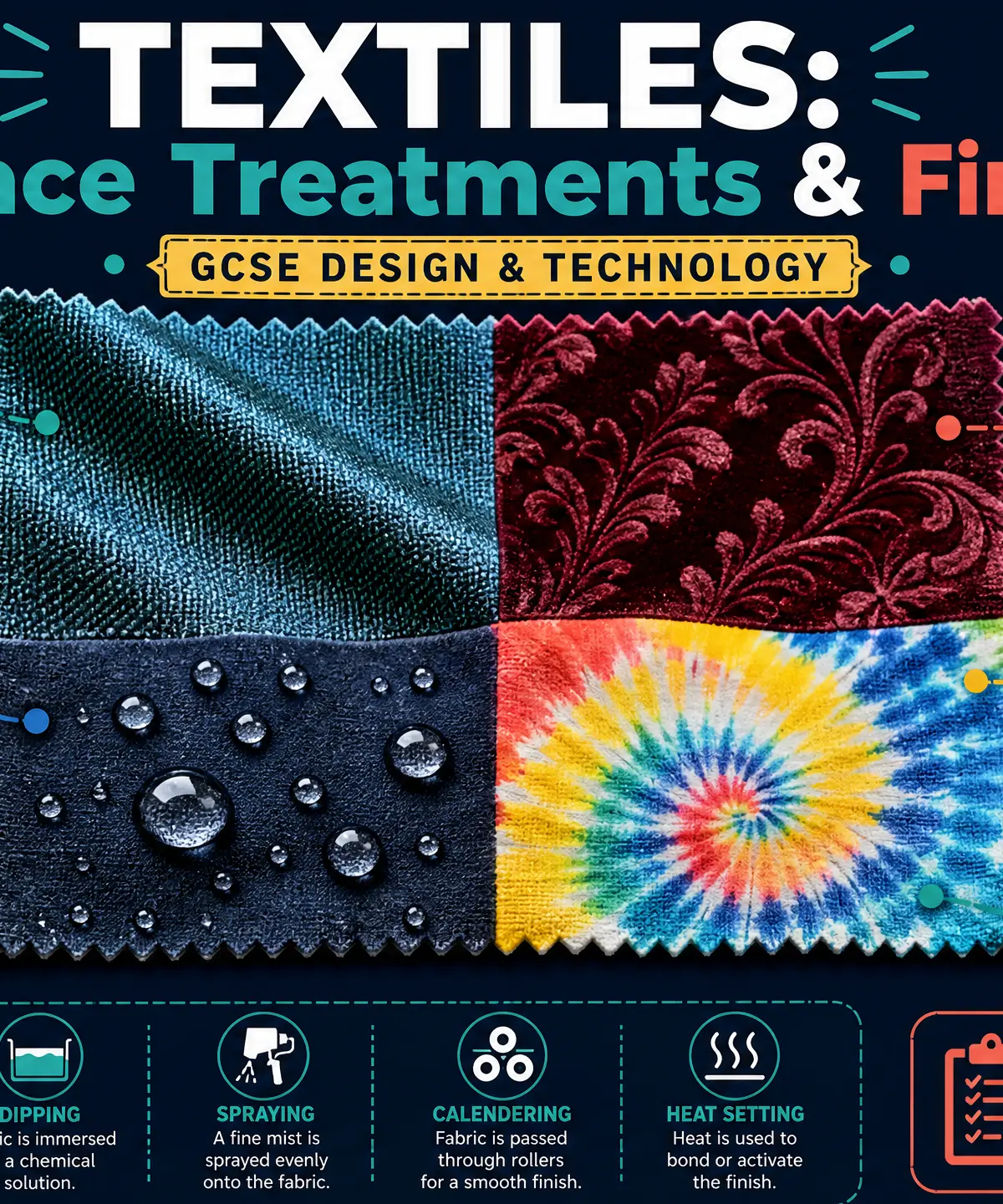
Overview
Surface treatments and finishes are essential processes in the textiles industry. They are applied to fabrics after they have been manufactured (or sometimes during the fibre/yarn stage) to alter their properties. In your GCSE Design and Technology course, understanding these finishes is crucial because it demonstrates your knowledge of how materials can be adapted to meet specific user needs and product requirements.
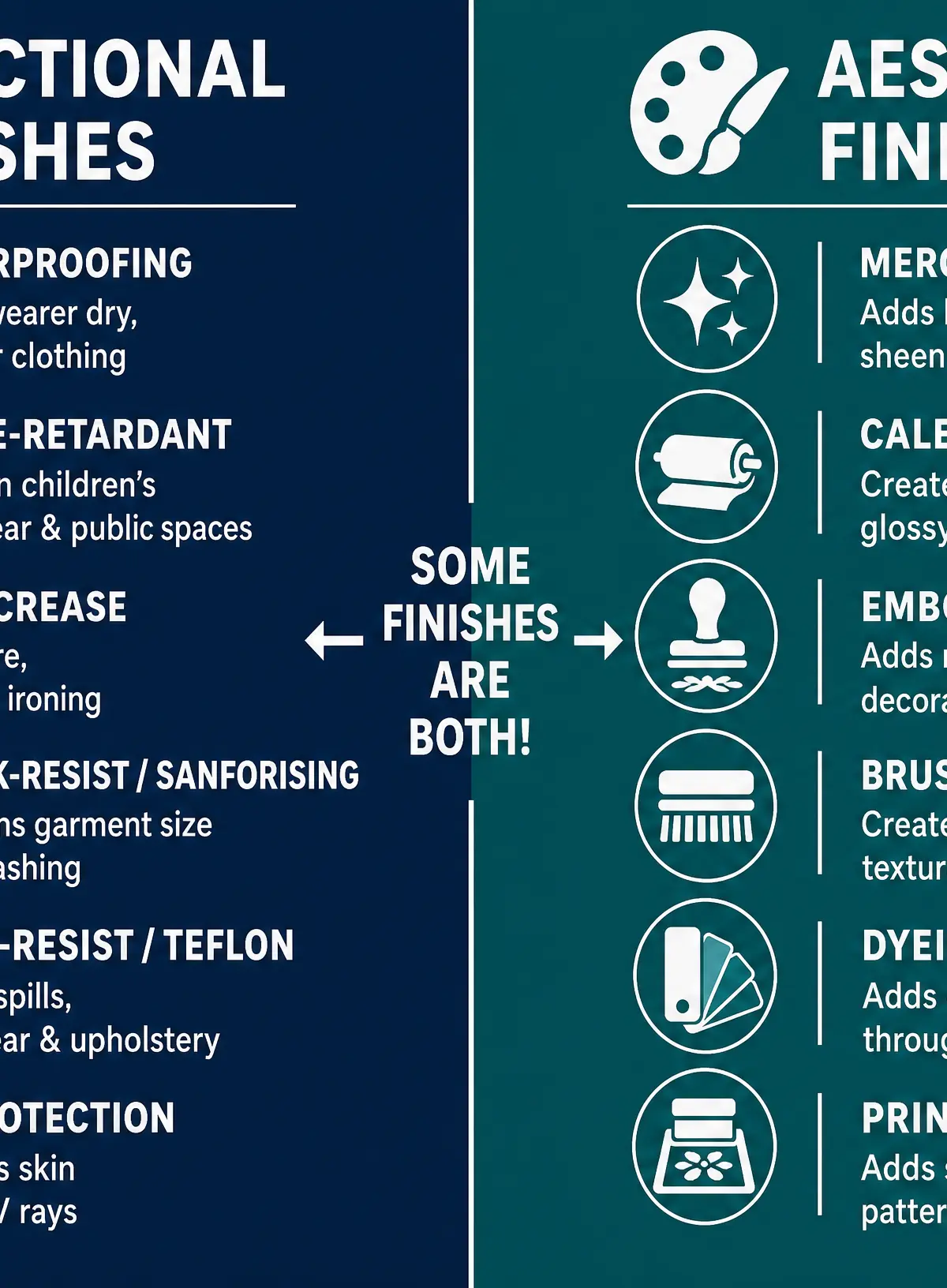
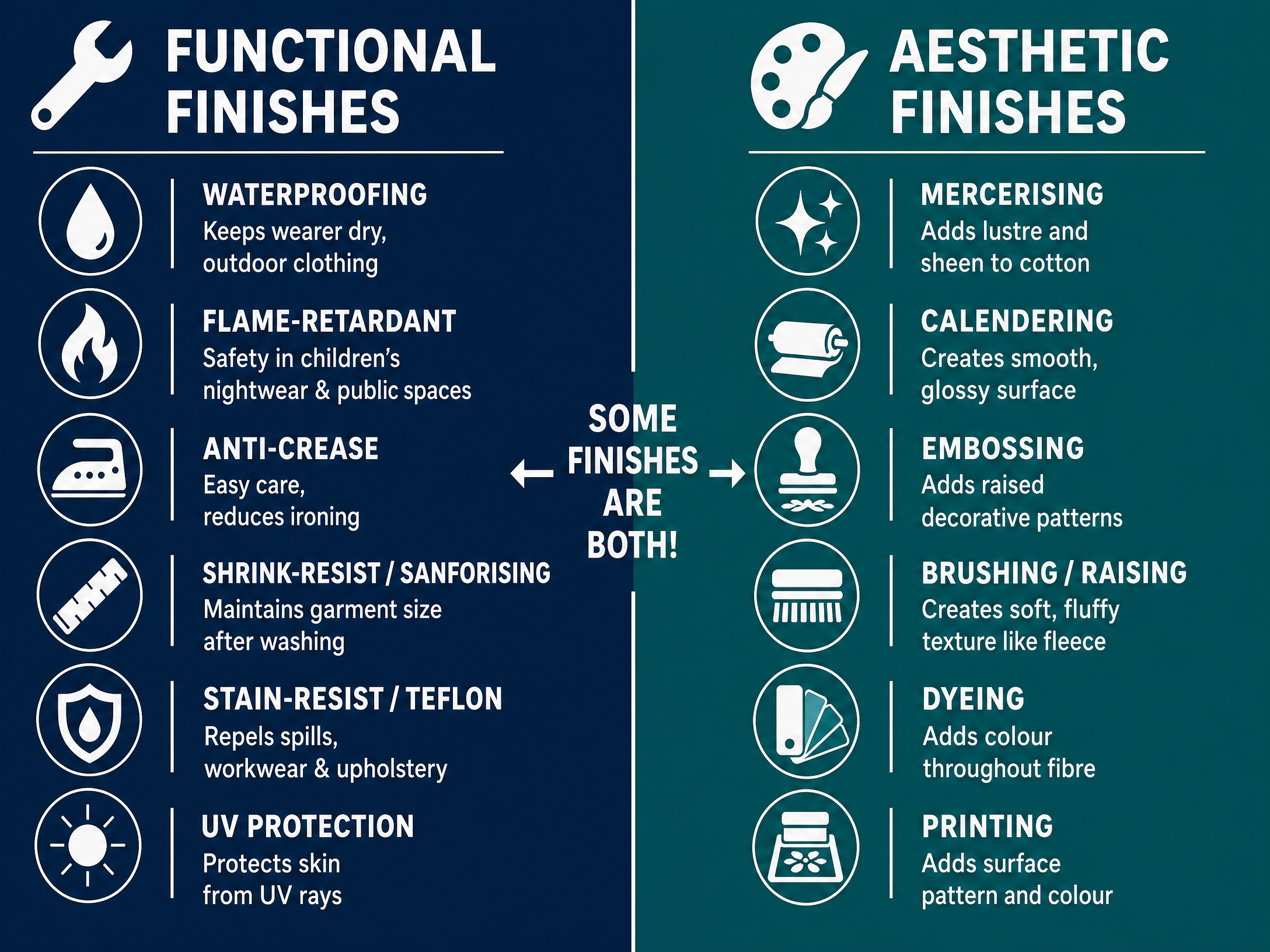
Finishes are broadly categorised into two main purposes:
- Functional Finishes: These improve the performance, safety, durability, or ease of care of a fabric.
- Aesthetic Finishes: These alter the appearance, texture, drape, or handle of a fabric to make it more visually appealing.
Some finishes, like mercerising, provide both functional and aesthetic benefits.
Listen to our comprehensive revision podcast to solidify your understanding:

Key Knowledge & Theory
Core Concepts: The Four Categories of Finishes
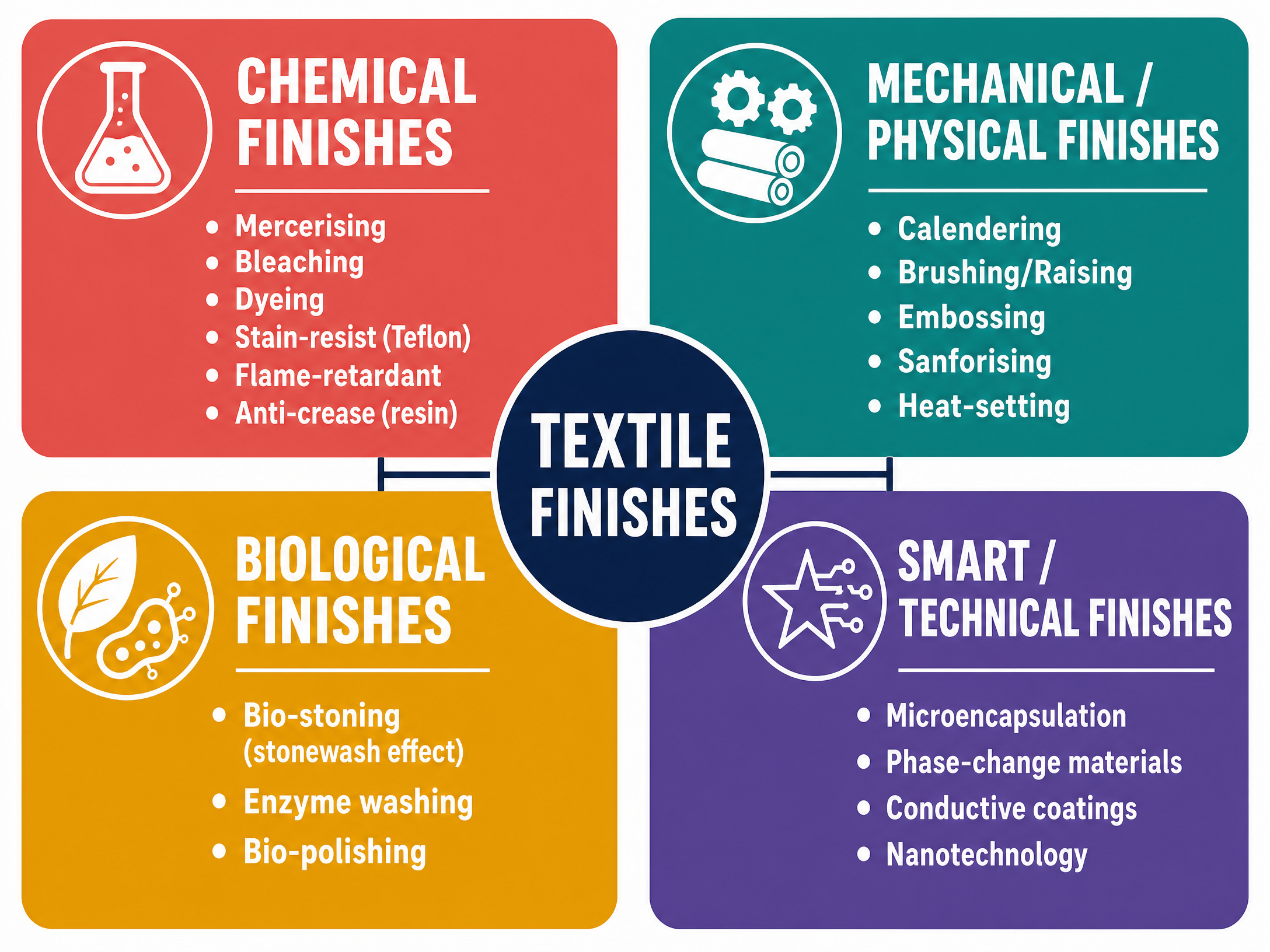
Examiners expect you to classify finishes correctly and explain how they work. There are four main categories you must know:
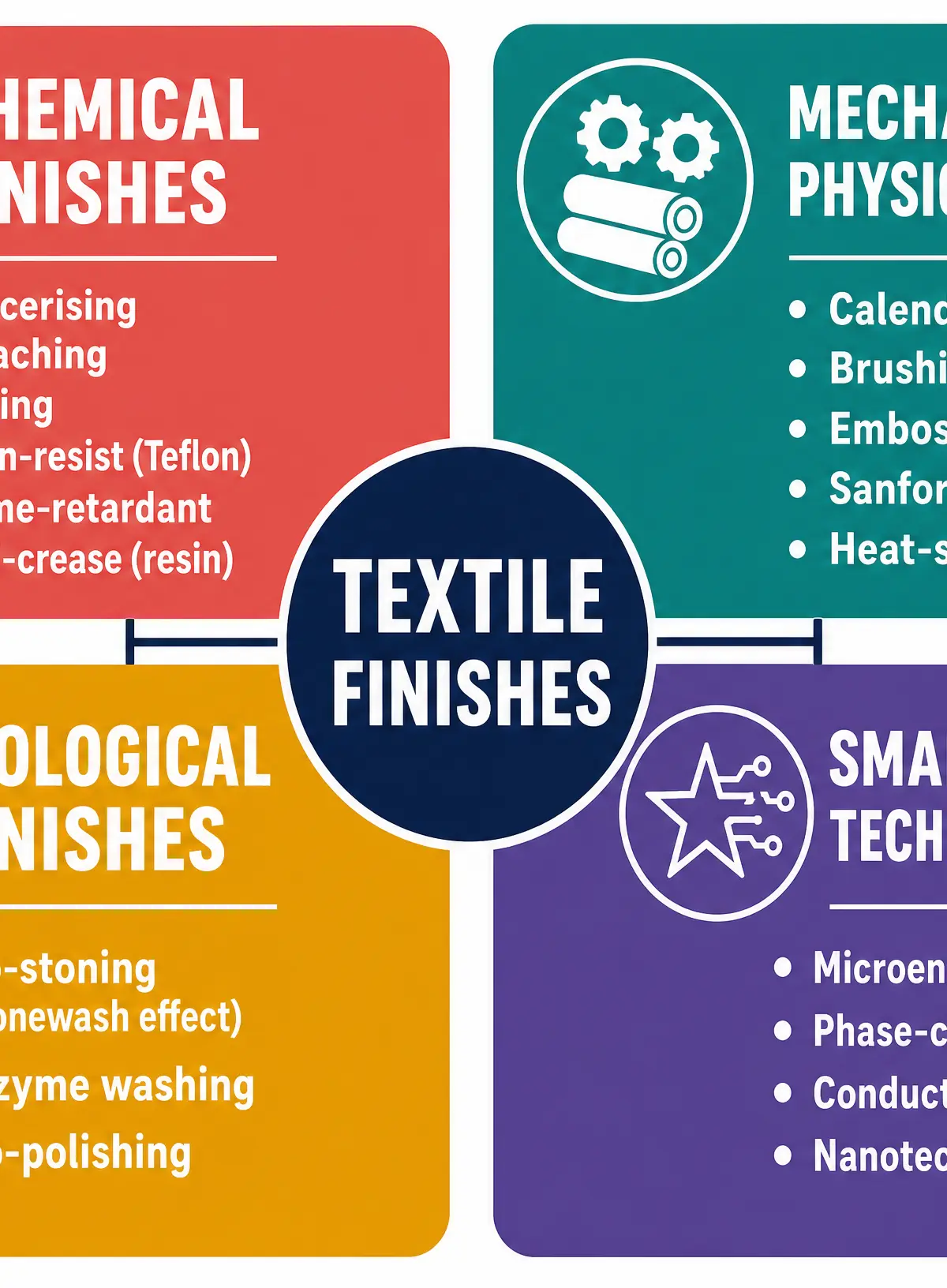
1. Chemical Finishes
These finishes involve applying chemical substances to alter the fundamental properties of the fibres. They are often permanent or semi-permanent.
- Mercerising: Applied to cotton using sodium hydroxide (caustic soda). It swells the fibres, making them rounder. This increases strength, improves dye uptake, and gives a lustrous sheen.
- Flame-retardant: Essential for safety. Chemicals (like intumescent coatings) are applied to slow down ignition and flame spread. Legally required for children's nightwear and public upholstery.
- Waterproofing: A barrier coating (e.g., polyurethane or wax) that prevents water penetration entirely. Used for outdoor clothing.
- Stain-resist (Teflon): Fluorocarbon chemicals create a surface barrier that repels liquids, causing them to bead up and roll off. Ideal for school uniforms and carpets.
- Anti-crease (Easy-care): Synthetic resins are applied to cellulosic fibres (cotton/linen) to prevent them from wrinkling, reducing the need for ironing.
2. Mechanical / Physical Finishes
These processes use physical forces such as heat, pressure, or friction to change the fabric's surface. They are generally more environmentally friendly than chemical finishes as they do not produce toxic effluent.
- Calendering: The fabric is passed between heavy, heated rollers under high pressure. This flattens the fibres, creating a smooth, highly polished, glossy surface.
- Brushing / Raising: Wire brushes or fine-toothed rollers pull up the surface fibres. This traps air, providing excellent thermal insulation, and creates a soft, fluffy texture (e.g., fleece).
- Embossing: Heated, engraved rollers press a permanent 3D pattern into the fabric surface.
- Sanforising: A controlled compressive shrinkage process. It pre-shrinks cotton and linen fabrics so they will not shrink further when washed by the consumer.
- Heat-setting: Used exclusively on synthetic fibres (like polyester). Heat is applied to lock the thermoplastic fibres into a permanent shape, such as permanent pleats.
3. Biological Finishes
These are modern, sustainable finishes that use enzymes (biological catalysts) to alter the fabric.
- Bio-stoning: Uses cellulase enzymes to break down the surface of denim, creating a stonewashed, faded effect without the environmental damage and fabric wear caused by traditional pumice stones.
- Bio-polishing: Enzymes remove protruding micro-fibres from the surface of cotton, resulting in a smoother fabric that is less prone to pilling (bobbling).
4. Smart / Technical Finishes
Cutting-edge technologies that allow fabrics to react to their environment.
- Microencapsulation: Microscopic capsules containing active ingredients (moisturisers, perfumes, insect repellents) are embedded in the fabric. Friction during wear breaks the capsules, releasing the contents.
- Phase-change materials (PCMs): Embedded substances absorb heat when the wearer is hot (changing from solid to liquid) and release heat when the wearer cools down, actively regulating body temperature.
- Nanotechnology: Applying finishes at a molecular level (nanoparticles) to create extreme properties like super-hydrophobicity (extreme water repellency) or antibacterial surfaces without affecting the fabric's handle or breathability.
Technical Vocabulary
To access the highest mark bands, you MUST use these terms accurately:
- Lustre: The natural or artificially induced sheen or shine on a fabric surface.
- Thermoplastic: A material (like polyester) that becomes pliable when heated and sets into a permanent shape when cooled.
- Hydrophobic: Water-repelling properties.
- Pilling: The formation of small balls of fuzz on the fabric surface due to friction.
- Effluent: Liquid waste or sewage discharged into a river or the sea (relevant when discussing the environmental impact of chemical finishes).
Practical Skills & Portfolio Guidance
Applying Finishes in Coursework
When designing and making your NEA (Non-Exam Assessment) product, you must justify your material choices, including any finishes.
**Techniques & Processes for the Workshop:**While you cannot perform industrial calendering or microencapsulation in a school workshop, you can apply and document certain finishes:
- Dyeing and Printing: You can apply aesthetic finishes through block printing, screen printing, tie-dye, or batik. Document your experimentation with different dye types (e.g., reactive dyes for cotton).
- Waterproofing: You can apply commercial waterproofing sprays (like Scotchgard) or wax treatments to cotton canvas to create functional outdoor products. Test the fabric before and after application to prove it works.
- Heat-setting: You can use an iron or heat press to create permanent pleats or shapes in synthetic fabrics.
Building a Strong Portfolio
Examiners award marks for justification and testing.
- Annotation: Do not just write "I used cotton." Write: "I selected a cotton fabric with a Teflon stain-resist finish for the children's apron because it will repel paint and food spills, making the product more durable and easier for parents to wash."
- Testing: Include photographic evidence of testing. For example, show a water droplet beading on your treated fabric next to a droplet soaking into untreated fabric.
Exam Component Preparation
Written Exam Knowledge
In the written paper, finishes are typically tested in three ways:
- Multiple Choice / Short Answer: Identifying the correct finish for a specific product (e.g., "Name a finish suitable for a firefighter's uniform").
- Explanation Questions: Explaining how a finish alters the properties of a fabric (e.g., "Explain how brushing improves the thermal properties of a fabric").
- Evaluation / Extended Response: Comparing two different finishes or evaluating the environmental impact of a specific treatment process.
Visual Resources
2 diagrams and illustrations
Interactive Diagrams
1 interactive diagram to visualise key concepts
Conceptual Flow Outline
The decision-making process for applying textile finishes.
Worked Examples
3 worked examples — open one to explore the question and available guidance.
Practice Questions
Test your understanding — click to reveal model answers
Identify one mechanical finish and state its primary purpose. (2 marks)
Hint: Think of processes that use heat, pressure, or friction rather than liquids.
Explain the difference between a functional finish and an aesthetic finish, giving one example of each. (4 marks)
Hint: Define both terms clearly, then provide a specific named example that fits each definition.
Denim jeans can be treated using traditional stonewashing or bio-stoning. Evaluate the use of bio-stoning compared to traditional stonewashing for a manufacturer of denim jeans. (6 marks)
Hint: Discuss the environmental, economic, and quality differences between using pumice stones and using enzymes.