Pearson Edexcel · GCSE · Design and Technology
Textiles: The sources, origins, physical and working properties of natural, synthetic, woven, non-woven, knitted, blended and mixed-fibre textiles and their social and ecological footprint
This topic explores the diverse world of textiles, covering the origins, properties, and construction of natural and synthetic fibres. Crucially, it examines the profound social and ecological impacts of textile production, a key focus for examiners in Design and Technology.
- 6 min read
- 3 worked examples
- 3 practice questions
- 6 key terms
Study Notes
Overview
Textiles form the fabric of our everyday lives, from the clothes we wear to the furnishings in our homes. In GCSE Design and Technology (Topic 6.2), you are required to understand not just what fabrics are made of, but how they are constructed, how they behave, and the impact their production has on the world. This topic bridges theoretical material science with real-world sustainability issues.
Key Knowledge & Theory
Core Concepts
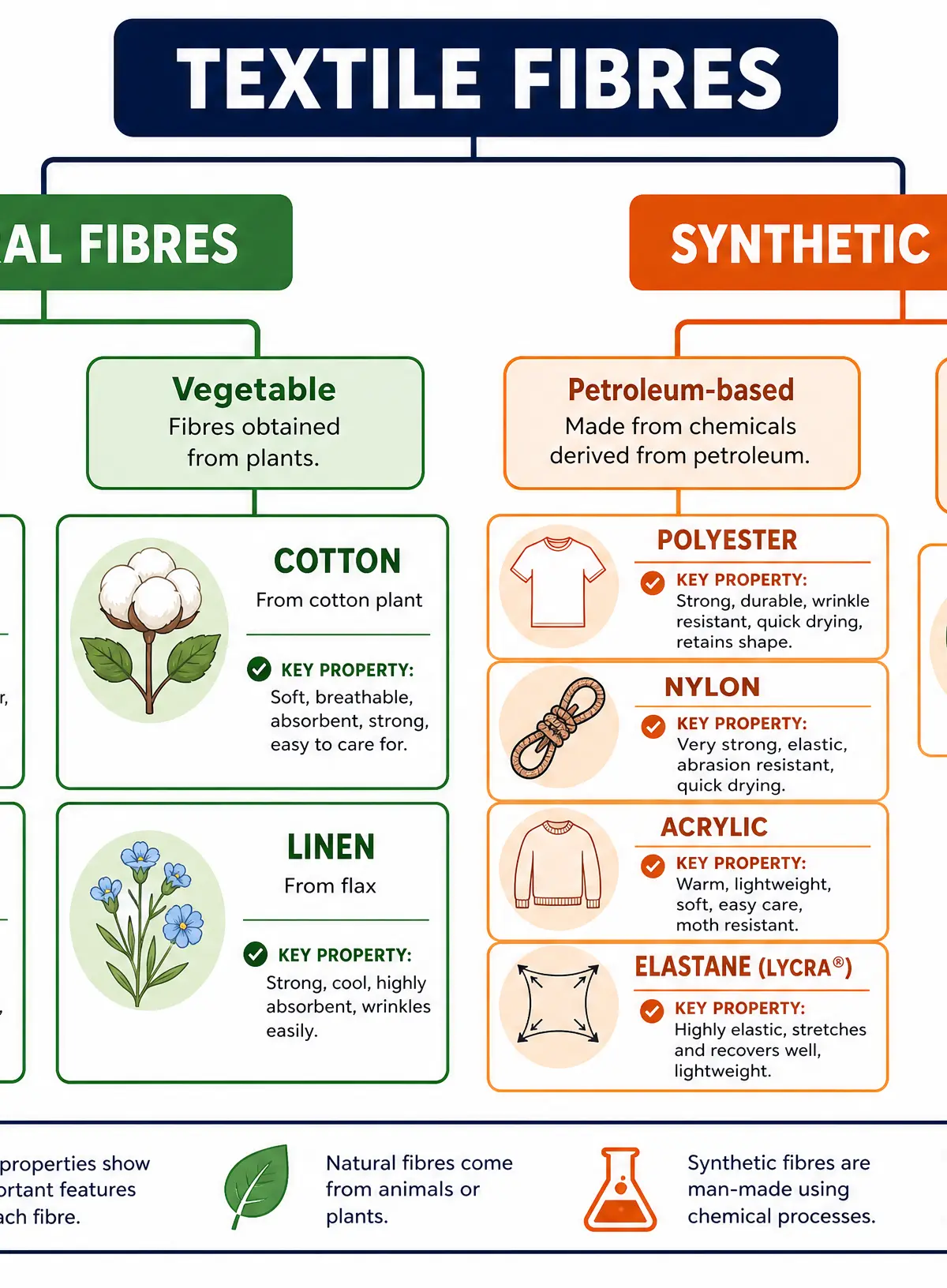
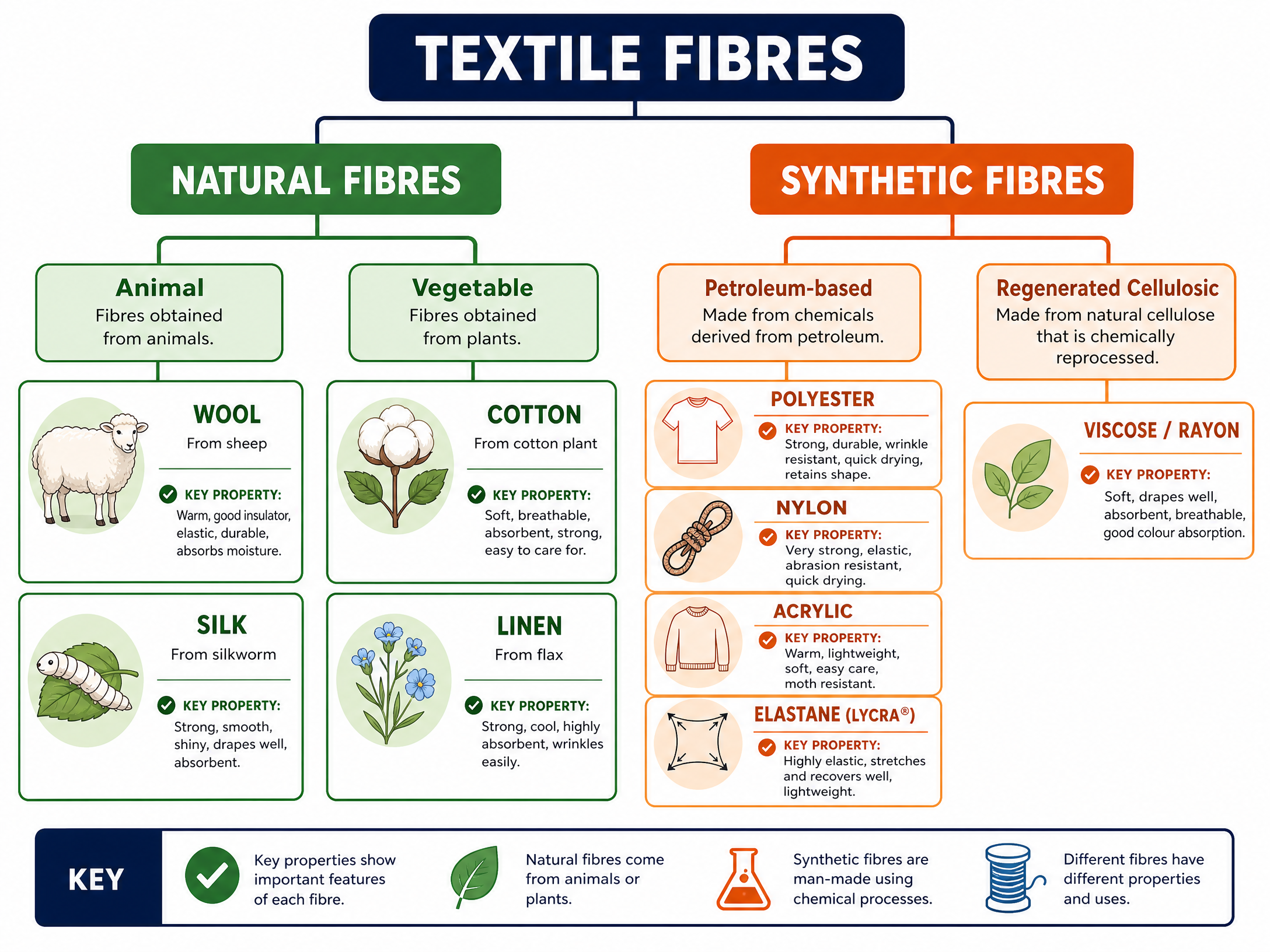
1. Fibre Origins and ClassificationFibres are the basic building blocks of textiles. They are classified into two main categories: Natural and Synthetic.
- Natural Fibres: Sourced from plants (vegetable) or animals.
- Animal: Wool (from sheep), Silk (from the silkworm cocoon).
- Vegetable: Cotton (from the cotton plant boll), Linen (from the flax plant stem).
- Synthetic Fibres: Man-made, typically derived from petroleum (crude oil) through chemical processes.
- Petroleum-based: Polyester, Nylon (Polyamide), Acrylic, Elastane (Lycra).
- Regenerated Cellulosic: Viscose/Rayon (made from natural wood pulp but heavily processed with chemicals).
2. Working and Physical PropertiesExaminers expect you to use precise terminology when describing how a fabric performs (working properties) or feels/looks (physical properties).
- Elasticity: The ability to stretch and return to its original shape (e.g., Elastane).
- Resilience: The ability to recover from deformation or creasing (e.g., Wool).
- Durability: Resistance to wear and tear (e.g., Nylon).
- Tensile Strength: Resistance to breaking under tension (e.g., Silk).
- Breathability: Ability to allow moisture vapour to be transmitted through the material (e.g., Cotton).
- Absorbency: Ability to take in moisture (e.g., Cotton, Linen).
- Thermal Conductivity: How well it transfers heat (Wool is a poor conductor, hence a good insulator).
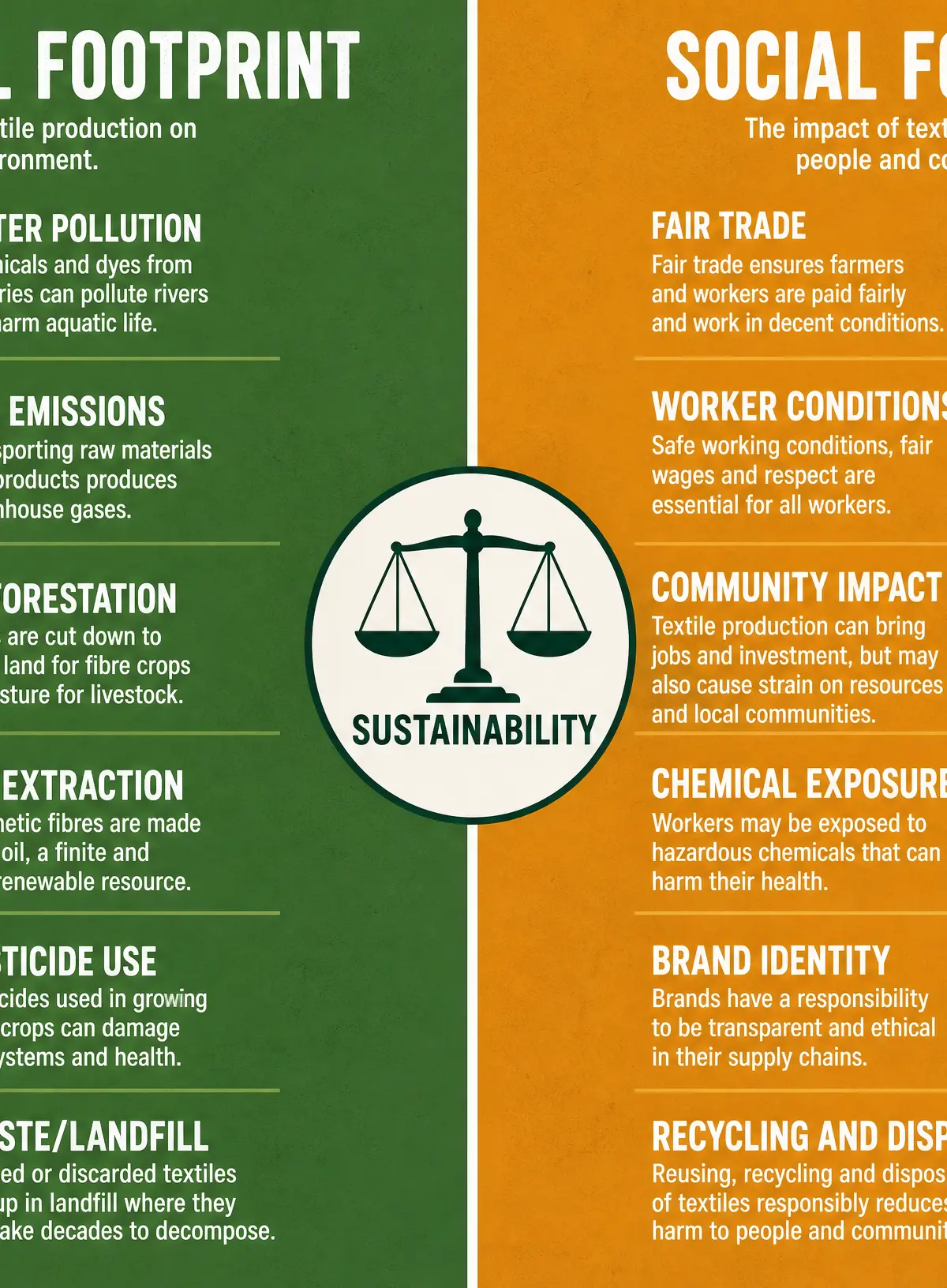
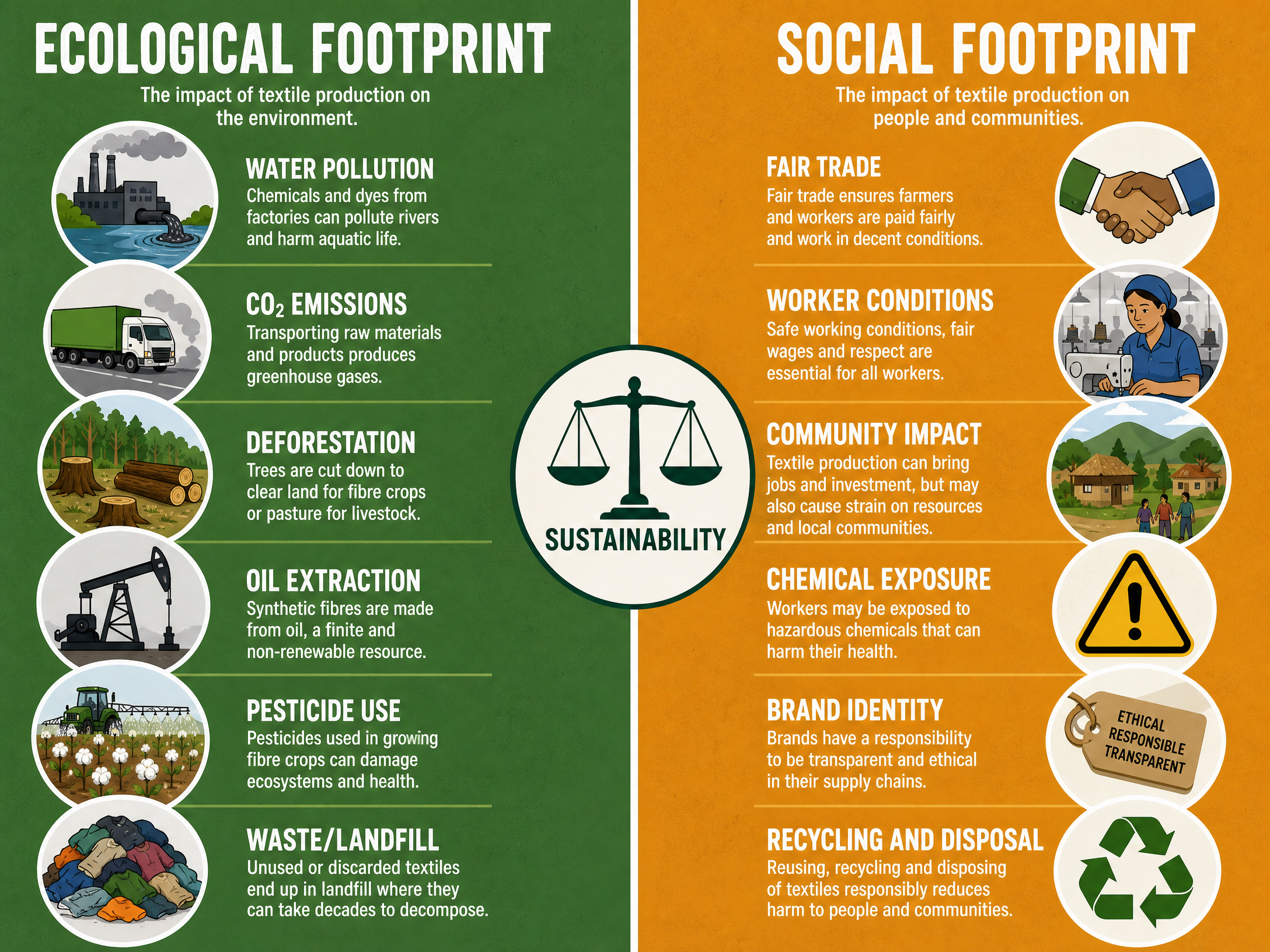
3. Social and Ecological FootprintThe textile industry is one of the most polluting in the world. You must be able to discuss its impact across the entire product life cycle.
- Ecological Impact: Deforestation for land use, immense water consumption (especially for cotton), pesticide pollution, greenhouse gas emissions from transport, microplastic shedding from synthetics, and the massive waste generated by 'fast fashion' ending up in landfill.
- Social Impact: Working conditions in garment factories (often in developing nations), fair trade practices, exposure of workers to hazardous chemical finishes (like dyes and waterproofing agents), and the ethical responsibilities of brand identity.
Technical Vocabulary
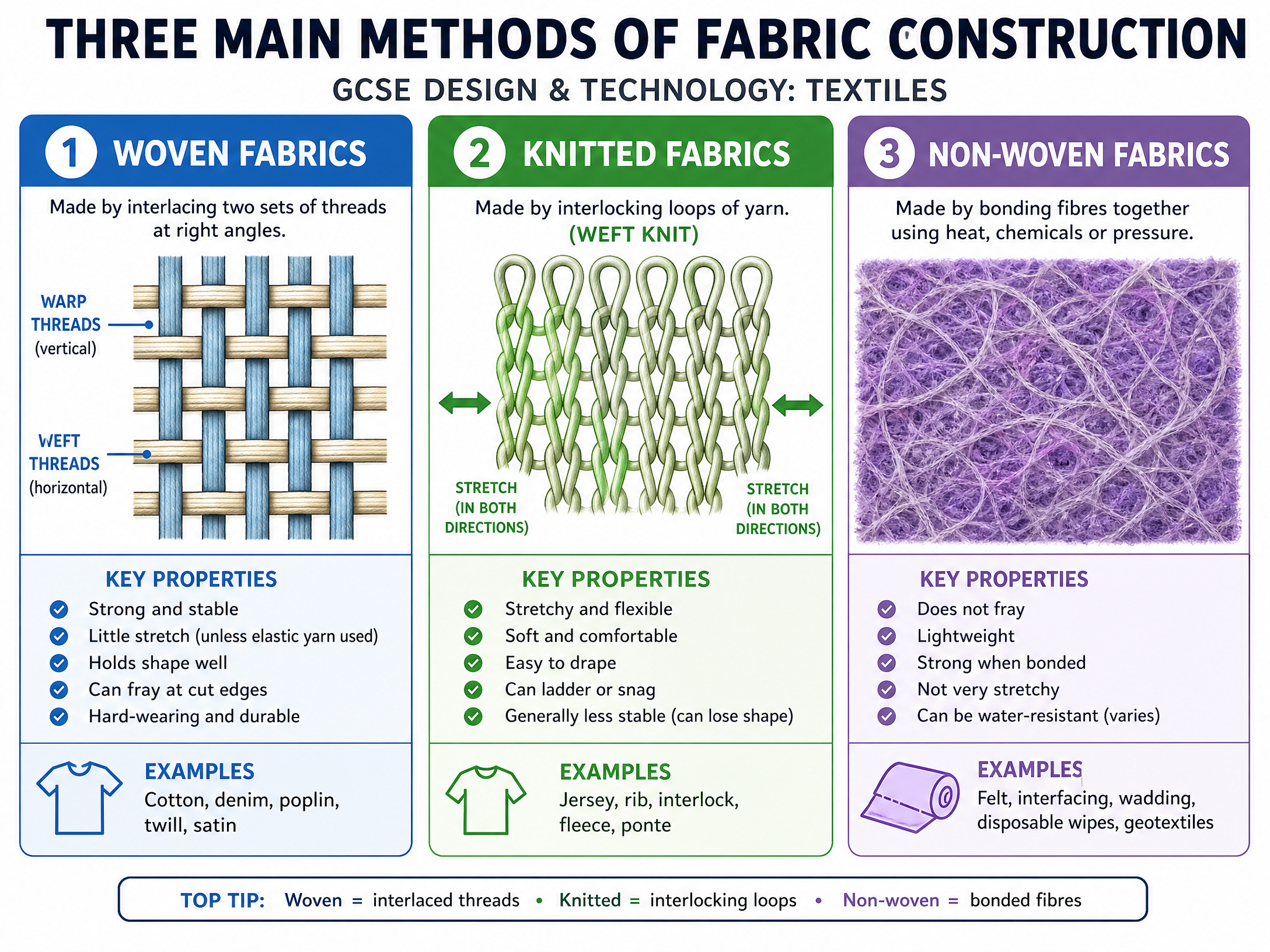
- Warp and Weft: The vertical (warp) and horizontal (weft) threads used in weaving.
- Sericulture: The production of silk and the rearing of silkworms.
- Life Cycle Assessment (LCA): Evaluating the environmental impact of a product from raw material extraction to disposal.
- Microplastics: Tiny plastic particles shed from synthetic textiles during washing.
- Fair Trade: Trade between companies in developed countries and producers in developing countries in which fair prices are paid to the producers.
Practical Skills
Techniques & Processes: Fabric Construction
Understanding how fibres are turned into fabrics is essential for both theory and practical application.
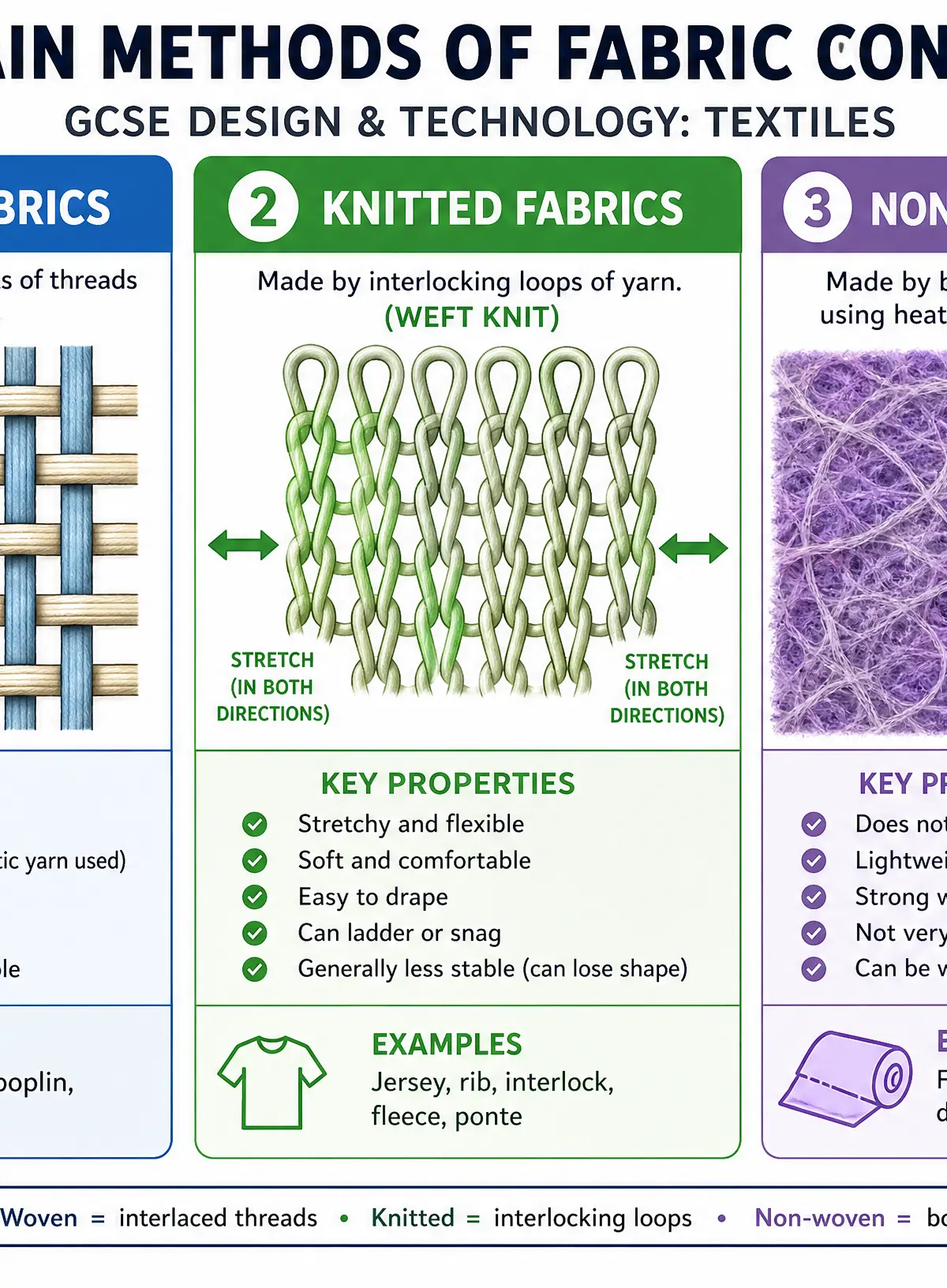
1. Woven FabricsConstructed on a loom by interlacing two sets of yarns at right angles. The warp threads run vertically, and the weft threads run horizontally (left to right). Woven fabrics are strong, hold their shape well, but fray at the edges when cut.
- Examples: Plain weave (calico), Twill weave (denim), Satin weave.
2. Knitted FabricsConstructed from a single yarn forming interlocking loops. This structure gives the fabric stretch and flexibility, making it comfortable to wear, though it can ladder if a loop breaks.
- Types: Weft knitting (horizontal loops, e.g., jersey for T-shirts) and Warp knitting (vertical loops, e.g., tricot for swimwear).
3. Non-Woven FabricsConstructed by bonding fibres together using heat, mechanical action, or chemicals. They do not fray, making them easy to work with, but they lack the strength of woven fabrics.
- Examples: Felt (matted wool fibres), Interfacing (used to stiffen collars).
Materials & Equipment
- Blended Yarns: Combining two or more different fibres in the spinning process (e.g., Polycotton = Polyester + Cotton) to combine the best properties of both (e.g., breathability of cotton with the crease-resistance of polyester).
- Mixed Fabrics: Using different yarns for the warp and the weft during weaving.
Portfolio/Coursework Guidance
Assessment Criteria
In your Non-Examined Assessment (NEA), examiners are looking for your ability to justify material choices. You cannot simply state "I used cotton because it is soft." You must link the working property to the user requirement and the product function.
Building a Strong Portfolio
- Material Testing: Include evidence of testing different fabrics (e.g., absorbency tests, stretch tests) to justify your final selection.
- Sustainability Statement: Include a section analysing the ecological footprint of your chosen materials. If you use polyester, acknowledge its environmental impact and suggest how the product's durability might offset this by extending its lifespan.
- Accurate Terminology: Always use correct terms (e.g., 'weft knit' instead of just 'stretchy fabric') in your annotations.
Exam Component
Written Exam Knowledge
The theory paper will test your factual recall of fibre properties and your ability to analyse the environmental impact of textiles. Expect multiple-choice questions on fibre origins and extended response (6-8 mark) questions evaluating sustainability.
Audio Revision Resource
Listen to this 10-minute revision podcast covering the core concepts, common mistakes, and a quick-fire quiz to test your knowledge.

Visual Resources
3 diagrams and illustrations
Interactive Diagrams
1 interactive diagram to visualise key concepts
Conceptual Flow Outline
Life Cycle Assessment (LCA) of a Textile Product
Worked Examples
3 worked examples — open one to explore the question and available guidance.
Practice Questions
Test your understanding — click to reveal model answers
State the origin of silk and classify it as either an animal, vegetable, or synthetic fibre. (2 marks)
Hint: Think about what creature produces the thread.
Explain two reasons why felt is a suitable material for making a decorative hat. (4 marks)
Hint: Think about how felt is constructed and what happens when you cut it.
Analyse the social and environmental implications of 'fast fashion'. (6 marks)
Hint: Discuss both the human cost (workers) and the environmental cost (waste, pollution).