Pearson Edexcel · GCSE · Design and Technology
The categorisation of the types, properties and structure of natural, synthetic, blended and mixed fibres, and woven, non-woven and knitted textiles
This topic covers the fundamental building blocks of textiles, from raw fibres to finished fabrics. Understanding the properties of natural, synthetic, and blended fibres, along with woven, knitted, and non-woven construction methods, is essential for justifying material choices in your GCSE Design and Technology coursework and exams.
- 7 min read
- 3 worked examples
- 3 practice questions
- 6 key terms
Study Notes
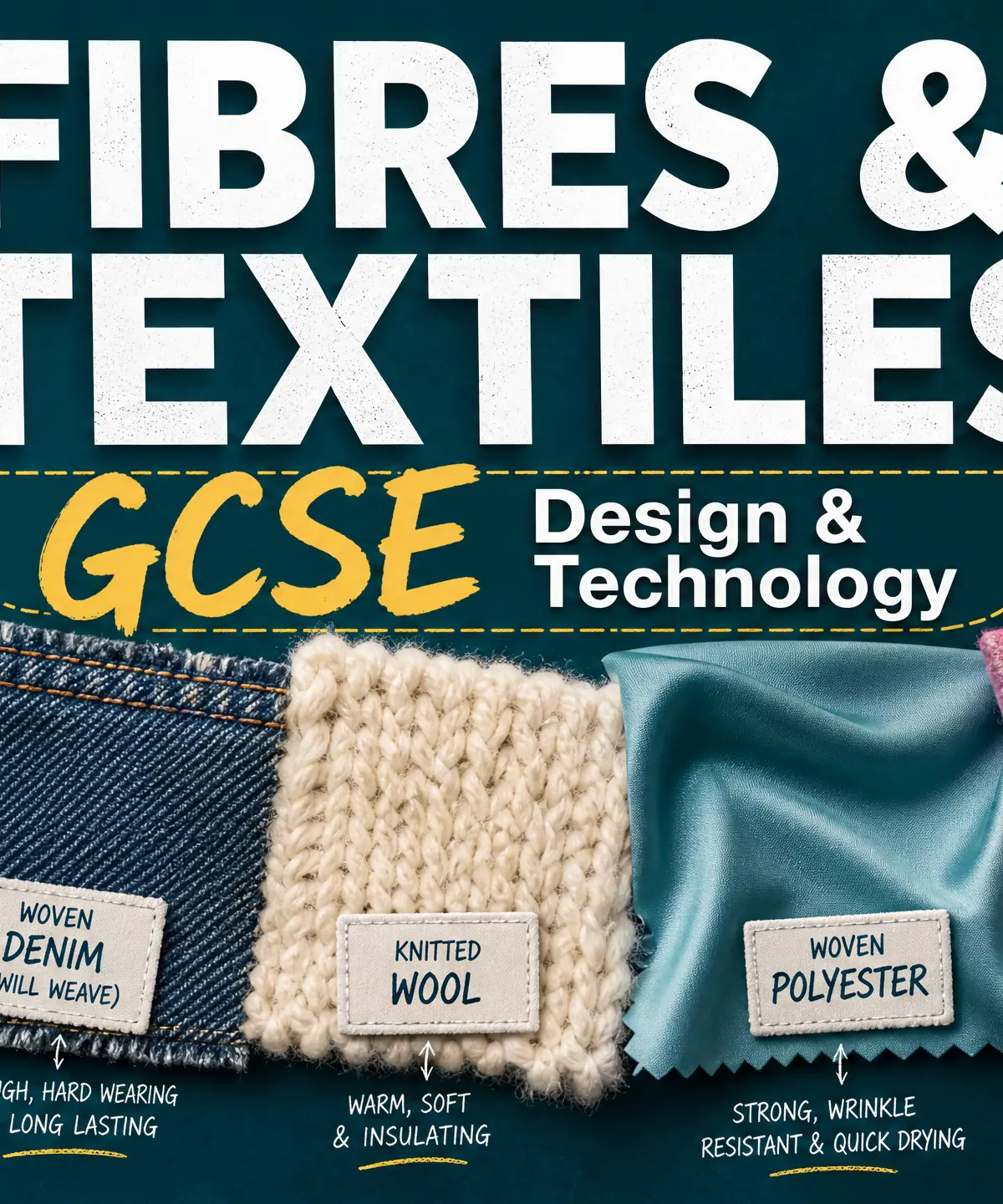
Overview
Textiles are a core material category in Design and Technology. Everything from high-performance sportswear to the upholstery on a chair begins as a raw fibre. To succeed in your GCSE, you must understand how to categorise these fibres, how they are constructed into fabrics, and most importantly, how their properties dictate their end-use applications. Examiners award the highest marks to candidates who can justify their material selections using precise technical vocabulary.

Key Knowledge & Theory
Core Concepts: Fibre Categorisation
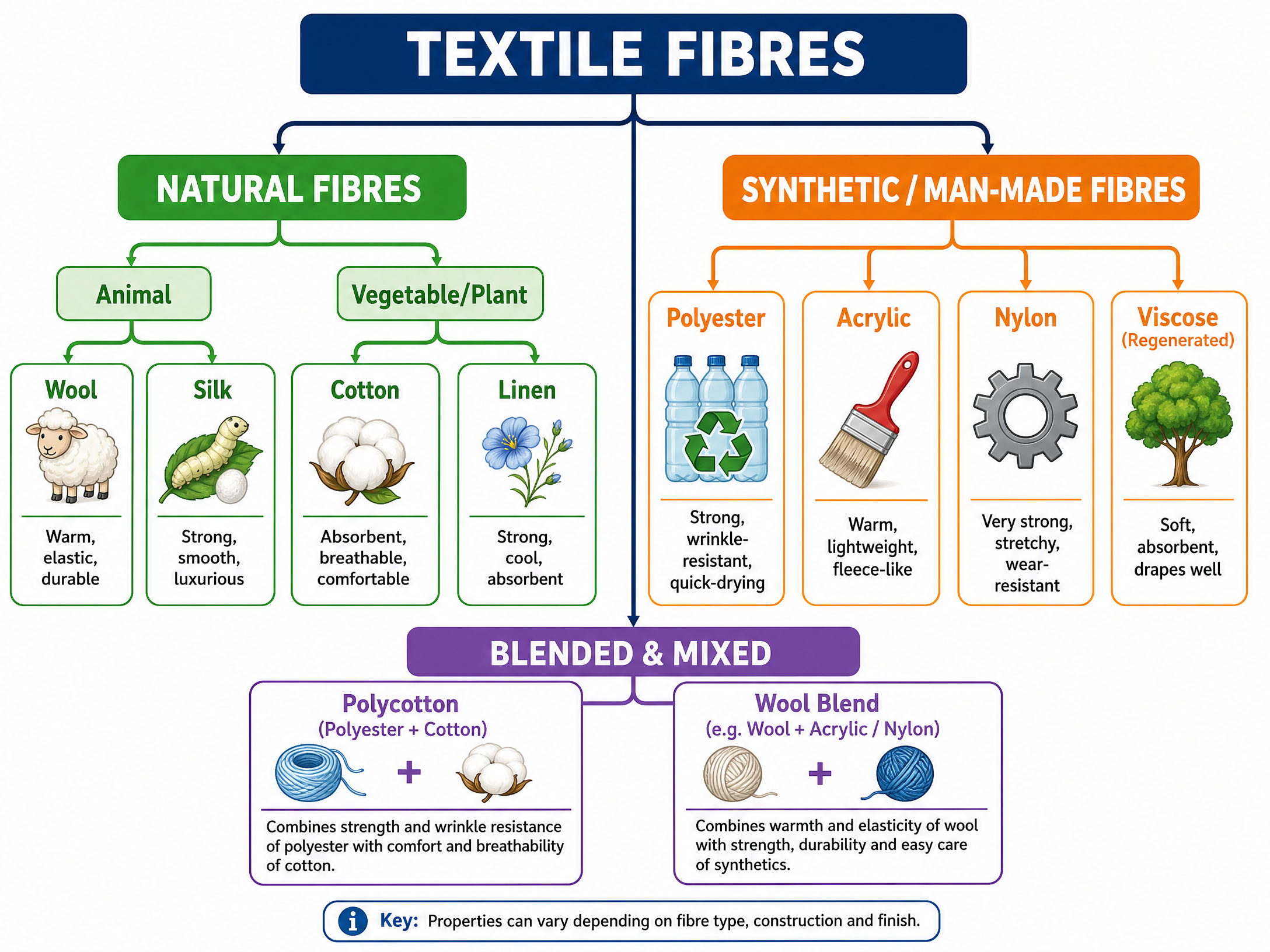
Fibres are the raw materials used to make textiles. They are spun into yarns, which are then constructed into fabrics. We categorise fibres into two main groups: Natural and Synthetic.
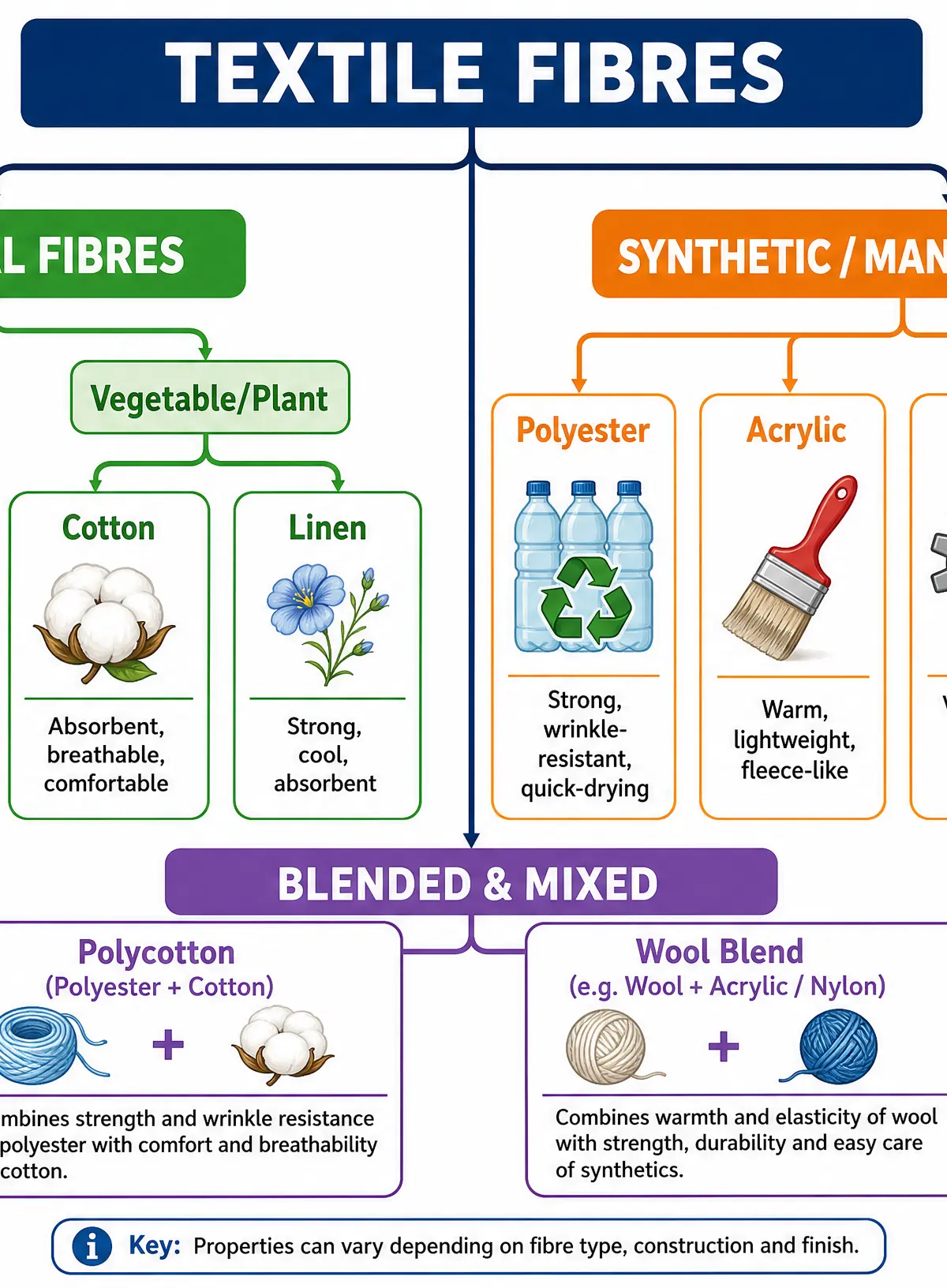
1. Natural FibresNatural fibres come from plant (vegetable) or animal sources. They are generally renewable and biodegradable.
- Animal Fibres (Protein-based):
- Wool: Sourced from sheep. It is warm, highly elastic (springs back into shape), and resilient. It is absorbent but can shrink if washed at high temperatures.
- Silk: Sourced from the cocoon of the silkworm. It is smooth, has a natural lustre, and is very strong for its weight, though expensive.
- Vegetable/Plant Fibres (Cellulose-based):
- Cotton: Sourced from the cotton plant boll. It is highly absorbent, breathable, strong, and easy to wash. It is the most widely used natural fibre.
- Linen: Sourced from the flax plant. It is very strong, cool to wear, and highly absorbent, but it creases very easily.
2. Synthetic (Man-Made) FibresSynthetic fibres are manufactured from chemical processes, primarily using petrochemicals (oil and coal). They are generally non-renewable but can be engineered for specific high-performance properties.
- Polyester: Very strong, highly durable, wrinkle-resistant, and quick-drying. It is not breathable and does not absorb moisture well.
- Acrylic: Often used as a synthetic alternative to wool. It is warm, lightweight, and cheaper than wool, but can pill (bobble) easily.
- Nylon (Polyamide): Exceptionally strong, very stretchy, and highly resistant to wear and abrasion. Used for tights, ropes, and sportswear.
- Viscose (Regenerated): Made from natural cellulose (wood pulp) that has been chemically processed. It is soft, drapes well, and is absorbent, but loses strength when wet.
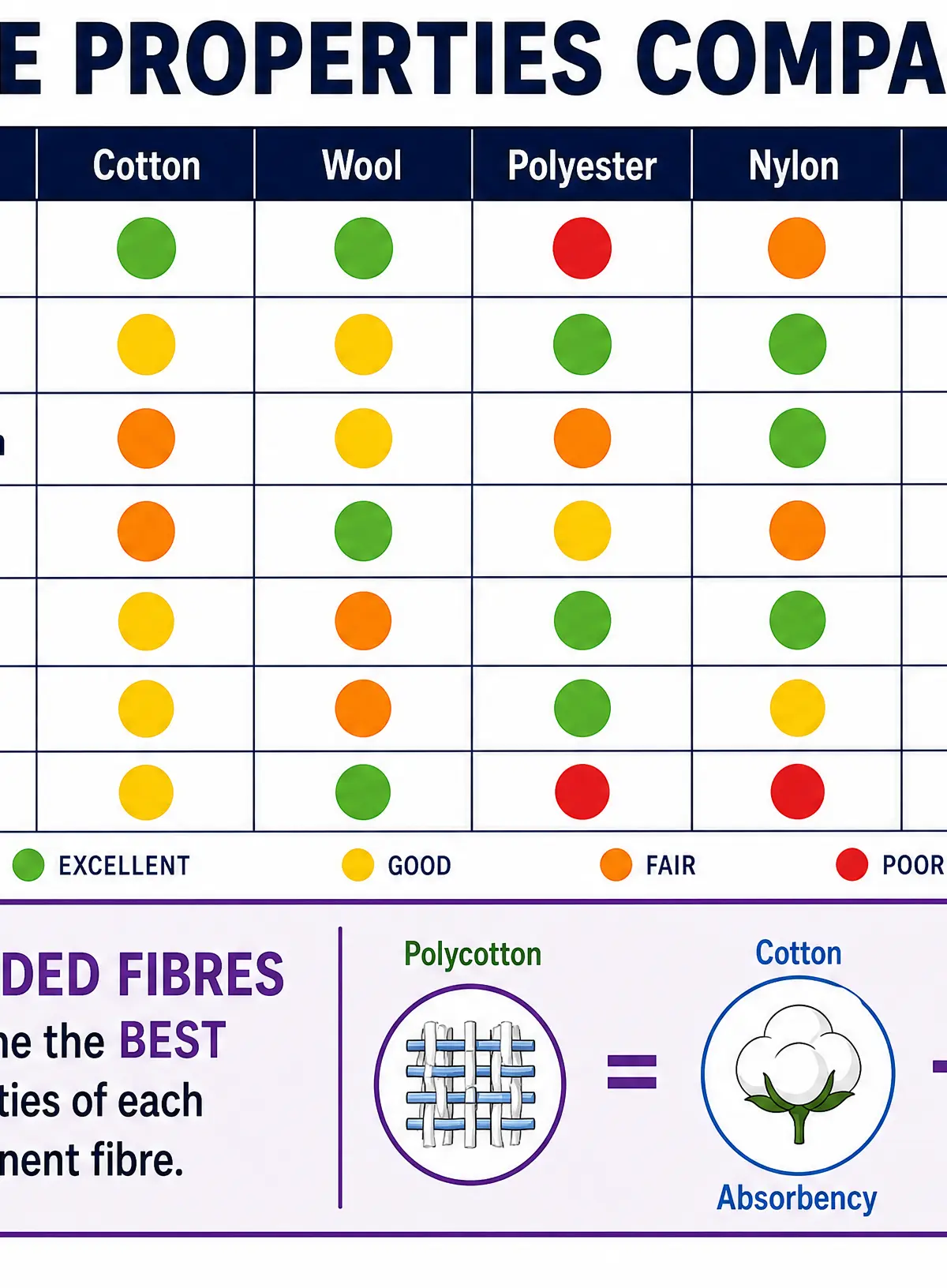
3. Blended and Mixed FibresDesigners rarely rely on a single fibre. To overcome the disadvantages of one fibre, they combine it with another.
- Blended Yarns: Two or more different fibres are spun together to create a single yarn (e.g., Polycotton = Polyester + Cotton).
- Mixed Fabrics: A fabric woven or knitted using different yarns (e.g., a cotton warp and a polyester weft).
Technical Vocabulary
- Fibre: The raw, hair-like strand from which all textiles are made.
- Yarn: A continuous thread made by spinning fibres together.
- Warp: The threads that run lengthways in a woven fabric.
- Weft: The threads that run across the width of a woven fabric.
- Elasticity: The ability of a fibre or fabric to stretch and return to its original shape.
- Resilience: The ability to withstand creasing or crushing.
- Durability: The ability to withstand wear, pressure, or damage over time.
Practical Skills: Textile Construction
Once fibres are spun into yarn, they must be constructed into a fabric. The method of construction dramatically alters the working properties of the final material.
1. Woven Textiles
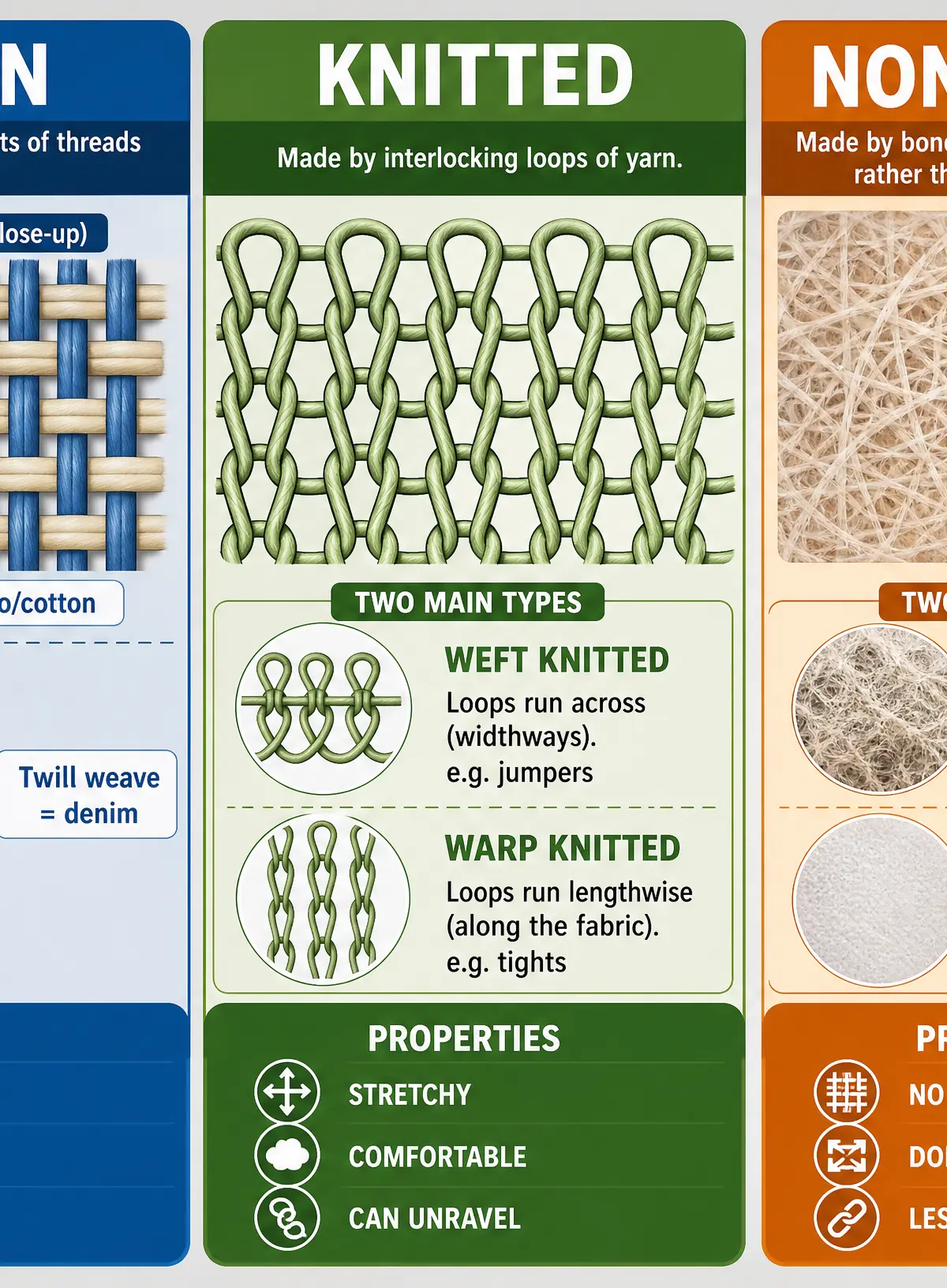
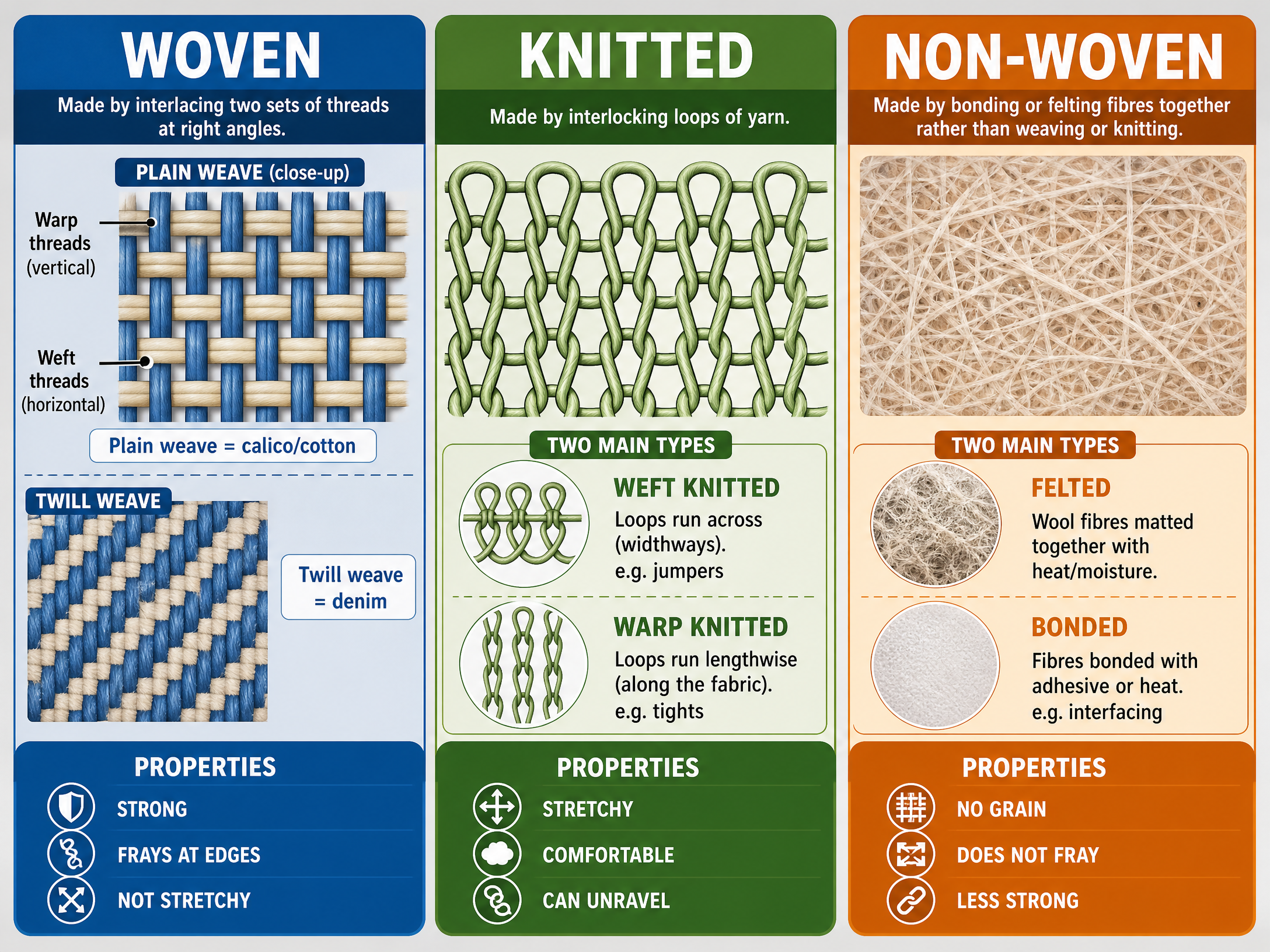
Woven fabrics are created on a loom by interlacing two sets of yarns at right angles.
- Plain Weave: The simplest weave (e.g., Calico). The weft yarn goes alternately over one warp yarn and under the next. It produces a strong, stable fabric that frays at cut edges and has minimal stretch.
- Twill Weave: The weft yarn goes over two or more warp yarns before going under one, creating a diagonal pattern (e.g., Denim). It is stronger, heavier, and more durable than plain weave.
2. Knitted Textiles
Knitted fabrics are created by interlocking loops of yarn. The loop structure allows the fabric to trap air (making it warm) and gives it significant stretch.
- Weft Knitted: The loops run across the width of the fabric (e.g., Jumpers, T-shirts). Highly stretchy and comfortable, but can 'ladder' or unravel if a loop breaks.
- Warp Knitted: The loops run lengthways (e.g., Tights, some sportswear). Less stretchy than weft knits but much more stable and resistant to laddering.
3. Non-Woven Textiles
Non-woven fabrics are made directly from fibres, bypassing the spinning and weaving/knitting processes. The fibres are entangled or bonded together.
- Felted: Wool fibres are matted together using heat, moisture, and friction. The microscopic scales on the wool fibres lock together. Felt has no grain, does not fray, but lacks strength.
- Bonded: Synthetic fibres are glued or melted together (e.g., Interfacing, disposable medical masks). Cheap to produce and does not fray.
Portfolio/Coursework Guidance
Assessment Criteria
When examiners review your Non-Exam Assessment (NEA) portfolio, they are looking for justified decision-making. You will not gain marks simply for stating "I used cotton." You must explain why cotton was the optimum choice based on its properties, and how its construction method (e.g., plain weave) suited your manufacturing processes.
Building a Strong Portfolio
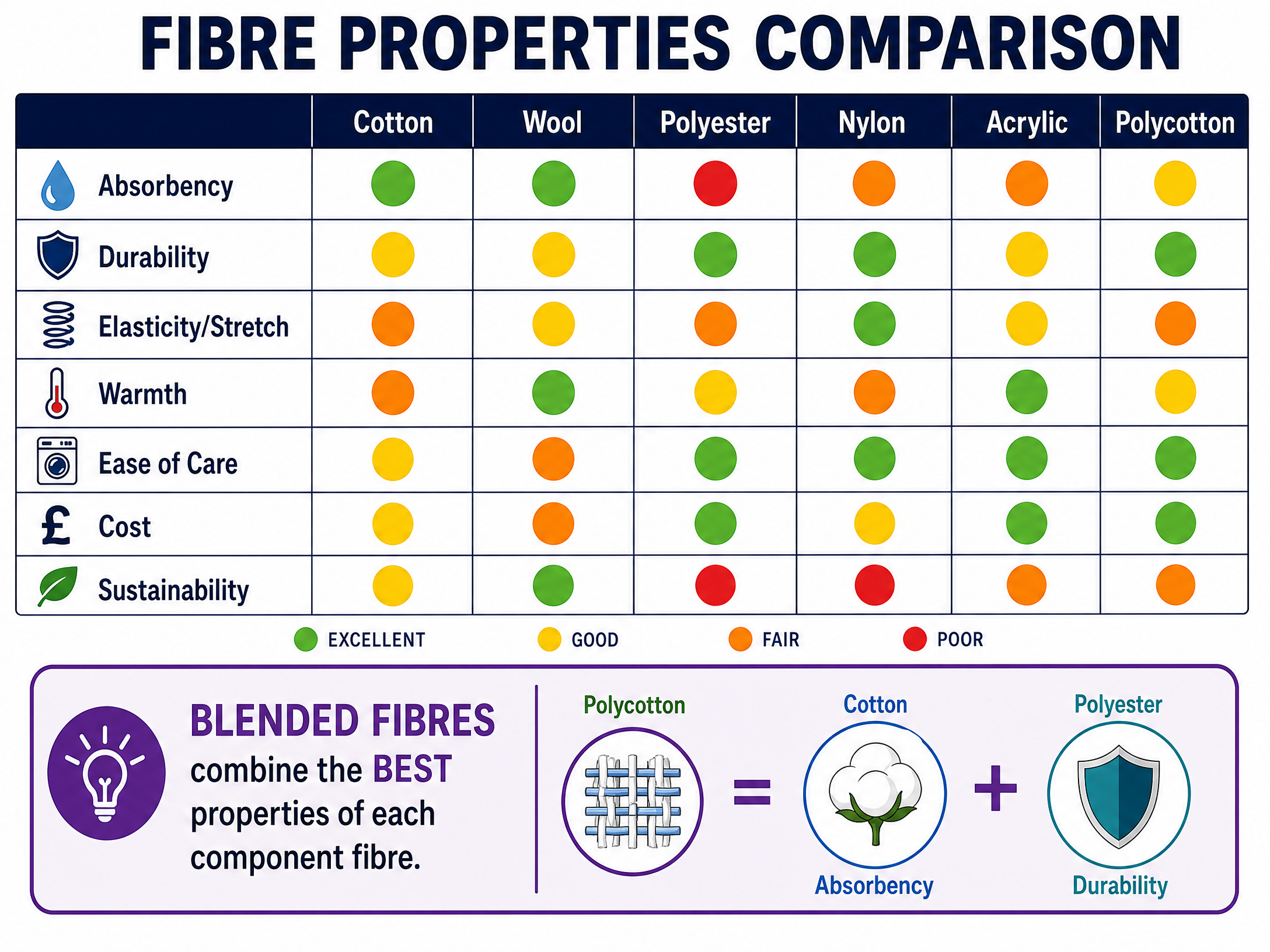
- Material Testing: Include physical evidence of testing. If you chose a polycotton blend over 100% cotton, show a crease-resistance test or an absorbency test to prove why the blend was superior for your product.
- Detailed Annotation: When annotating your design developments, explicitly reference fibre properties. For example: "I have selected a weft-knitted acrylic for the cuff of the garment because the loop structure provides the necessary elasticity to fit over the hand, while the acrylic fibre offers a cost-effective, warm alternative to wool."
Exam Component
Written Exam Knowledge
The written paper will test your ability to discriminate between materials. You may be given a product (e.g., a reusable shopping bag) and asked to evaluate two different materials (e.g., woven cotton vs. non-woven bonded polypropylene) for its manufacture. You must compare their strength, durability, environmental impact, and cost.
Practical Application in the Exam
Always link your theoretical knowledge to a practical context. If asked about the disadvantages of a plain weave fabric, mention practical manufacturing issues: "It frays easily at the edges, meaning a seam finish such as overlocking must be applied during manufacture to prevent the product from falling apart."
Visual Resources
3 diagrams and illustrations
Interactive Diagrams
1 interactive diagram to visualise key concepts
Conceptual Flow Outline
The Textile Production Process: From Fibre to Fabric
Worked Examples
3 worked examples — open one to explore the question and available guidance.
Practice Questions
Test your understanding — click to reveal model answers
Identify one natural animal fibre and state one of its key working properties. (2 marks)
Hint: Think of a fibre that comes from a sheep or an insect.
Describe the structure of a plain weave fabric and explain why it is prone to fraying. (3 marks)
Hint: Think about how the warp and weft threads interact in the simplest weaving pattern.
A designer is creating a high-performance jacket for mountaineering. Evaluate the use of synthetic fibres compared to natural fibres for the outer shell of the jacket. (6 marks)
Hint: Consider the specific environmental conditions of mountaineering (wind, rain, abrasion) and compare how nylon/polyester perform against cotton/wool.