Pearson Edexcel · GCSE · Design and Technology
Timbers: Appropriate surface treatments and finishes that can be applied to each natural and manufactured timber for functional and aesthetic purposes
This topic covers the essential surface treatments and finishes applied to natural and manufactured timbers. Understanding when to use paint, stain, varnish, wax, oil, shellac, or veneer is crucial for both functional protection and aesthetic enhancement in your Design and Technology coursework and exams.
- 7 min read
- 3 worked examples
- 4 practice questions
- 6 key terms
Study Notes
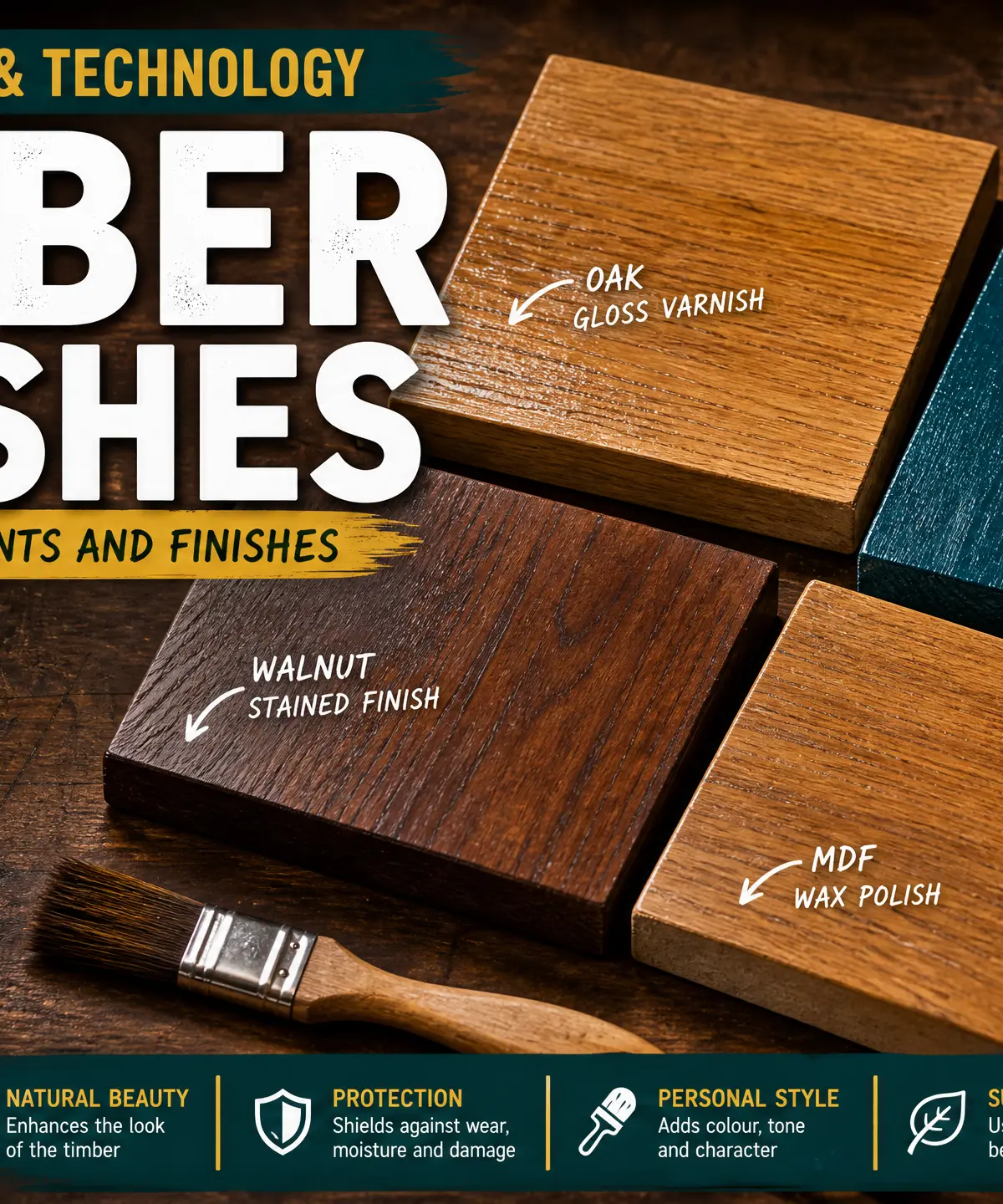
Overview
Timber finishes are a fundamental aspect of GCSE Design and Technology. Timber is a natural material, and without appropriate treatment, it is vulnerable to environmental damage. Applying a surface finish serves two primary purposes: functional (protecting the timber from moisture, UV light, insects, and wear) and aesthetic (enhancing its appearance, altering its colour, or highlighting its natural grain). Candidates must be able to discriminate between different finishes and justify the most appropriate choice for specific design contexts.
Key Knowledge & Theory
Core Concepts: Penetrating vs. Surface Finishes
Understanding the distinction between penetrating finishes and surface finishes is critical for achieving high marks.
- Penetrating Finishes (e.g., Oil, Stain): These soak into the wood fibres. They nourish the timber from within and enhance the natural grain. Because they do not form a film on the surface, they cannot peel or chip, but they generally offer less resistance to heavy wear and moisture compared to surface finishes.
- Surface Finishes (e.g., Varnish, Paint, Shellac): These form a hard, protective layer on top of the timber. They provide superior protection against scratches, heat, and moisture, making them ideal for high-wear areas. However, if damaged, the surface film can crack, peel, or chip.
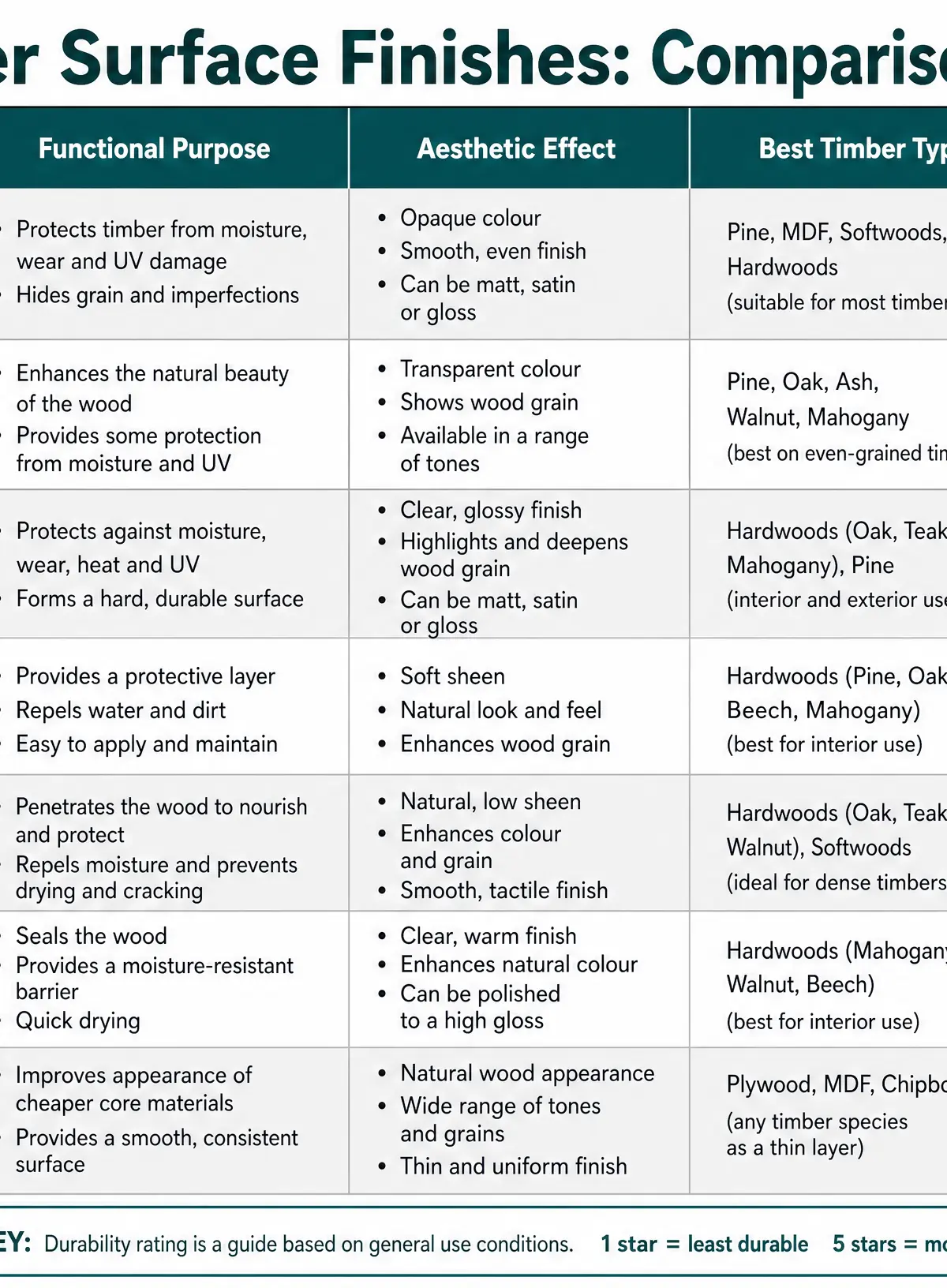
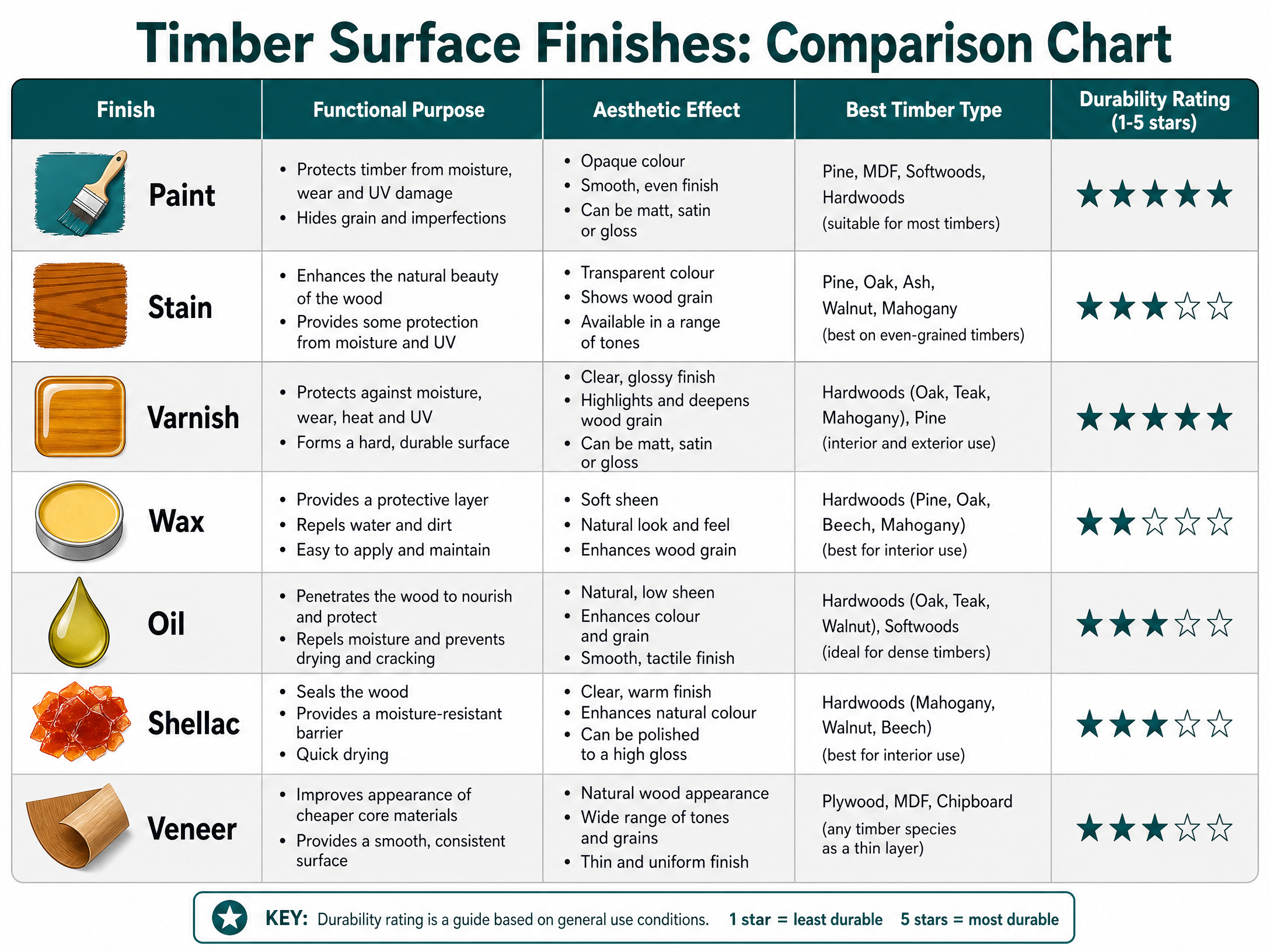
The Seven Key Timber Finishes
| Finish | Functional Purpose | Aesthetic Effect | Best Timber Type |
|---|---|---|---|
| Paint | Provides a highly durable, opaque barrier against moisture and UV damage. Seals the wood completely. | Offers complete creative freedom with a smooth, even finish (matt, satin, or gloss). Hides the wood grain entirely. | Pine, MDF, Plywood, Softwoods (ideal for hiding less attractive materials). |
| Stain | Offers minimal protection on its own; often used as a base before a clear topcoat. Penetrates the fibres. | Deepens or changes the colour of the wood while allowing the natural grain to remain visible. | Pine, Oak, Ash, Walnut (excellent for even-grained timbers). |
| Varnish | Forms a hard, highly durable surface film. Protects against moisture, heat, scratches, and UV light. | Provides a clear, glossy finish that highlights and deepens the natural wood grain. | Hardwoods (Oak, Teak, Mahogany), Pine (suitable for both interior and exterior use). |
| Wax | Provides a basic protective layer against dirt and minor wear. Repels water to a small degree but requires regular maintenance. | Creates a soft sheen and a natural, tactile feel. Enhances the grain without looking artificial. | Hardwoods (Pine, Oak, Beech) for interior decorative items. |
| Oil | Penetrates to nourish the wood, preventing it from drying and cracking. Repels moisture. | Gives a natural, low-sheen finish that enhances the colour and grain of the timber. | Dense Hardwoods (Teak, Oak, Walnut) for worktops and outdoor furniture. |
| Shellac | Seals the wood and provides a moisture-resistant barrier. Often used as a sanding sealer base coat. | Creates a clear, warm, amber-toned finish that can be polished to a high gloss (French Polish). | Hardwoods (Mahogany, Walnut) for traditional interior furniture. |
| Veneer | Improves the structural stability and provides a consistent surface to cheaper core materials. | Gives the appearance of an expensive, natural hardwood while using a cheaper core. | MDF, Chipboard, Plywood (applied as a thin layer). |
Technical Vocabulary
Candidates MUST use these terms in their exam answers and coursework annotations:
- Opaque: A finish that cannot be seen through (e.g., paint), completely hiding the grain.
- Transparent/Translucent: A finish that allows the natural grain to be seen (e.g., varnish, stain).
- Durability: The ability of a finish to withstand wear, pressure, or damage.
- Aesthetic: Relating to the appearance or beauty of the finish.
- Functional: Relating to the protective qualities of the finish.
Practical Skills
Surface Preparation
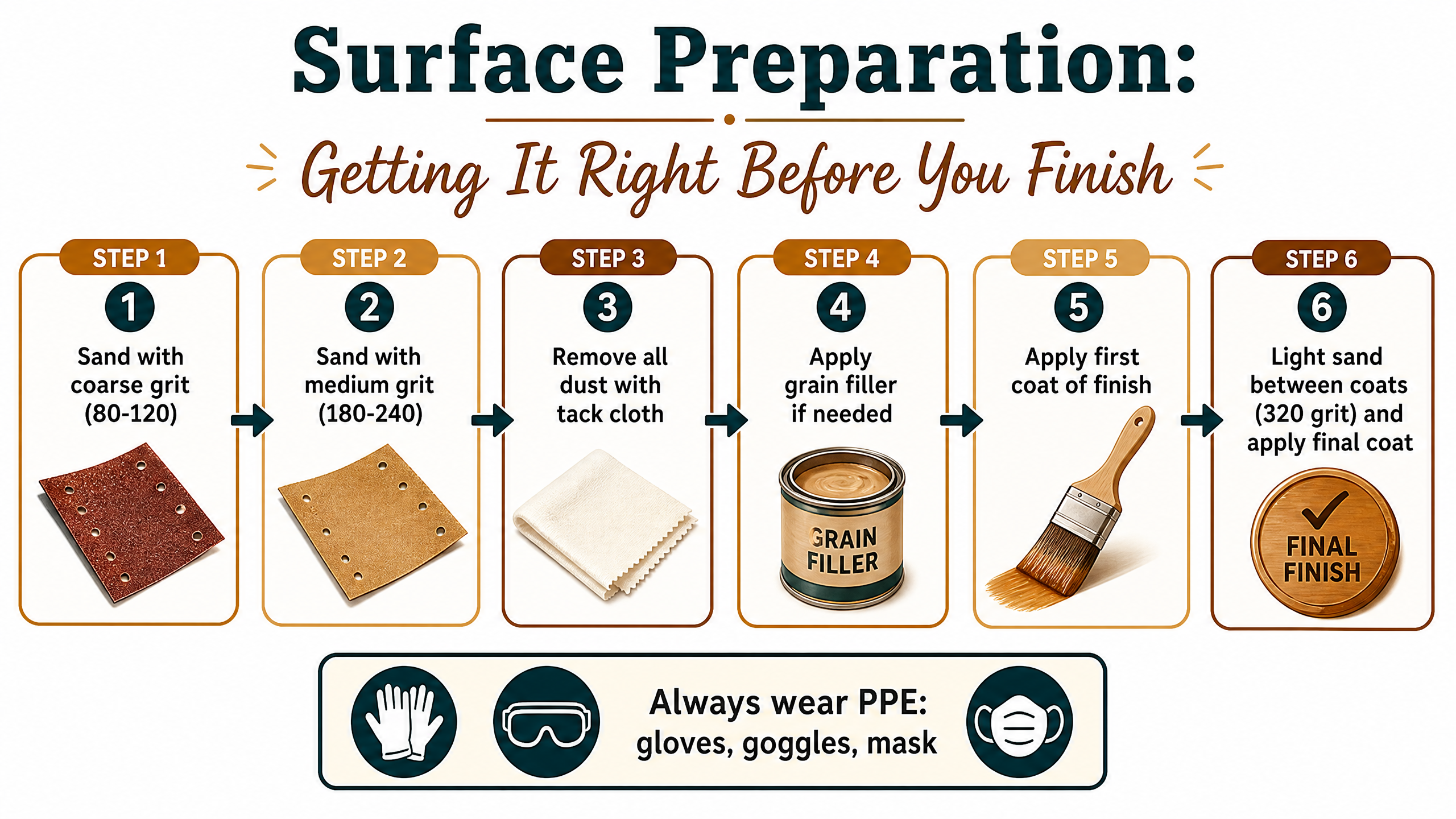
A finish is only as good as the surface it is applied to. Examiners look for candidates who understand the sequence of surface preparation.
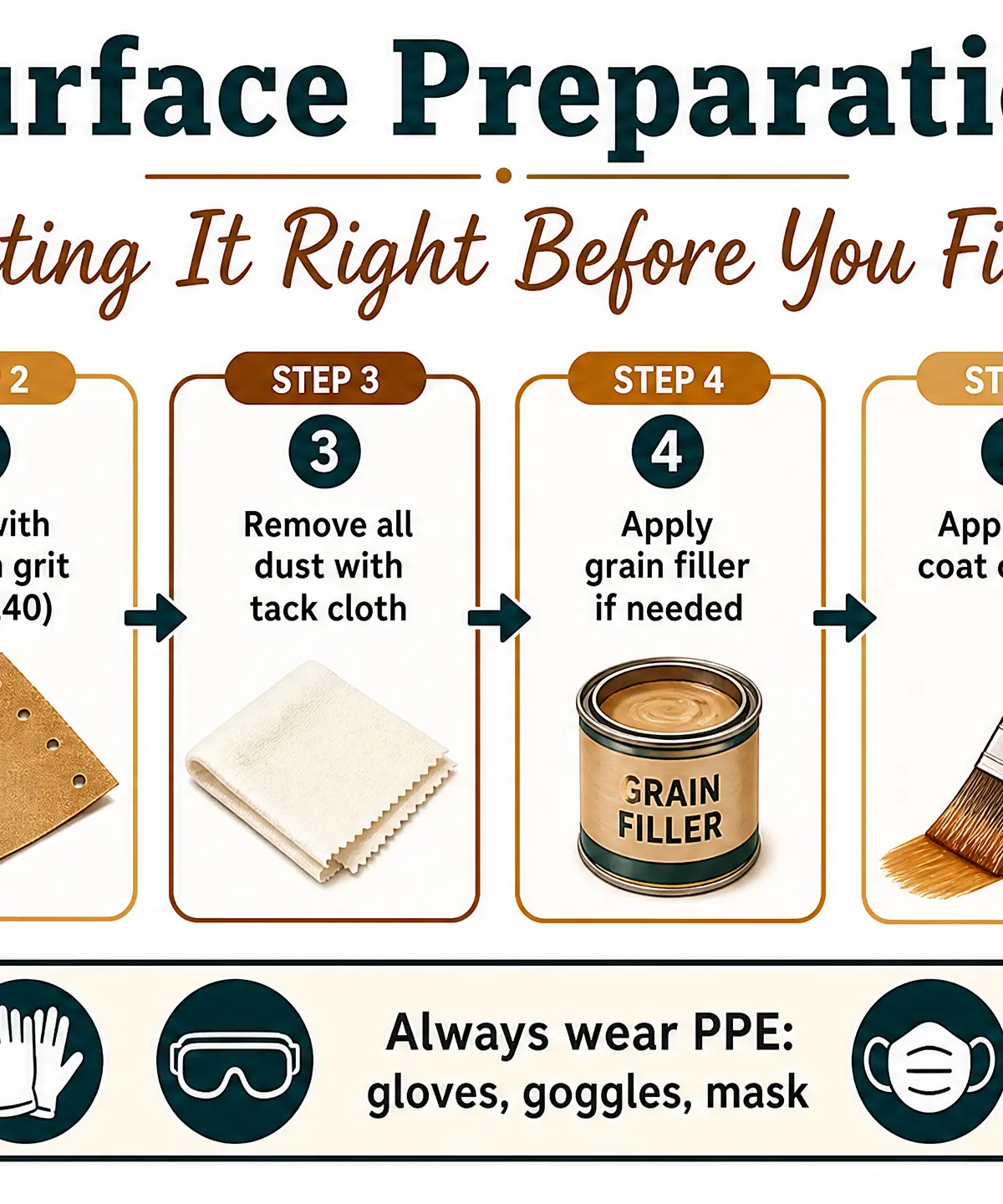
- Sanding: Start with a coarse grit sandpaper (e.g., 80-120 grit) to remove major imperfections. Progress to a medium grit (180-240 grit) to smooth the surface.
- Cleaning: Use a tack cloth or vacuum to remove all sawdust. Any remaining dust will become trapped in the finish, ruining the texture.
- Grain Filling (Optional): For open-grained woods like oak, apply a grain filler to achieve a perfectly smooth glass-like finish.
- Application: Apply the first coat of finish evenly, following the direction of the grain.
- De-nibbing: Once dry, lightly sand the surface with a very fine grit (e.g., 320 grit) to remove any raised fibres (nibs) before applying the final coat.
Materials & Equipment
- Brushes vs. Rags: Varnish and paint are typically applied with synthetic or natural bristle brushes. Oils and waxes are often applied and buffed using lint-free cotton rags.
- PPE: Always wear appropriate Personal Protective Equipment, including a mask (to avoid inhaling dust or fumes) and gloves (to protect skin from solvents).
Portfolio/Coursework Guidance
Assessment Criteria
Examiners award marks in the Non-Exam Assessment (NEA) for the clear justification of material and finish choices. You must demonstrate that you have considered both the functional requirements of your product (e.g., "My outdoor bench needs to withstand rain") and the aesthetic desires of your client (e.g., "My client wants to see the natural oak grain").
Building a Strong Portfolio
To evidence your understanding, include a "Finishes Testing Page" in your portfolio. Take off-cuts of your chosen timber and apply three different finishes (e.g., wax, oil, and varnish). Photograph the results and evaluate them against your specification criteria. This proves active experimentation rather than simply guessing.
Exam Component
Written Exam Knowledge
In the theory paper, questions on finishes often appear in Section B (Specialist Technical Principles). You will frequently be presented with a product (e.g., a child's wooden toy, a garden gate) and asked to suggest and justify an appropriate finish.
Audio Revision
Listen to the podcast below for a deep dive into exam technique and a quick-fire recall quiz to test your knowledge.

Visual Resources
2 diagrams and illustrations
Interactive Diagrams
1 interactive diagram to visualise key concepts
Conceptual Flow Outline
Decision-making flowchart for selecting appropriate timber finishes.
Worked Examples
3 worked examples — open one to explore the question and available guidance.
Practice Questions
Test your understanding — click to reveal model answers
State one functional reason for applying a finish to a wooden product. [1 mark]
Hint: Think about what the wood needs protecting from.
A student is making a jewellery box from solid mahogany. They want a finish that enhances the natural grain but they do not want a high-gloss, 'plastic' look. Suggest a suitable finish and justify your choice. [3 marks]
Hint: Look for a finish that is low-sheen and tactile, suitable for an interior decorative item.
Explain the difference between how wood stain and polyurethane varnish interact with timber. [4 marks]
Hint: Use the terms 'penetrating' and 'surface'.
A manufacturer is designing a range of outdoor seating for a public park. Evaluate the use of Teak Oil versus Exterior Paint for finishing the timber. [6 marks]
Hint: Consider the harsh environment (weather, public use, vandalism) and maintenance requirements.